 End-to-end outreach workflow



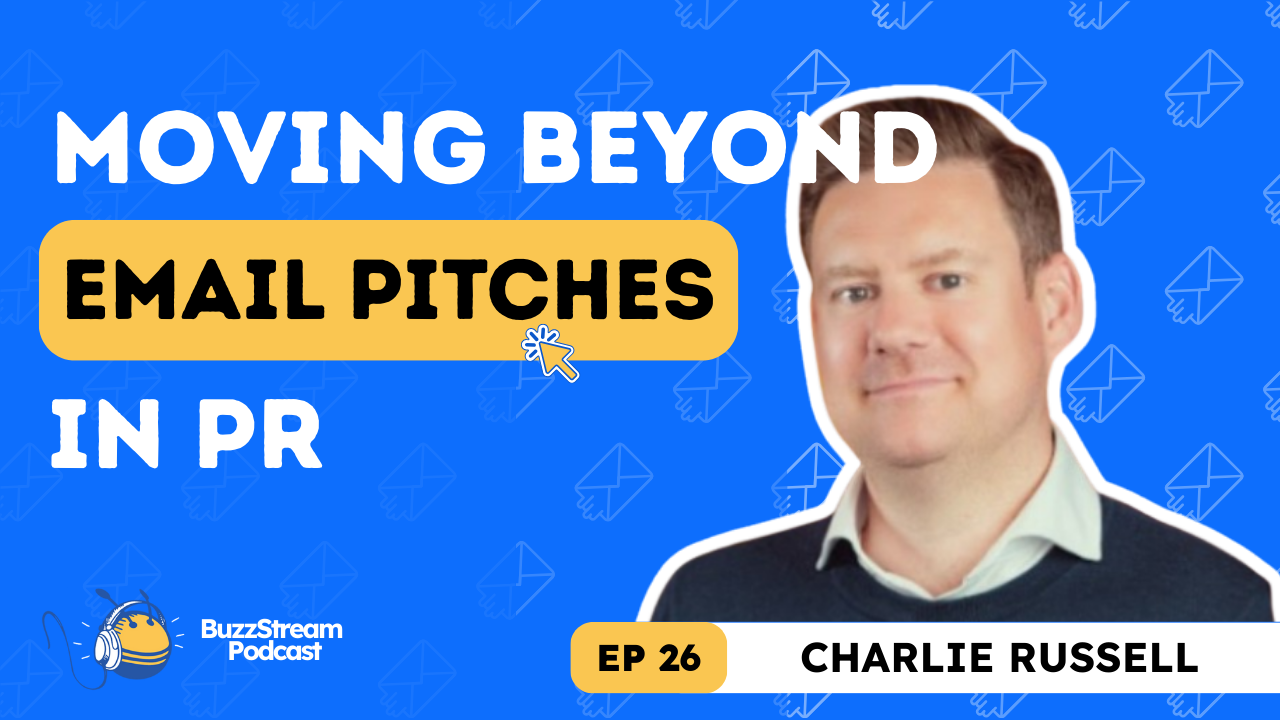
Table of Contents
- Synapse was built to move PR pitching out of overloaded email inboxes.
- Even perfectly targeted pitches fail when mass “spray-and-pray” outreach overloads the system, so the channel—not just the message—has to change.
- Synapse keeps requests, replies, and DMs within the platform.
- Traditional media databases are becoming less effective because maintaining accurate contact data is expensive.
- Relationship-building is now mandatory in an AI era.
If you’ve been following my writing, you know that journalists are drowning in inbox chaos. Data show that the spray-and-pray technique is ineffective. To cut through via email, you need hyper-relevant outreach.
But on the other hand… when the system itself is overloaded, even great pitches can get buried.
I invited Charlie Russell, the Founder and CEO of Synapse, a stories marketplace that connects journalists and PR professionals, to discuss this further.
In this episode, we talk about Synapse and, more broadly, what’s actually changing across the industry right now: how journalists want to be contacted, why relationships matter more than ever, and what tools (and mindsets) are evolving to meet the moment.

Here is a slightly edited transcript from our talk:
What is Synapse is and what problem it is solving in the marketplace?
I mean, that’s going to maybe take up half the podcast, so maybe I’ll just give a short snippet and then we can get into some of the detail and maybe my background.
Synapse is a stories marketplace. We have created it as a product that allows for two types of user to log in: a journalist or a PR.
And some of the issues that I’ve seen, having worked in this industry for quite a few years is that
Email is basically the main channel and that is a very crowded and congested channel.
But when you ask the journalist, how can we contact you?
Despite the fact that the vast majority of them will say, we don’t like email and we don’t receive email.
The vast majority will then also say, please email us. Because there is actually no other method to get in touch with them.
And that’s why I created Synapse as another channel for PRs to reach journalists—but one that is completely and utterly tailored to this market.
So it means that it has certain functionality built in with it, which puts the journalist in control and means that they can see relevant stories without being overwhelmed and gives PRs great opportunity to track the progress of the pictures that they’ve sent and any engagement that comes with the media. In a nutshell, that’s what it is.
Can you tell us about your background?
Sure, yeah, well, it starts in 2008.
So I mean, I’m guessing, I’m hoping most people that are listening to the podcast were born by then, but probably in school, whether it’s sort of primary school or university in 2008.
But it was basically my first job out of university was at Dow Jones, which is known for its, well, actually a lot of people thought I was going to be a stockbroker, but that’s completely misunderstood about that brand.
It is a news brand and a data business.
The company had just been acquired by News Corp at the time, so it’s quite an exciting time to work for them.
We had people like James Murdoch and even Rupert Murdoch walking around our office and got really good exposure to journalists.
But at the same time, we were in the middle of a downturn, so people were cancelling their services left, right and center. So I spent two years at Dow Jones. And one of the things that they were building at the time was this PR product.
It was, I worked on the Factiva side of the business, which is still in existence.
It’s a great tool.
It’s an archive of news that people can basically go in and interrogate. And everyone from a research analyst looking to do background checks on an individual or a business through to a PR looking to do some research for clients or media monitoring might use Factiva.
The interesting thing was when we tried to build this PR product, which essentially was using Dow Jones’s own media monitoring capabilities to create a journalist database, and we tried to sell it, we couldn’t, especially in the UK, because there was this incumbent called Gorkana, and we could not shift them.
And I remember one of the most interesting things that happened to me was I was in a five-side football team, soccer team for the folk in the US and one of the players was in the PR team, the internal PR team.
And I asked him about this new product and he said, we’re not using it.
We’re using Gorkana. said, so our own, we won’t even eat our own dog food, so to speak.
You’re still using this product Gorkana?
And they said, yeah, because it’s really good. And the data is really accurate.
So when I was headhunted to go over there, I said, yeah, I want to talk to that business.
And I joined at a really interesting time. It was before the first buyout.
So I was working on one floor in Covent Garden in London, with about 40 or 50 people. was in the account management team.
I think I was the first or second person that they’d hired externally.
Everyone else was sort of graduates from, worked their way up from university through the business.
And I sat with Alex and Michael, the founders, really, really near to them, got really good exposure to their experience.
And we were acquired by Cision, the media monitoring group, after a short time that I was there. And then I went through that merger process and left in 2013.
It’s interesting both Alex and Michael are still in the business.
Alex is the founder of Roxhill, which is a leading database here in the UK and growing rapidly.
And Michael has created Tellum, which is all powerful in Asia.
So they’ve gone off to do some really, really powerful stuff themselves.
And at that time, obviously, if you’ve been through a private equity buyout, it could be quite tricky and a lot of people left and I was included in that.
I went off and I did something else in fintech, but after about two years, I started to have the itch and think, I’d like to do something for myself, but I want a bit more experience.
So I worked for a startup out of Notting Hill and we worked with marketplaces.
So our big clients were Zoopla and Auto Trader, which is the leading car marketplace in the UK.
And Zoopla is second to Rightmove as a property marketplace in the UK.
You may have heard of it, but I guess it’s like Zillow in the States.
But I started to see how where you have a large volume of information such as there are a lot of cars for sale in the UK or there are a lot of houses or flats for sale or rent in the UK, you need a marketplace.
It’s not acceptable for every car dealership in the country to email me and go, hey, do you want to buy an Audi?
Here are all our Audis. I would be completely overwhelmed.
I’d have to get a new email address and disappear face to the earth.
So that’s why marketplace is perfect because you can log in and you can say, I’m looking for this make, this model, this age, this color, with this specification. And it will show you.
There are three cars that meet your specification in the UK, and you can look at them all and you can have them delivered to your door.
That is a world apart from how the auto industry used to work, and it’s been transformed by marketplace. And the penny dropped.
I said to myself, we should build this for PR, because PR has a volume of information that is funneling itself into inboxes that journalists cannot read.
It doesn’t matter how good the pitch is. It really doesn’t. If they’re getting a thousand or more emails a day, they just won’t see it.
And they ask for a follow-up to give it a second chance.
Even if you, as an individual, are sending out perfect, tailored emails to a handful of journalists for every campaign, if some other person next door to you is doing mass email, then you’re going to get caught up in that traffic.
And that’s a problem.
And so I had this vision of lifting and shifting all of that content out of inboxes and onto a dedicated marketplace, where journalists could just log in and do a keyword search.
They could combine it with a sector and a type, like show me a case study, a statistic, or a product.
And we would show them all the PR opportunities, and then they can liaise directly with the PRs. And that is exactly what we’ve built. We launched in September two years ago, so just over two years ago, and yeah, are working with key media like Reach, NewsQuest and National World and others.
Is Synapse just UK-focused right now?
In terms of the media, yes it is just UK based, although we are working specifically with PRs outside of the UK now. S
o we are letting people from the States and from the Middle East and other countries join the marketplace.
As long as they’ve got some relevance to the UK media, that’s absolutely fine.
But from a journalist perspective, at the moment we’re just trying to narrow down the UK before we look at other geographies.
How do you differentiate from other journalist request platforms?
We can maybe get onto this, but because of the number of approaches that journalists get via email, and also the tools out there now that allow PRs to create fake experts, that more and more journalists are frightened of the Impox, and it represents too much work to actively go through and work out what’s real, what’s fake.
Of course, they will check their sources and they will validate. But where do you start?
If you’ve got two next to each other, you could get three, four fakes in a row before you found a real story.
So what are they leaning towards?
They’re leaning towards these platforms, these hashtags, these systems whereby they can go and get their answers.
Now, sometimes they go direct to brands and sometimes they go via PRs.
It completely depends on the platform and also the journalist preference. But because of also the decline in search and clicks and the rise of what’s being called GEO, in order to get in those top suggested results, you actually need a lot of expert voices.
So ironically, whilst journalists have a lot of information that they can’t trust in their inbox, they need experts more than ever.
So it’s a golden age for these sorts of platforms that are assisting journalists.
Where do we differ?
Well, my understanding is it’s about end product. And the end product or a journalist, if they use a different solution, is more email.
That is a problem.
Hi, I’m responding to your request.
Well, which request? When did you see it? Is it out of date? Have I already filled it?
And crucially, can I trust you? Is it real?
And what we do is we are an in-platform solution.
So if a journalist puts up a request, and we’ve had quite a few go up today, for example, from the likes of Reach and from NewsQuest, then as a PR, you accept it, and then you can send them a DM within the system and the DMs open.
They’re not always open, but if the journalist puts a request up, the PRs have the right to contact them.
And that’s a real game changer because, A, all of our PRs are verified by hand, so we make sure they are who they say they are.
Response rates are really, really fast with us.
So once the journalist has what they need, they archive it and the messaging stops. It doesn’t breed more email, puts the journalist in control and it builds trust. And I think…
This is the problem that so many tech solutions have out there. A
nd there is some great PR tech, like super innovative, super clever, loads of like native AI solutions and embedded AI solutions.
But if the end product is an email, it doesn’t differentiate, and it doesn’t solve the problem for the journalist. It only solves the problem for the PR.
And at the end of the day, the journalist is the end product. So you need to look after them as well.
When did media databases kind of stop being as effective as they were?
Yeah, I mean, it’s funny because Gorkano was the most loved brand I’ve ever worked for. I mean, we used to talk about the loyalty bonus that we’d offer clients, which was we’d put 6 % or more on their bill every year, whilst not changing list price, and they still keep paying it, and they thank you for sending them the end points.
I mean, it was like, was a great time to be alive.
It was a great time to be a part of that really good account management team that we had, like 12 of us doing great work and very happy clients.
Every day, our contacts were researched by people.
We must have had 50, 60 people in research across the UK, in the States, and we had some people covering Europe as well.
Now, a few things have changed.
Obviously, mergers and acquisitions have happened. The business has been twice bought and now Cision own it.
And Cision had a problem with the Competition and Markets Authority here in Europe.
So they had to sell that database onto Vuleo and then keep their original database.
And I think it’s a very expensive business to have people researching that information.
So that’s one sort of major problem that we have, is the expense of keeping a really quality database up to date.
Secondly, journalists’ moves. We have had a huge exodus because of across-the-board cuts in the media. And it’s very hard to track where people have gone and whether they’re still in journalism, because a lot of them go freelance. And again, it’s hard to get hold of them.
And then you’ve got this temptation with AI. Well, surely AI can scrape this information and build it for me and maintain it. And the answer is probably yes. But is it accurate enough at the moment? I’m not sure. And in Europe, we have other issues like GDPR, which is actually, do you have the legal right to contact these people? Is there a legitimate interest? Have they previously unsubscribed? So it’s a real minefield as to whether you actually legally are able to contact these people.
Also, we’ve had many years of the data being sold to anyone really. There’s no restriction on it.
You don’t have to be a PR.
If you wanted to be, if you’re a small business owner and you wanted to spend three, four, five thousand pounds on the database, you can do that.
And you can start emailing your message to thousands of journalists. Are you trained in that area? Do you know what they want? Do you understand how to use it?
This is what I always say. The industry is over-served by data. There is so much data.
But it’s underserved by technology.
There’s actually not enough to really help that final last mile of delivery, which is email.
And so it’s difficult for database businesses because I’m sure that margins are shrinking as well and they’ve got other solutions to sell. But ultimately the database is still hugely important.
You need a starting point as PRs. I don’t think a chatGTP is necessarily going to do the job to build an accurate media list, you’re going to need to buy something in and then act as a starting point.
But if the starting point, the quality of the starting point is getting lower and lower and lower, then it means that the output is getting lower as well.
How are journalists incentivized to get on media databases in general?
So in my day when I was there, there was no money exchanging hands.
It’s something that as publishing has declined in terms of the money it can make and obviously with the lack of, you know, with SEO in decline now as well, they’re really struggling in the advertising.
But their data has been sold.
I mean, we’d estimate the UK market to be around upwards of 25 million pounds a year in terms of spend. You know, with tech valuations what they are, that’s a really valuable business, a really valuable chunk of revenue that these publishers could do with.
But no, there is no money exchanging hands.
Is there a reward on offer?
Well, the idea that, hey, your email address is on your website. Yes, it is.
So anyone can technically find you and contact you. Yes, that’s true.
We will build you a profile.
Some systems claim to let journalists own their profile, but often I go and see journalists and they’d say, oh, can you show me my profile? I’ve never seen it before. You’ve never seen your profile?
No, and ultimately they might get a phone call. think we targeted every three months we would want to speak to the journalist and check everything was up to date.
I presume that’s sort of in decline a little bit now.
And we would put events on. So we’d say, look, come and have a breakfast. We’ll get 250 PRs in a room.
And sometimes we do that once or twice a week.
We do evening events as well.
And it’d be a chance for them to sit there in front of PRs and tell them what we want and how best to contact us, which, again, normally fell back to email.
And that was always the first, you know, this is again triggers for me as to why I founded Synapse.
What, how do we best contact you?
Do you redo your emails?
Is there a certain day or time to reach you?
It just told me the solution wasn’t working, but interestingly enough, a journalist is happy to sit in a room of 250 PRs and talk about themselves because they need PR content and they want PR content.
So it’s like, it’s hugely valuable. Anyone that dismisses it isn’t in the industry we’re in.
We know it’s valuable on both sides and therefore you say well if I’m not on these databases the email is going to stop and sometimes that can happen right freelance journalists they leave their title they go freelance and their name isn’t out there the databases haven’t caught up and they get nothing and they’re looking for stories desperately so it can go both ways but yeah I mean I know they still have a place and it’s just about education it’s about using the tool sensibly.
As you say, if we stopped the mass blasting and went for a more tailored approach, it would definitely help. And there are other services like that. News wires, other solutions which are designed to reach larger inboxes that get monitored.
And if the story is good enough, it will be followed up on and hopefully written up.
Should PR pros still try to build relationships with journalists?
Yes.
Yeah, you have to because again, the AI element is, know, relation. What is a relationship at the end of the day? It’s that there’s some implied trust. There’s a bit of shared knowledge. It is difficult. You know, I’ve got one of our board members, Mark Bukowski, probably the most famous PR in the UK, he’s been doing it for 40 years.
And he said to me once, heaven help anyone starting out in this business.
How do you start? He can, he can, you know, he’s, he’s also a political commentator, he’s written books, and he’s regularly talking about everyone from the Royal Family through to like the recent scandal at the BBC, he will be on television.
And so he’s into those media organisations and he can phone up people he knows and he can, you know, he can help his story cut through. what about the junior that’s just joined the agency?
How do they build relationships with journalists who equally may be in their first job?
It’s a very difficult thing to do, but you have to try.
You have to, because once you get that recognition and they say, know Vince, I know where he works, he works at agency down the road.
He’s got five good clients, three are in personal finance and two are in sort of consumer goods, lifestyle, whatever it might be.
They’re to keep coming back to you because you’re a really good source of information and they can trust you and they’ve met you. So I think what would my advice be? mean, work out the channels where they are.
We are seeing more, know, X is nearly gone, it seems Blue Sky was a thing for a while, but it seems to have dropped off more and more on LinkedIn, LinkedIn for journalists.
It’s even when I started this business two years ago and we launched, were so many more journalists on LinkedIn engaging with the platform, posting on the platform, some really big famous names.
It’s a great way to get their product out.
Yes, for five good a month, subscribe to their Substack.
Listen to what they have to say.
Often it will be tips for PRs because they know PRs have budget and they’re going to subscribe to things like that.
And then think about maybe being a bit different, being a bit real.
What about doing a short video and just pinging it over to them?
Just to say, by the way, I’m a real person. Here’s my face.
There’s a building outside.
Here’s me with the newspaper with, hey, guess what? Your story in it from today.
They know that can’t be faked. Well, it probably can, but let’s assume they’ve not gone through that much trouble to fake it.
To try and stand out and then just be sensible. I think sometimes people are frightened of the phone.
I think you can pick up the phone and reach journalists. It’s faster than back and forth on email. If you are backing and forthing, pick up the phone and just say, I just thought it’d be quicker.
Let’s run through. They will definitely appreciate that.
But don’t, don’t tell them everything you know.
Don’t sell, oh, by the way, whilst I’ve got you, here’s another five clients. What do you think?
Journalists will take that meeting to go through your client list and work out where there’s value. They will take that meeting because it’s valuable for them, but only after you’ve played a good story. And then maybe think about events.
You know, I wouldn’t call it event stalking, but sort of, hey, oh, I’ve seen you here. Maybe not outside the house, but you know, maybe at a journalist event.
Find out where they’re going. And once you’ve met, they’ll give you the time of day.
They are genuinely really good, passionate, friendly people that want to do a good job, in my experience. They can be a bit aggressive over email sometimes and over the phone. That’s that classic rite of passage as a PR.
Have you been shouted at by a journalist yet?
If not, pick up the phone. I think those days are gone. My experience is they’re just a really great, friendly bunch. And if you’re really professional and you give them what they need, you’re golden, they will keep coming back to you more and more for comment expert opinions, stats, and everything you’ve got.
What’s your messaging when it comes to the less-is-more approach?
Well, I think the clue is the job title. I’m a consultant.
Consult your client, help them understand that vanity metrics are just that, vanity metrics. It’s about outcomes.
What are you looking for as a client?
Are you looking for more footfall, more traffic to your website, more clicks, more signups, more money in the bank, whatever it might be. As a PR, you’re likely to be part of an ecosystem. It involves advertising and other promotional things.
So you’re part of that story, but you’re not the whole story. So help the client understand.
You know, I work with an ex PR here at Synapse. worked at FleishmanHillard.
She’s told me stories of certain clients saying your KPI is to send out 52 press releases a year.
They won a week. Now, sometimes you just, how can that be a KPI?
It’s like, might be 52 stories, but sending out 52 releases, what’s the point in that? Are you going to get coverage every week?
Are you going to get quality if you’re having to come up with that volume? The answer is probably no.
So it’s more about steering things towards those outcomes. And again, like, well, to plug my own business, part of what a marketplace does is cover off that BCC.
You don’t need to do the mass mail-out if you use a marketplace, because we have this strap line, which is target those that matter and reach everybody else.
When you’re building a pitch in Synapse, you can tick the journalists that you want to notify that this pitch has gone up because you think it’s hyper-relevant.
And we have some AI tracking tools that look at journalists’ behaviour within our platform.
They typically want these sorts of stories and we’ll give you a score to say these are in the top 25, go for those people.
But then also, if you place it on the marketplace, any journalist can see it and they might come in.
And this is often the problem I think that PR might have had historically is I don’t want to send out those mass emails, but last time I did it, I got four pieces of coverage from journalists I didn’t know and I never would have pitched them.
And it’s really hard to know what they want. And we’re getting these more general reporters now that cover cross sector. One minute they’re talking about stuff in the home, the next they’re talking about personal finance.
It’s becoming, it’s, journalism is becoming stretched conceptually and there’s so many different channels now and those sectors are breaking down and they’re bleeding. So again, one of the people we speak to, Rosie Taylor, put something on LinkedIn this weekend on her blog that says, why don’t media databases have the type of stories that a journalist writes.
Tell me anything, as long as it’s got an expert attached.
Tell me anything, as long as it’s got statistics or case study.
I’ll cover anything, but it has to be right for a feature.
We actually built that in from the start because I saw the way that the traditional definitions of a journalist are basically falling away.
But you’ve got to be smart. You’ve got to spot the opportunities, read what they write, but don’t think about they wrote this story so they’re going to cover it again, because they won’t hink about who’s interested in that story.
Because they’re not writing for themselves, they’re writing for their readership. So put yourself in the readers’ shoes and then work out what a story is and then pivot on that and say, hey, I’ve thought about your readership.
We’ve got this client and they’ve just come up with this great study that proves X or Y.
That’s the way to do it. A
nd if you pitch like that, you will get better success. And actually, again, small nugget of information, don’t ignore freelancers because freelancers will go into 10, maybe more different titles on a regular basis and their emails will get through to those editors.
So they’ll look at your story and they’ll think, is a great story for me, yes, and I can get three editors looking at it by the end of the day and one of them will commission it.
And so you can actually spread the net by using that channel effect and speaking to one really good, well-connected freelancer.
What haven’t I asked you that you would like to kind of get out there?
I think I’ve a lot of talking, so I appreciate everyone listening and your time as well, Vince.
I suppose I’m going to throw it back at you and say, from your experience, how do you think things are different in the US?
Because obviously the US is a huge market and signups could be great, but I would love to understand maybe those nuances and differences that you see in UK PR versus PR in the US.
Vince Nero:
Yeah, I it really, I think it depends, I guess, on the kind of coverage you’re trying to get. I mean, I think what we’re seeing a lot of is, you know, there are major areas of the United States that just do not get local coverage, any news coverage, really. There’s a great study out, I’m blanking on who it’s from, that talks about news deserts and like these areas in the US that really don’t get any coverage at all.
So the kind of the result of that, the consequence of that, I guess then becomes there are a lot of journalists wearing multiple hats, you know, they’re covering multiple angle or multiple beats and kind of to your point, like I think that is in general, anytime journalists are starting to get laid off, they’re going to be overworked and they’re going to have a lot more stuff going on.
So I think there’s probably a lot of that going on.
When you get into the national pubs here, again, it is a lot more noise.
I think the thing that we struggle with when you talk to PR agencies and consultants and in-house people are, the stuff that is getting the news right now is it’s tough to cut through the news cycle in general, right? L
ike, and there’s so much this—and not to be a downer—there’s so much just like bad, miserable stuff going on.
And that tends to be the stuff that everyone likes to talk about.
I mean politics are taking up a lot of airtime out here.
So I think that is a big piece.
So I don’t think out here things like expert commentary are as universally accepted by journalists.
I sometimes I’ve gotten the feedback of like, why would I tell someone what kind of story I’m going to write before I write it.
Like why would I publicize that?
So there’s I don’t know if that you know, that might be just a very small sect of old school journalists maybe.
It’s just so interesting comparing the two because I in some ways like the UK is almost accessible like a local, you know, more like a local news station would hear in that you can get some more coverage for those like best cities for whatever. then, know, that’s why that, that does so well out here, that tactic.
But I think for the journalists, yeah, it’s still kind of all over the place.
I think in how they are utilizing this stuff and how they’re kind of managing the last six to six months to a year,
I feel like in the layoffs and the movements and AI and, losing traffic. I did talk to one person I remember who was part of a major news network out here, and he was saying, you know, Google Discover, but that that’s really crushed us, and the changes in that algorithm have crushed us.
And now when traffic goes low, they have to kind of rely on again, like kind of the more downer subjects, which is like, what did he say? Shootings and car crashes or car crime and car crashes or something like because that’s the kind of story journalists are—like what it’s to your point—Like what is the audience want to see?
It’s like this is what gets clicks so yeah,
It’s maybe just not as centralized obviously as the UK is and that there are those challenges from that perspective,
Charlie Russell
Yeah, I mean, I would argue to some extent ours is too centralised, and the regional media gets forgotten.
It’s great opportunity in regional media like a subscriptions are booming in certain places without question.
And also there’s like there’s really good quality journalists there that often they don’t get pitched, but they’re really hungry for stories.
So if yours does have a local angle, it’s a really, really good opportunity to get some coverage.
Then, you know, if they’re part of a wider group, it can get syndicated and all sorts.
But of course, clients say, well, I want to be front page national newspaper. Good luck with that.
Also, that’s maybe not right for your readership. think, again, as you say, it comes down to education, doesn’t it?
It’s helping your client understand where their readers are and how to reach them.
But it’s interesting. mean, think, yeah, the whole AI is an existential challenge for the whole industry. mean, that’s across all geographies.
And I think everyone is just keenly watching and waiting to see what some of these big organizations do and whether they can pay the news for the information that they’ve taken and rolled into their models.
And I think they’ve got so much money, and what is without question is they need high-quality content created by humans, originated by humans, to continue to push into their models, and hopefully they can build with the likes of ChatGDP and Google so that we can make sure that the media continues to do the great work it does in scrutiny and reporting, but also we can get the very best of the technology that’s available out there.
Everyone’s just working smarter not harder. I don’t think it has to replace people it just has to make their lives easier and help them concentrate on the more creative stuff.

 Check out the BuzzStream Podcast