 End-to-end outreach workflow



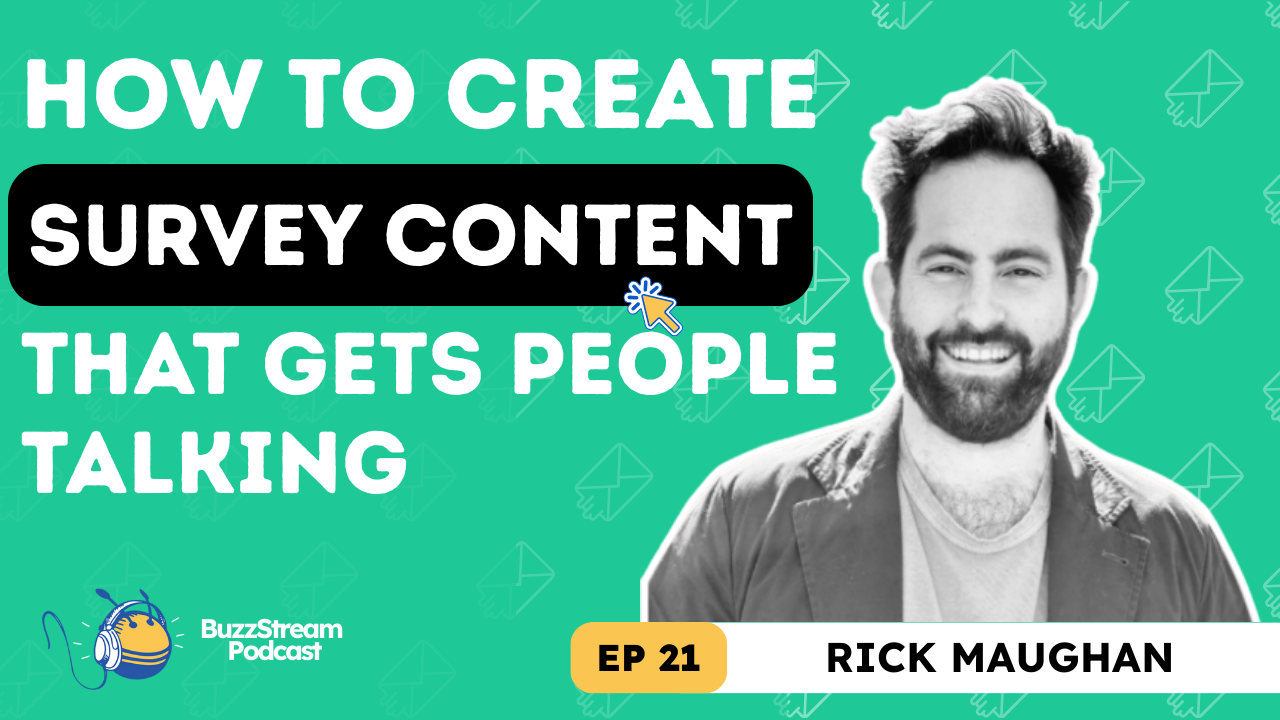
Table of Contents
- Strong survey ideas spark real conversation and emotional reactions—talkability is key to virality.
- Blend evergreen and timely topics for data stories with both lasting impact and media appeal.
- Use diverse question types and audience splits (e.g., generational, behavioral) to uncover multiple story angles.
- Avoid overly product-centric surveys—tell broader human stories to earn media coverage.
- Survey credibility hinges on transparency: sample size, methodology, and respondent access matter.
- Collaboration with editorial minds and media feedback helps shape surveys that resonate in press and AI search.
What makes a compelling survey idea? It might just be as simple as getting people talking.
While researching this topic, I came across Talker Research’s study on The Perfect Movie Length. It has gathered over 133 referring domains since 2024. I dug a little deeper and realized that Talker Research (in conjunction with its sister agency, We Are Talker) has created tons of great surveys for its customers and its brand.
As their website states, they create “data-driven insights to inspire ideas, create content & spark conversations.”
So, I reached out to their Head of Content, Rick Maughan, to discuss survey ideas: how they come up with them, what makes a good one, and how teams can replicate Talker’s success.
Our conversation was a fascinating one, filled with actionable takeaways that anyone looking to use a survey as part of their content and/or PR mix.

What does Talker Research do?
Yeah, great. Thank you for that very kind introduction. Yeah, Talker Research is, as it sounds, a research agency at its core. So everything we do is foundational with data, primarily online and survey-based. That’s our kind of bread and butter.
And we, at our heart, deliver survey-led news, from an idea all the way through to hopefully getting coverage and getting the story talked about. And that’s really why we chose the name Talker.
We want to produce content that drives conversations, is engaging, and really gets thought leadership out there. So that kind of defines us at the heart of everything we do, whether it’s insightful or engaging data sets.
Or really revealing information that helps organizations progress their internal motives.
So we work across a number of things, primarily consumer-facing and consumer-led.
So we probably sit most comfortably in the lifestyle and consumer space. So you alluded to things like movie surveys, but we also have a lot more under the hood. We do work across a range of clients and industries.
Do you also help brands secure coverage?
We do. So yeah, this is where talker research differentiates a little bit. We have a kind of sister agency: We Are Talker, with which we work hand in hand, and we ensure that if we are involved in a project, we help to get the survey out there as well.
Now it’s mostly in terms of over time building a really good reputation with the media for our talkers, for kind of a hub of great usable content that people like yourself come across and want to be alerted about. That holds us to a certain standard in terms of the integrity of our research and the quality of stories.
We’ll only put things in the talker newsroom that we feel represent us and the research well.
But yeah, that’s kind of where we sit. So we do a little bit more. We’re much more ideas-oriented and invested in the outcomes of the research.
Then there may be a traditional researcher who would provide you with the data, and then you would go on from there.
How do you come up with an idea for a survey?
Yeah, golden question, isn’t it?
Where do you get your ideas?
And I think it’s a combination.
We still like good old-fashioned people in a room throwing ideas around.
And again, I will try not to burden us with tons of talker-related synonyms, but it is a conversation. But it’s about what sparks that talk.
What feels real when we are brainstorming, whether it’s a client brief or whether we’re bringing our own input and insight, does it generate talk?
Do people want to chip in, share their anecdotes?
We know we’ve got something.
When we’ve forgotten there’s a brief and we’ve been talking for 10 minutes and everyone’s been inputting because that shows it’s interactive.
People want to contribute to that topic.
They have things to share.
They have opinions.
And then we know we’re onto something interesting that’s worthy of insight, you know?
And in there is a calculated, careful mix.
So we’ve got a team that are dedicated to doing this day in, day out.
It really is our core focus. So we live and breathe it.
Researchers, of course, ⁓ news and editors and journalists and comms people.
We’ve got a really nice mix of perspectives and people that come in with different takes.
And that kind of really helps.
Of course, we’re constantly tapped into the agenda.
We ingest news in every pore. And we’re also, of course, monitoring data-led coverage wherever it may come from, whether it’s one of ours or someone else.
So we’re living and breathing the space, I guess.
Is collaboration important to the process?
I think so, I think so because you just, just for a sense of, you know, perspective and not to feel you’re shouting into the void.
I mean, obviously we have AI and things like that.
Anyone can throw in and have singular idea sessions, but there’s something about resonating with that human creativity that, that like seeing people’s eyes either light up or die inside when you know, you’ve thrown out a terrible idea, but also having that, you know, I love how AI will be like great idea. No matter what you say.
No, we want human.
It’s so important to create that space where you can go and tell you what happened to me.
And I wonder if this is an idea and just by public feedback.
And creating that space to creatively.
You have to share a bit of vulnerability kind of, or I liken the best ideas to like stand-up comics, and it’s that level of human and behavioral observation.
My old news editors of the past, I’m old enough that we were given physical DVDs sometimes just to spontaneously generate ideas, and we would go and watch the set.
See what ideas generate into data-led stories.
Obviously, we, as a team, sometimes do things like that. We might take a one-hour special each and kind of come back and see if that ‘s things like that because those people are masters of daily observation. That’s really what good research is, you know.
What percentage of news-driven ideation happens versus daily life?
Yeah, it’s a good mix.
I think we do the news-driven agenda, reactive stuff mostly for other publishers.
So that’s another window that we have is we work to provide them with data for their editorial purposes.
So we see what they’re kind of looking at and what’s resonating with their audiences. So the new stuff does drive us. We will put out polls purely for Talker Research, you know, in terms of, look, this is just a topic that demands a survey like now let’s do it.
But we also think a little bit more evergreen.
I was really interested in your excellent YouGov analysis, and now the timing versus the evergreen study really gets us off.
And that’s somewhere where we sit. think you want everything to be timely. Of course, it helps from a news perspective, but in the realistic marketing or market research world, you need timelines and projects.
There are many, many kinds of hands on the project; you have to be a bit more realistic about the speed of these things.
So in that case, we’re really looking for the sweet spot of kind of evergreen, but with that timeliness within a kind of month period, you know, something.
Cost of living isn’t going away anytime soon.
If it’s a story that’s dead in a week, you really have to make it there, then we probably aren’t always as suited to it. Yeah, it’s hard to give a percentage. We’re more towards long-form research than towards the day-to-day news-agenda type.
How do you make “boring industries” less boring with a survey?
Yeah, it’s a really good question. And obviously it varies depending on the client and the industry, but yeah, take construction or something like that. We specialize in B2C, but we also get a lot of B2B clients. One client that springs to mind is used by contractors within the building industry.
And there are specific financial invoicing tools used by those specific types of contractors.
We’ve done a lot of great work with them, just broadening it to, like, how do you make it a people story, not a product story?
We will find a panel of actual contractors and get their takes and insights; valid data that resonates with the key target audience there and drives trade and specialist coverage.
But we’ll try and relate what they’re saying to a wider, potentially forecasting type of story.
They were seeing certain things that indicated potential recession indicators.
So, for example, that was a story that applied more to the average person. So we would take something like their forecasting, their positioning in an industry that can be predictive for economic things, and we would apply it then to a kind of average news reading audience.
At the same time, we would also poll general respondents, and we would look at topics like affordable housing in their area, and we’ve just done a story of that that’s made incredibly well across a suite of publications, because that’s the way we can make that relatable.
We get the tool on the radar, they get consumer coverage, they get industry-specific coverage, and they see value on both fronts.
So it’s a bit of both, a bit of give and take.
If there’s no interest in the consumer side of things; we might play more as direct researchers and less creative advisors, you know.
Do you validate if an idea has been done before?
Absolutely, yes. On any campaign we do.
We always have media relations input.
We’ve got an excellent media relations team who, again, day to day, it’s data stories and dealing with the media.
And they pick up so much feedback and they have great relationships.
And we’re in that privileged position where we do speak directly to publishers on a kind of almost weekly basis in some form or another.
So we get that kind of feedback from editors about what they’re looking for.
And that obviously changes, not just, you know, it changes newsroom to newsroom.
We’ll have some who are, like, obsessing over quantitative data.
Others, like, we really want qualitative input.
Can we access the respondents? Okay, we need to build up authority index on articles. We need first person account. need original quotes, we need this, etc.
It goes through phases where we’re like, okay, we need.
Then that ripples down to our client-led stories where we’re like, okay, can we make sure we can access respondents and do qualitative takeaways where we can and ensure that when we get a journalist, there’s nothing worse than a journalist coming to you going, love this, can I speak to someone who did the survey?
And you’re like, sorry, no, we didn’t have the right content permissions on that one because we didn’t think of it at the start.
So things like that give us some format and then yes we are always looking to see, it been done before?
In what way?
And how can you bring a fresh take to it?
Context is everything; making sure it has the timeliness for this year.
Why is it a story for now? We live in that space of like, okay, well, another tax season’s coming.
We know those same sorts of sets, we will have tax clients, the same kind of tax data, and questions that they’ll want to write.
Or have the same sort of hypotheses.
It’s about trying to put fresh spins on things wherever we can. So that’s really, you know, what we’re constantly trying to push.
How important is it to get personal insights or quotes from the survey respondents?
Rick (18:45)
Yeah,
I think it’s definitely something to be open to.
I think a blend, even if it’s inside the research, doing free text or open answer questions and allowing respondents to contribute, because that gives you some gold in terms of just the creative, unpredictable, brilliant responses you can get, all the insightful stuff, all the poignant and heartstring-pulling data we are craving.
And I think that’s where surveys still work so well.
We crave a bit of collective experience.
We’re all funneled down these media-individual journeys.
We get our algorithms serving us everything in the way we like it. And that’s only going to increase. Look at offerings like ChatGPT’s Pulse. Think it’s all going to be in the styles we want it in the way we want it.
We do crave bit of like, well, what’s that person’s experience and is it human and where do I relate in terms of that experience?
Not in a divisive or oppositional way, but if you do disagree with it, it’s also a piece you want to interact with.
That’s why data is so good for hanging up averages.
You mentioned the movie one, you know, the perfect length is 92 minutes. I might disagree with that. I might think that’s weird.
Why is it 92, not 97, not 120, but it makes me want to know that experience and kind of understand what people are thinking.
I think it’s whether it’s on the quantitative side, with a nice collective average that I can engage with, or it’s about providing journalists with the ability to get exclusive quotes or to interact with the data further.
I think it’s a mix that is the kind of short answer.
How important are sample size and methodology?
It does vary newsroom to newsroom, but I think wherever possible credibility is still the biggest driver?
You want to know that’s been responsibly handled.
Journalists are perhaps more suspicious than ever.
They’re being bombarded by pitches.
They’re being bombarded by data.
No journalist that I’ve ever met has ever said, I’m short of stories.
They’re not. They’re short of time, resources, and the ability to build those stories, but they’re not short of content.
People use the analogy of a teacup over a fire hydrant. Like, there’s content everywhere, but they need help on what’s quality and what’s worth covering.
So, anything that builds that authority, know, methodologies that cite, of course, I’m, you know, declare bias here, but proper researchers, people that subscribe to transparency initiatives, people that, organisations that you know it’s been properly handled and are completely transparent and open about it, I think is really crucial.
So first and foremost, being upfront about your sample in the news copy as well, in your press release. Not burying it or hoping that the story kind of does all of the work.
I think that transparency is key.
I will say story is still king. Story is what matters.
There’s no magic trick to getting a journalist’s attention. It has to be a good story. So that kind of matters most. But when it comes to samples in terms of sizes,
I think it really depends on what’s being said and who’s saying it. For the general population, our sweet spot is about 2,000 as a standard.
The reason it’s that number is it gives you enough at kind of regional level and other breakdowns.
It kind of projects better if you are making larger claims that might be representative of a broader population, rather than a thousand, for example, really stretched thin.
In any individual reporting sector, to achieve statistical significance, we need a minimum of 80 respondents to have any confidence in responsible reporting.
So that’s something that we adhere to.
But it really depends on who’s doing the talking, because if it’s for example, a study of a hundred ICU nurses, that’s relevant and that they’re worth listening to and you don’t need thousands, right?
You have to be wary that your data won’t split.
The smaller your sample is, the more niche you get.
And it’s surprising actually how quickly you can get niche. You might start with a survey and go, it’s going to be 2,000 people.
For example, it’s tech use over the holidays.
Okay, so they need to celebrate a holiday. They need to have a phone, a smartphone, which is, you again, you assume is a collective experience, but, you know, then you’re rooting, rooting, rooting.
Suddenly, your key headline or takeaway, you’re like, oh, hold on, it’s not of the full 2000, it’s actually only 400 that made it this far.
So you have to think early on, before the research, and this is why, you know, consultative input and really thinking things through before they go live.
Because once that button’s hit, you really have to make it work with your data set, but thinking about panel is really important and does take a bit of knowledge there, yeah.
If you’re unsure about the sample size, can you compare it to other similar stories?
Absolutely, yeah.
I think that’s as good as you can do, just looking at the existing, yeah.
Do you have a sense of how a survey will turn out before you run it?
Yeah, sure. Yeah, there’s definitely some consideration of that because, know, at the end of the day, we have to make sure it’s a story and a data set that works, you know.
I think the first kind of flag or thing that helps guide us is, you know, does it feel real?
In terms of a hypothesis, is it something that we believe will emerge in some degree of truth?
It doesn’t have to be overwhelmingly.
And I think this is where sometimes a lot can be a bit misguided, the need to prove your product or your concept in the data and people fall into the trap of, well, we need a data set to say our protein bar is the best protein bar.
So what we’ll do is we’ll either poll a list of the best protein bars and ensure or pray that ours comes top.
And then invariably it doesn’t. Then you don’t wanna mention a load of competitors. Then you’ve gone down an alley that’s like really hard to come back from.
And even to start with protein bar says protein bars are great.
I mean, it’s not a story, right?
So what we would do potentially in that instant, we would say, look, put it in someone’s hands.
Who’s using that?
So, gym goers, people who are kind of health-conscious, how can we build that into a slightly wider narrative?
It might be, you know, we’ve done stories around, well, is there anything in like, January’s coming up, getting back to the gym in the new year?
What can help fuel our kind of health and fitness goals?
Perhaps we’re a bit anxious about that after a while. It’s with phrases like gym-timidation that have done very well for us in the past.
So something like that, know, six in 10 Americans have gym-timidation.
They’ve freaked out by mirrors, worried they’ll be in the back of a fitness, you know, influencer video. It’s a very real fear, you know? And then, so, yes, we get a little bit away, and I know that that’s, you need context, protein bars want to talk about people eating protein bars, but you have to meet the audience where they are if you’re serious about earned coverage.
Do you ever test out a survey first?
We don’t tend to do much of that. We might if it’s a like a very new sort of hypothesis that we’re like, we’ve really never done anything in that area.
Can we, even within the panel, make that feasible?
Do we have many of the people who would be eligible, for example?
So we do run a lot of feasibility studies. Still, in terms of trying to forego the opinion or kind of guess the opinion, with something like that, I mean, for us, we do a lot of it, more traditional market research and brand awareness versus competitors.
To us, that’s that kind of first stage of that journey would be to conduct that research and we can do that and give that market share and share a voice analysis, for example.
Really, where we’re kind of brought in in the creative part of things, we consult on a, look, can we move it to something that we feel will really help you get you out there that isn’t so self-serving? We strike that balance.
We give that data, we would still have a lot of protein bar data in any project we undertake, but we would make sure we have a way to kind of, a less biased hypothesis, always has a bigger chance of working and getting them out there.
So it’s just a different way of working, but there are many ways to safeguard against the results not coming out.
The biggest hit to that is that I really like it, so it must come out that this specific individual thing reaches the top, you know?
How can people rethink the story when it’s not what they initially thought it was going to be?
It’s an excellent question. And of course, there’s maybe areas where, I will say it happens surprisingly on rare occurrences with us.
I think we have the luxury that we do tend to do more questions per project, particularly if we’re committed on a creative level and distribute.
Vince: So maybe one way to safeguard is by asking more questions.
Rick:
So yeah, you know, 20 for us is the sweet spot and kind of gives more than enough.
And when you factor in using a variety of question methods: direct yes or no’s, multi-choice lists, statement agreement ratings, five point scales in terms of how strongly you agree with certain elements, are sliders, etc.
For us, we’re usually pretty assured that something interesting will emerge from the data that supports the overall hypothesis.
But the key is to kind of agree a broader hypothesis that isn’t a live or die one.
That’s a common thing we see, but we guide clients wher “you’re kind of damned if you do, damned if you don’t, if you go down that route,” because even if your bar tops it, then often it’s like, well, it’s not enough.
We don’t want to say only 50 % because that means we’re saying there are two sides to every stat.
So if you go too direct, then often we get the like, well, it’s not, we thought it’d be like 96%.
And that means half the world isn’t eating our protein bar. We can’t go out with that. So what we tend to do is move into the, you know, the more kind of accessible areas.
Things like, you know, we get, we’ll see it a lot with like streaming companies, of course, who are like, okay,
Why don’t we do like best movies, best TV show of all time?
Okay, great, let’s do it. but we, sorry, we don’t have Breaking Bad on the screen.
We only mention our things.
In which they don’t do a list. Looks contrived. As soon as it looks contrived, a journalist’s job is literally to sniff out BS.
They see you come in a mile away.
You know, no one’s running that.
I think if you talk about the space where the product is, the movie nights in that instance, or the kind of watching times, or the perfect length of a movie, or debate points within that industry, you know, it can be knowledge on protein. How do we know our levels? Do we know how much supposed to eat, do we struggle on that front?
It doesn’t have to be people who eat protein bars feel better, know, if it says protein bar.
It has to be a bit smarter than that and a little bit more accessible to the average newsreader and the editor scrutinising it.
You could even split, for example, I love a great split. Obviously then you’ve got age, you’ve got gender, you’ve got reach, household income.
There may be 10 questions, 20 questions, but then you times that again by the five splits you’ve got, you’ve got stories all over. So it’s being able to dig into those and add.
Sample size helps at a regional level, definitely, but even from an age perspective, there are many generational headlines.
Gen Z headlines were everywhere, that kind of comparison, and where are things going.
In the UK, you see a lot more tabloid-like, Gen Z are killing the cup of tea, it’s dead, or things like that. But generationally, no matter your country, it’s interesting to see how things line up.
But you can get more creative than that by splitting on things that, you know, perhaps don’t jump to mind.
It might be splitting by your level of protein intake for your protein bar. And maybe there is a correlation that higher protein intake leads to longer workouts or more satisfying workouts. Or even if you don’t want to go into performance led, doing like how your playlist influences your gym approach.
Why don’t you correlate your style?
Do introverts and extroverts have different types of approach in the gym? Know, like, are there ways in?
One of the best stories we ever did, and I love it, is a simple split by do you make the bed or don’t you make the bed? They’re kind of either or ground, right?
And that just blew up because, you know, people share it with their partners.
People are, you know, that you’re usually one or the other. You’re often married to a different one.
You know, it’s that kind of beautiful take on things.
And it’s not just related to your sleeping habits, but you split that by your success at work, the number of promotions, who’s more punctual, all the kind of pretty, you know, just that reaction you gave there. Really, what we’re looking for is that that’s a talker. So that’s the sweet spot for us.
It does vary a little bit from the direct product and appreciate that in the SEO world and the digital PR world, there’s definitely like guard rails.
If we could just talk about anything, my job would be easy.Vince Nero – BuzzStream (37:12)
What is a question that I didn’t ask?
I think, I mean, it’s not so much what you didn’t ask, but in terms of where we see our kind of work going in our partnerships and the kind of people using us and organizations.
I think it’s like, what’s the intention?
And we see ourselves increasingly supporting, you know, dedicated thought leadership, brand newsrooms.
It used to be that the B word was a bit of a dirty word, you know, dealing with journalists and trying to build partnerships and get our stories out there used to be like, okay, so they’re really data-led. When do I mention there’s a brand on them?
And I think that world has changed. Think there’s so much great content being produced by really specialist, talented people on the brand side.
And now I think we’ve moved past a lot of the like, we just have to like shoehorn our product into things and say like, it.
Now there are just amazing newsrooms doing great content on the brand side. And I think it’s really about long-term intentions and building the kind consistent, consecutive pieces of coverage. Of course the AI and geo element is playing a part, but that way to kind of amplify content is really where we’re positioning ourselves much more.
And, you know, that’s not just digitally, we’re seeing such appetite from broadcasters and, you know, that really plays into our kind of talk value thing.
We’re really using data as the foundation for campaigns.
You mentioned trend reports.
People are looking for new ways to raise the profile of their internal talent.
We don’t really want to hear direct from a company anymore.
We want to hear from thought leaders and people. It’s that human connection and intelligence that we’ve talked about. And we want to meet them where the audiences are across platforms. So that’s really how to incorporate data as a foundation across campaigns, podcasting, so many different mediums, sales enablement, all of that.
I think it’s about thinking about data on a broader level and not just in a direct context.

 Check out the BuzzStream Podcast