
 End-to-end outreach workflow




Table of Contents
- The UK builds digital PR around press releases, while the US relies more on newswires and avoids full releases in outreach emails.
- US PR pros personalize more often and more deeply than their UK counterparts.
- AI adoption in pitching is much higher in the US than in the UK.
- UK campaigns secure coverage faster, while US campaigns generate more links and pay for placements more often.
Each year, we publish our State of Digital PR Report, which outlines strategies, challenges, and overall trends across the global digital PR community.
And although digital PR is global, the way it’s executed certainly is not.
In my analysis of these reports and chats with agency leaders, I’ve noticed significant differences in digital PR between the United States and the United Kingdom.
In this post, I’ll outline some of the major differences in digital PR between the US and the UK based on this study.
1. The UK and the US somewhat disagree on the definition of digital PR
When asked about the tactics that count as digital PR, both markets agreed on the big two:
- Pitching data-led content
- Providing expert commentary
But the differences started to show immediately after that:
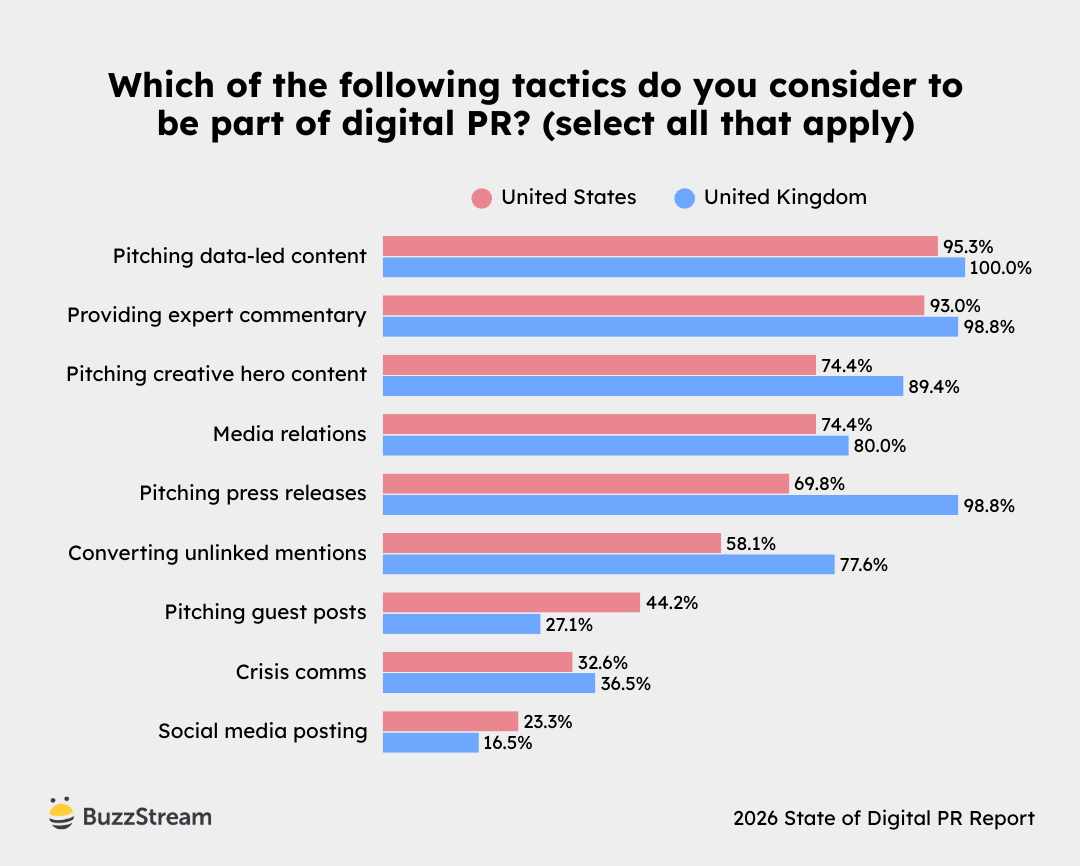
Our UK digital PR respondents say the focus of digital PR is more on press release pitching (98.8% in the UK vs. 69.8% in the US).
There are some other differences, like a stronger focus on unlinked mentions for the UK and guest posts for the US, but for me, the press releases are the most drastic difference, so let’s dig in there.
UK digital PRs paste press releases into the email body, US doesn’t
Based on our study respondents, UK digital PR pros paste the press release directly into the email body, whereas press releases are not used at all in email outreach in the US (11.6%).
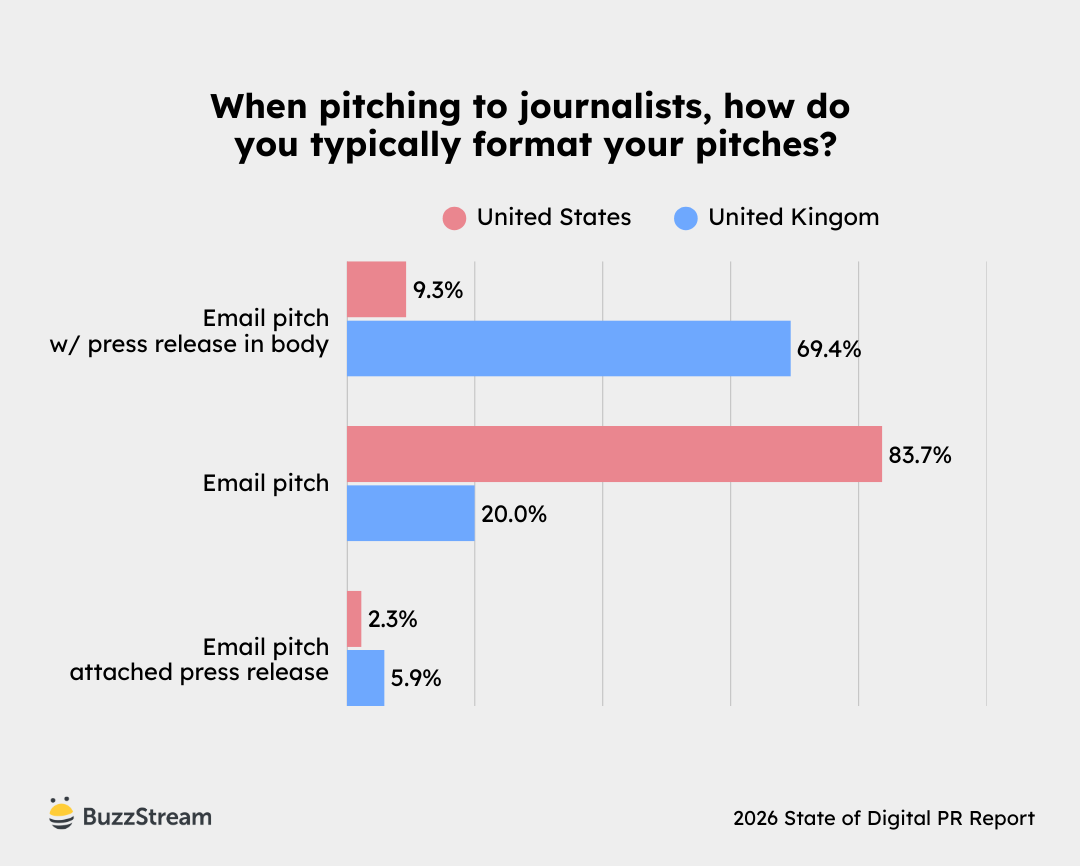
That may explain why we are seeing a greater disconnect between the US and the UK in how they define digital PR.
This doesn’t mean the US has totally abandoned press releases, though…
The US is more likely to use newswires to distribute press releases
In another question in our report, we asked whether digital PR pros use newswire services, and it seems the newswire distribution tactic is much more widely used among our US respondents (67.5% said yes or sometimes vs. 13% in the UK).
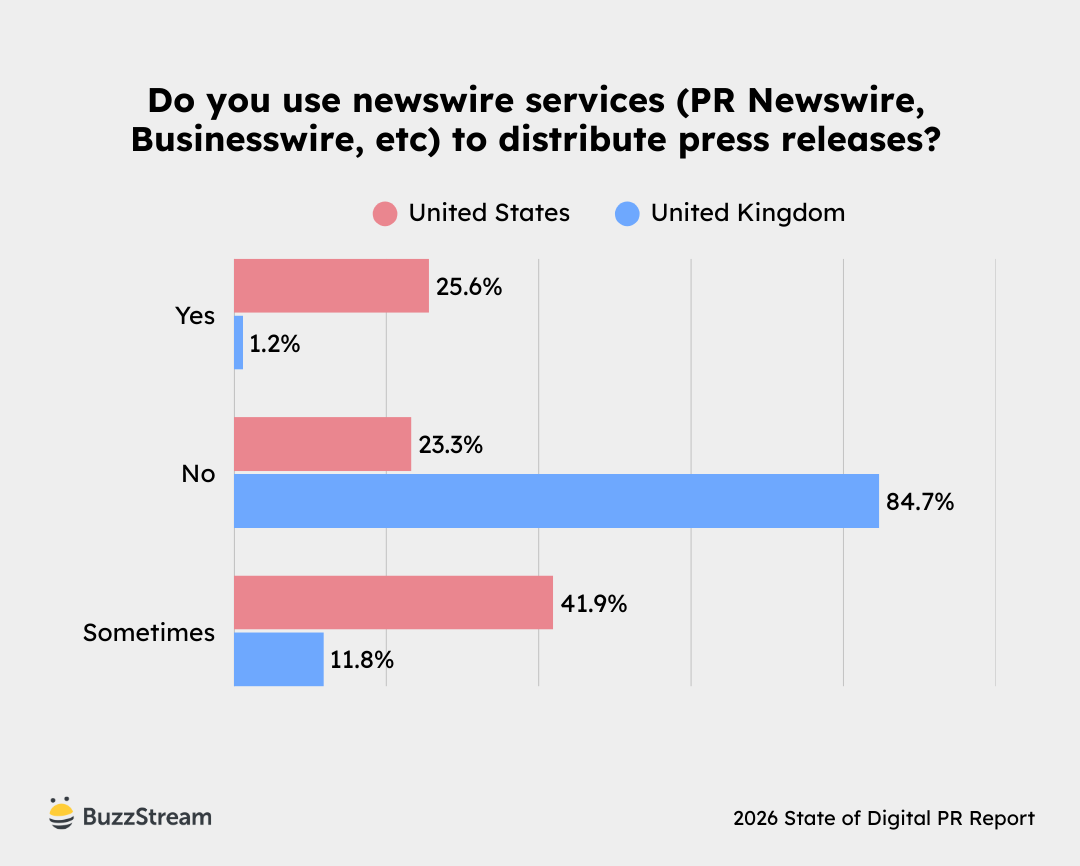
That said, it’s still not overly used in the US.
Next, let’s get into the emails themselves, as there are some tactical differences.
2. The US and UK define personalization differently
We had two questions about personalization—first, how it was defined, and then how often they used it.
We’ll start with the definition question.
US–based journalists are more likely to define personalization by referencing bio and social posts
The US and UK agree that personalization means the pitch is relevant to the beat/industry and references the journalist by name.
However, the bigger gaps come when referencing articles, biographical information, and a journalist’s social posts in pitch emails.
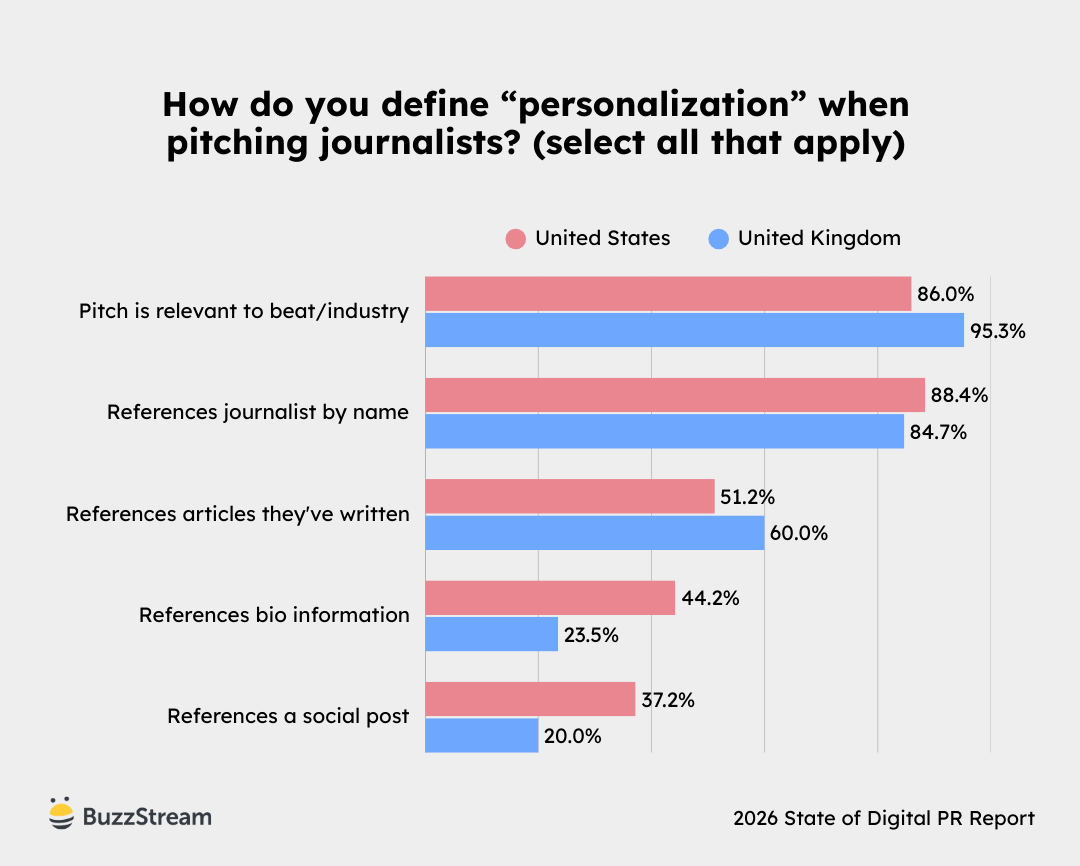
The US ranks “references bio information” and “references social posts” about twice as high as UK respondents.
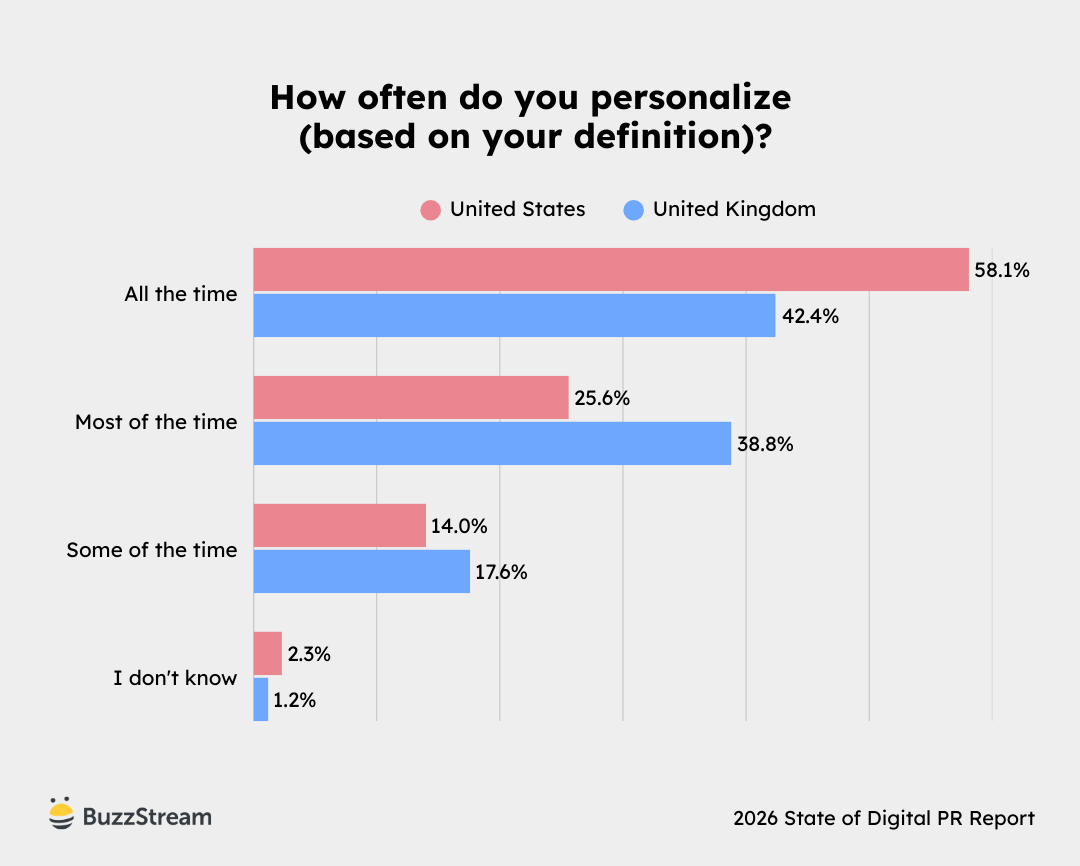
Based on those definitions, here is how often the PR pros said they personalize.
US-based digital PR pros are more likely to personalize emails all the time
58.1% of US-based digital PR respondents reported always personalizing, compared with 42.4% in the UK.
Personalizing can be time-consuming.
One shortcut PR pros are taking is ListIQ, built to help find relevant journalists in Google News much faster.
But another tactic PR pros are trying is using AI to aid the pitch process.
Let’s look at how that usage compares next.
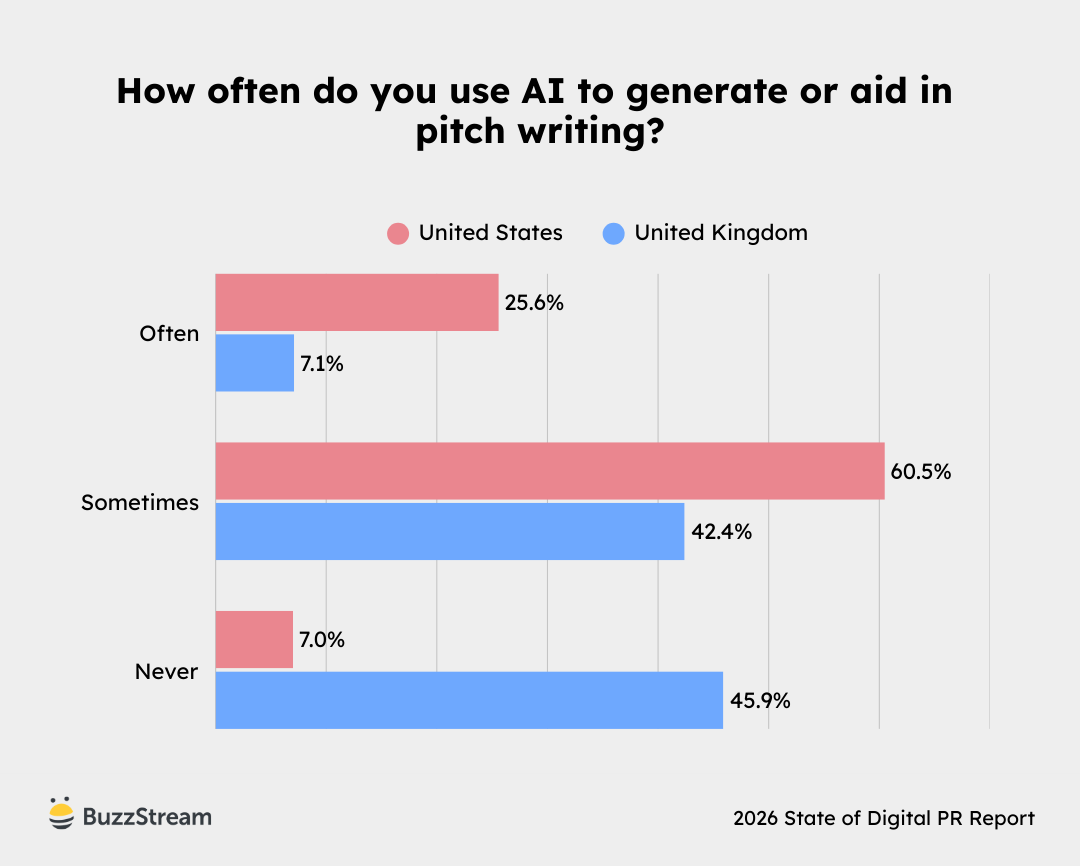
3. US digital PRs are more likely to use AI in their pitch efforts
About 85% of US respondents said they often or sometimes use AI to aid in pitch writing, compared with about 50% in the UK.
The same trend holds for using AI to aid in or generate press releases.
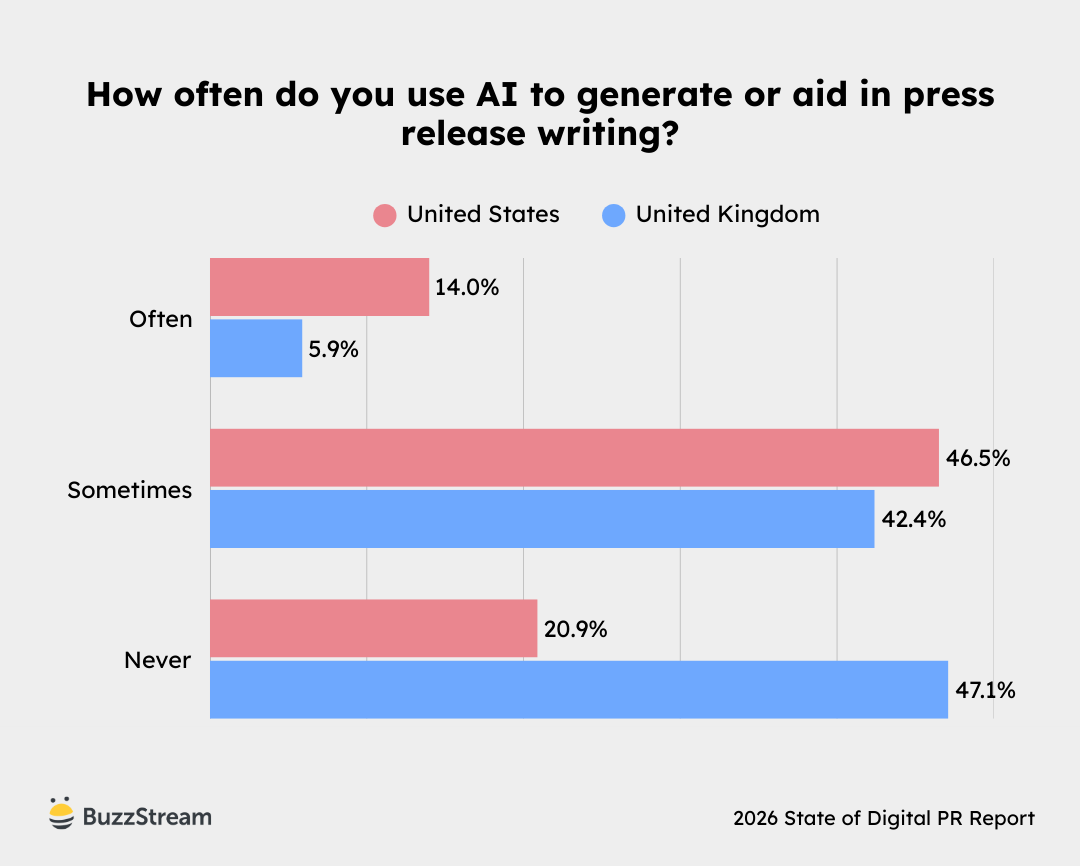
One reason the UK may be more averse to using AI in their pitch process is the negative press an AI-powered press release generation tool received in The Press Gazette, which claims the “tool is bombarding UK media with AI-generated content”.
Next, I noticed differences in the timelines for pitching and journalists’ responses, and ultimately, results.
4. UK Digital PRs see results more quickly than US
About 41% of digital PRs in the UK say they achieve measurable results from a digital PR campaign within the first 1-3 months, compared to just 23.3% in the US.
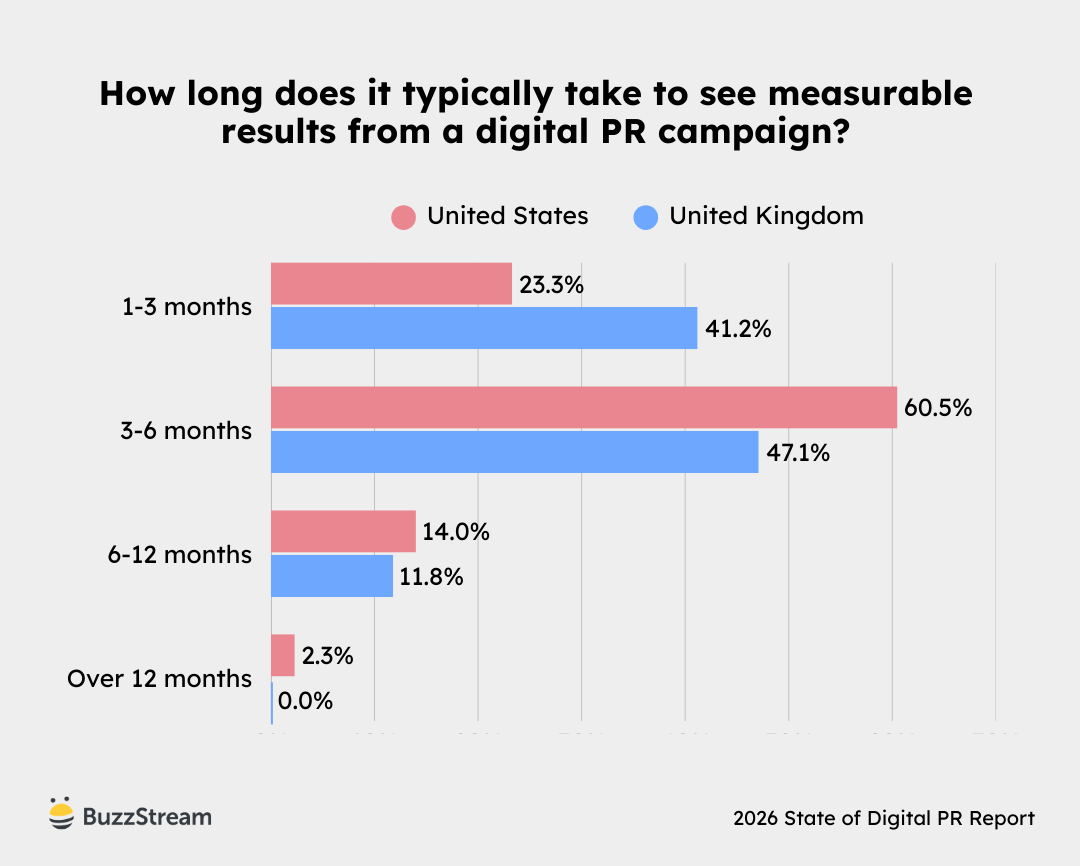
About 60% of US respondents answered 3-6 months, compared with 47.1% in the UK.
This does track with some conversations I’ve had with agencies that operate in both markets.
Digging in further, one reason the US may lag here is a slower conversion time among journalists.
Let’s check that next.
5. It takes longer to get coverage in the US
70% of UK-based digital PR pros told us they get coverage in under 5 days, compared to 37.2% of US-based respondents.
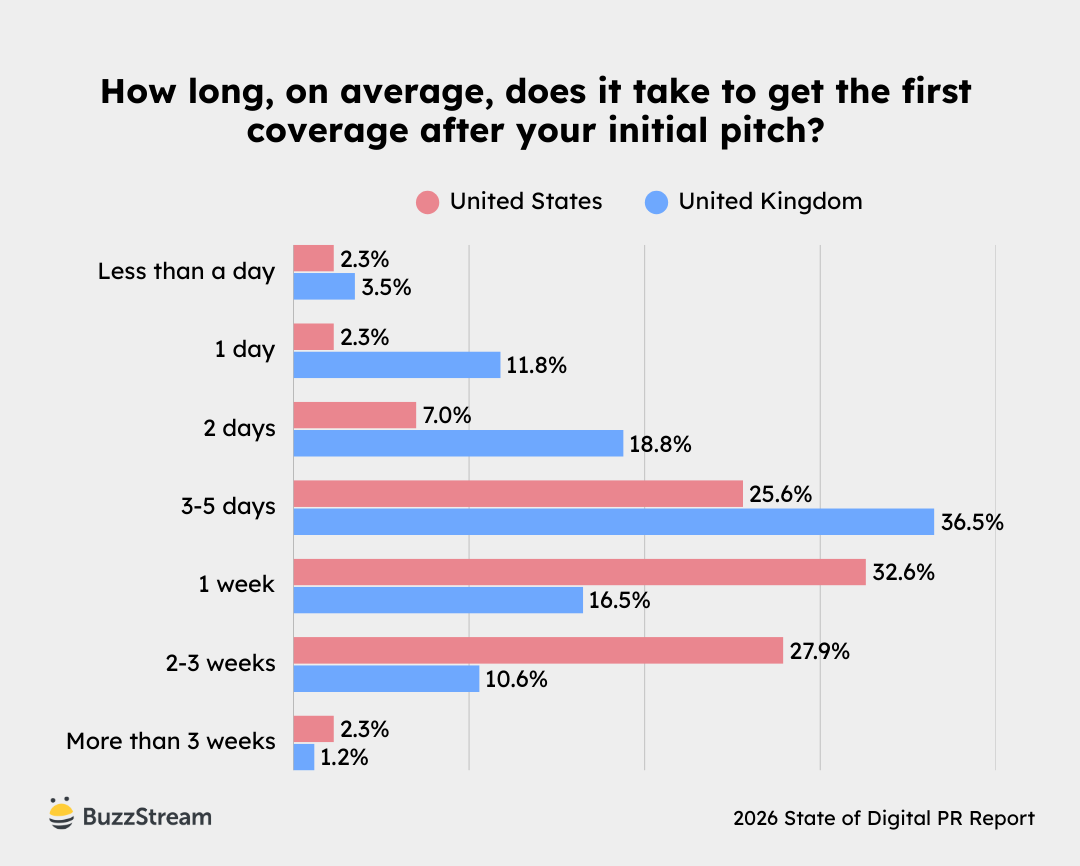
About 60% of US respondents reported that it takes 1-3 weeks to get coverage (as compared to 27.1% in the UK).
We know that the UK has almost twice the reply rate, according to our site engagement study.
But take these with a grain of salt, because many other factors are at play, such as the UK markets and industries.
We do know that industries behave differently, so let’s look at that next.
6. Heath/Wellness is hard to get links for the US, easy for the UK
When asked which industries are the most difficult to get links in, US respondents said Health/Wellness ranked most difficult (39.5% compared to 11.8% in the UK).
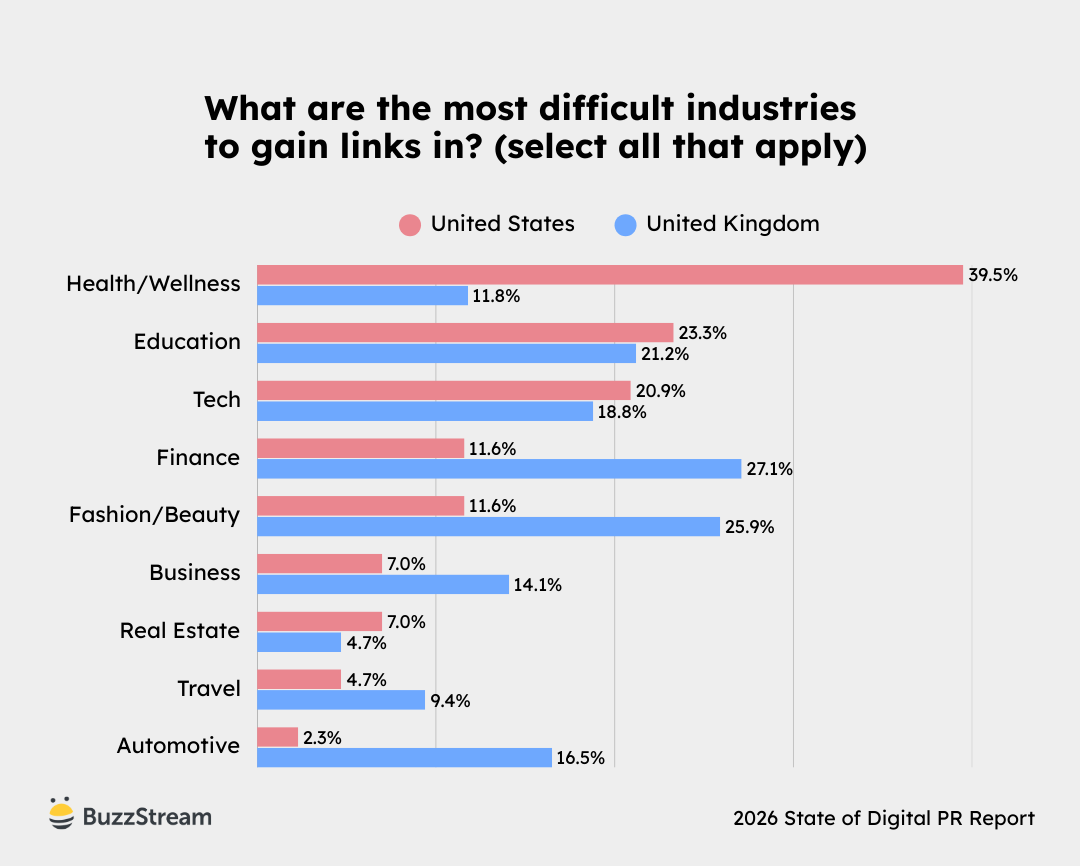
When we flipped it, we saw that Health/Wellness was the second-easiest industry (after Travel) for the UK-based digital PRs.
These factors can definitely influence the aforementioned response rates.
They can also have trickle-down effects on results. So, in the last two sections, we’ll look at the results.
7. US-based digital PRs can build more links, faster
51.2% of US respondents said they can generate 31+ per month, compared to just 25.9% of UK digital PR pros.
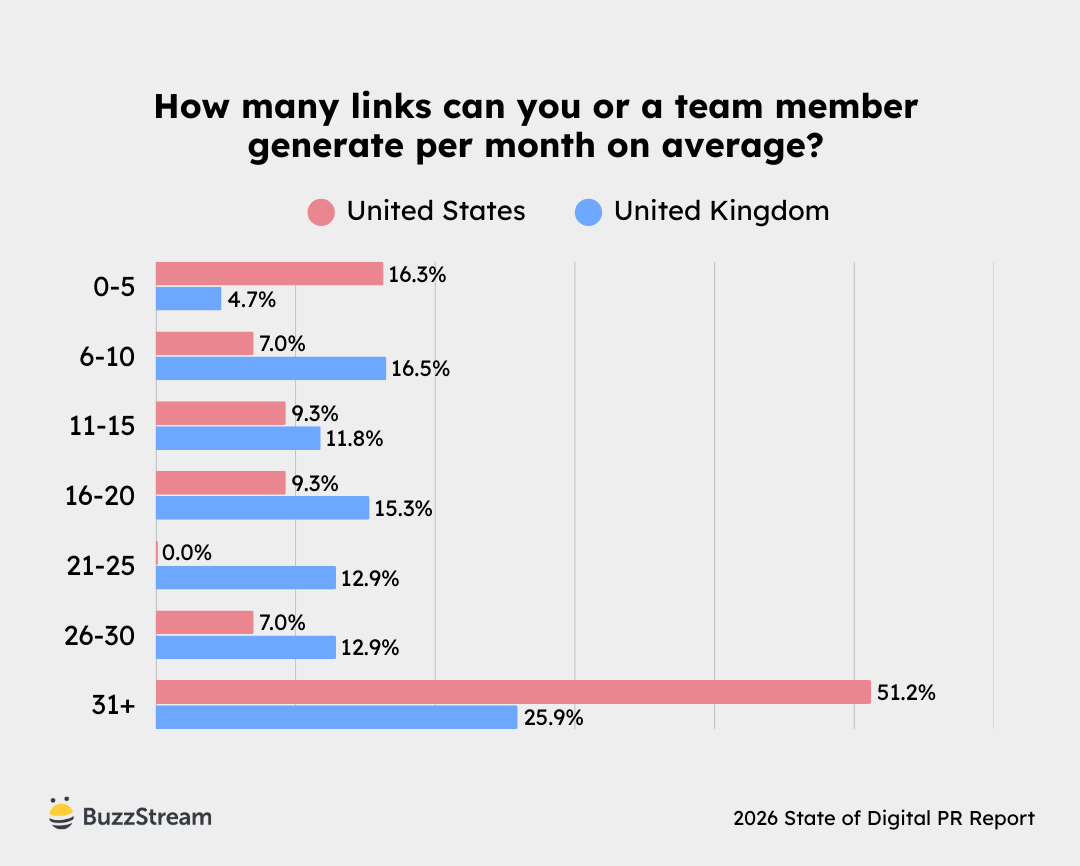
The US market is HUGE, so there are hopefully more links to go around.
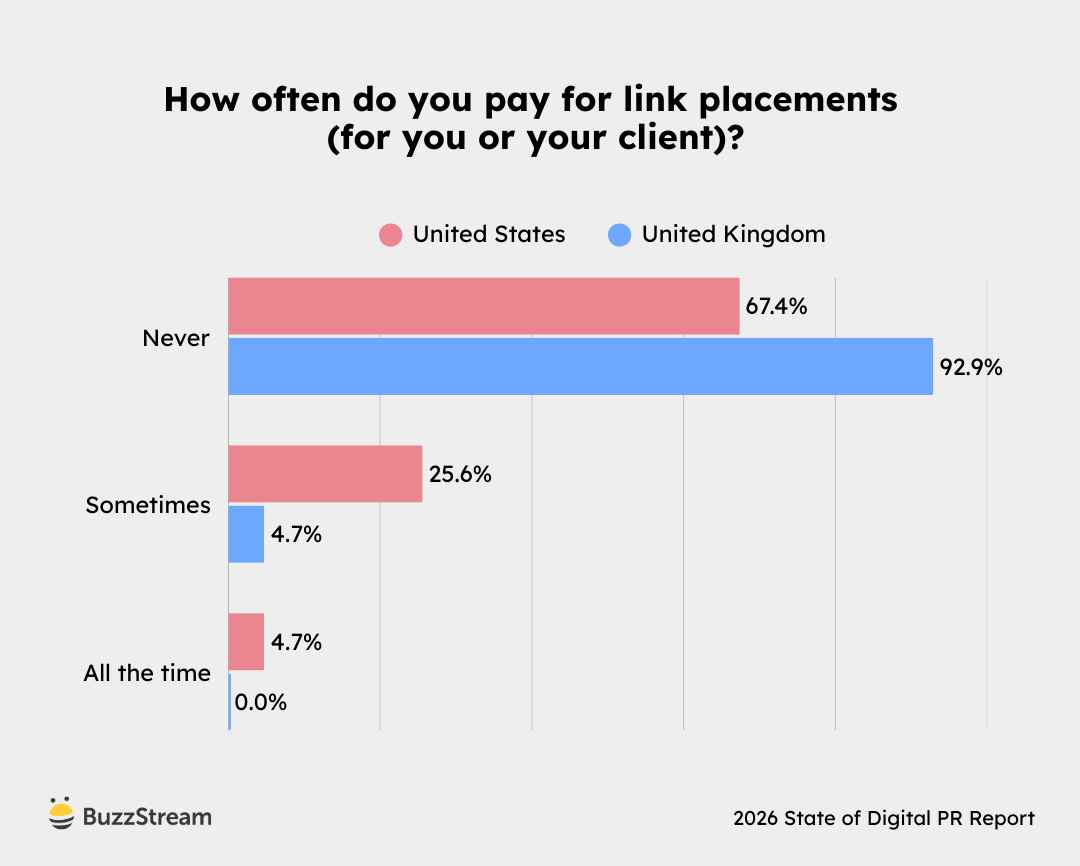
8. US Digital PR Pros Are More Likely to Pay for Link Placements
Based on our study, we found that 30.3% of US-based digital PR pros always or sometimes pay for links (compared to 4.7% in the UK).
Going back to how digital PR pros defined “digital PR” (our first question), the US grouped “guest posting” in the definition (44.2% compared to the UK’s 27.1%).
Most guest posting these days is paid, which may account for this trend.
And to answer the glaring question between this insight and the previous, no, the people who reported 31+ links were not the same ones who said they paid for link placements.
What to Take Away From This?
We have to be very careful about how we read takeaways from a study like this — correlation does not equal causation.
These are just some of the standouts from our State of Digital PR responses. They don’t necessarily represent everyone.
That said, here are the trends that align with people I’ve spoken with and experienced firsthand:
- The US does seem to pepper its digital PR services with more traditional link-building tactics, like guest posts and paid links.
- UK journalists seem to respond more quickly, resulting in faster outcomes.
- There are many more links in the US market (because it is bigger).
- Mentioning recent articles in a pitch seems to be more of a US-based practice (and I think it is a holdover from Brian Dean-type skyscraper technique blogger outreach).
- Using newswires is very much a US-based tactic.
- Pasting full press releases into an email pitch is almost entirely a UK tactic.
If you’re interested and listen to our podcast, you’ll find tons of anecdotal evidence of a significant difference in how the US and UK media markets operate.
Check out my episodes with:
Remember, it’s the people and the strategies behind the numbers that really count.

 Check out the BuzzStream Podcast