 End-to-end outreach workflow



Table of Contents
This is a transcription of my perfect pitch webinar, where I used data from millions of pitches and insights from top performers in the space.
Special thanks to Fractl, Incubeta (Shout Bravo), Rise at Seven, Propellernet, Journey Further, Aira, and Go Fish Digital, for contributing screenshots.

Jump down to the full deck here.
Here’s the transcription:
First thing up front, I guess this is from our State of Digital PR report.
Most of the stuff we’re going to talk about today will be data-led content.
It’s mainly because this is the most widely used type of digital PR.
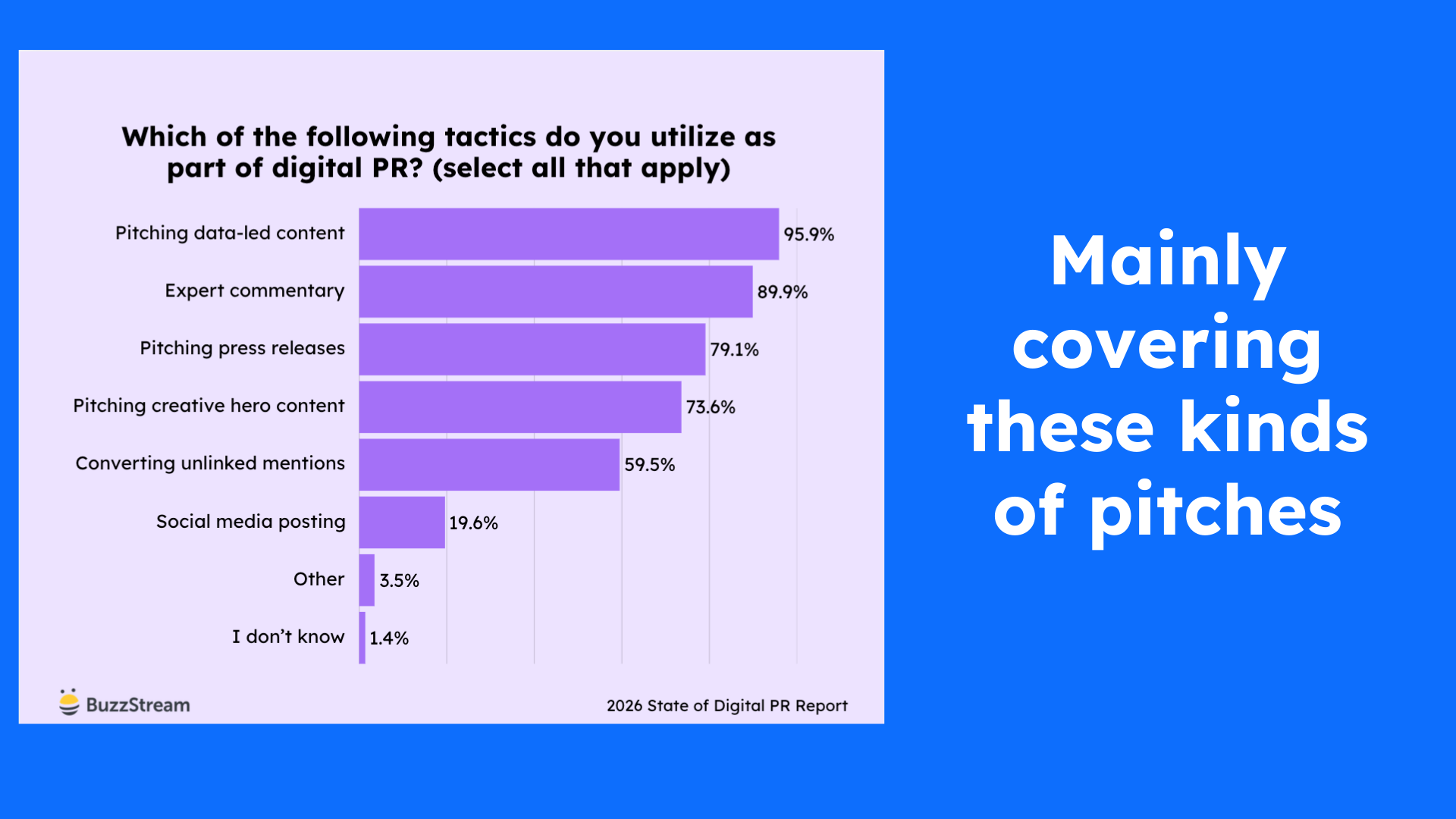
I’ll touch on some extra commentary and press releases because it all kind of fits in. And the same with the hero content. think a lot of that is data-driven anyway.
And you can take a lot of the same stuff. That’s a lot of the same takeaways. Social media posting. I won’t get into it, obviously, because it’s not really pitching. The other things I’m not covering are product releases, events, and more.
I put those in like the traditional PR bucket. All right.
So let’s dig into some of the data.
Part 1: What Does the Data Say?
Let’s start here.
Word Length
Word length, and we’re talking just the email body, right?
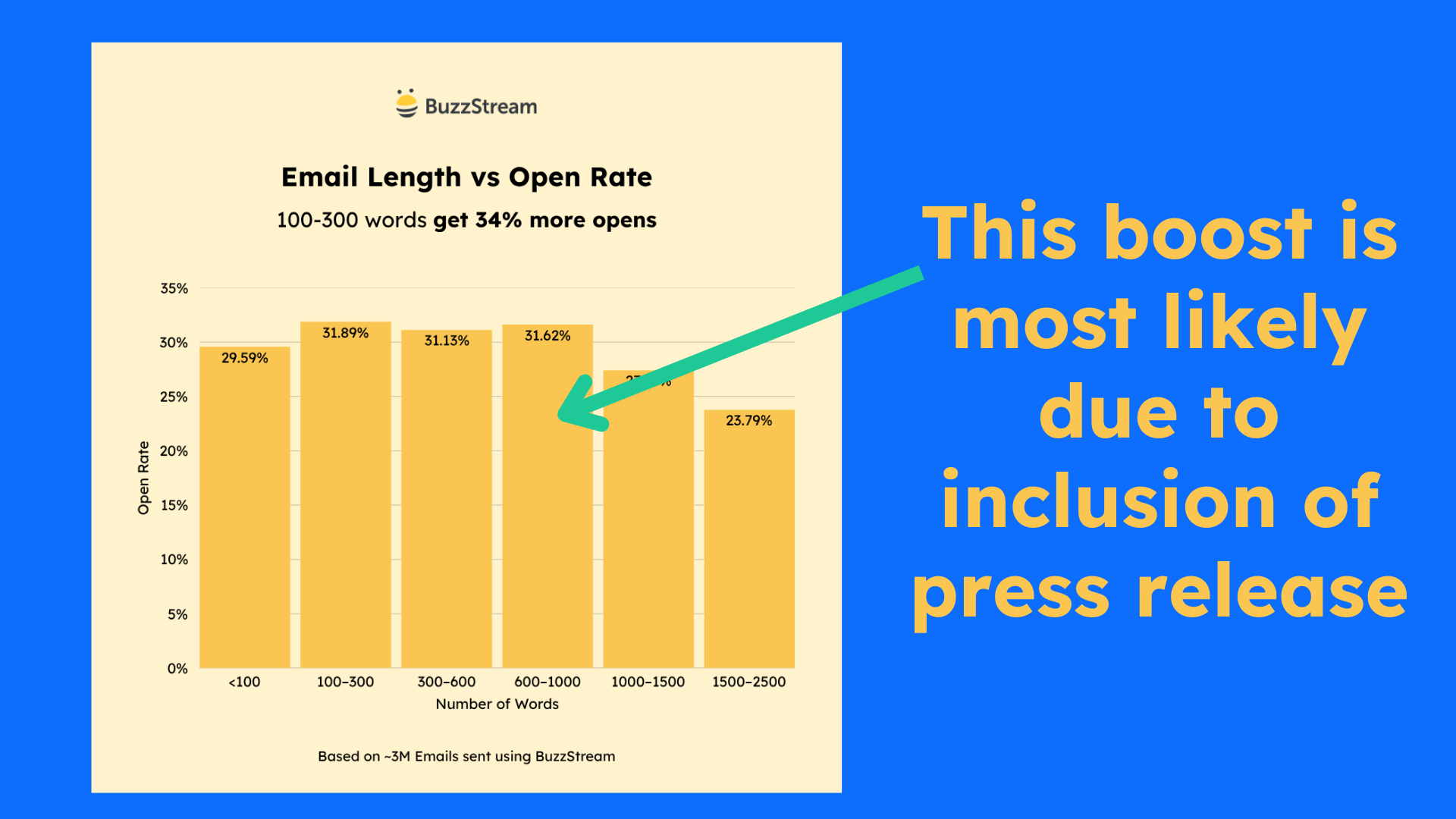
100 to 300 words get the best open rates. (Based on our email length study.)
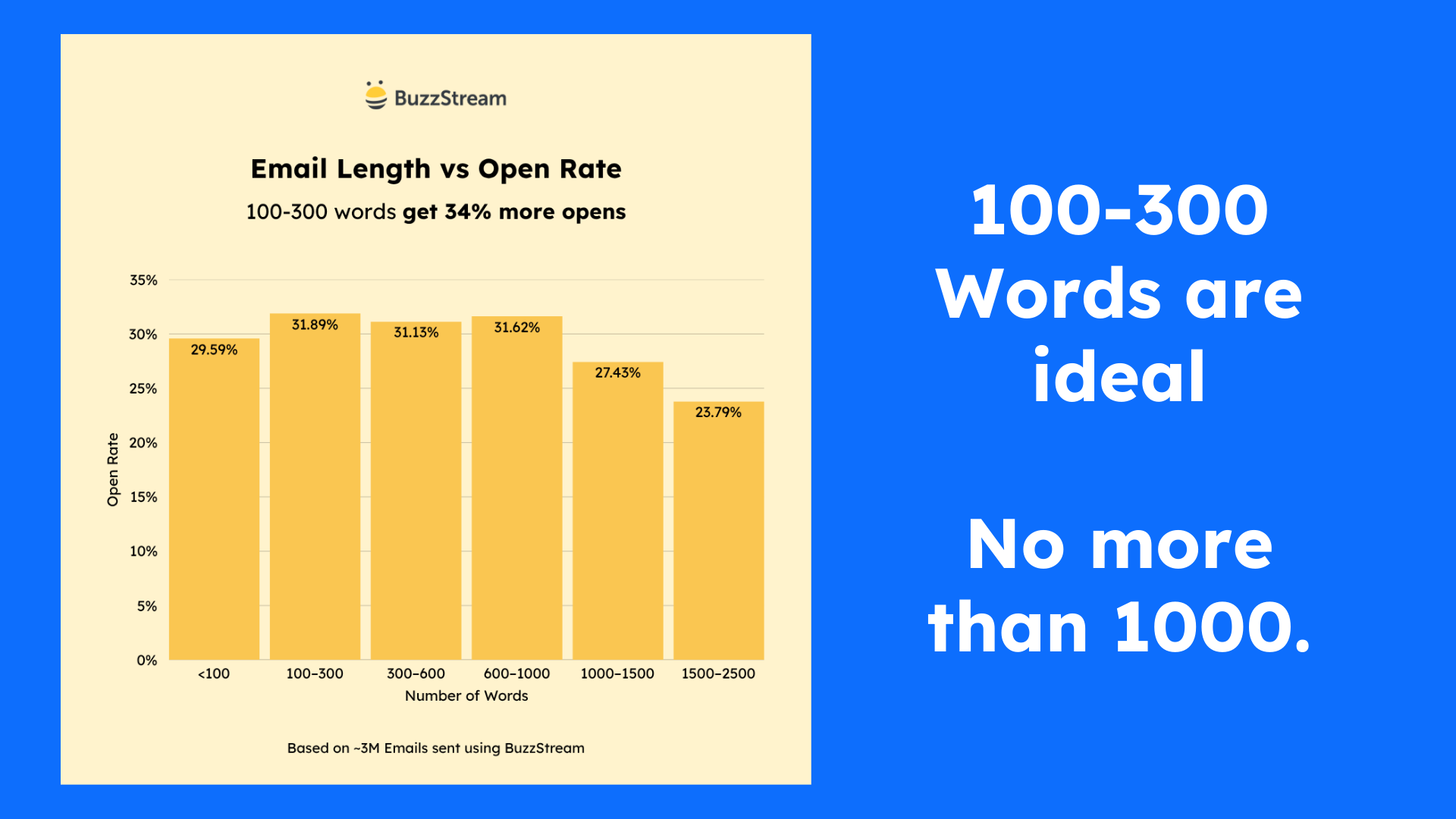
And you see this little bump here, like, at six hundred to one thousand.
And that is I think because a lot of people do paste in their press releases within the pitch. And I’m going to get to that.
But when you’re talking about reply rate.
You know, it’s still like the under 300 words seem to earn the best replies.
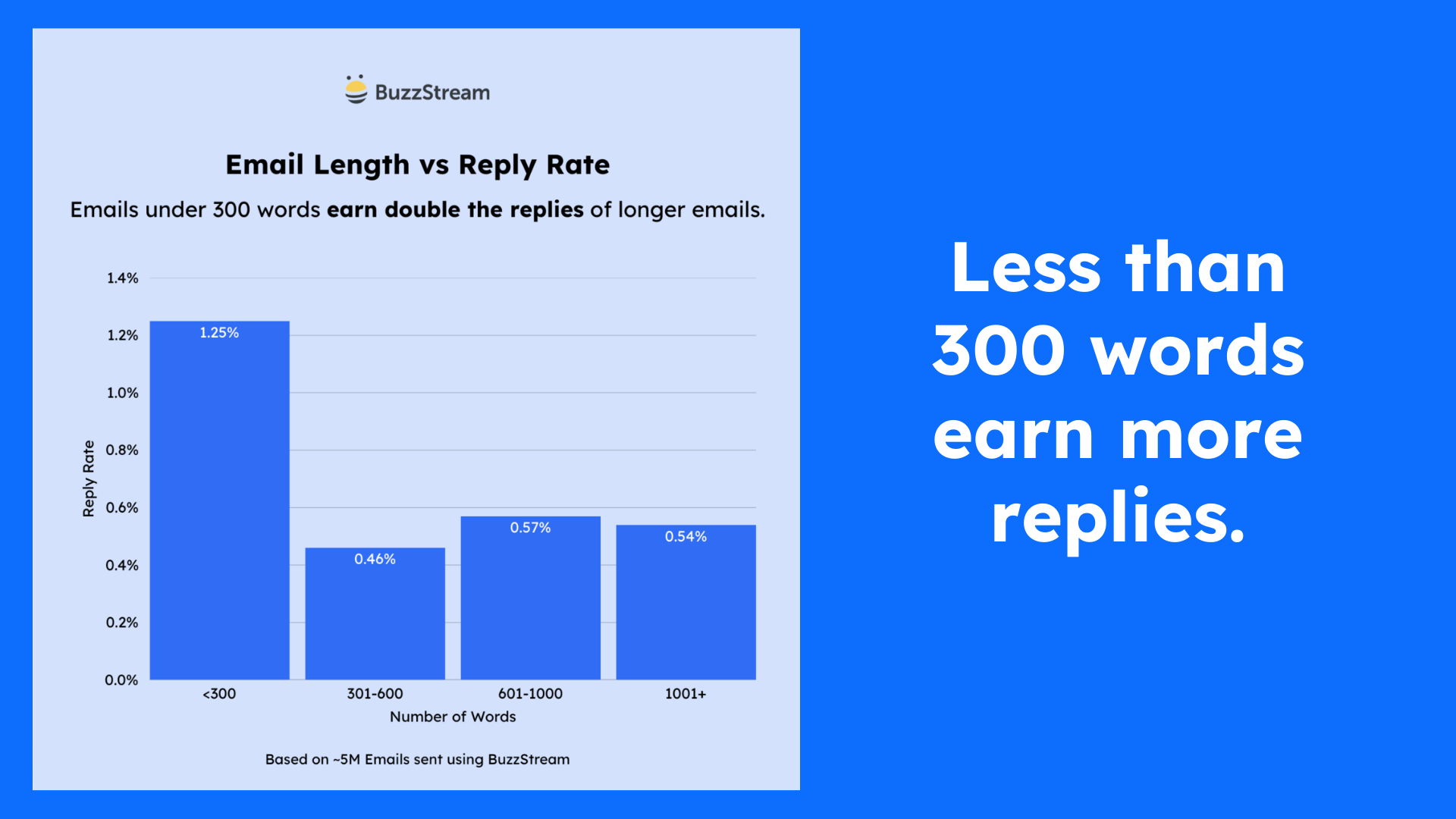
Again, there’s like a little bump at the end here, but like there’s clearly a much more, a much higher reply rate.
So obviously, reply rates are not the end-all be-all, open rates are not the end-all be-all, like really we want the coverage rates, but like this stuff I think is more indicative of just like how people are gonna interact with the data that they’re given and the pitches that they’re given.
Using Press Releases Within Email Body
Okay, I want to touch on this because it is a really interesting finding as I dig into the data we have and the types of agencies that do this.
So when I asked about this, when you’re pitching the journalists, do you actually paste the press release into the email body?
Our state of digital PR survey found basically a 50-50 split.
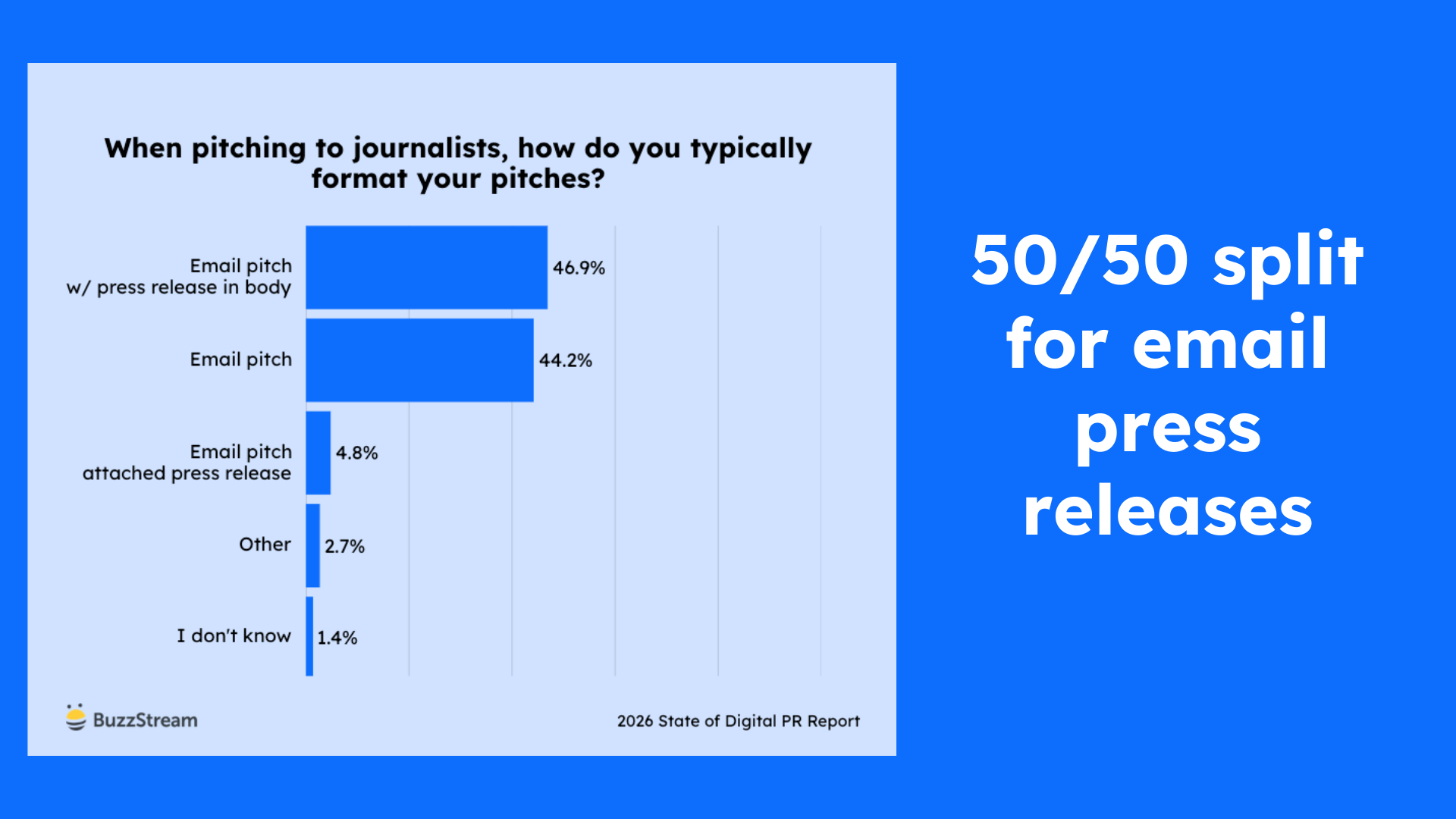
Some people just do an email pitch, and about half paste a press release within the body of the email.
And now I think that’s gonna skew a lot of those numbers that you saw before.
But when I dug into it, it seems that the UK respondents who said that they did this were the ones who are primarily doing the pitching with the press release in the body, versus the US-based ones, who are the ones who are just doing the plain, straight-up text.
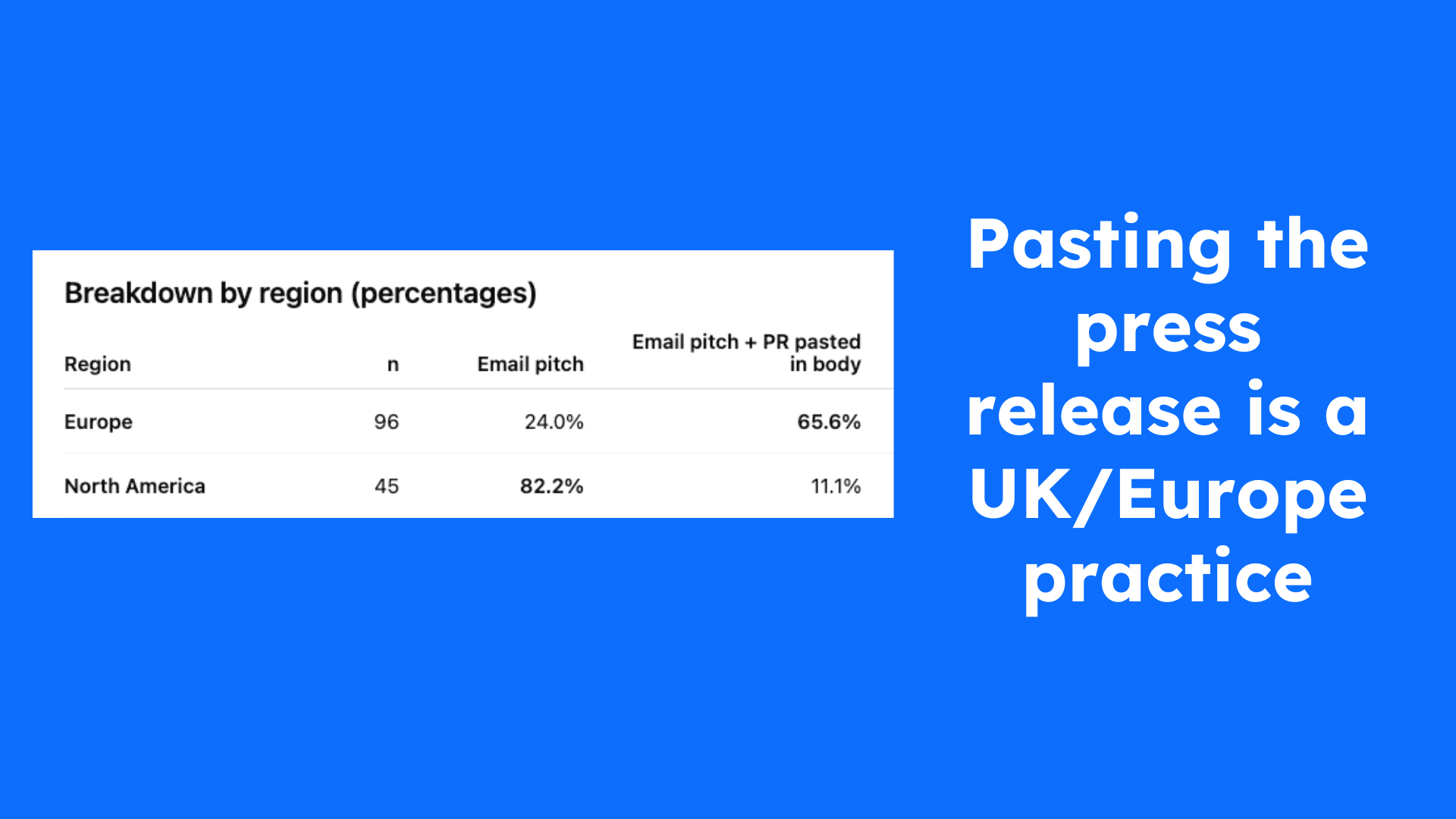
That’s really interesting to me because again, like that’s going to skew a lot of I think what we see here. So let’s dig in some more.
Personalization
Okay, the email personalization thing.
When we asked about this, the term “personalization” had many different connotations.
Realistically, most people who say they personalize an email are just making sure it’s relevant to their beat or industry.
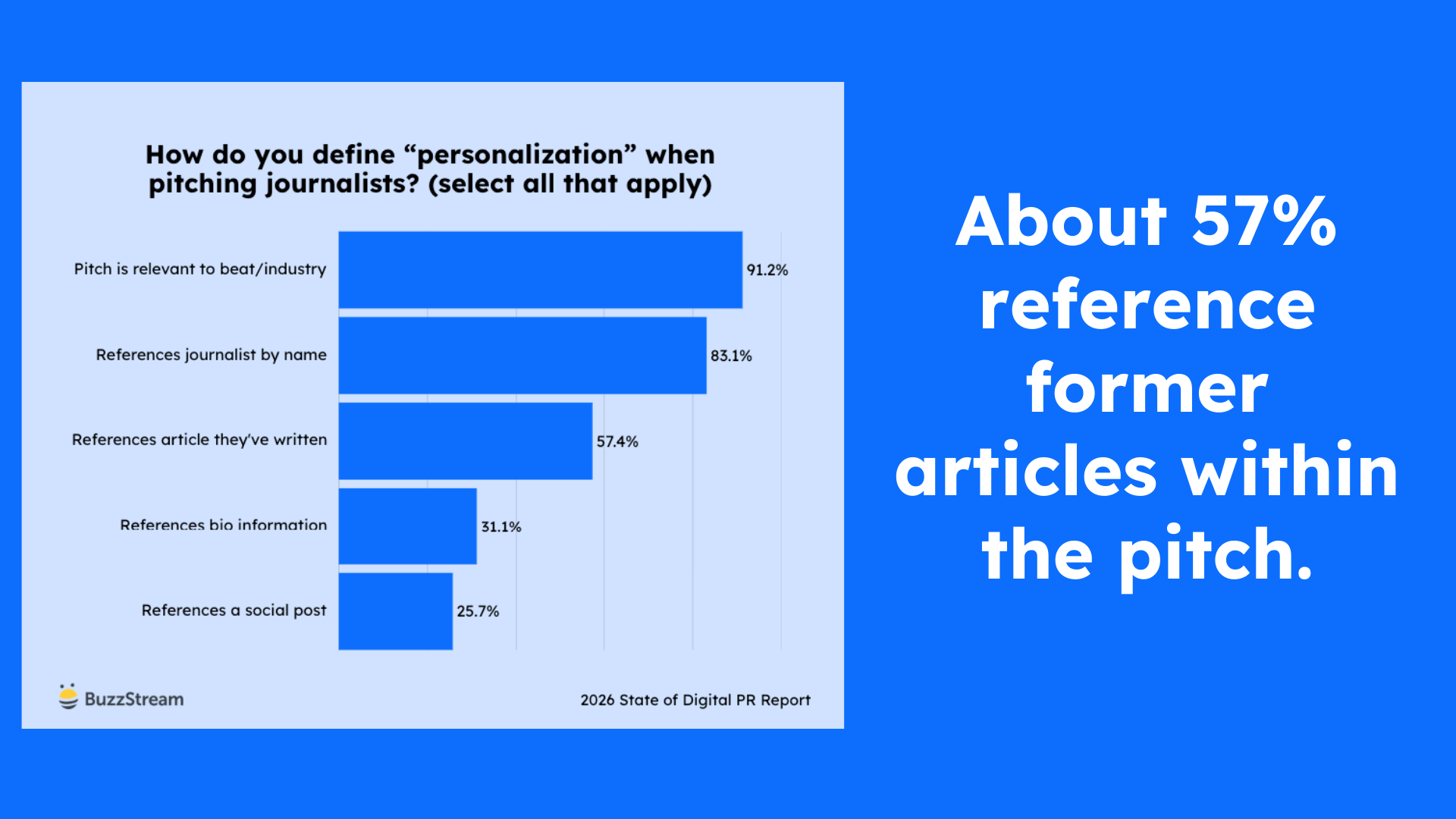
Then 83% say they reference the journals by name, obviously.
Just 57% referenc articles they’ve written, which is where this personalization thing gets a little dicey, and like some people are averse to it because that is where I think some of the potential, like fake flattery, comes in.
Now I’ve talked to lot of journalists about this and realistically it’s a kind of a toss-up like some people have said to me “Yeah, like I love when people call out a piece and tell me that they like it”, but I’ve also talked to other people who are like “I don’t have time for this” and it feels fake, or feels like did you really read this?
It’s not needed that sort of thing.
So I think if it adds to it, you really can get something out of it, and it can actually help you build relationships.
People have said, I recall getting feedback from journalists saying things like, “Thanks for the personalized pitch.”
It does mean something to them.
But I think if you’re just going about it, saying like, “hey, I saw you wrote our insert article name, this is a great piece,” or something, you’re not really giving them anything to work with.
I don’t know if it’s actually going do anything.
So I’m going to get into a little bit more, but I want to talk a little bit about images next because I have some data on that as well.
Images
So, inline images, I thought that was an interesting one.
This question comes up a lot. It’s about a 70/30 split of people using them.
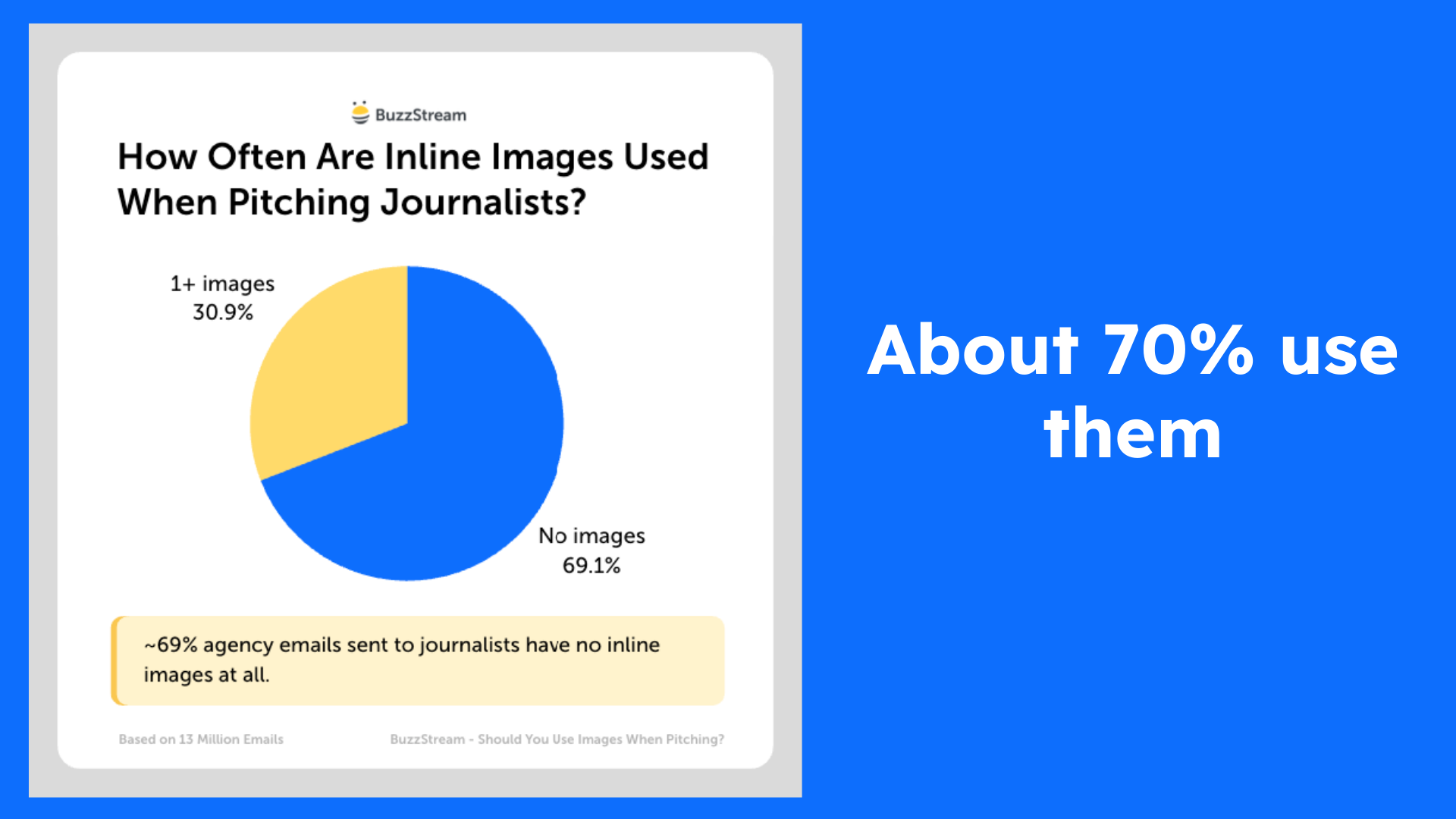
Realistically, the open rates between not using it and using it are pretty similar, as you can see here.
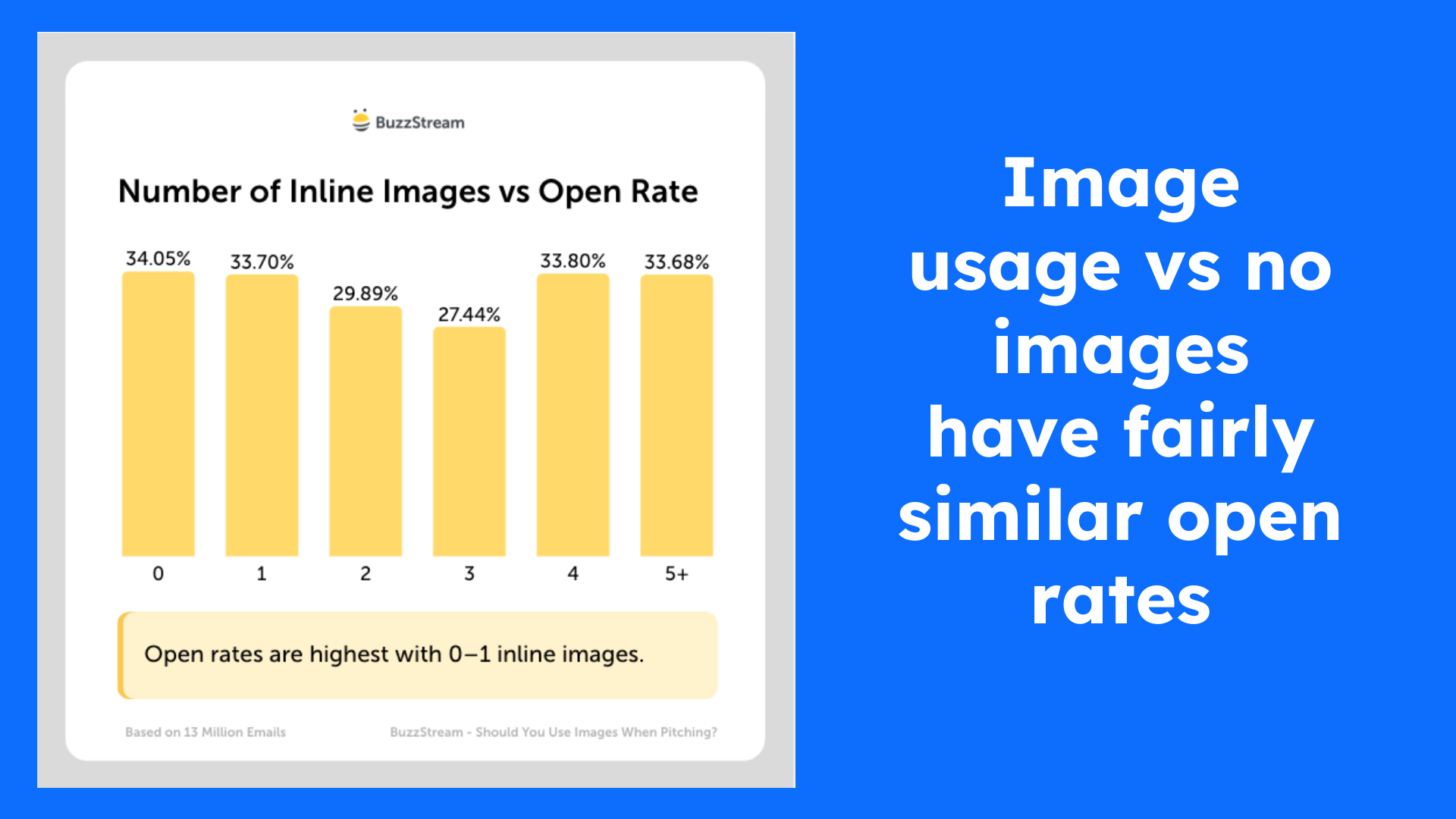
Same with the number of images, same with the reply rate.
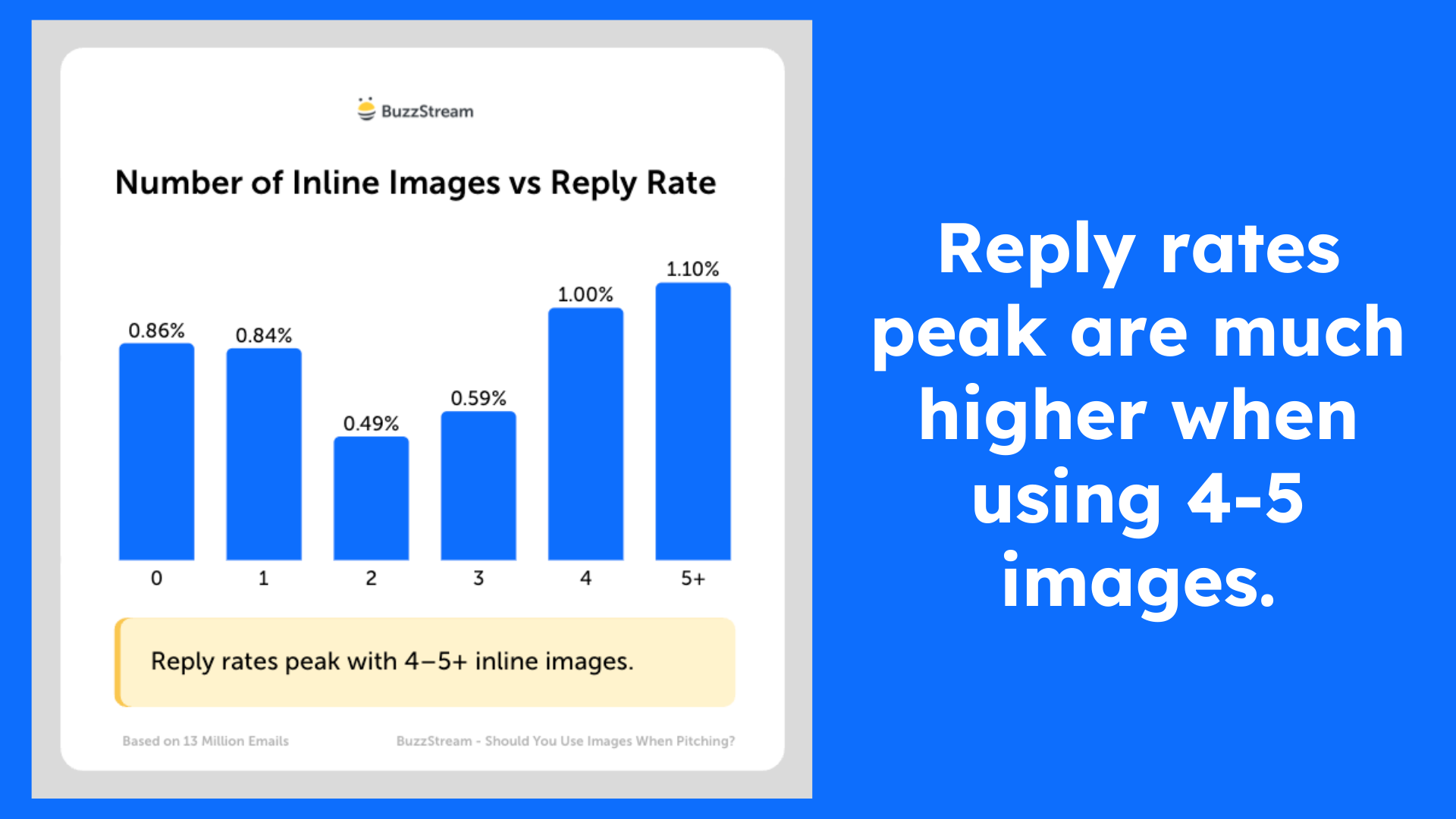
So there’s like a little boost at the end here, honestly. I didn’t know really what to take from this, like if you have a lot of images and they’re helpful, like you know, I think of maybe city study, city index studies that sort of thing.
Some people send multiple graphics, an infographic kind of thing, broken up.
That can sometimes do it, and just like solicit some more replies.
But realistically, I don’t know if this is the takeaway here. I’m not really sure where to go with this. I think it really depends on your image and if it is essential to the pitch.
If it’s really, it looks really nice and adds to it.
You’ll see when I get to the end here that my takeaway for all this stuff is that it’s really going to come down to the person you’re pitching, how they like to use the things you’ve pitched, and how they like to write.
Sometimes people actually take your images and add them to their studies and articles, but a lot of times journalists don’t like to do that.
Some publications redo the graphics anyway, the graphs, and that sort of thing.
So I really do think it is different depending on who you’re reaching out to, which again, I’ll get to.
Attachments
Lastly, this was kind of surprising to me, but maybe, I guess this has kind of fallen off, but like nobody ever seemingly uses attachments anymore.
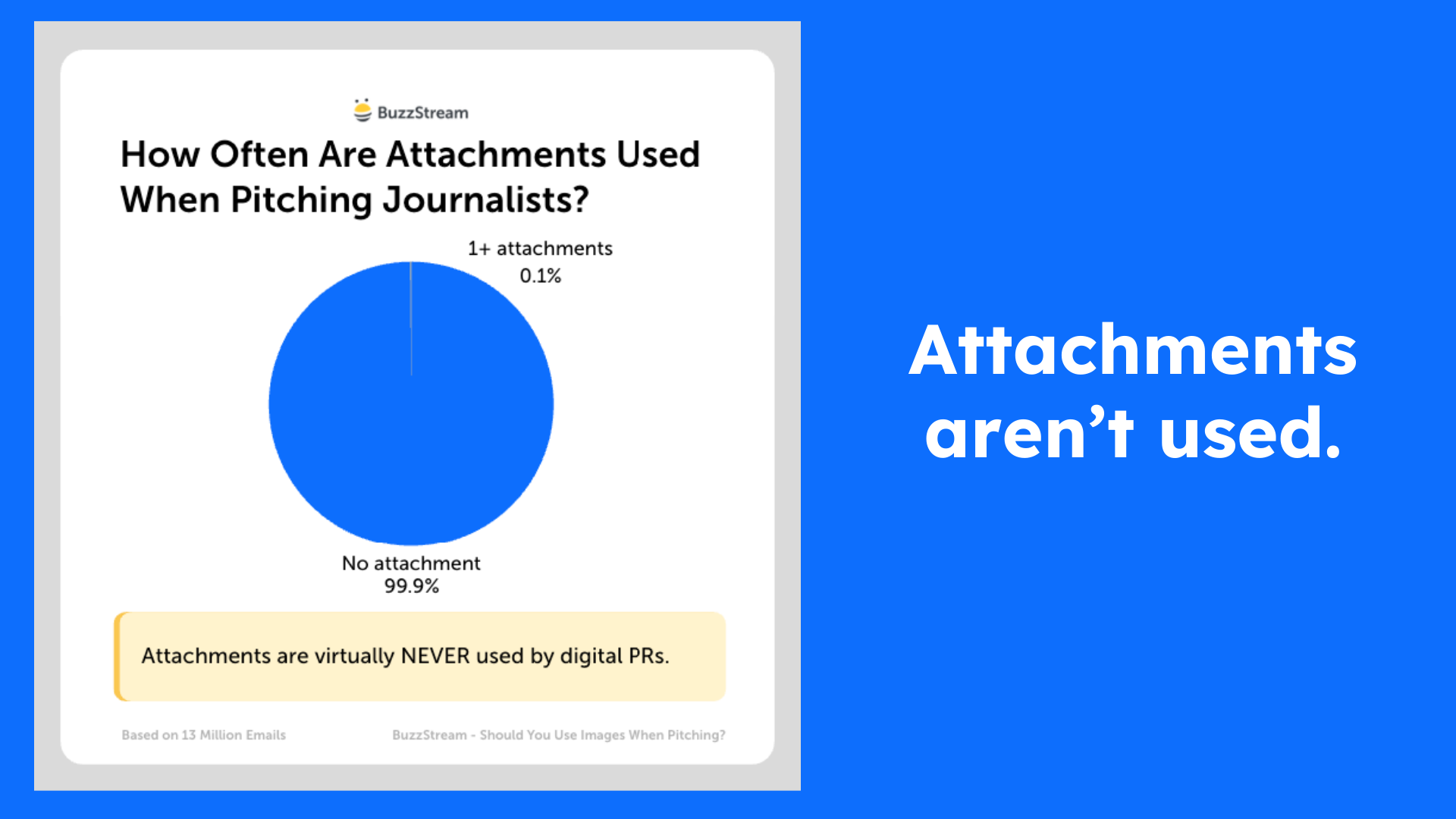
I think it’s, you know, it’s a spam filter thing.
So keep that in mind. Okay.
What Goes into Every Pitch to a Journalist?
So, unfortunately, as I said, I don’t think there is a pitch format that is going to work.
If you’re hoping to get that from this webinar, I’m sad to say I don’t think this is what you want.
But what I’m hoping to give you is a range of ways to think about this, based on what many high-performing agencies do.
So like I said, there are key components here.
So let’s get into them.
Part One: A Strong Hook
The first part of any pitch is going to be the hook, and your job is to hook and reel them in.
You might have heard that the AIDA method is attention, interest, desire, action.
But I’m calling it, you want to hook them, right?
There are different ways to do this.
I think a lot of people use this method, where they give them a relevant stat that really ties into things.
Remember, your job as a PR professional here is to give the journalist something their readers will want.
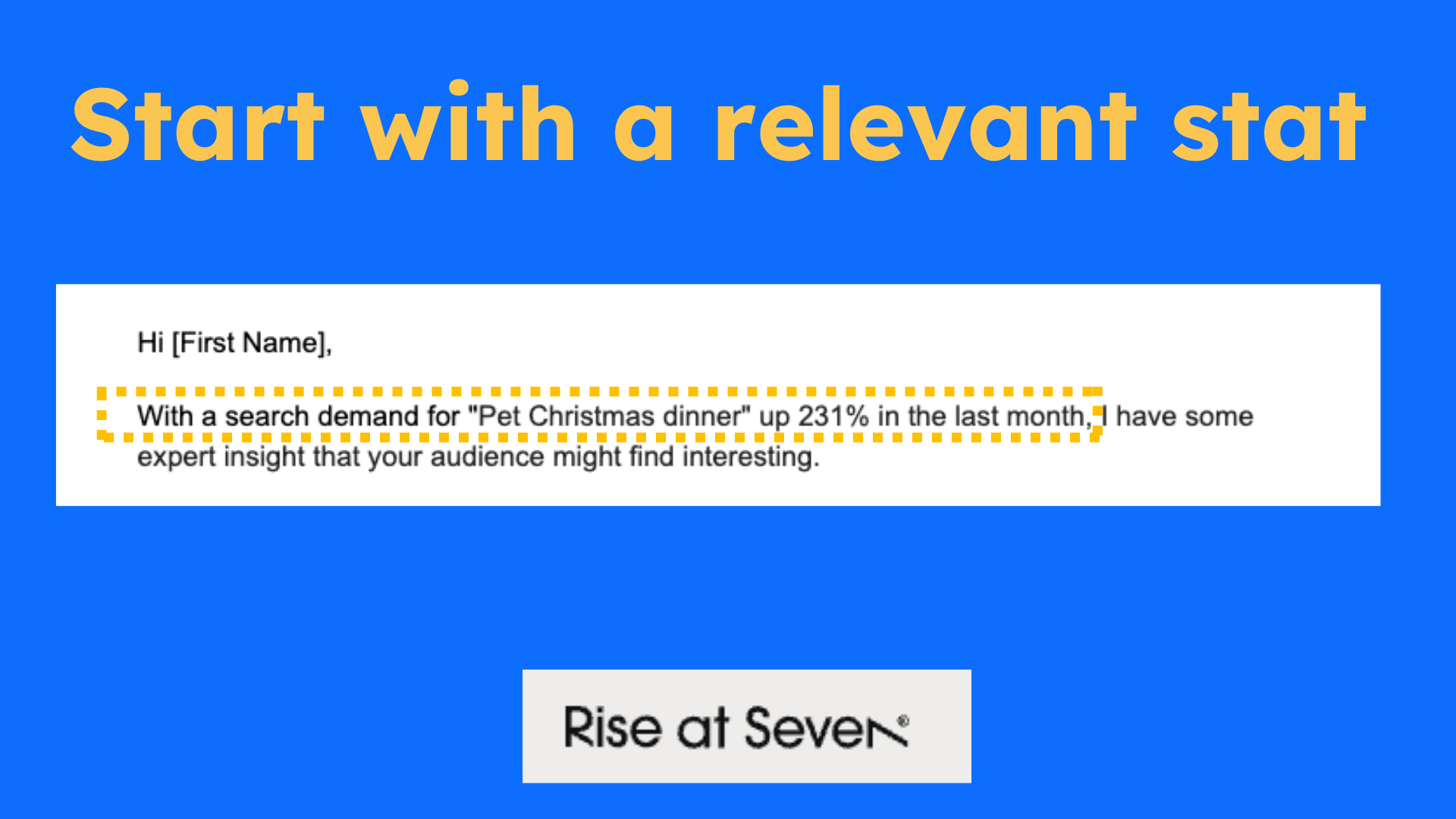
So I think the timely angle will be very important.
So if you can lean on trending topics, this is really important to start with a relevant stat, calling out a trend that’s happening right now.
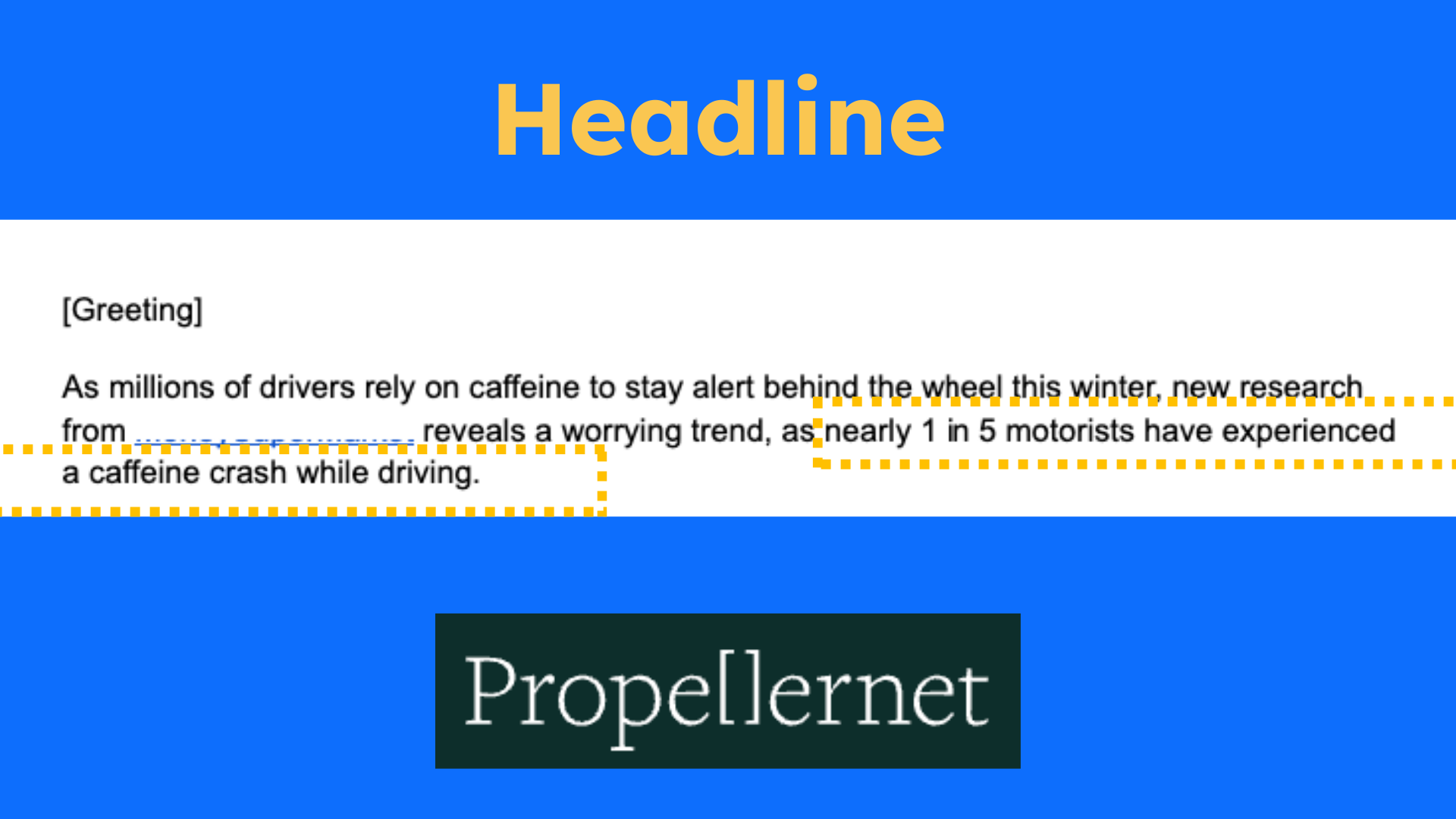
It’s million of drivers rely on caffeine today to stay alert behind the wheel.

Here’s another one: Apple cider vinegar for weight loss is up 277 % this week.
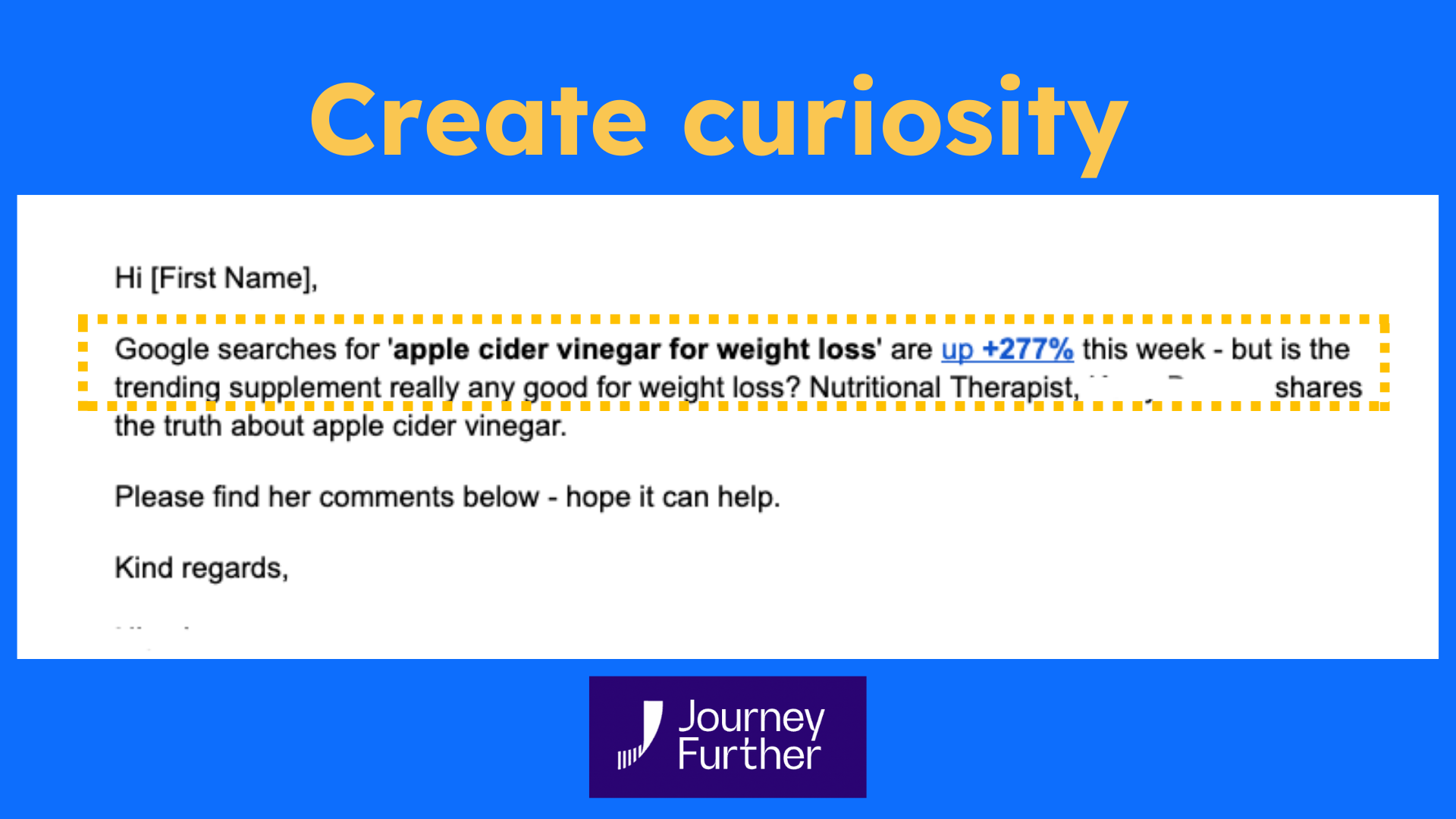
There’s a trend. Now I also like the idea of creating curiosity.
You can ask a question.
So this idea of like, here’s the stat. What does this really mean?
Here’s the stat, you know, create that little curiosity gap, that knowledge gap, that’s making the person want to read on.
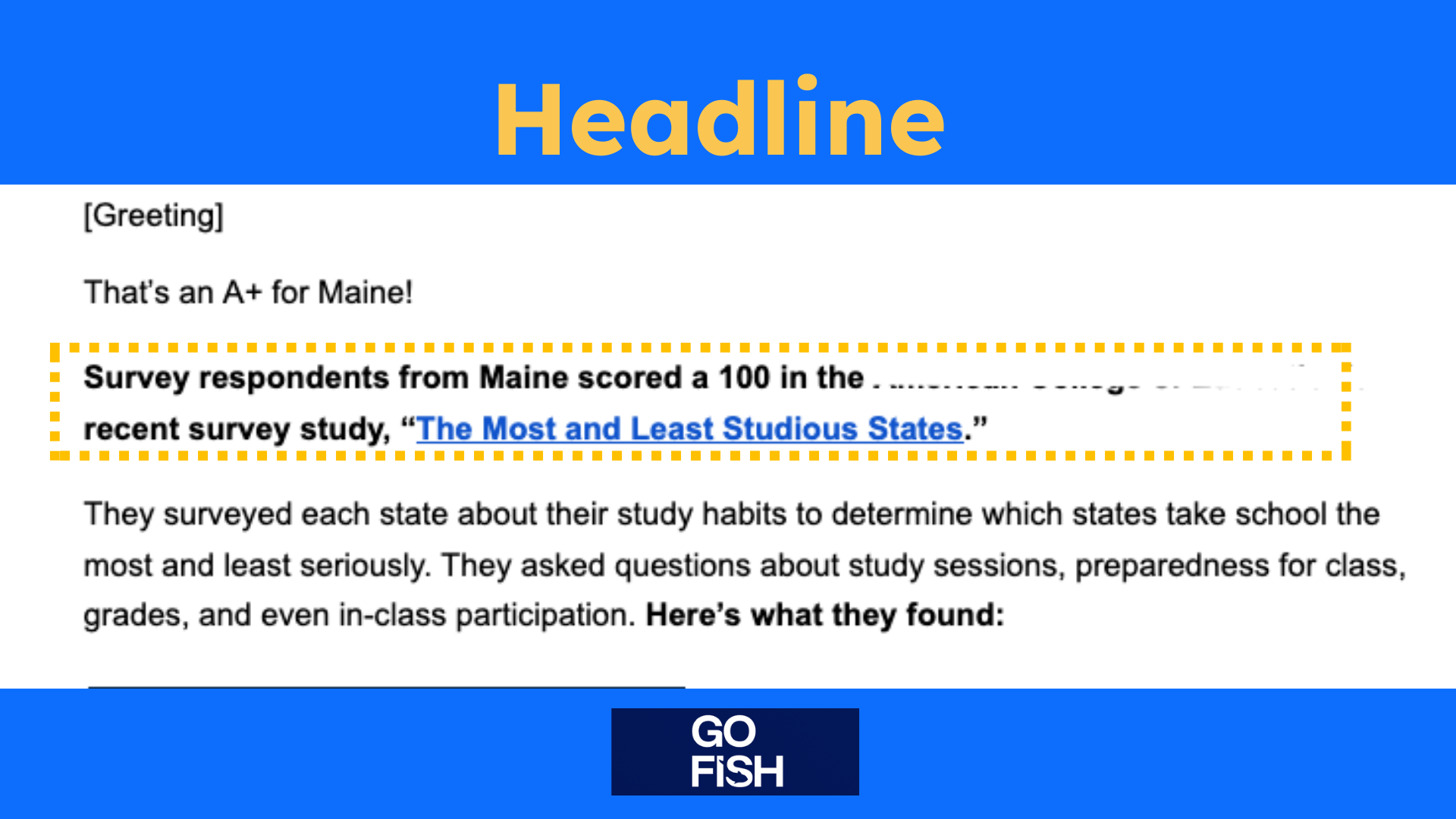
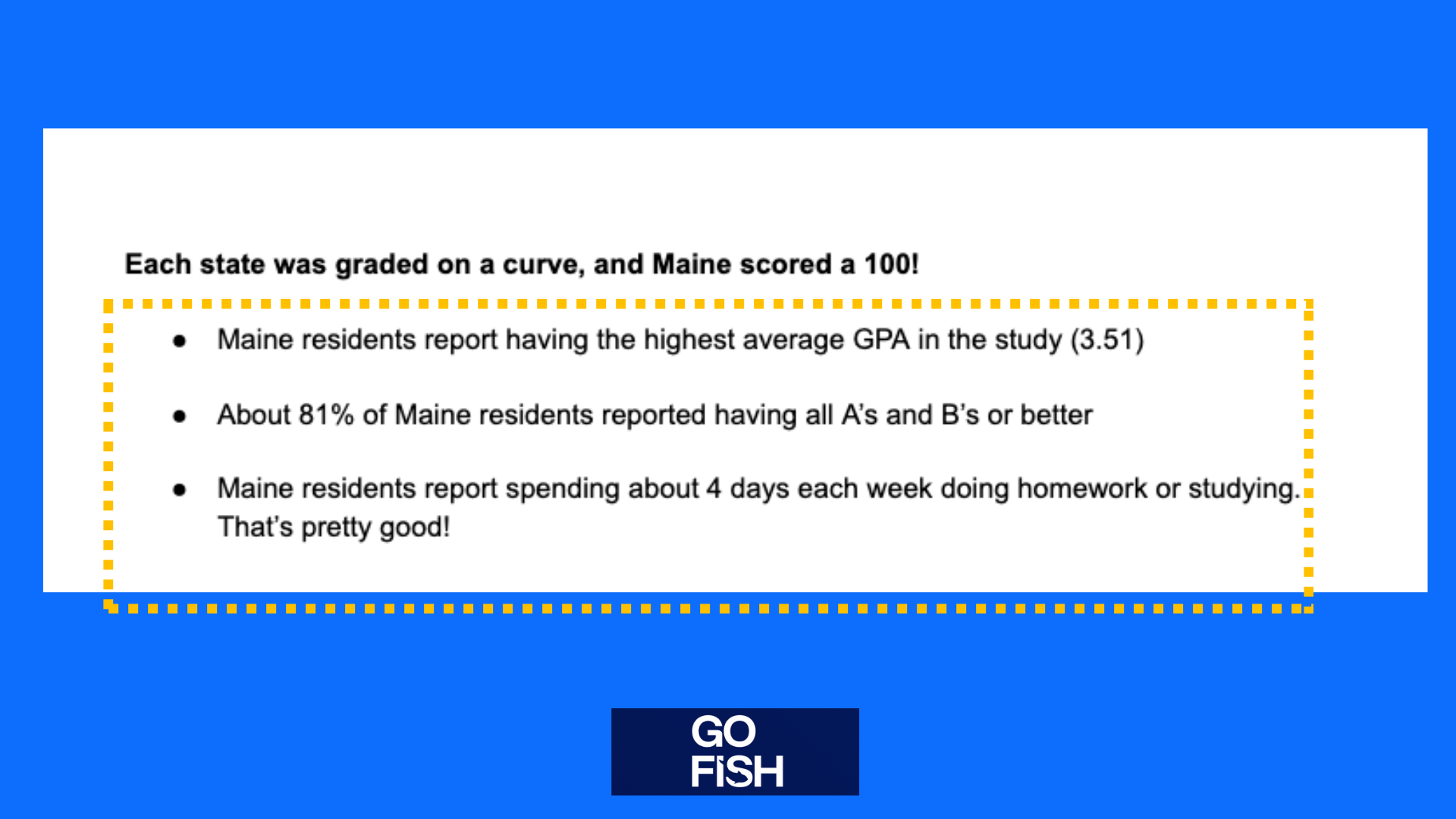
I like this from Go Fish, this piece on the most, least in most studious states, the little playful curiosity, that’s an A plus for Maine.
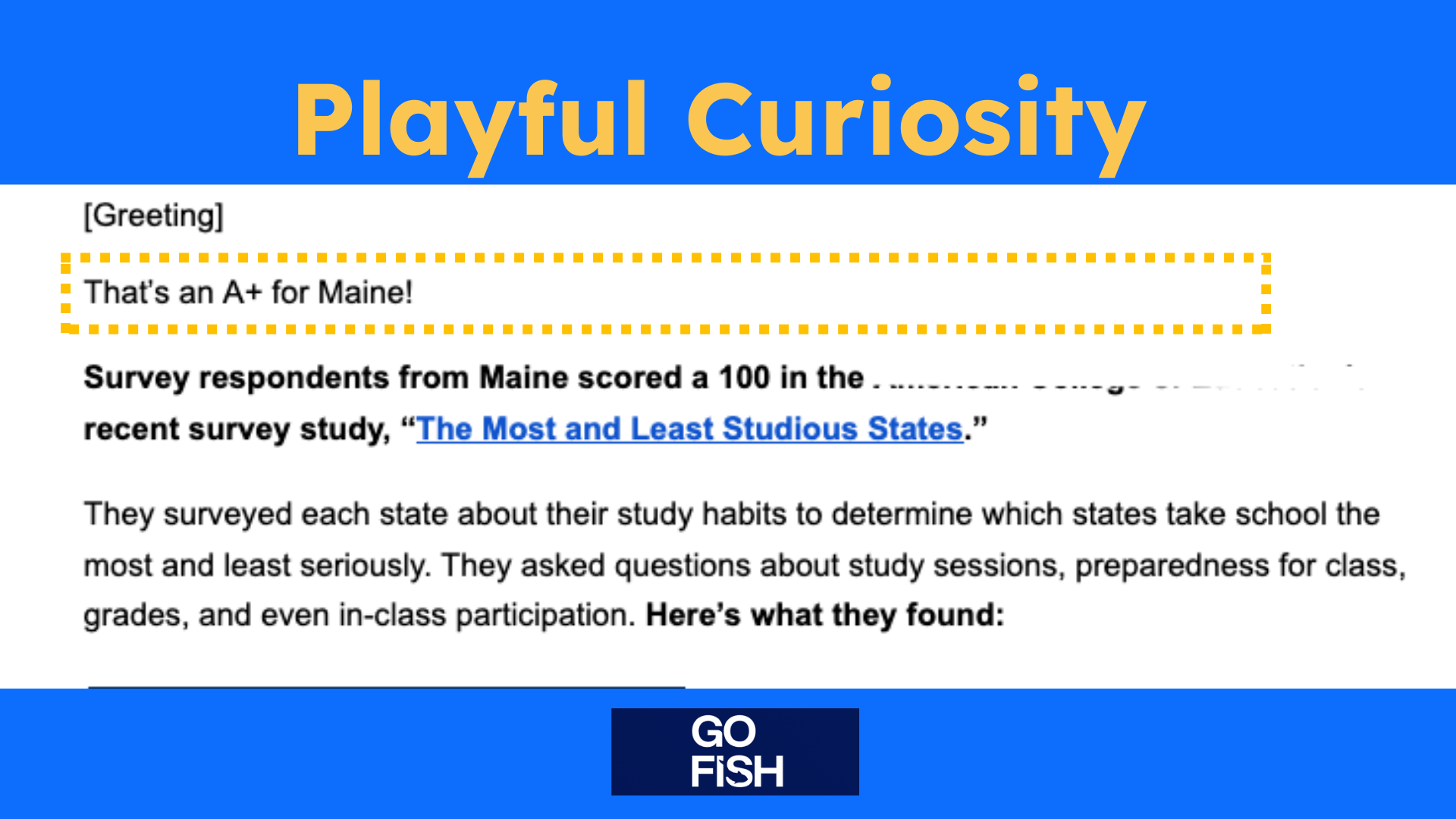
Obviously like A plus, it’s an education-based studious states, little wordplay. But like starting out with something like that gets the journalist like, what does that mean?
Again, here’s another one from Fractl, a stat plus the curiosity piece.
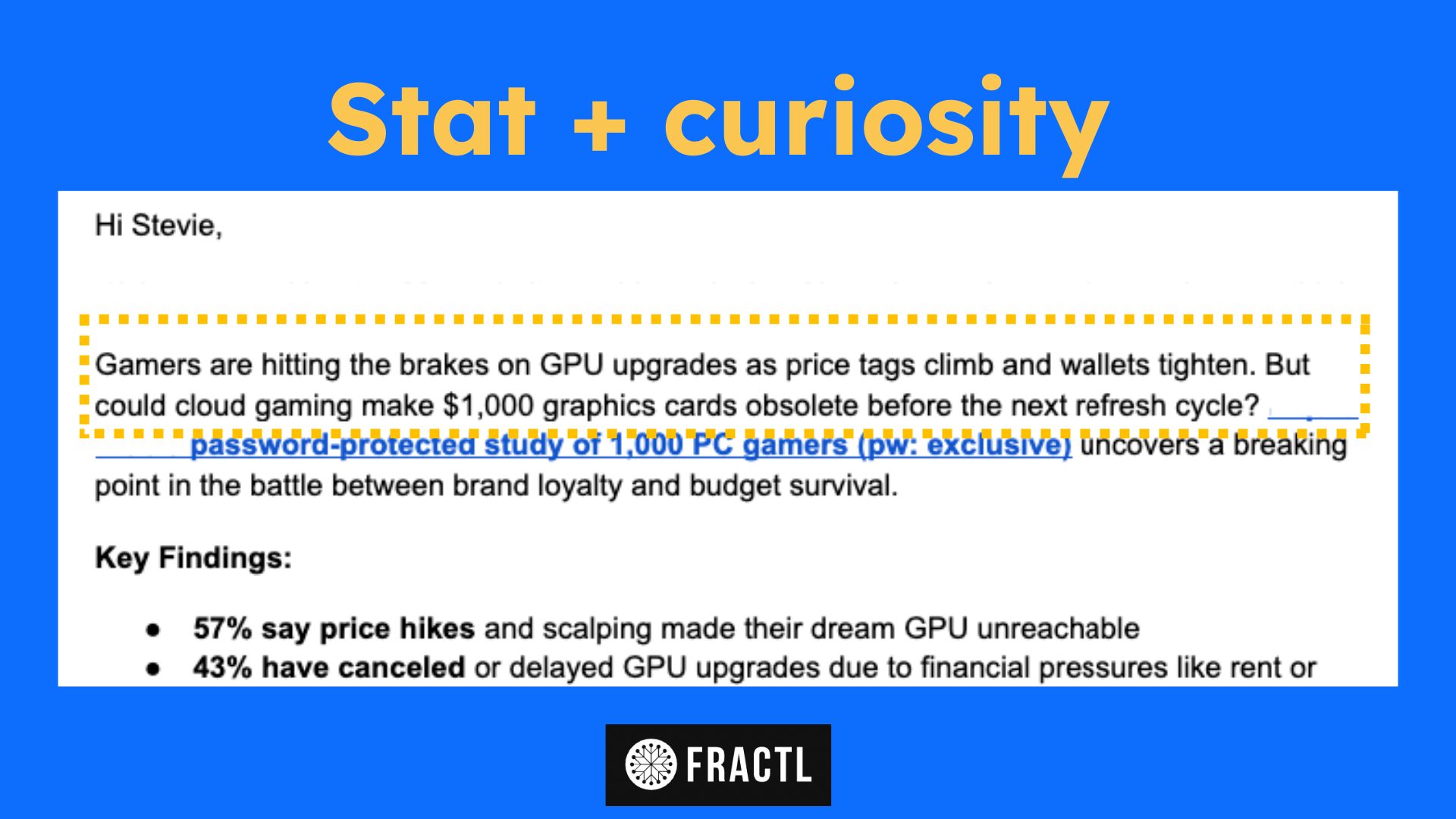
Gamers are hitting the brakes on upgrades. Like that’s the stat. That’s the trend.
But could cloud gaming make a graphics card obsolete?
Again, this is like very niche, but for the right person, this is going to pique their curiosity.
If you want to simplify this, I think the easiest way I’ve heard a lot of people talk about it, especially the journalists I’ve talked to, is the idea of, like, why should I care?
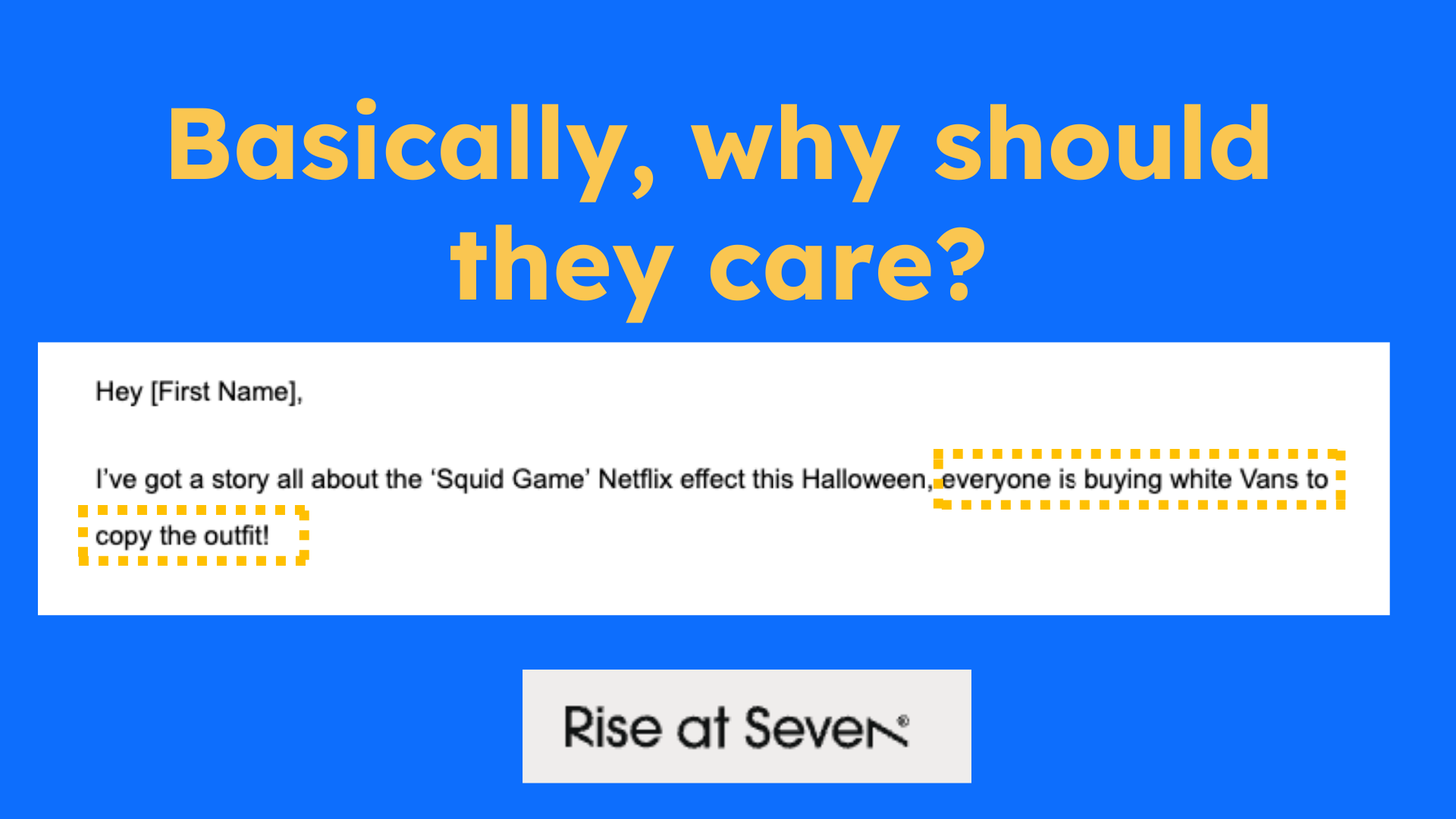
Why should I care that you’re pitching me, and if you can answer that, I think you’re gonna be okay with that opening line.
I mentioned this a bit, but the ‘why now’ is also important.
So why should I care? Why now?
You know, they’re kind of two pieces of the same pie, but here, you know, the Propellernet example, the trend was as a million drivers rely on caffeine to stay alert this winter, right?
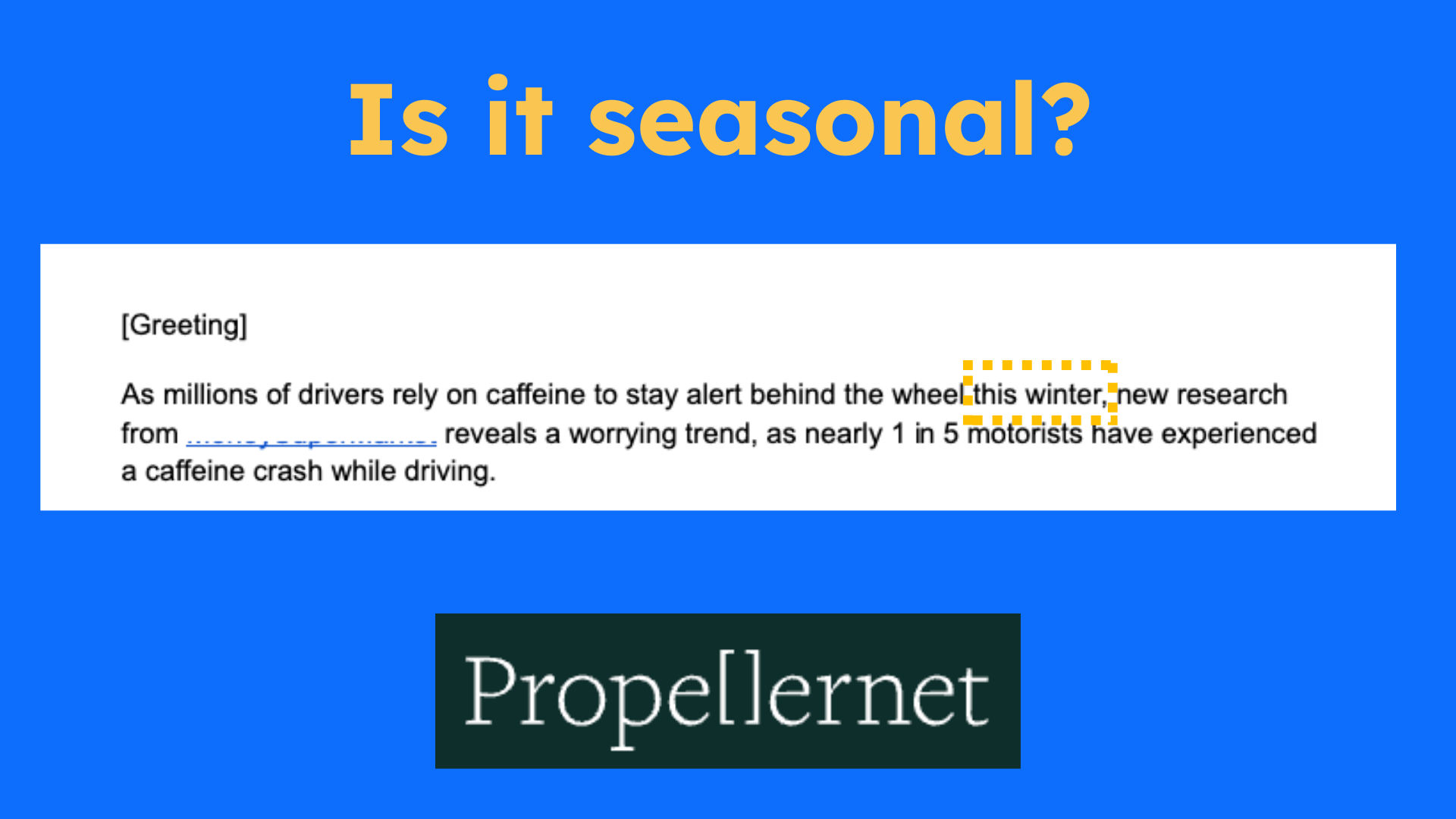
So it gives you a timely piece, and it’s a why now for the journalist.
Again, you’re you want to give them the reason that they should be covering it right now, why their readers should be interested in it right now.
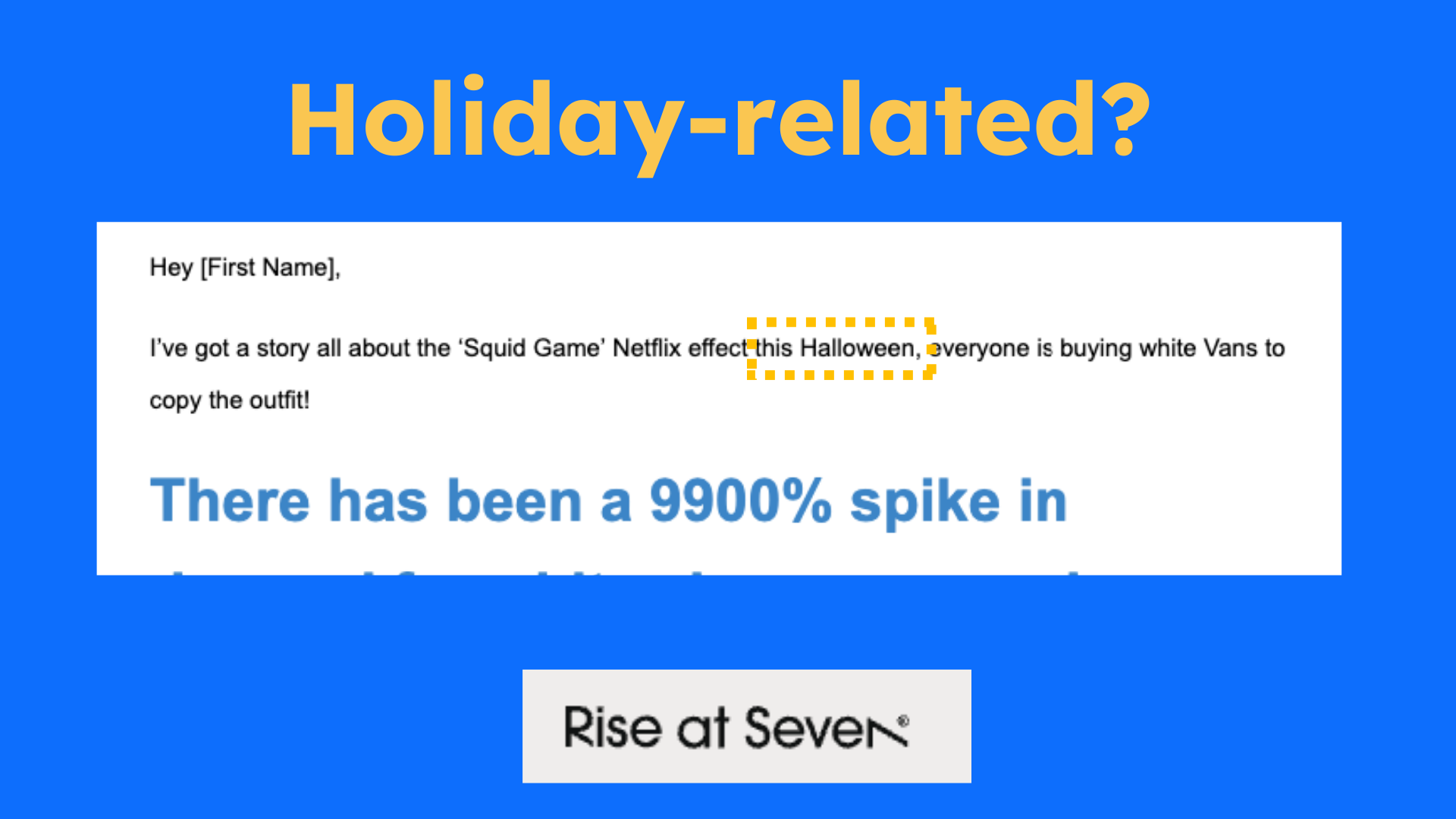
Holiday-related, right?
Here’s a Squid Game Netflix effect this Halloween.
This was pitched around Halloween.
This Journey Further one.
This is trending this week.
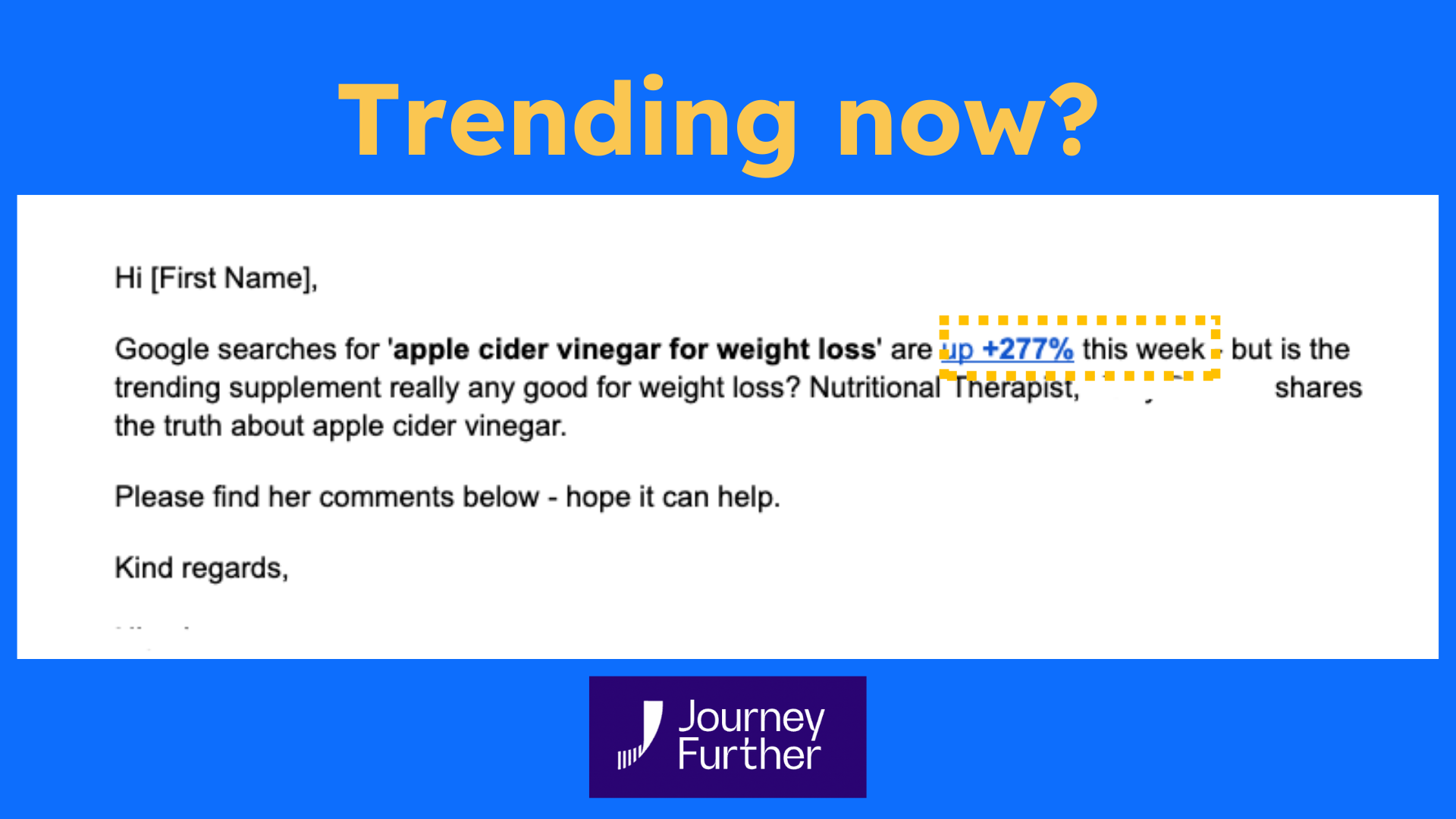
Okay, so you gotta get on it if you wanna catch this trend, journalist, right?
Like you make it obvious to them.
Here’s another one, Rise of Seven, “Pet Christmas Dinner was up 237 in the last month.”
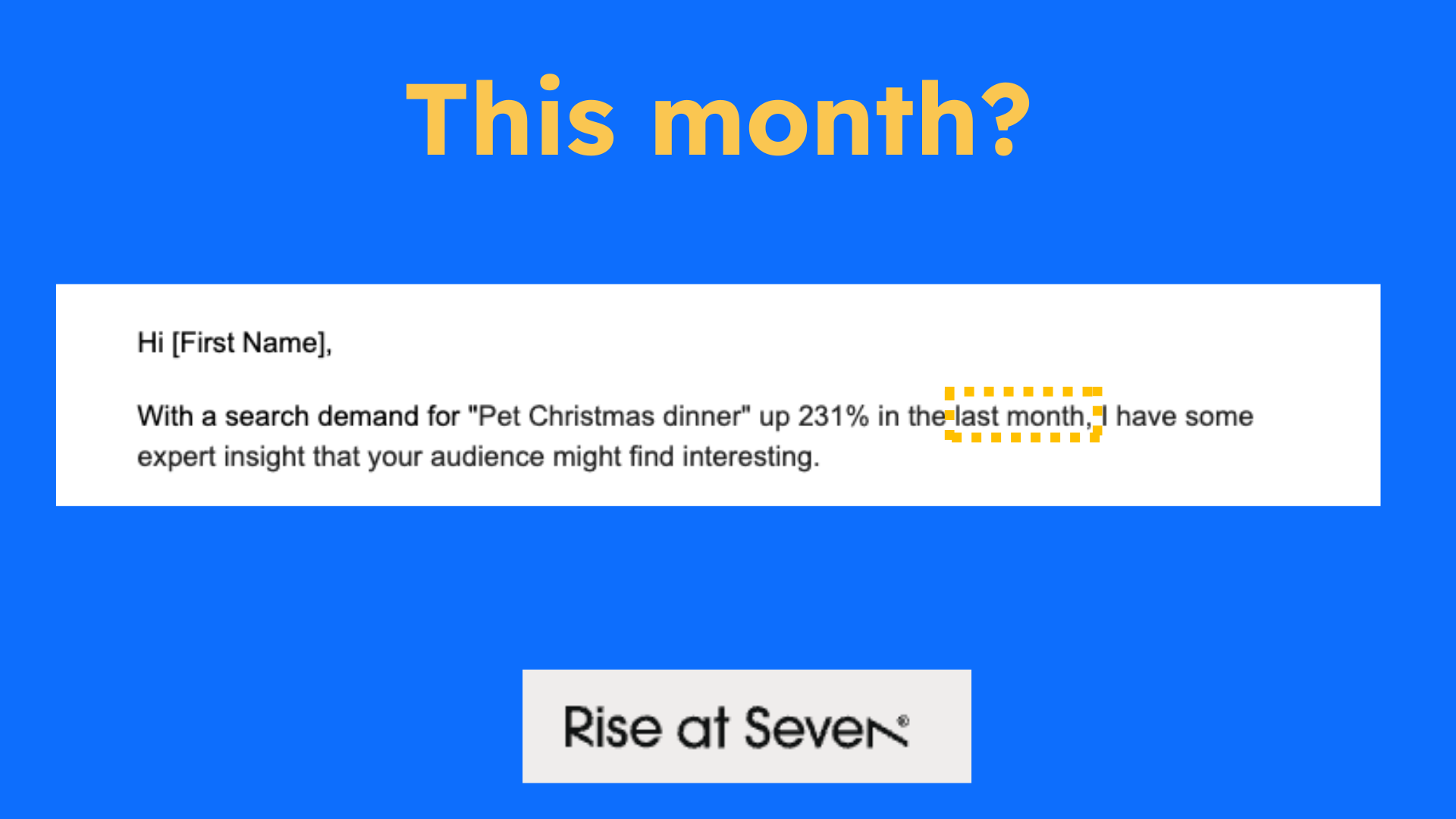
Okay, so like you’re again giving him a reason, answering why now, I like this thinking about the readers, right, thinking about the journalists’ readers.
If you’re targeting the right people the right way, this stuff should connect the dots.
Again, I mentioned that, as very niche gamers, we’re hitting the brakes on GPU upgrades as price tags climb and wallets tighten.
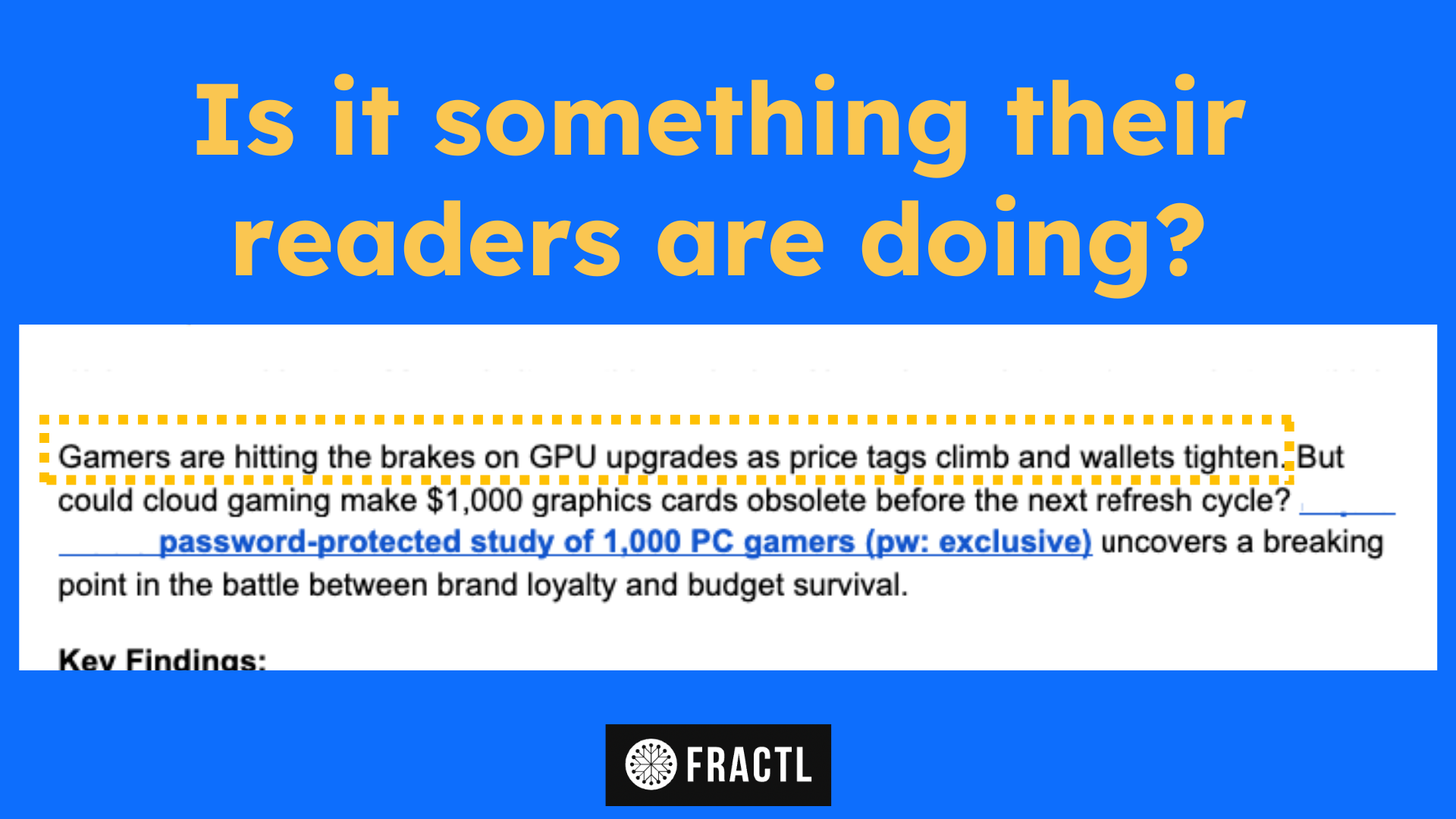
If you’re pitching this to people who cover gaming GPU upgrades, gaming computers, and that sort of thing, they’re going to get this.
Their readers are probably feeling the price tags climbing and the wallets tightening.
So this resonates with their readers.
So that’s the one, the first part. You want to hook them with a trend, with whatever, to pique their interest.
Part 2: Give Them the Headline
And the second part is, then you’re going to give them the headline.
What is the main takeaway of your piece?
Think about it from the headline that they’re going to be writing.
And you can see that in all these examples.
According to the PropellerNet, one in five motorists has experienced a caffeine crash while driving.
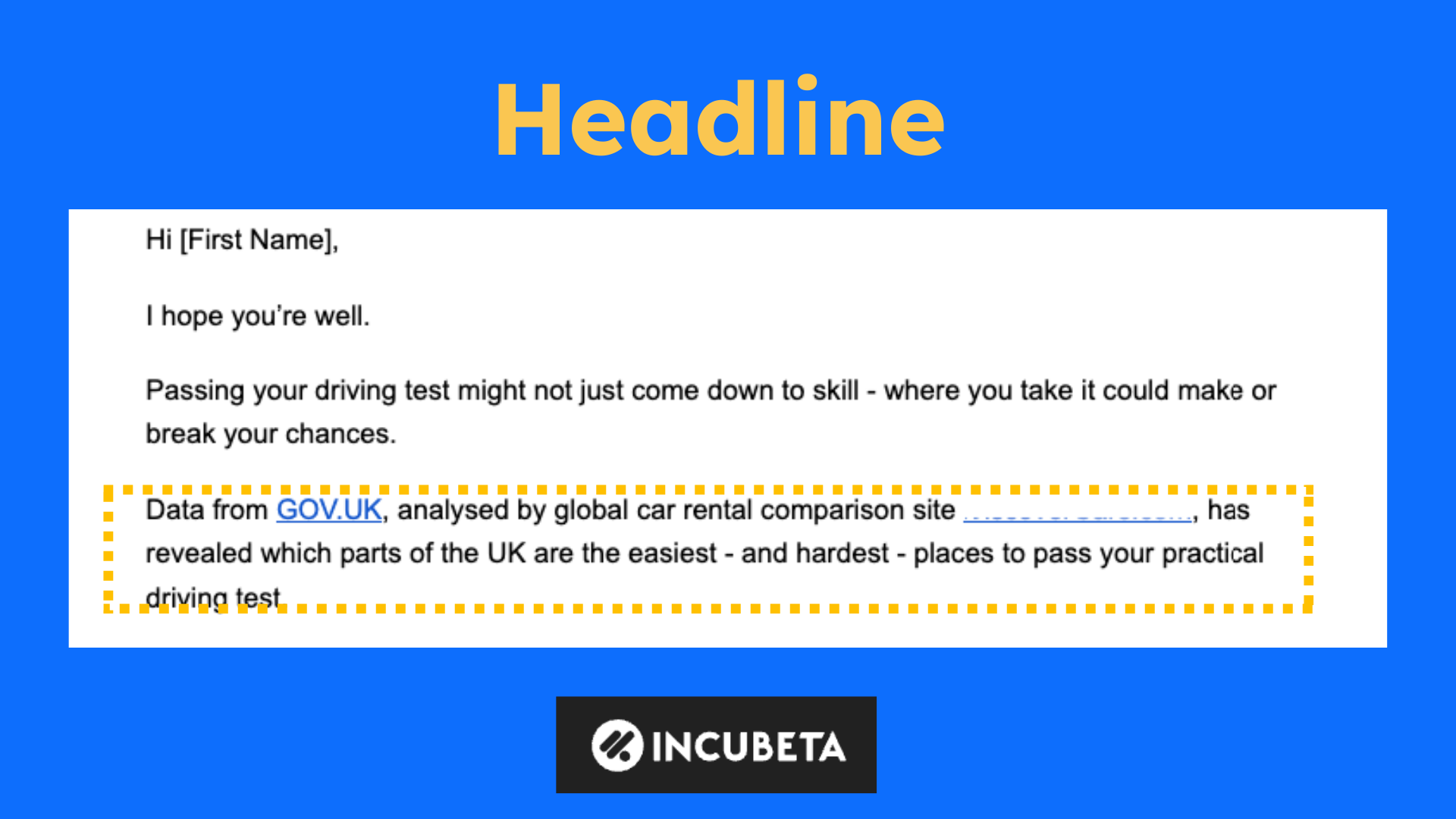
We revealed which parts of the UK are the easiest and hardest places to pass your driver’s test.
The most and least duty at States main score to 100.
So those are the two most important pieces.
Part Three: Optional Features to Include in a Pitch
And now I’m going to get to the kind of flexible places. The flexible features.
Press Release
And I mentioned a lot of this because from the press release, this stuff is all going to kind of roll into one another.
A lot of this stuff you may want to put in the press release.
But some of the people, as I mentioned, in the US do it slightly differently, and just like put pieces of this in your pitch.
Again, there’s no silver bullet here, but the press release, like I said,is mainly a UK practice.
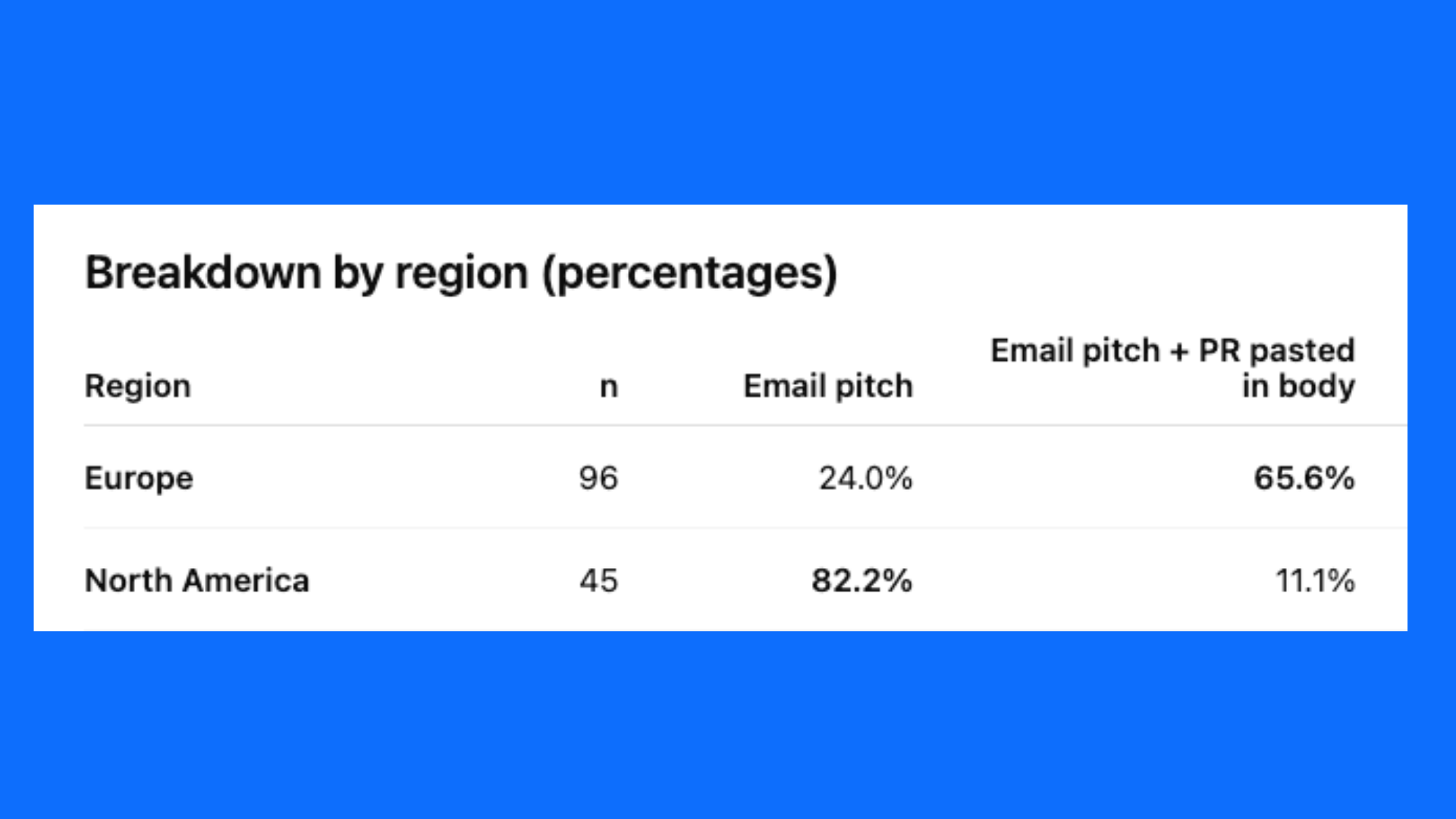
But I think that is why we’re seeing the word count boost up to here. Of the ones I analyzed, it was around 1000 to like sometimes 1200 words.
When you’re talking about pasting in a press release, if you have all the components of a traditional press release.
And those components are very similar to what I am kind of outlining, where it’s like, you know, the headline, right?
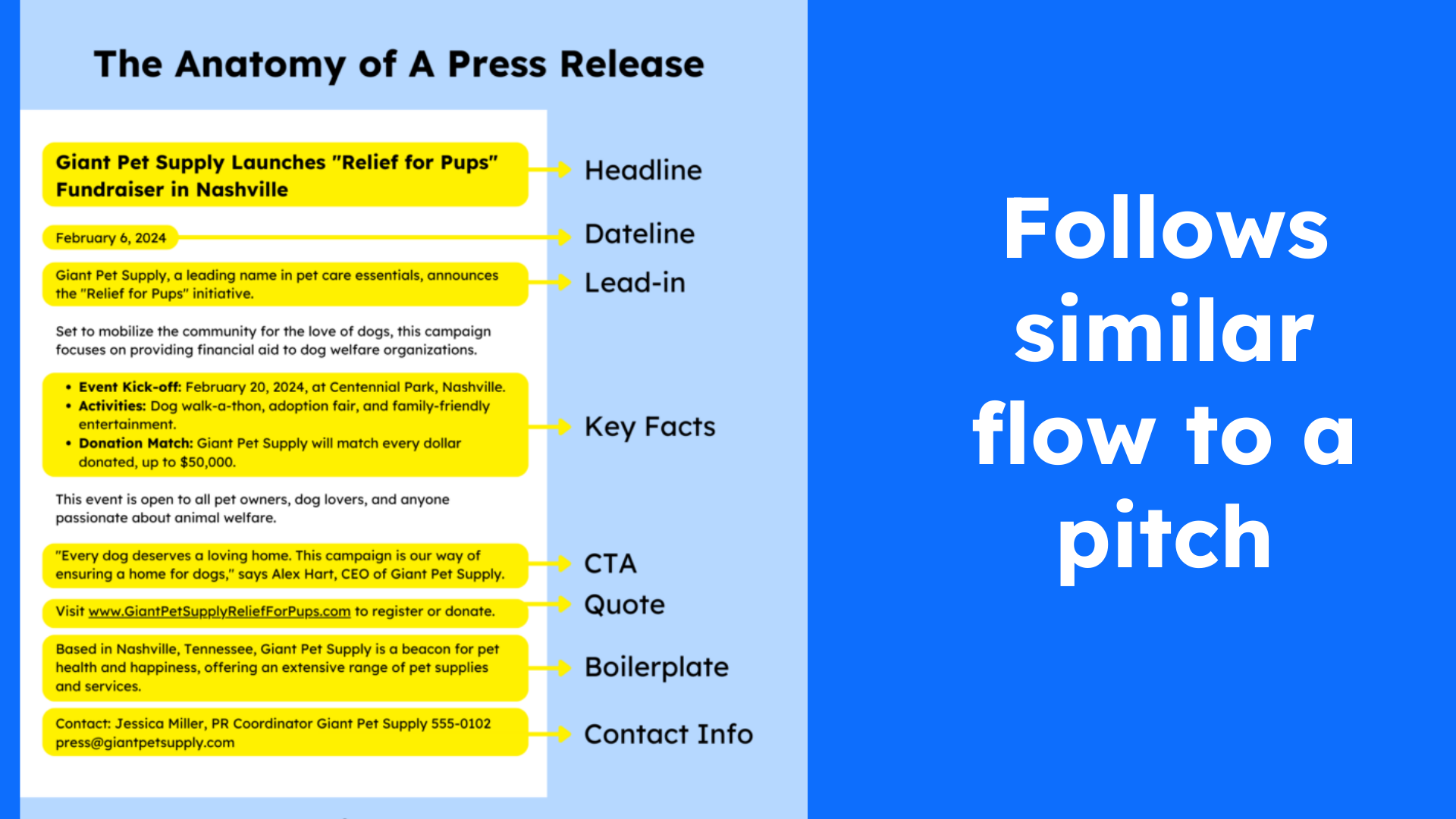
They have other things, like the date. You typically don’t need that necessarily.
And if you’re pasting it in, the lead-in, right, you’re gonna capture their attention.
The key facts, that’s gonna be something I’m gonna get to next; this idea of giving them bulleted information.
Some type of takeaway or quote.
And then the boilerplate is just going to give them background on who you are, and then your contact information.
Not always necessary when you’re pasting it in.
Rarely did I actually see that, but this is kind of the anatomy of a press release.
But I think the key components are what I’m getting into next, which are the key takeaways.
Key Takeaways
So virtually every email had a bolded takeaway.
The median was four bullets, 4.3. always, when I used to do it, I would always try to just keep it to three.
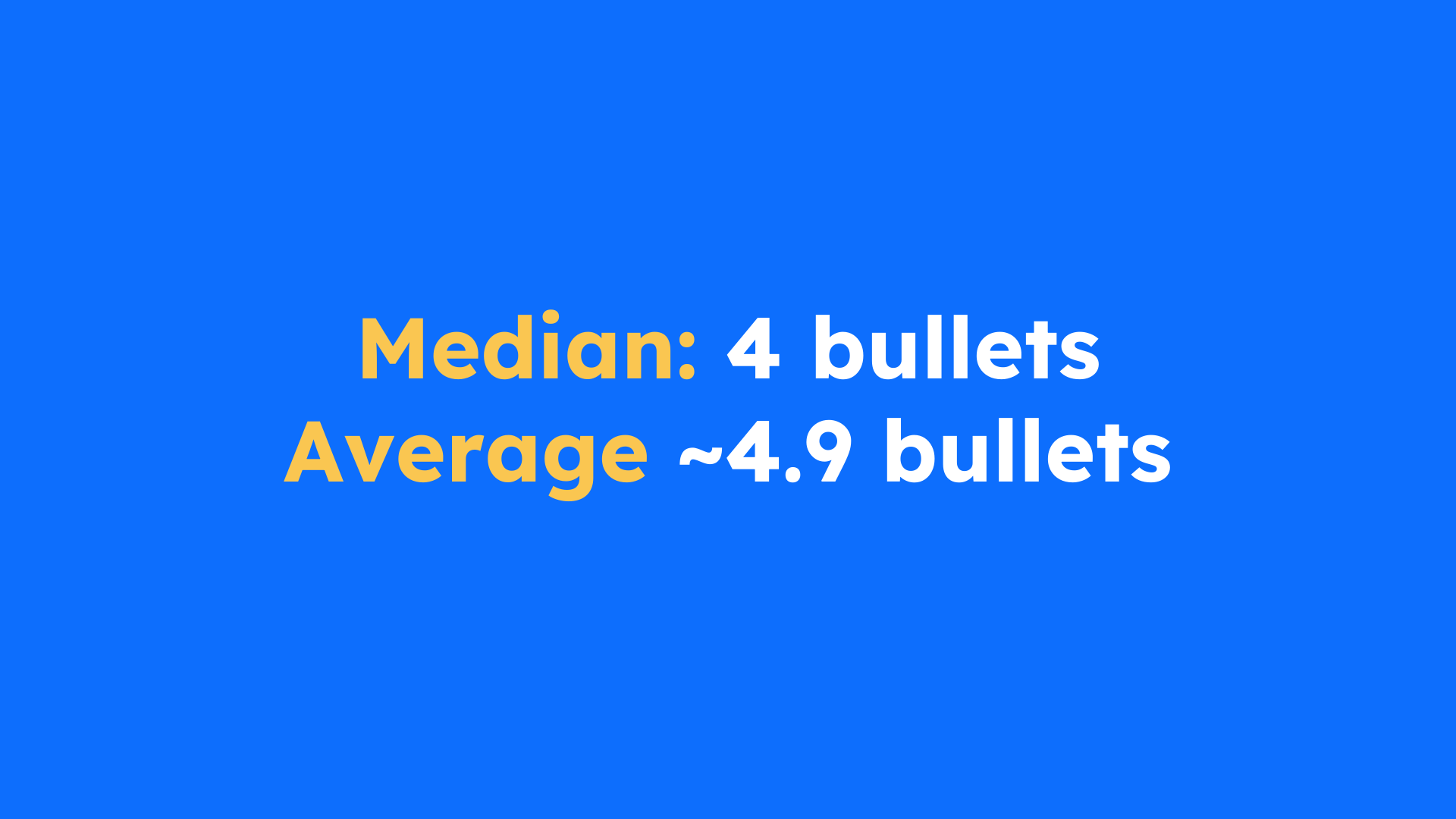
I always thought that was too much to give them more, but it really depends on the size of your study and the takeaways. know, some people are doing seven or eight, and they’re successful with it.
You want to just give the journalists what they need.
Here’s an example of the top three, and that studious states one.
Here’s another one that has six.
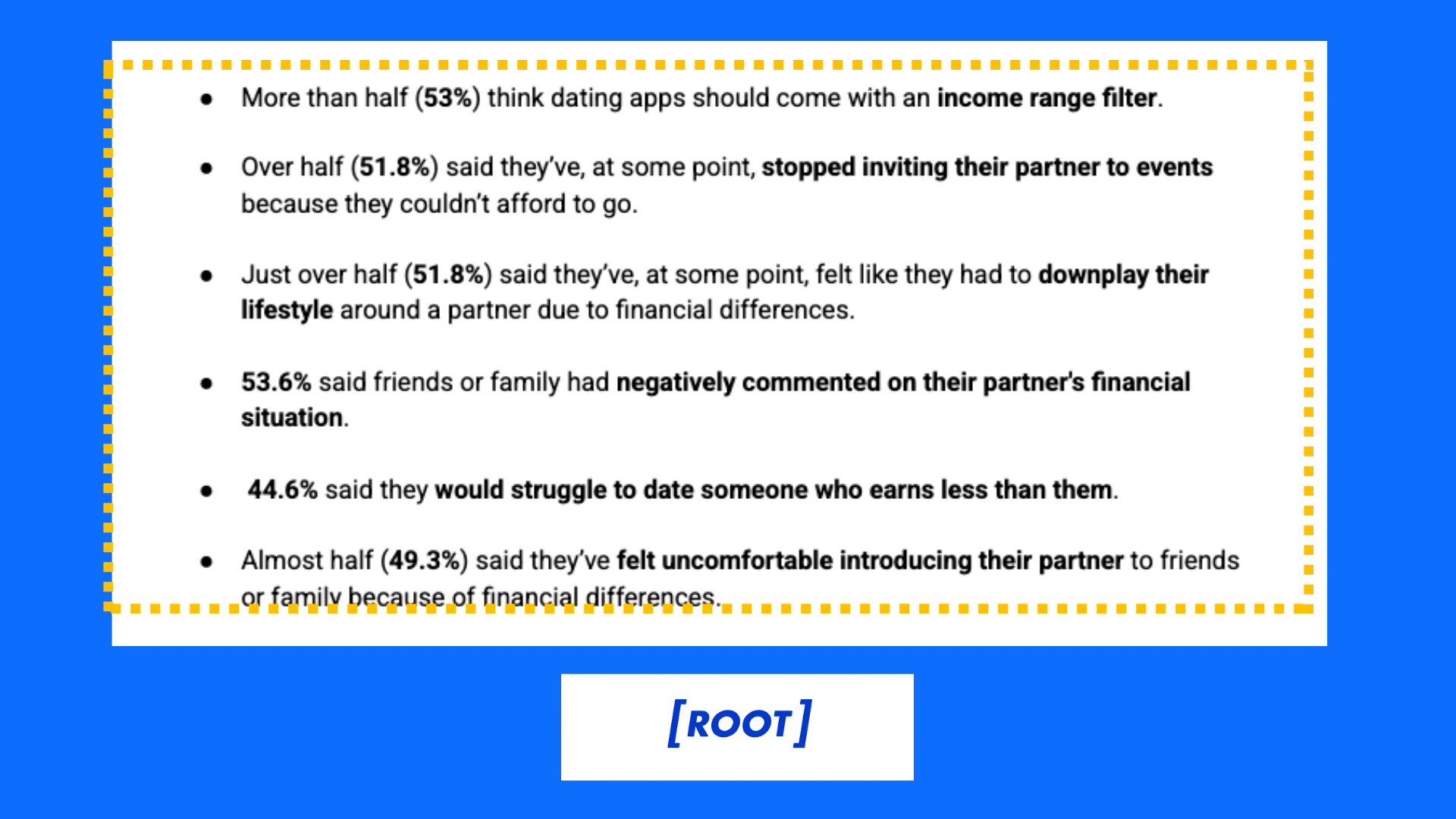
So again, like not everything can be a key takeaway, but what you’re trying to kind of give them are the things that are going to stand out and help them write the story.
Like what you know, the angles and different angles that they might want to write about.
Text decoration
Don’t be afraid to change up the text. It doesn’t have to just be plain text, default, Arial, Helvetica, whatever.
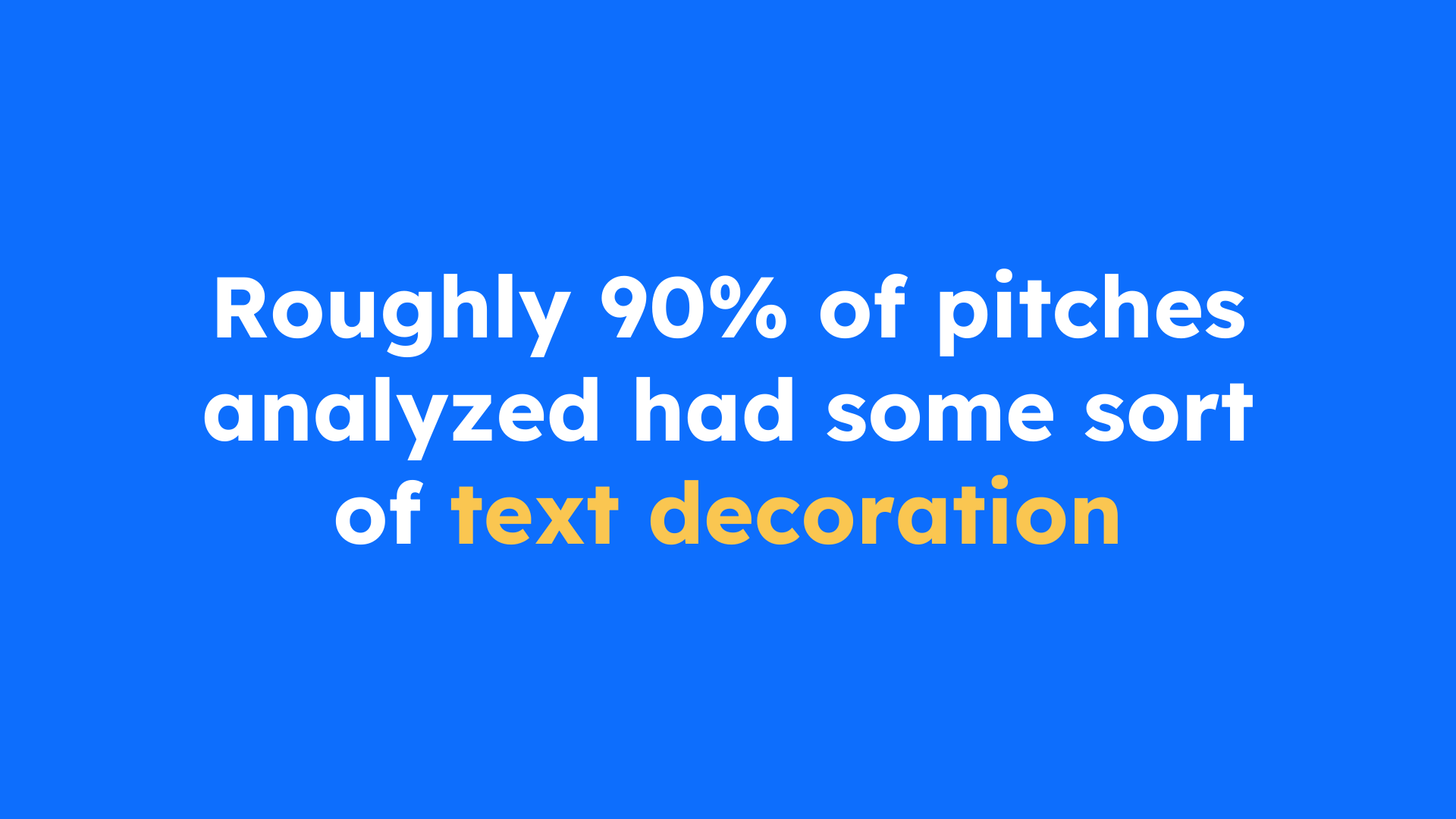
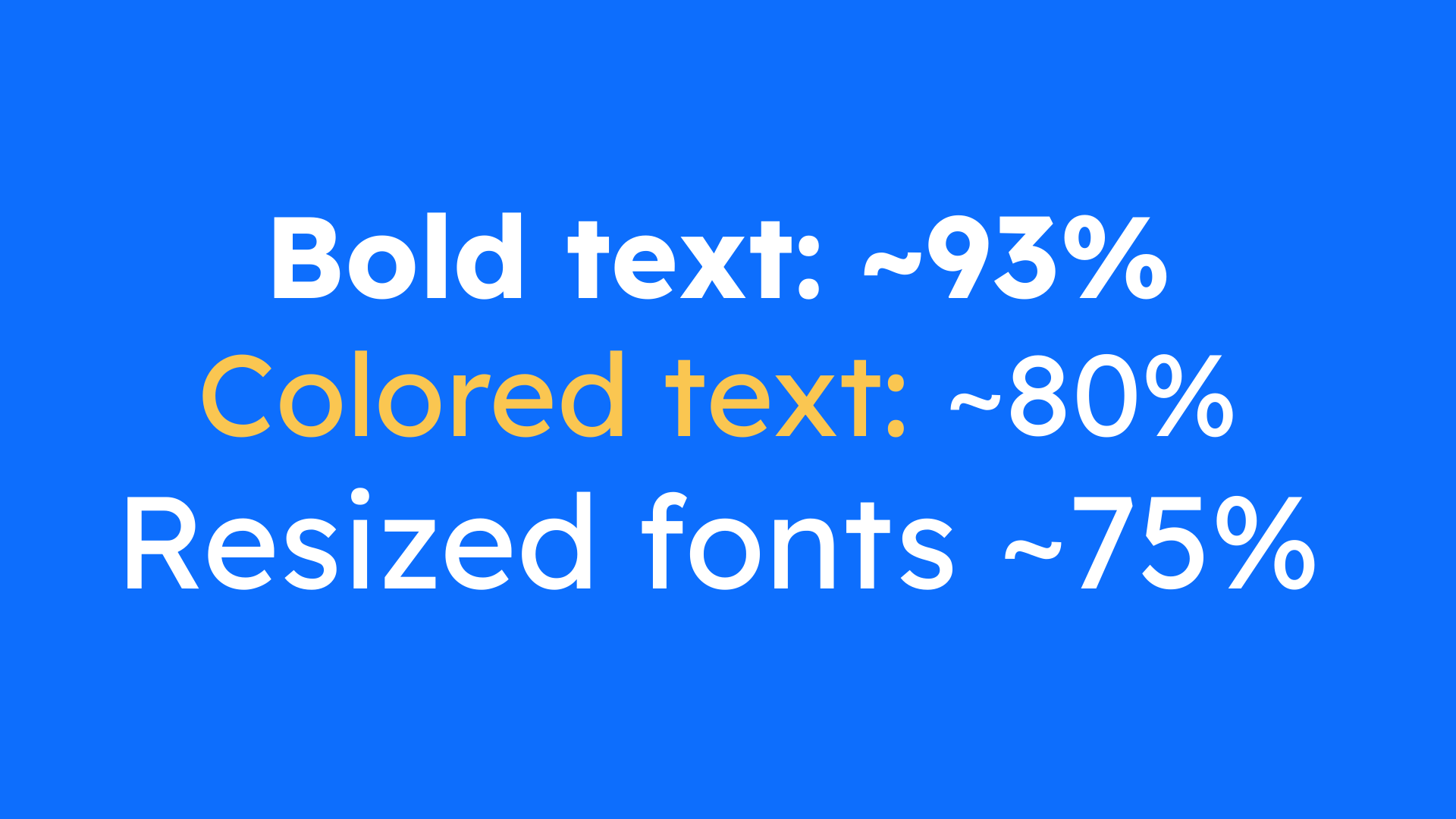
90 % of the ones I analyzed had some sort of decoration.
Most people using bold. Some people using color text.
A lot of people using different color text.
And a lot of them are also resizing fonts, right?
Like a headline that they include in the press release might be larger than other stuff.
So it’s all about readability and scanability for a lot of people and kind of matching what their expectations are.
I saw some people who would actually tailor the color of the text to the colors that you would typically see on the publication of the journalists they were pitching to.
So getting it really, really personalized that way.
Bolding is probably the easiest and most obvious version of this.
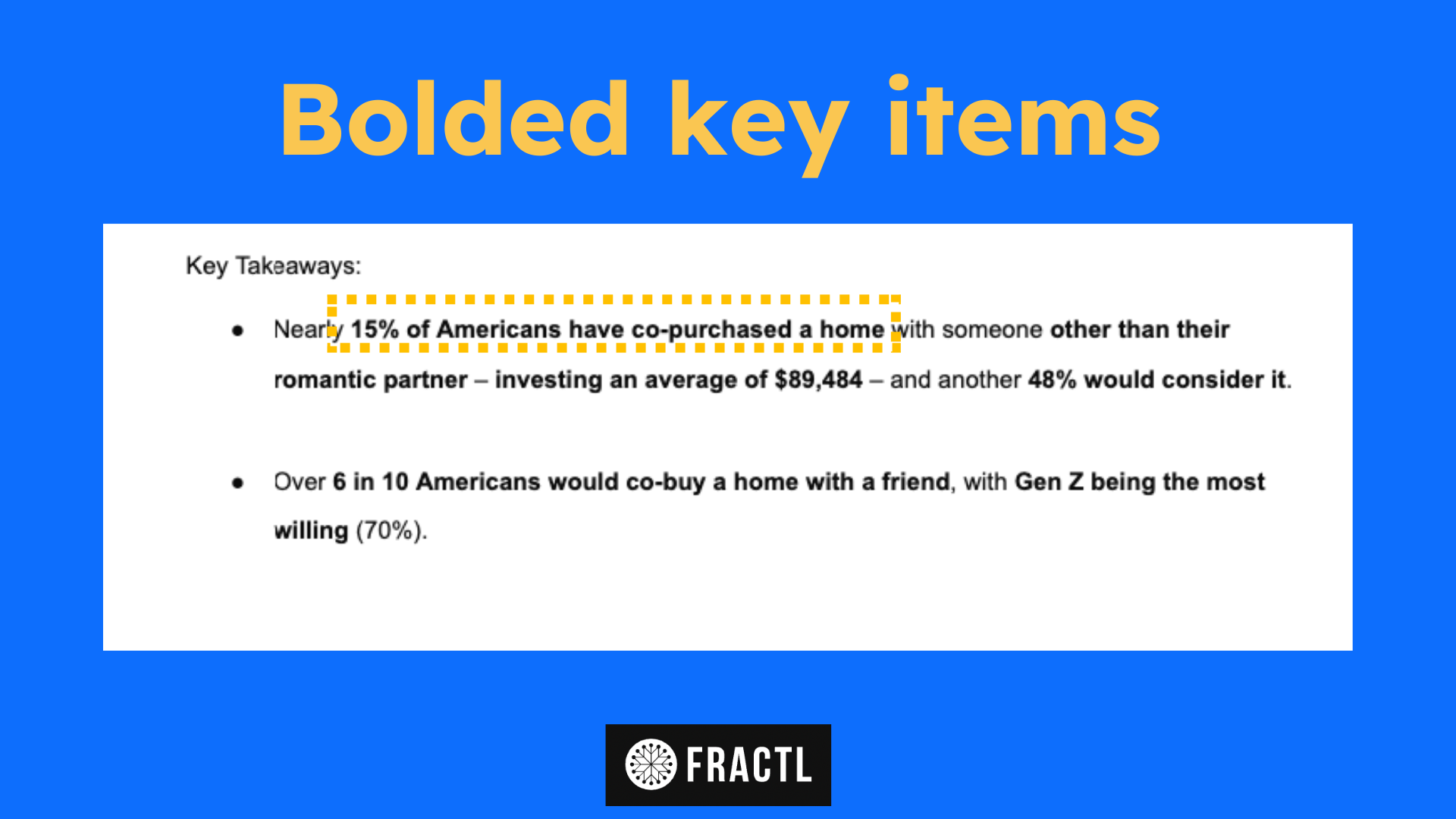
I highly, highly, highly recommend doing it.
Key items, key stats where everybody these journalists are time poor they’re just scanning this stuff so you just want to highlight the things that are going to be most applicable and most interesting.
Linking to assets
All right, linking to assets.
This happened rarely, I would say.
For the most part, it was always in the press release.
I’ve heard a lot of people go in and out, and there wasn’t really any conclusive data on which way to do this.

Dropbox links, sometimes people link to Google Sheets, Google Drives.
Really, I think it depends on the size of your data set and the size of your story.
If you have a lot of assets, say you’re pitching them a city index study and you have a lot of high res graphics of these states and cities, put them in a Dropbox link, make it easy for the journalist.
But it really depends on how the journalist plans to use them, which I’ll get to.
Expert Quotes
Okay, expert quote. This is a big one.
For the most part, everybody used this.
I will get into kind of the expert commentary type of pitch, but I’m gonna go through kind of what we should look for in an expert quote when you’re doing it, based on the examples and the data that I looked at.
So a lot of people did this type of thing, where it’s like the response to the study.
The main mistake is when people just reiterate what the study says.
I think the most effective way to do this is to explain why this study is important, and then reinforce that point.
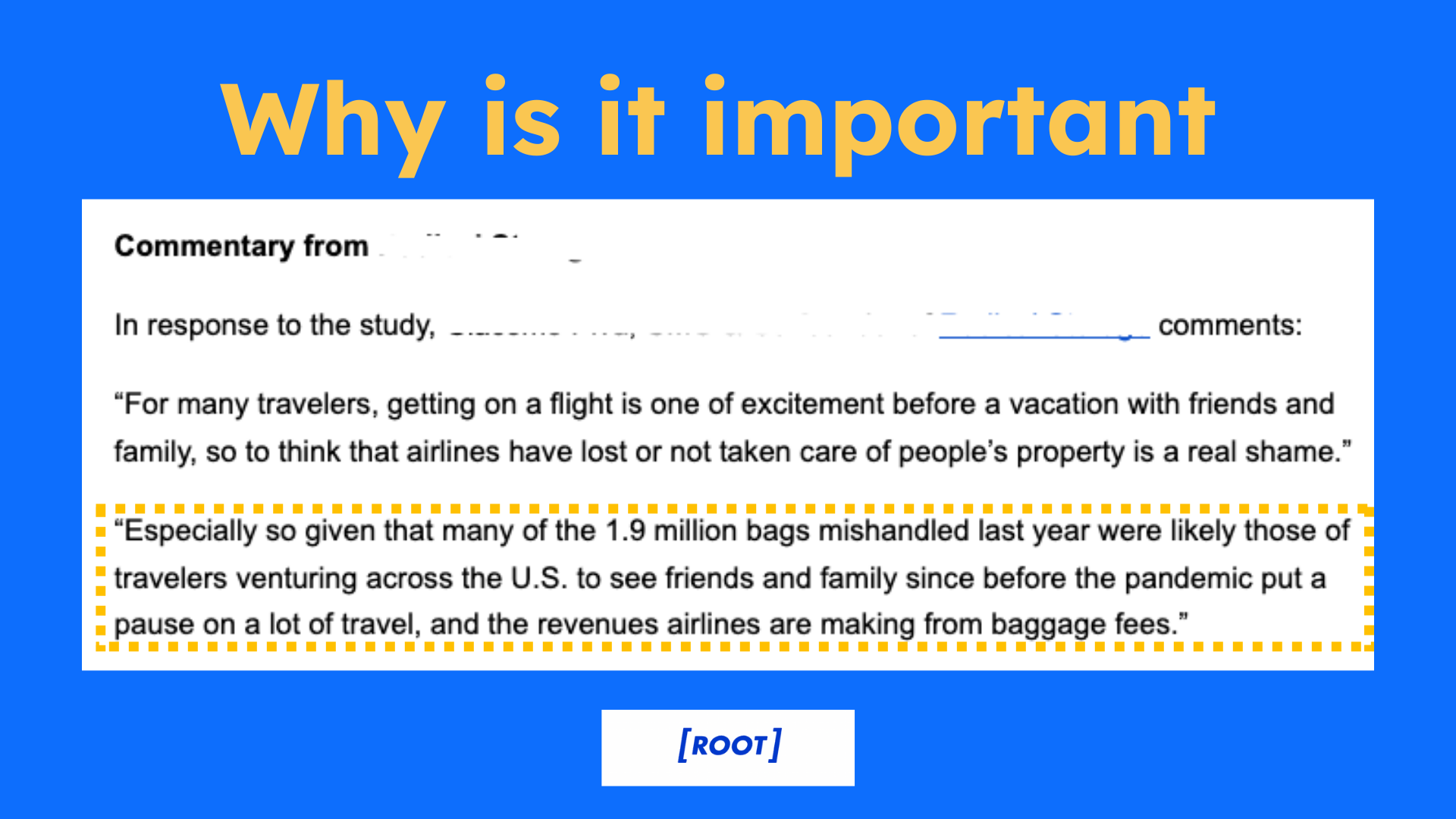
So that’s what this one from Root does, so given that 1.9 million bags were mishandled, there’s a pandemic, put a pause on traffic, like, what you’re doing here, I think, is also providing some more color.
You’re adding to the story like this one:
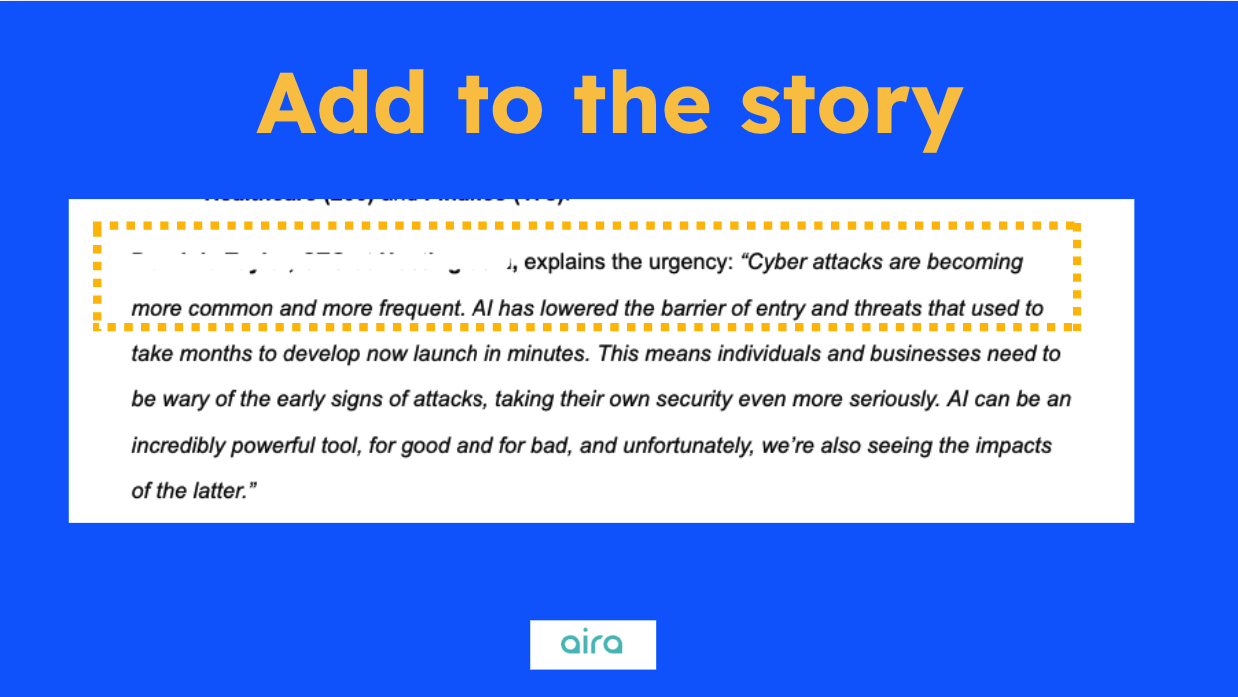
So cyber attacks are becoming more common and more frequent.
AI has lowered the barrier of entry.
These are things that are going to help the journalists like frame their article.
Hmm. Maybe I do. I should, you know, add this in here or, you know, if they’re kind of looking at the story that you’re pitching for different ways.
Shaping the narrative I like this from this Journey Further one.
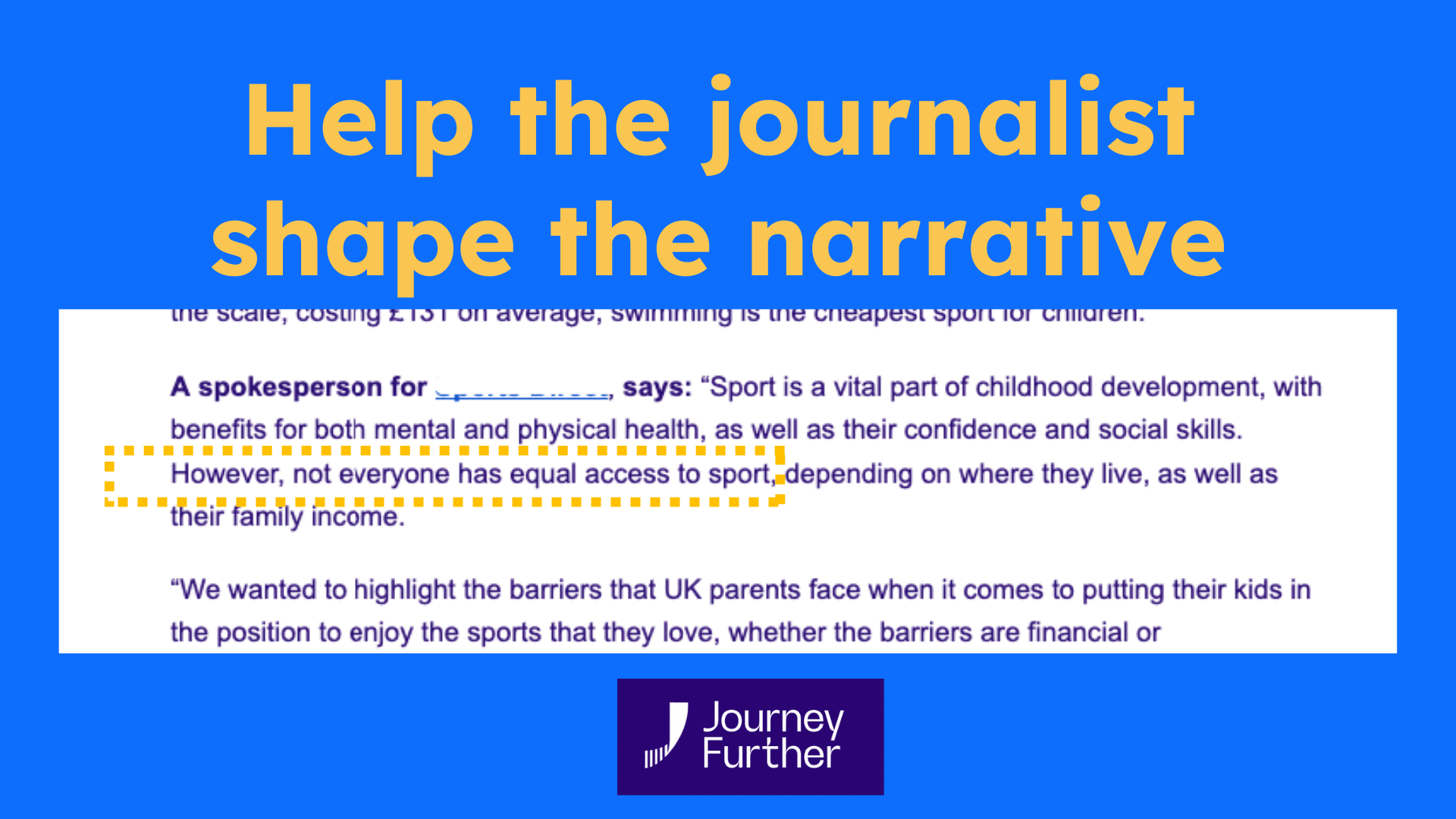
It was all about, getting sports access for children and and the narrative I think one of the takeaways here for them was that not everybody has access equal access to the sport so again, you’re kind of laying this out putting your journalists hat on thinking about how would I want to cover this and maybe preemptively giving them some color that’s going to help tell that story.
This was an interesting takeaway.
Most of the digital PRs in the UK added the quotes.
In the US, many of them asked for a quote.
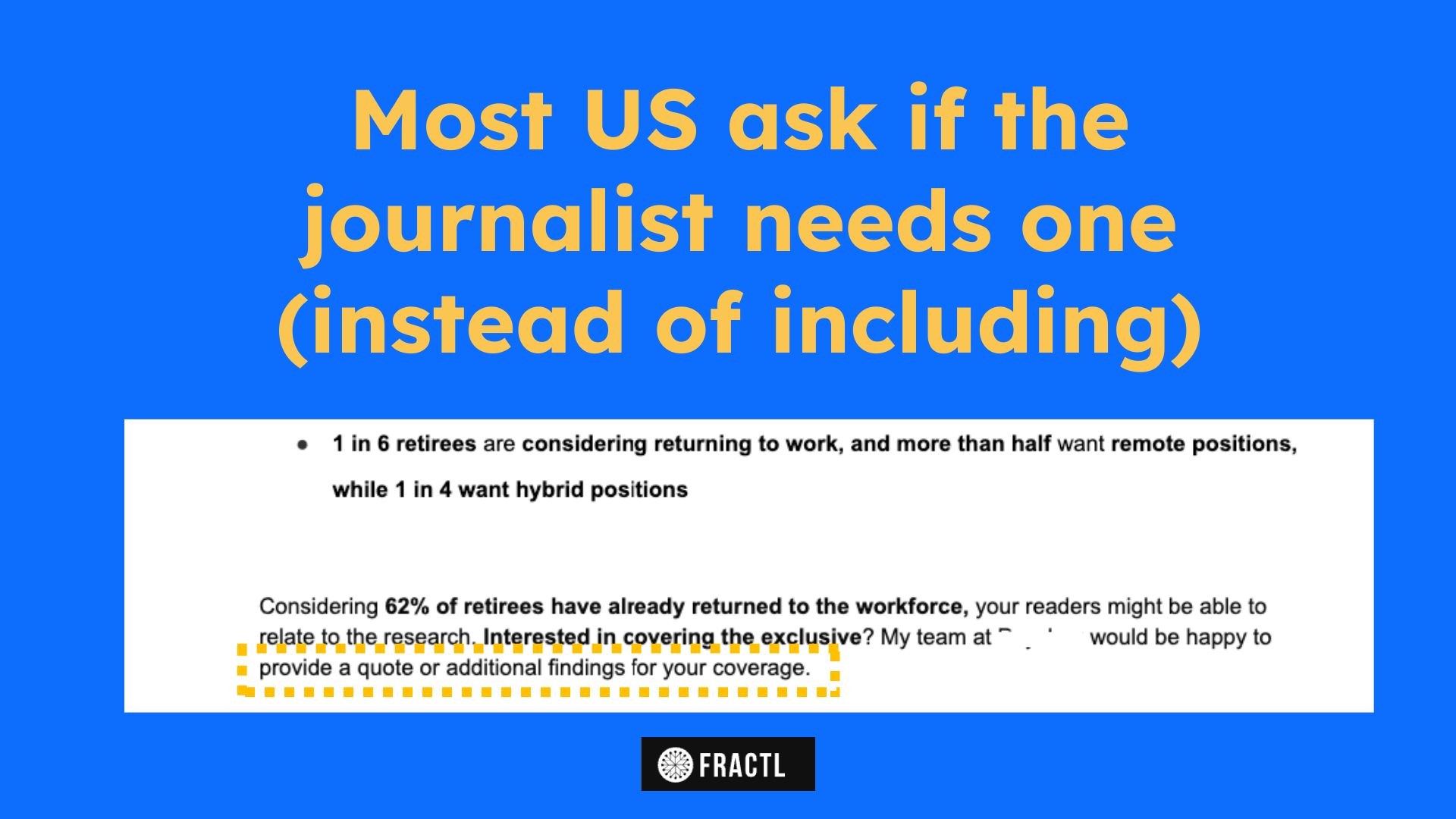
It wasn’t as stark as the press release one that I shared, but there was definitely a difference.
This one, I think, is kind of a personal preference.
I don’t think there’s any right way to do it.
There are some PR professionals who are the mindset of you got to give everybody every single thing that they need to make the right call and to write their article, whereas others will leave the door open to getting responses if they need additional findings or data or quote.
I would say the last piece of this is just I have heard and gotten personally like when you kind of leave the door open like this for quote and for coverage, it can kind of help that relationship nudge that relationship along. Which, you know, depending on the time that you have, that might be worthwhile.
The other thing to consider is whether the journalist you’re pitching has the bandwidth to respond at all, let alone like this.
Like in super large newsrooms, maybe they won’t respond because they’re overloaded, and the smaller site and more niche sites, maybe they have more time, so they would respond.
It’s going to really depend on who you’re reaching out to, which again, I’ll get to.
Images
Like we said, it’s, you know, some people use them.
Some people don’t.
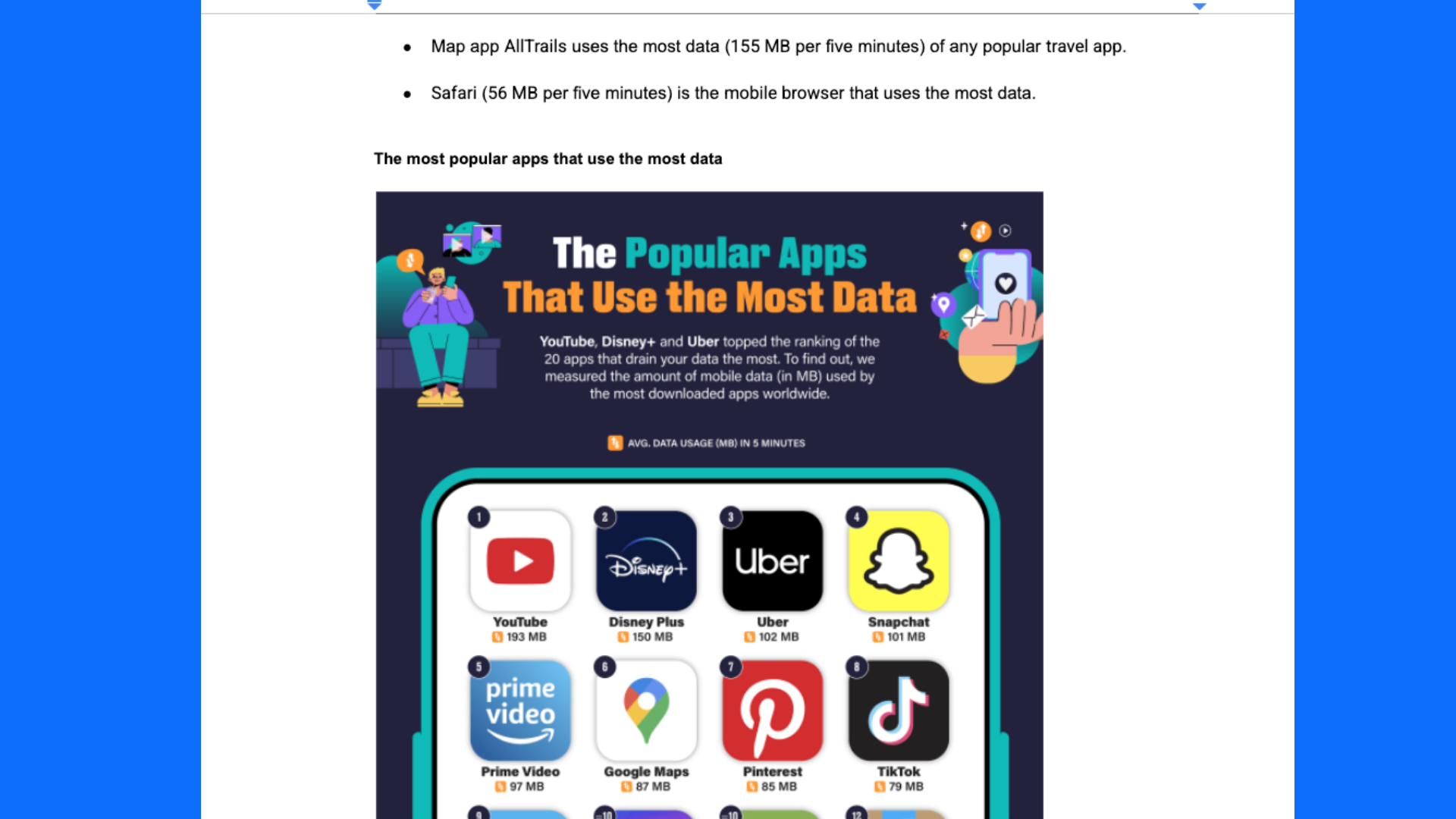
If you do, I think you really want to just do it in a way that is dependent on the person that you’re reaching out to, if they’re actually going to use it.
Data Tables
Obviously, this is for the data-specific stuff, data-specific pitches that we’re doing and stories, but you can pop them right in there.
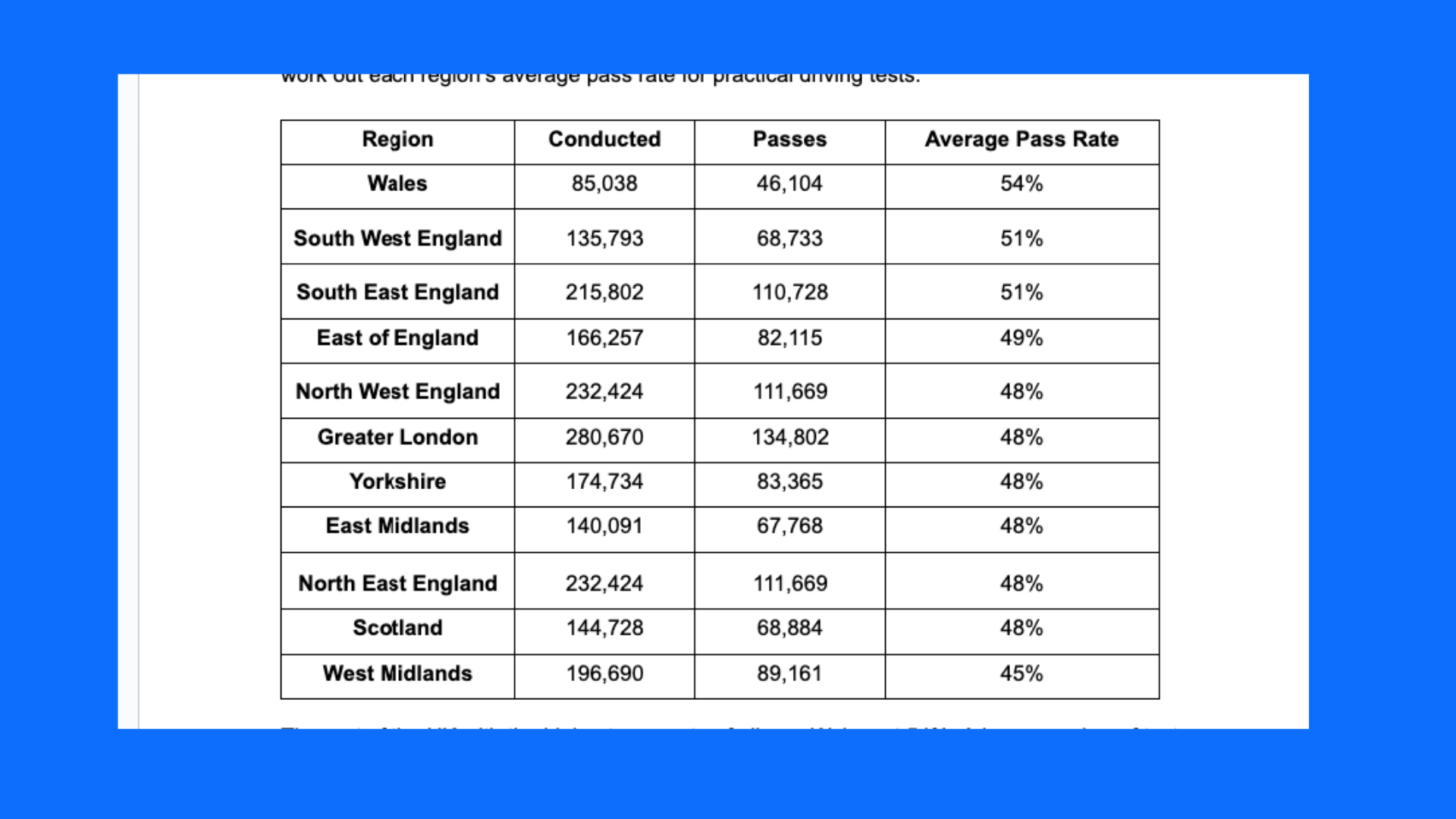
Data like content is the most widely used one.
So I figured I’d throw it in this, but you know, it doesn’t have to be anything flashy.
It can look just something like this.
Typically, they’re found in the kind of press release portion of the pitch.
What if the people that are doing it, that’s where they’re found.
Tips
Okay. This, this idea of like adding tips and kind of writing an article for the journalist.
This is a very UK centric thing based off of what I have seen in the data.
Only about 20 percent of the pitches utilize this and this really, really to me depends on the person that you’re reaching out to.
There are some publications that will write an article and then provide tips at the end.
Daily Mail is one, you know, that a lot of the UK-centric ones seem to do it this way, though not always.
Here’s in this was a post about annoying habits of travelers like the most annoying things that different travelers do.

And then, as part of the press release, here were some fun ways that drivers can deal with annoying passengers.
And they gave them, know, again, you’re literally writing the article for them, making it as easy as possible for this journalist to just plug and play.
I said this already, but virtually all the tips are UK based and they came in the press release portion, not in the pitch.
How to Pitch Expert Commentary
Okay. Now I said I would talk about pitching just extra commentary because it’s slightly different, although not very by much when you kind of break it down.
When I analyze this, it was kind of just a condensed version of all the stuff I just talked about.
So the expert commentary, unless you’re responding to a journalist request, it’s not very different.
I’m talking about if, you know, breaking news happens or you have a brand new client and you want to get them in the news somehow.
Typically, it’s going to be like reactive to a trend or maybe there’s an upcoming trend. There’s a holiday, something like that.
You start with the why now, so I wanted to reach out with comments on how to avoid the phenomenon of holiday hoarding.
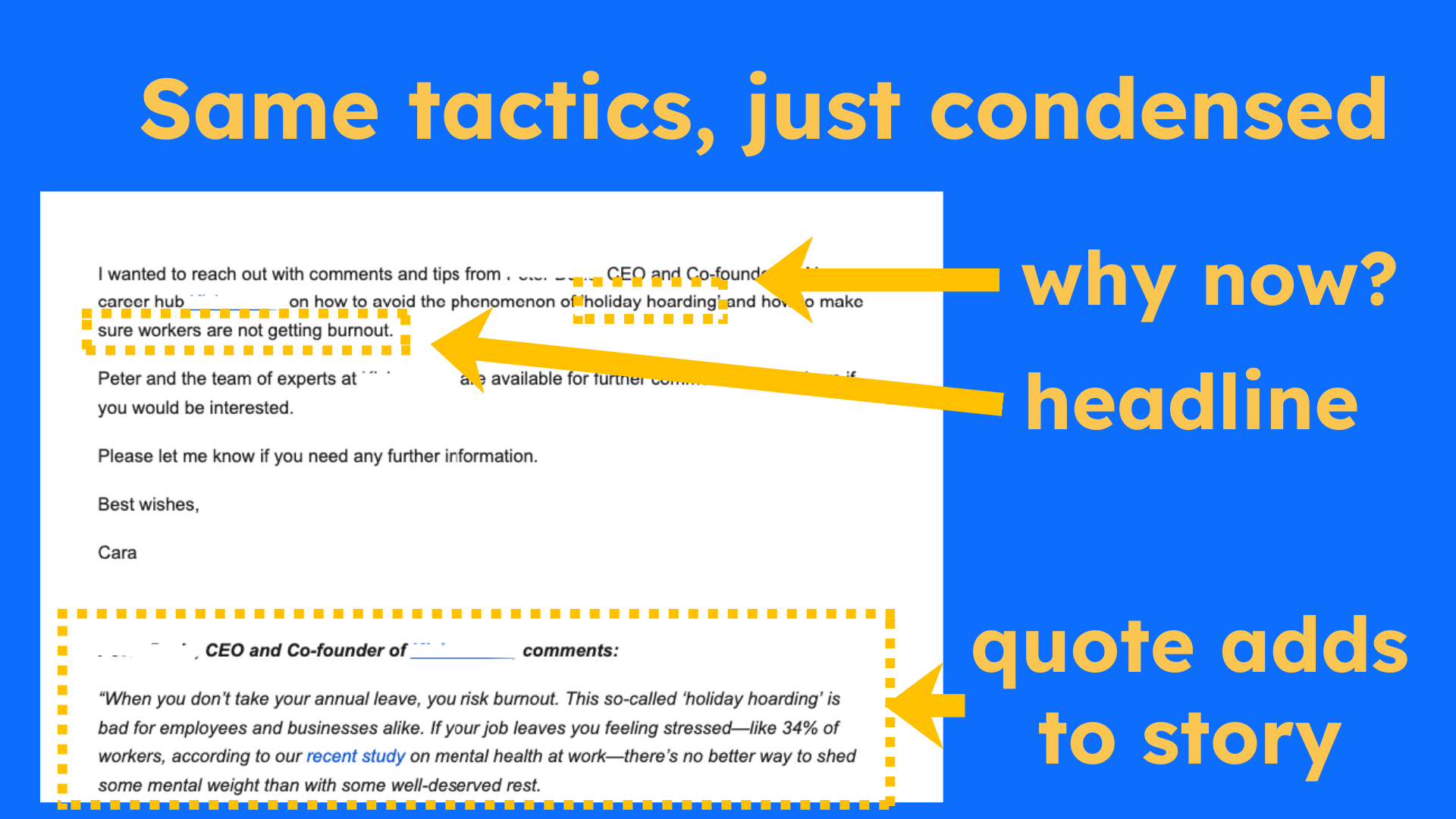
Okay, that’s your why now and then the headline is kind of How to make sure workers are not getting burnt out So holiday hoardings happening, you know, it’s the holidays Workers are probably getting burnt out. That’s the takeaway.
That’s the story.
And then the quote just adds to that story.
Put your journalist hat on.
You got to think about the different angles.
What’s the narrative?
How do you want to shape this?
What’s going to add something?
What’s going to add value to the story that you’re covering?
Here’s another one. Again, apple cider. I think I shared this already. Apple cider vinegar for weight loss is up 277 % headline, but is the supplement really any good for weight loss?
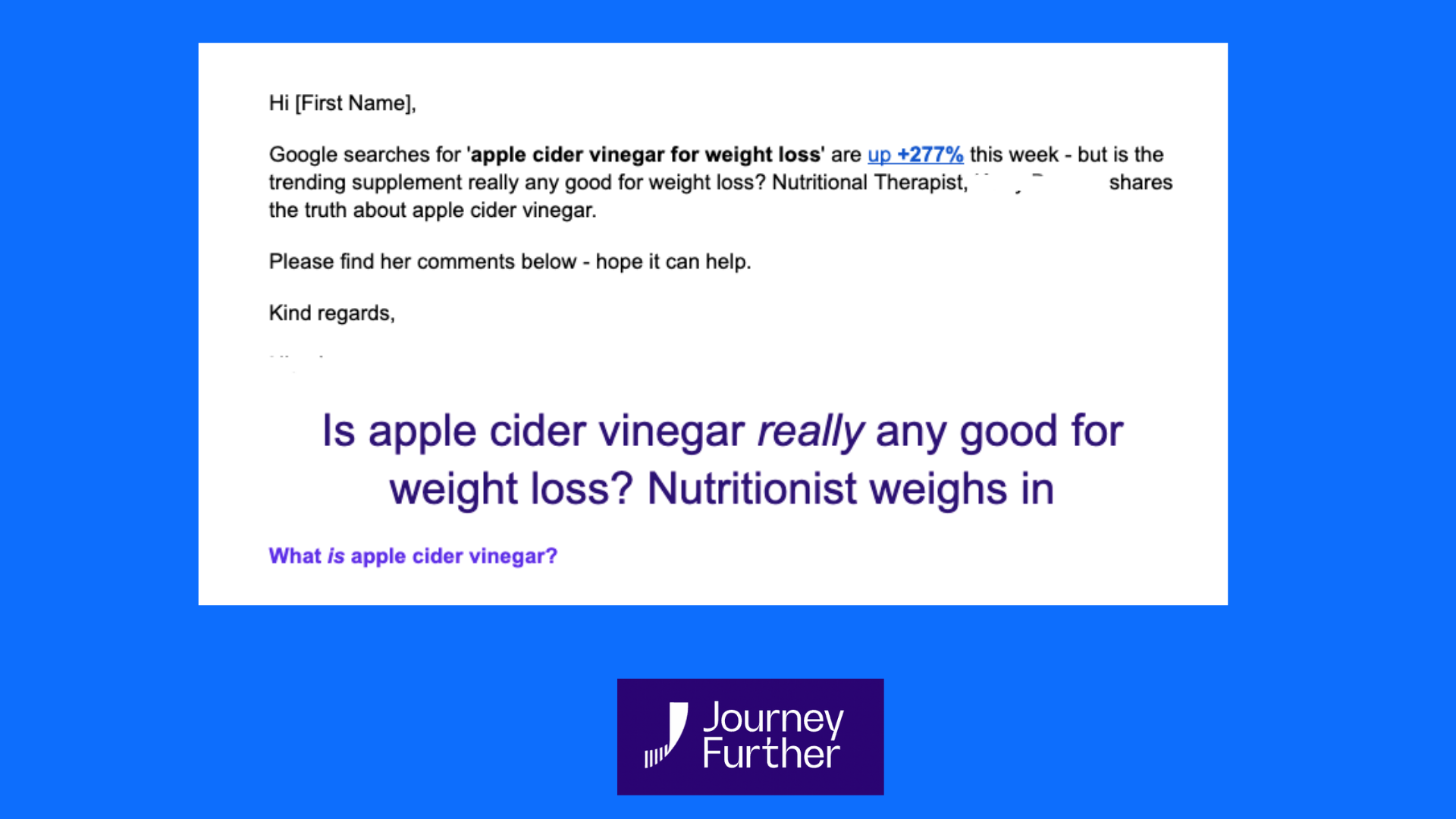
Okay. There’s the curiosity, but kind of like that.
Maybe that’s the headline, and then you could see they really leaned in on it here.
And then you get into kind of the tips and the commentary itself. What is apple cider vinegar? And then you get in, you have your quotes from people.
How to Decide What to Include in Your Pitch?
I caveated a lot of that, and this is why.
I think you come to a webinar like this and you’re like, I know all this stuff, but how, when should I use this?
And how, and I think the easiest way is always, always, always going to be to read the article of the person that you’re pitching to, that will tell you everything you need to know.
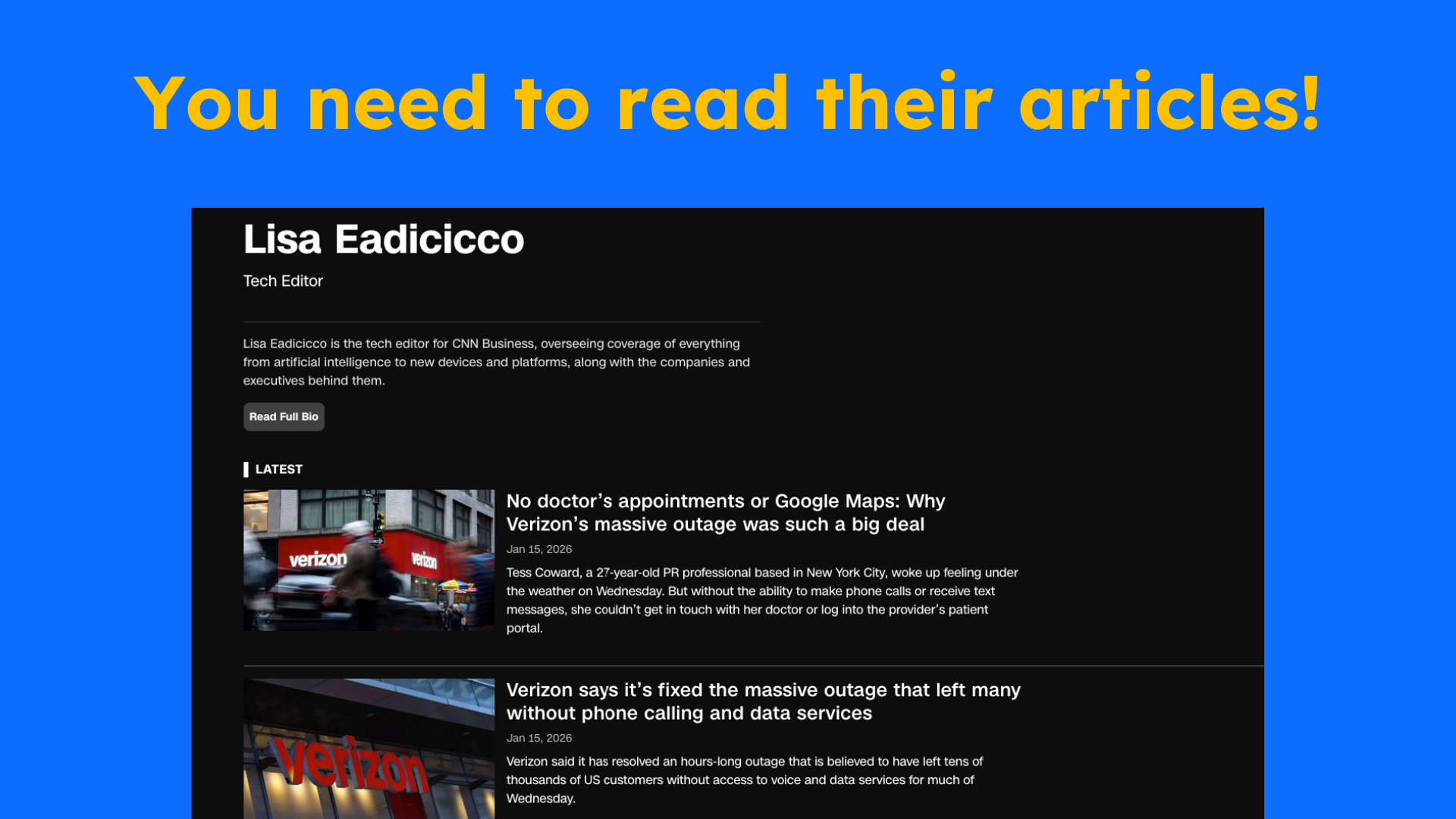
So you go to the recent articles on your author page, typically, and this will guide you into it.
It is frustrating surprising whatever that only 56 percent of us on digital PR space are reading recent articles to understand the fit for these pitches.
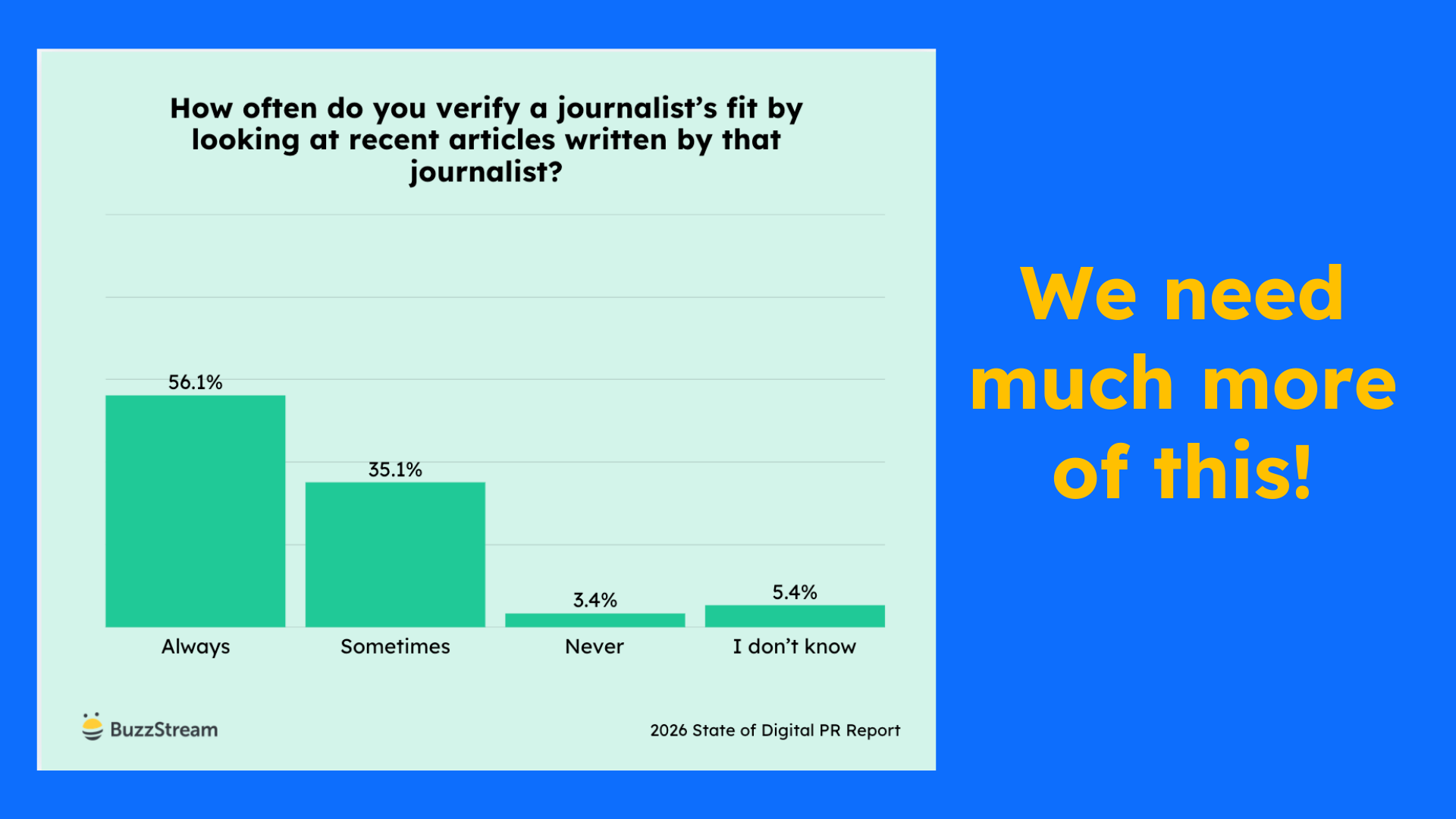
But I think that is really the way to do it.
So what you will find how to write your pitch, how to format it, and how to frame the stories by reading just a few of their recent stories.
So answering all the questions before, should I add an image?
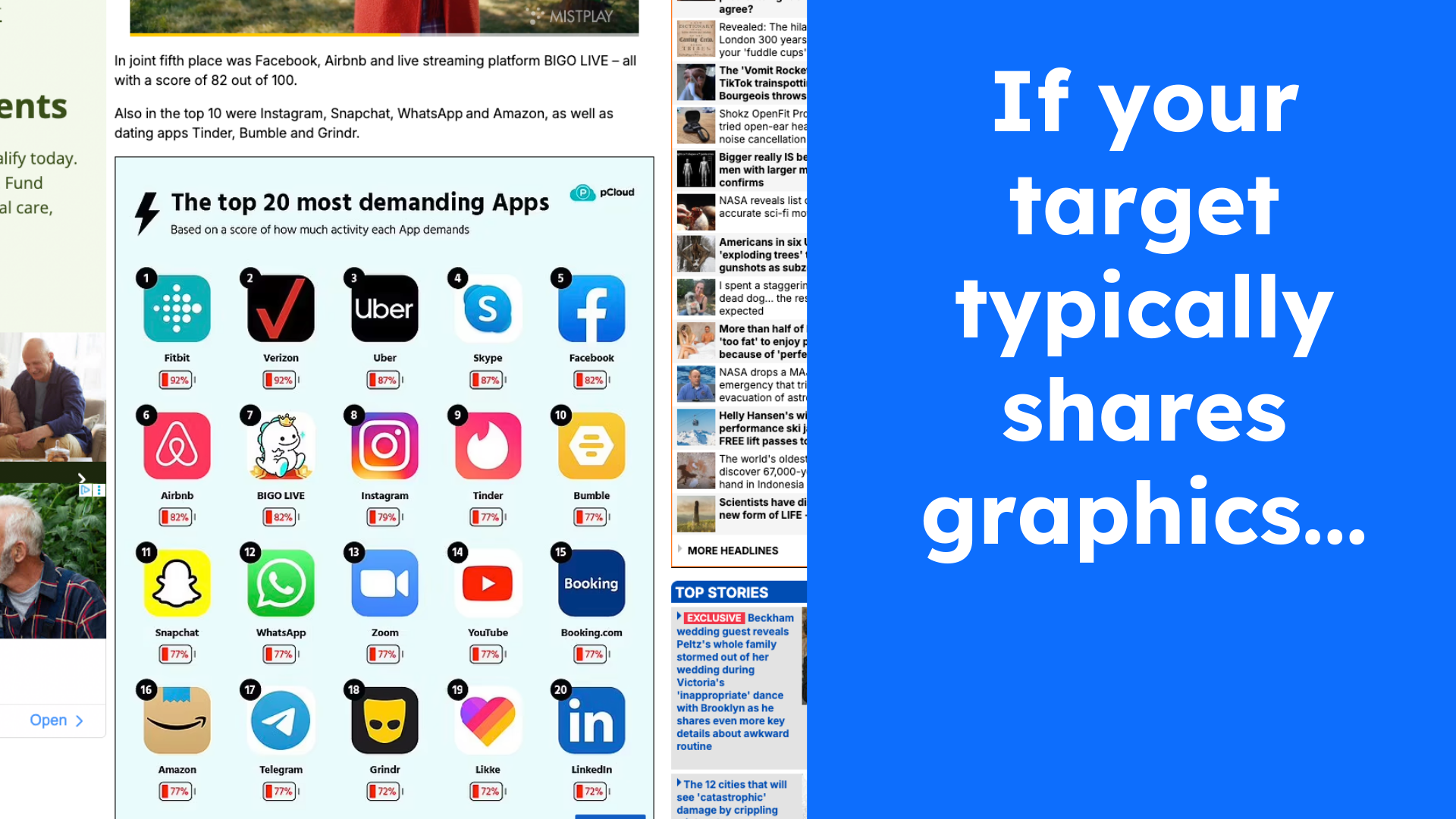
Well, if your target publication, and specifically the journalist, likes to share images, put that graphic right in line, right?
Do they like to share tips?
As I said, this is from the Daily Mail.
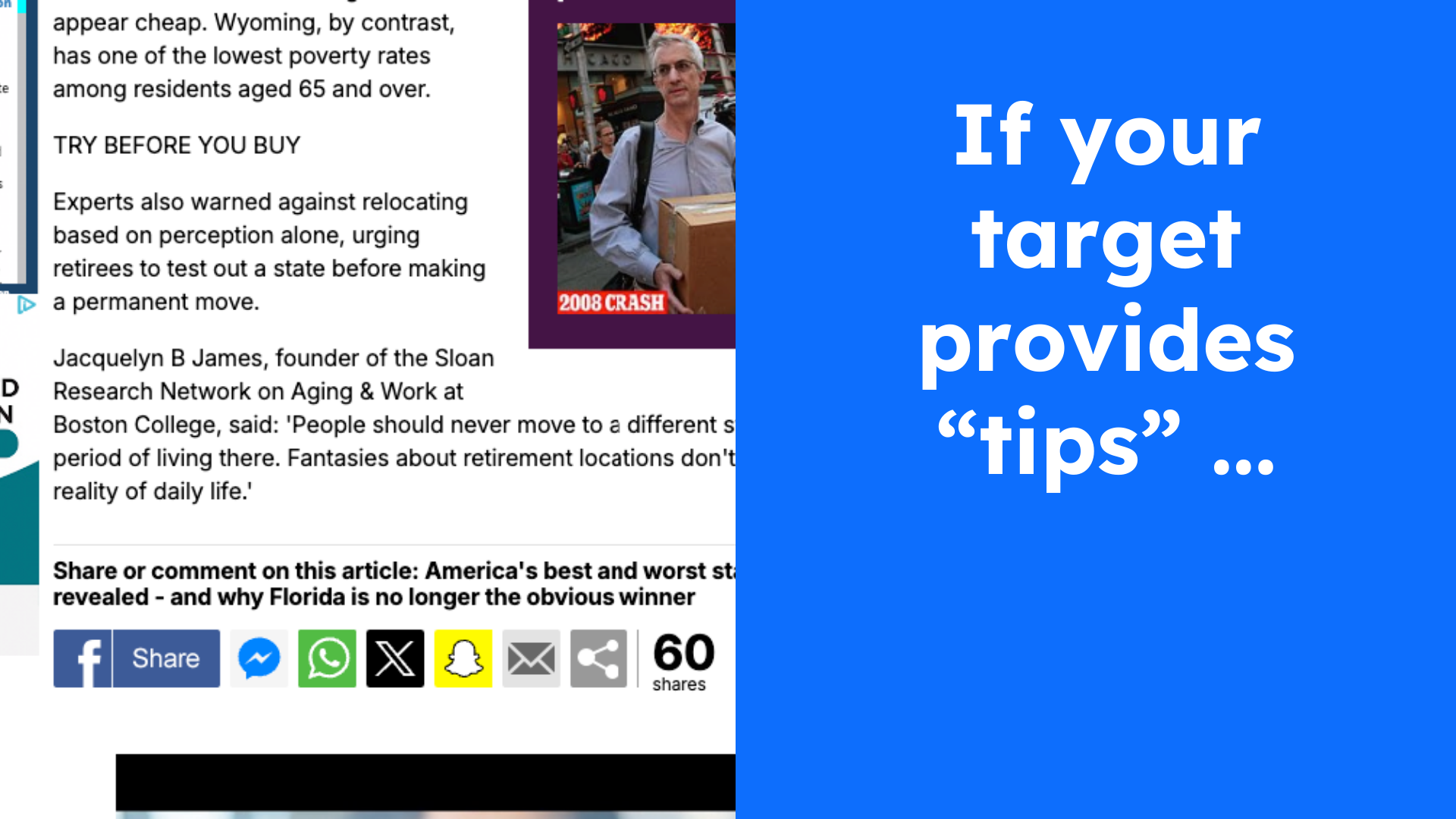
You could see that they actually have these little tips and expert commentary after the post itself.
Then provide tips.
Make it as easy as possible.
Are they putting in data tables?
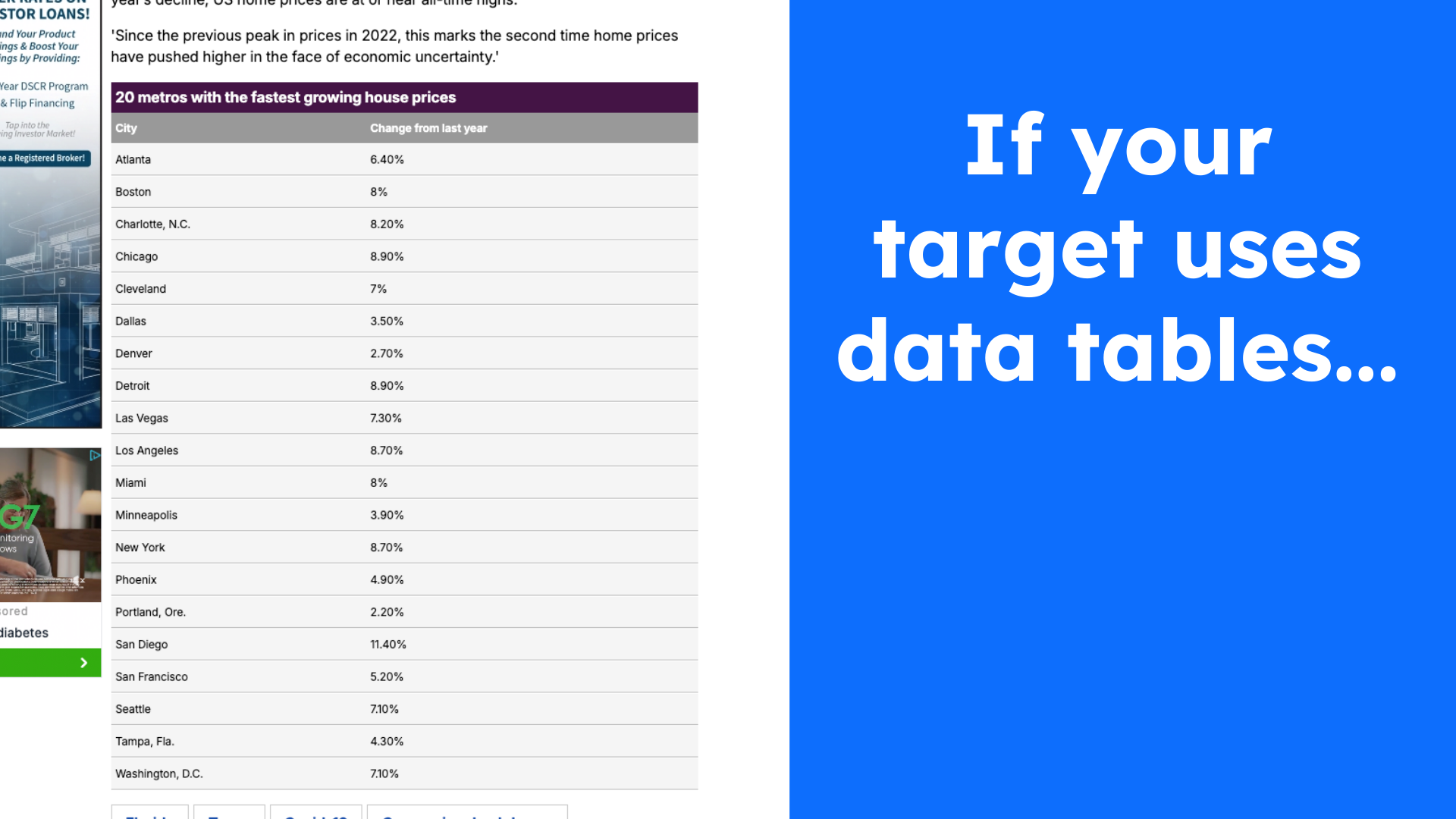
Give them the data table.
Do you see the extra quotes right in there?
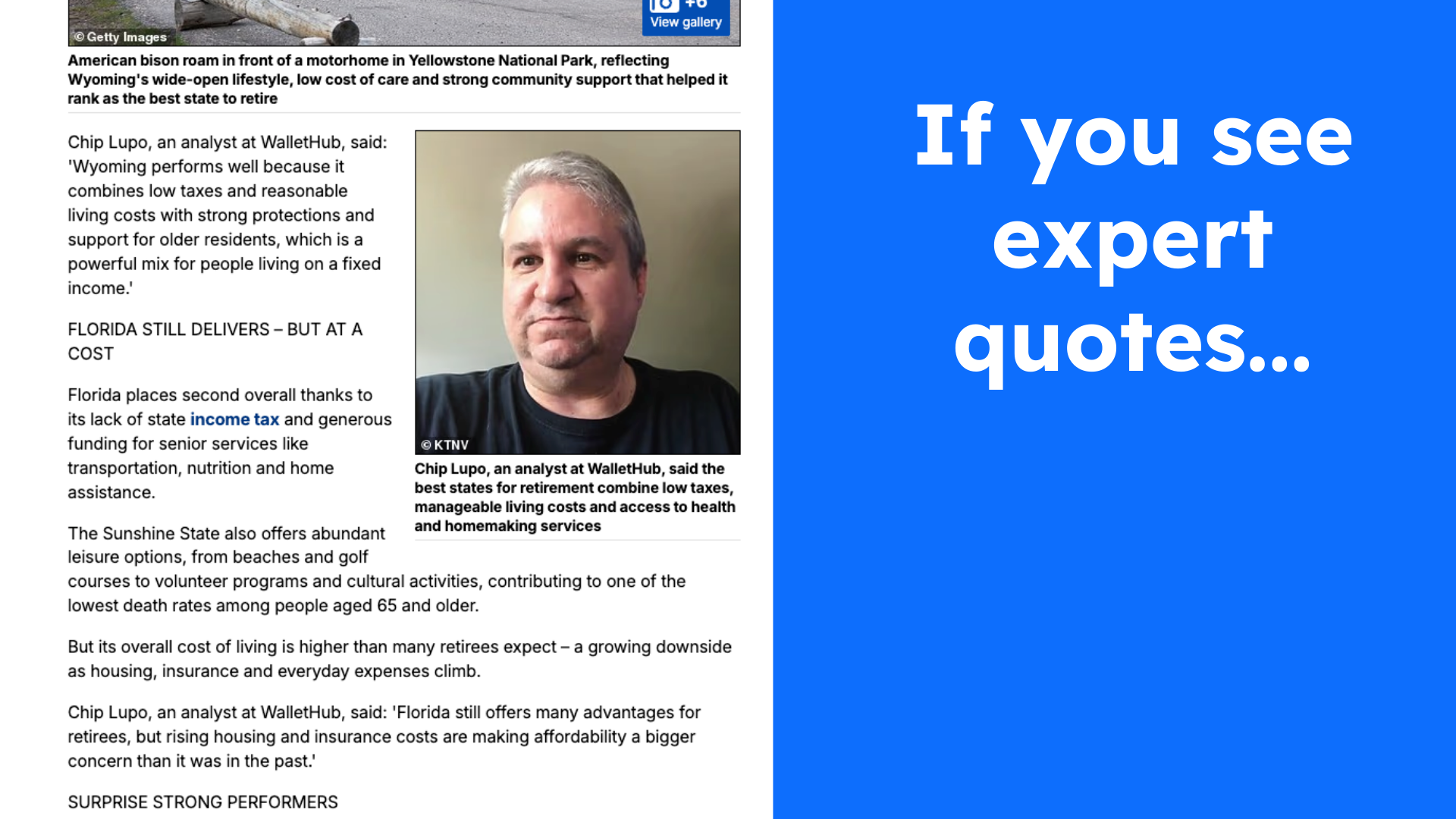
Chip Lupo from Wallet Hub.
Yeah, then you should be giving them extra quotes.
You don’t have to ask like they’re going to be using them.
And then the thing that comes up with all this is like, right, that takes a ton of time to do that, right?
This is personalization.
And I have to obviously call out ListIQ is like the reason that we built this was so that you can do this more quickly.
So if I’m doing a post or on flight cancellations because of all the weather, then I can easily do a Google news search.
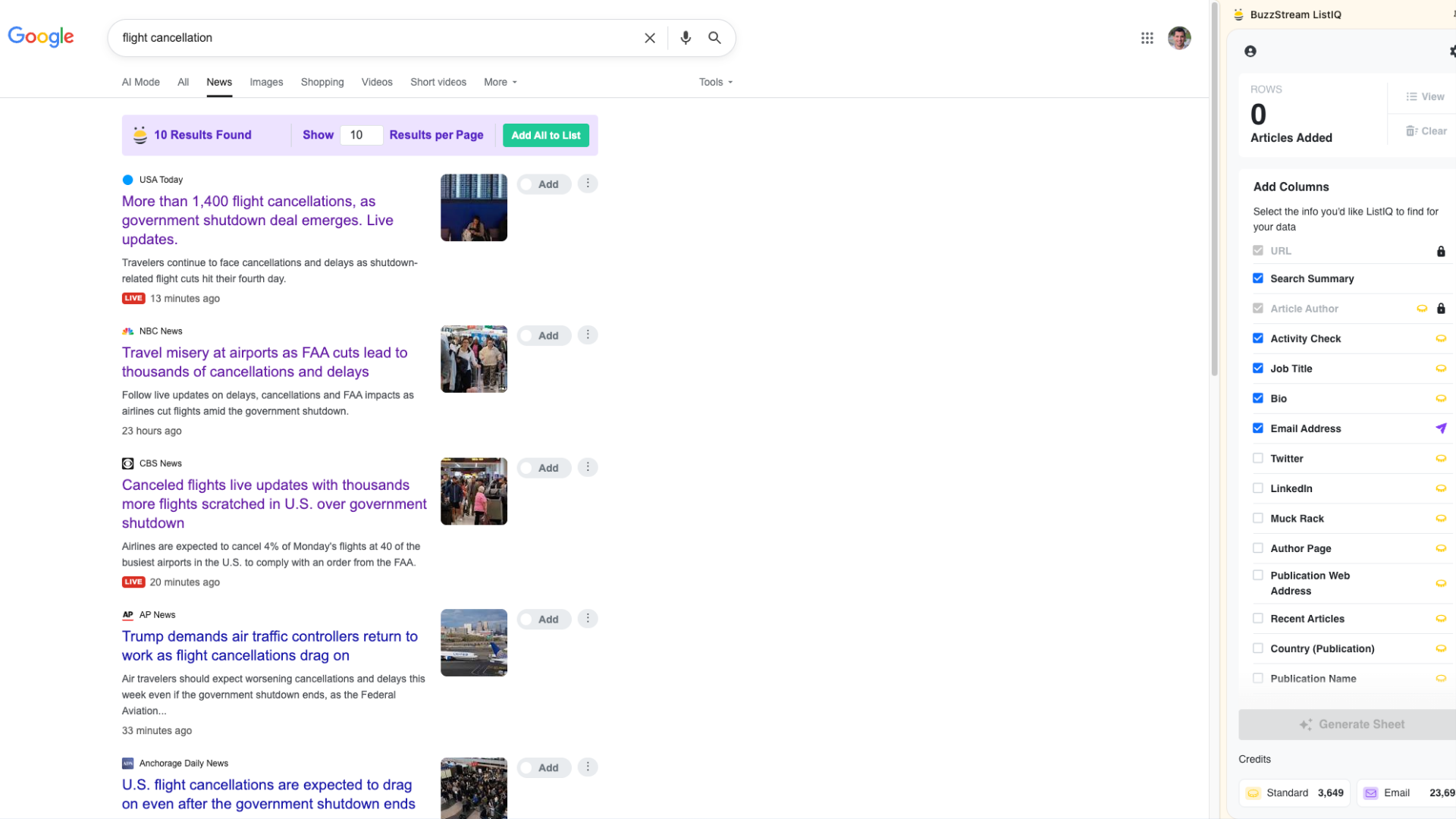
Then I’m going to turn on Google list IQ activity, check bio, email address, and recent articles.
I want to select all these things. And then what I’m going to end up with is a Google Sheet with all the authors, their job titles, and their verified email addresses.
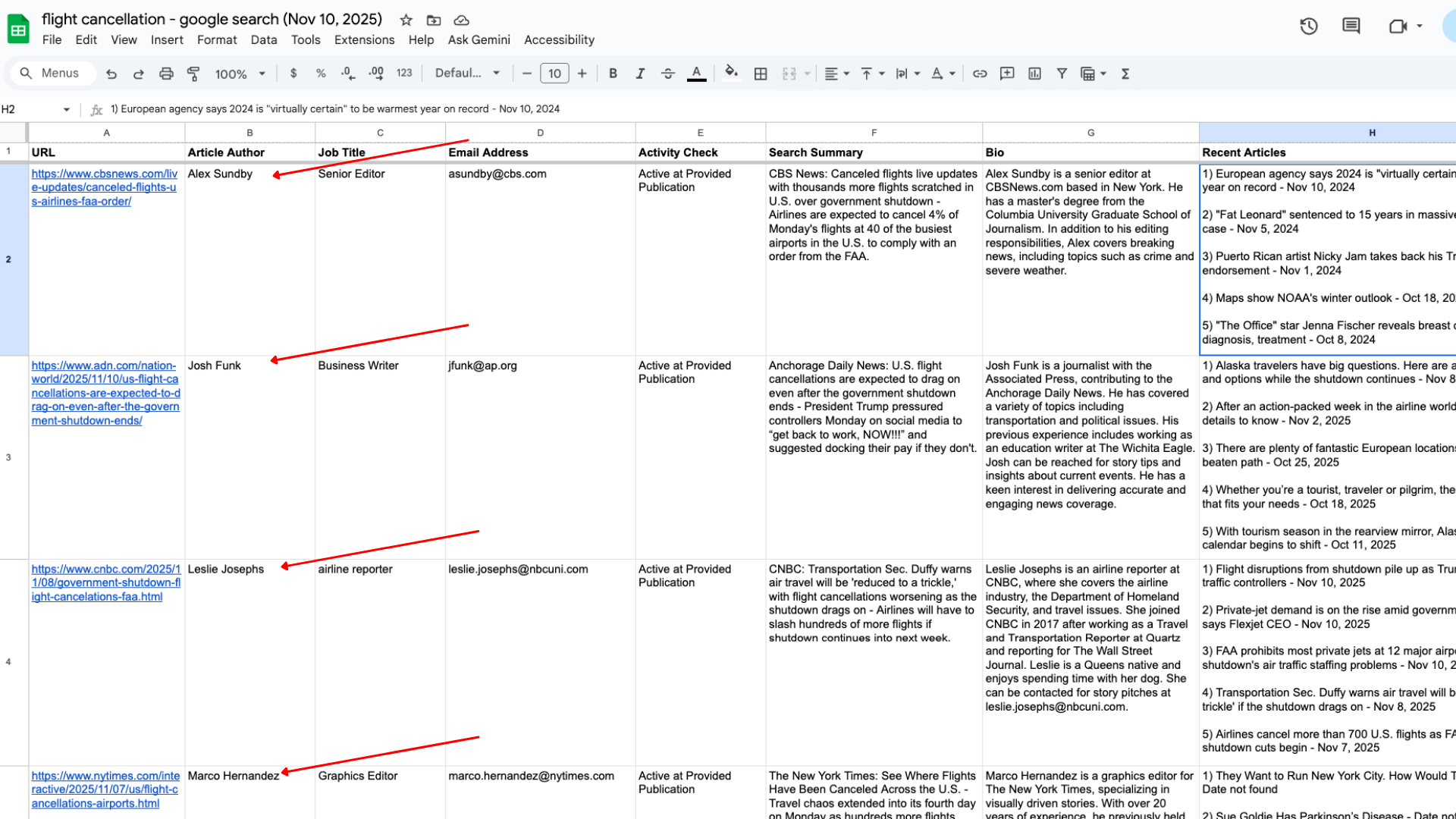
It shows whether or not they’re still active at the publication their bio to make sure that where I’m reaching out to people who cover this.
But more importantly, I’m going to be able to check out their recent articles.
I’m gonna see how they’re writing things.
I’m gonna go into their bio, their author page, and I’m click through and read these articles and really understand the key components of what it is that they’re writing about.
That’s really what is going to clarify all of this for you really quickly.
Audience Questions
Here are some questions from the audience.
How do I make a boring subject or topic appealing to journalists?
I love this question. I actually did like a whole piece on this.
I did a whole, presentation and then I have a YouTube video when I was back at siege on this.
It’s like one of my favorite topics to talk about, but realistically, think of like in the insurance industry.
That is like one of the most boring ones and like there are some really killer pieces out there and it comes down to like being able to access the data for a lot of people.
But the thing to think about I think in any of this stuff is the why now ?
The timeliness aspect and why it is appealing to the users, right?
So like the actual readers of your journal, your target journalist publication.
The other thing to think about is like the emotional side of things.
Like if you can figure out something that is really emotional, whether it gets people fired up, they get something excited about something, fears, always do well, that kind of stuff.
That really seems to make an impact.
So I would say that’s through my mind too, but I’ll actually share that presentation as well that I did because I go through a whole workflow for that.
Do you think reporters would prefer a “personalized intro” that points to recent stories they’ve done?
The next one is, okay, I think this was Devin. Great question.
Do you think reporters prefer a personalized intro that points to recent stories they’ve done? The data was kind of up in the air with this when I tried to dig into this.
And again, like my thought with this is just that it’s, it’s really dependent on you yourself.
And the personalized intro can definitely be misconstrued as fake.
Consider these days too, that there are a lot of AI pitch writing software out there that, tries to do some of this.
I’ve gotten some of the weirdest “personalized” emails lately, like based on my LinkedIn, it was like it’s sure it looks like it’s cold in Greenwich, Connecticut, today.
It was where I was, but I don’t need to know that. I don’t have the time to like comment on that.
I don’t think doing that sort of thing necessarily does you a big favor.
So I would say if it is really relevant.
The way I would do it is think of it like this: if your story is adding on to something that exists already.
For instance, The Press Gazette did a thing about blocking AI bots back in June.
Preska shared this most major news publishers block bots.
This is way back when, 2023, they did another one, I think last year at some point.
But then I just did one recently and pitched it to them, and they covered it.
They covered our piece this tim,e and because the way that I framed it was, hey, you guys covered this like, “Charlotte, you covered news publishers blocking ChatGPT, but a lot has changed since your last study.
So I thought you might be interested in this.
Like that’s personalizing and mentioning an article, but it’s not like, “Hey, you covered this. I thought it was great and really interesting that they’re blocking bots. So I thought you’d be interested in this city study” or something, you know?
There has to be some real, obvious connection.
And I think if you’re adding to a story that they’ve done that, that to me really makes a big difference.
Okay, next one I see here, I’ll reshare this again.
How Do You Build Relationships Before Pitching?
Next one is this. Okay. How do you build relationships before pitching? love this as well. Brit Klontz, think, and Jacqueline Lambert were on our podcast.
I could share a link to this.
They had some great recommendations for this, this and Brit does it really well.
That I’ve seen it, a lot of people do this, but this idea of like sharing content from your favorite journalists and kind of helping them out, like when they cover, give you a piece of coverage, you go on your personal Twitter and share it and like it, comment on it.
Again, put yourself in their seat.
They have jobs to do too, right?
A journalist has a job.
Their job is to get their post out to as many people as possible.
So if you can get on there and help them, that makes a big difference, right?
You’re gonna really build your relationship that way.
Yeah, that’s, that’s all I’ll say.
I think that that makes it goes a big way.
What do you focus on when creating an outreach campaign to acquire backlinks from your competitors?
Okay, so this is like a very strategic thing and I actually really like this because this helps you do that personalization.
Take the press because that example.
Say I know that the Press Gazette is a place my competitors are getting links from them.
I’m going to look at the types of things they’re covering, and I’m going to see what it is that I can either add onto or I’m going to pitch them similar content.
Whatever the competitors are covering or wherever they’re getting links from, you can just kind of work backwards from how they’re getting the coverage and create similar stuff.
Create stuff that’s better than your competitors, and pitch it to the same people.
As long as you’re not pitching the same exact story, right?
Like obviously you don’t want to do that.
How do best practices in pitches differ between segments – like fashion, IT, energy, ministry of government, etc.?
Okay best practices between segments.
Amazing amazing question.
I got lost in the data with this one.
There are some nuances but there was nothing really that I can extract to say like yes every IT person needs images or you know every the people in the Ministry of Government only like city index studies.
Again, it’s really going to depend on who you’re pitching to, right?
Like, because there is a wide range of publications in all of these segments and industries, right?
There are fashion publications that share images.
So yes, you should be pitching them in images.
There are fashion ones that are more, you know, straight. They don’t, they just want city index studies or whatever.
So again, the leading indicator for all this stuff is going to be who you’re reaching out to, the type, and the format of coverage that the publisher, and specifically the journalists, like to actually do.
Should you include a press release in your pitch or not?
That’s a toss up. Lenny, like I don’t want to, like a lot of these are agency specific, right?
Like you have built your workflow that you know works. So you’re kind of leaning into it.
I would test it.
I wouldn’t want to give you information that says, like, never use press releases, but if you’re pitching a ton, not getting any responses or links, and you’re not using press releases, maybe try a press release. I think personally, it seems like less is more, especially in the US market from the people that I’ve looked at.
But there are plenty of UK-based agencies that do pitching in the US and have a lot of success with it.
I mean, writing a press release can be tough and time-consuming.
That’s why a lot of people are doing this like AI based version of it.
There might be this differentiator nowadays where, you know, there are getting a lot of pushback.
Journalists are pushing back on PRs who are doing things like AI-generated press releases, and people are saying, “I’m immediately discounting these pitches, and I just throw them in the trash or hit spam.”
So like, that might be a way to help differentiate yourself is by pitching less and giving them the option to open the door to communication.
If I was a fake PR or fake expert, which is a big concern in this space, maybe I wouldn’t be so forthcoming and say, “hey, you can email me and I’ll set up a time to call if you have any questions about this study.”
That to me shows that you’re a real person.
So maybe there is some competitive advantage that way.
The Perfect Pitch by Vince Nero

 Check out the BuzzStream Podcast