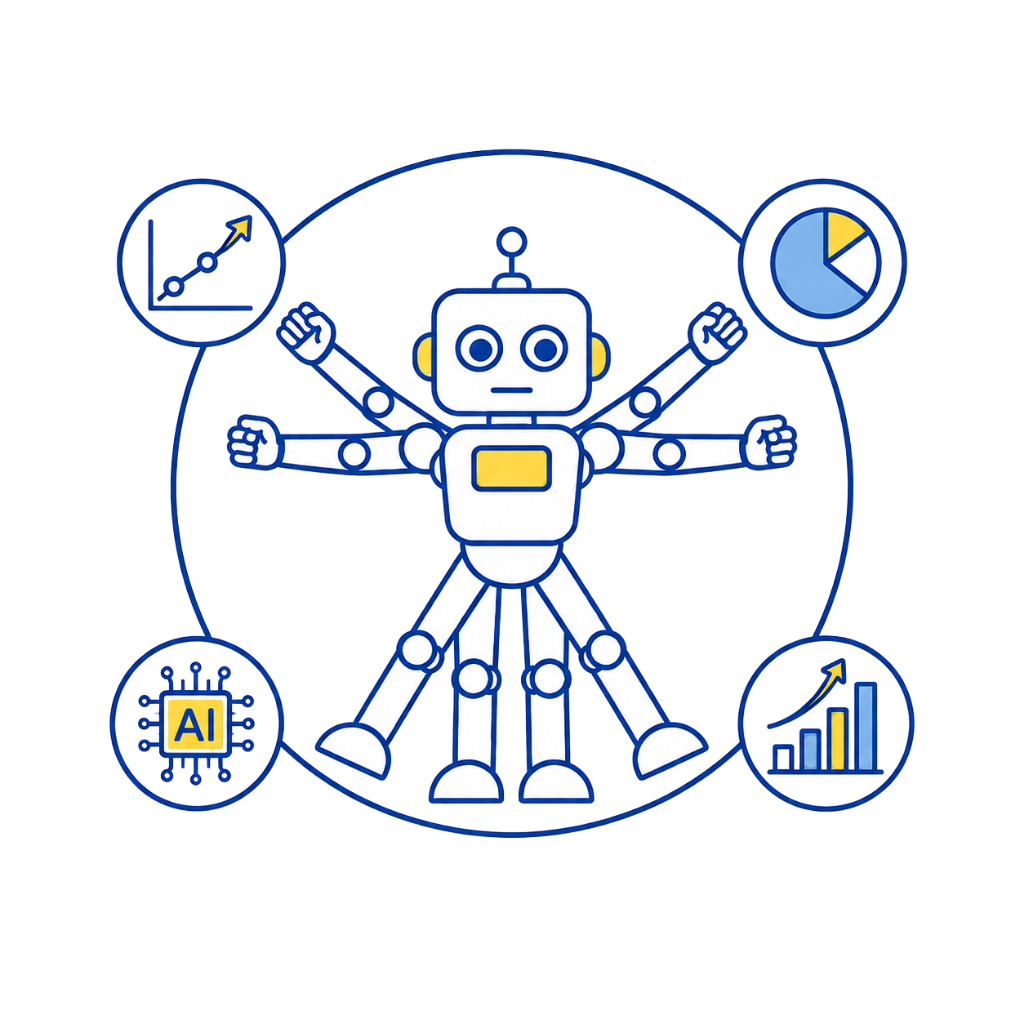
 End-to-end outreach workflow



Table of Contents
- AI citations are links or source references that AI platforms use to support and validate their answers in real time.
- AI mentions reflect how strongly a brand is associated with a topic based on training data and repeated online references.
- To earn citations, content needs to be easy for AI systems to retrieve, chunk, understand, and reuse in answers.
- A brand can be mentioned without being cited, since mentions and citations are triggered by different AI processes.
- Tracking both citations and mentions helps measure both referral potential and overall AI brand visibility.
Most people know they need to track AI visibility, but what’s more important: citations or mentions?
One may inspire clicks, but the other can push brand awareness.
Understanding how they work and the differences between them can help you better determine what to track for your brands and clients.
In this post, we’ll cover the definitions of AI citations and AI mentions, where they come from, and most importantly, which you should focus on for your goals.
What Are AI Citations?
AI citations are references generated alongside an answer to support or verify the answer’s findings.
These aren’t necessarily meant as recommendations, but rather just validation or accuracy for the model.
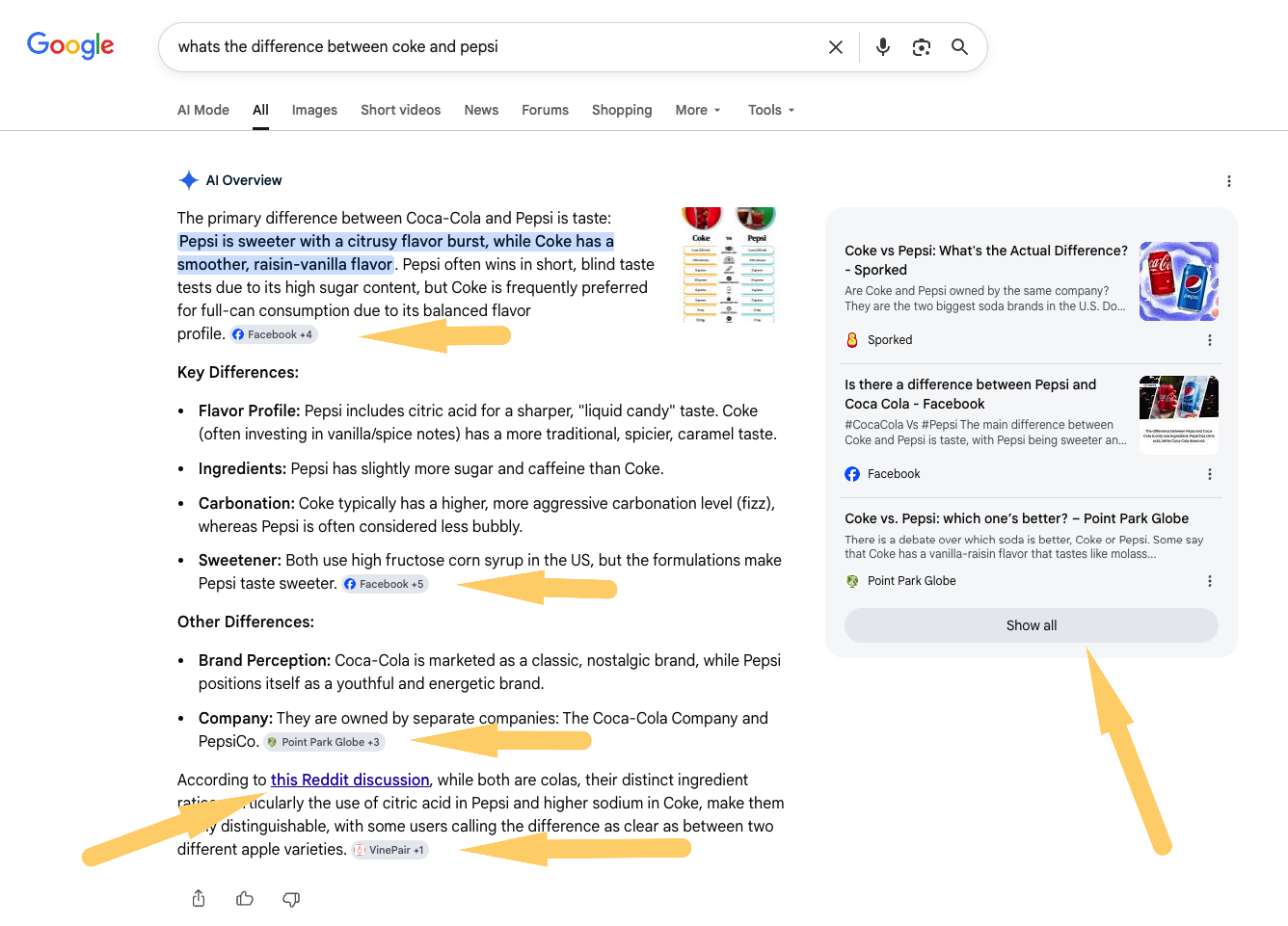
There are a few different kinds of citations, and platforms differ a bit.
For instance, here are Google’s AI Overviews:
ChatGPT looks like this with sources inline and at the end of the answer :
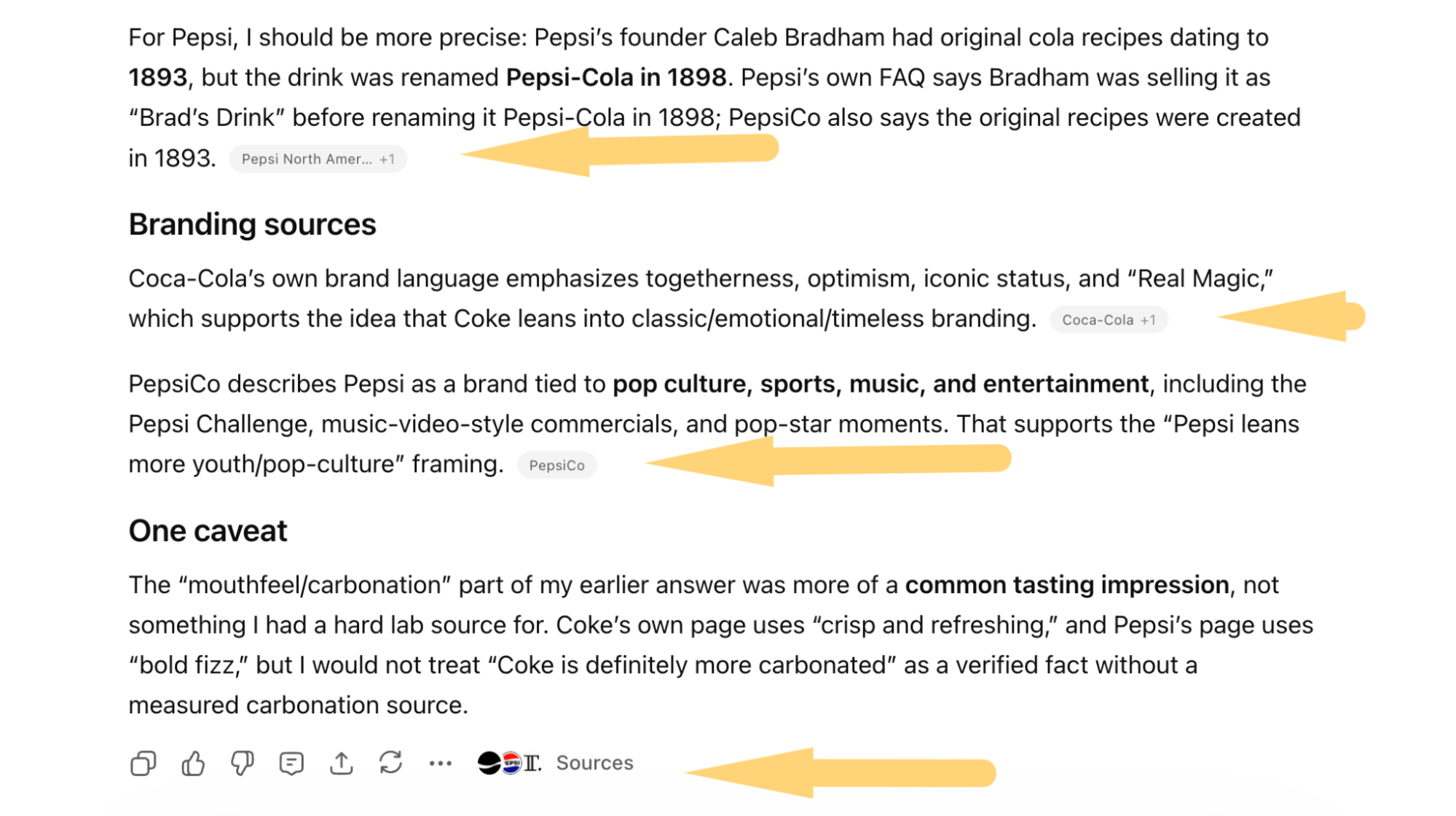
Gemini, similarly, shows inline and at the end:
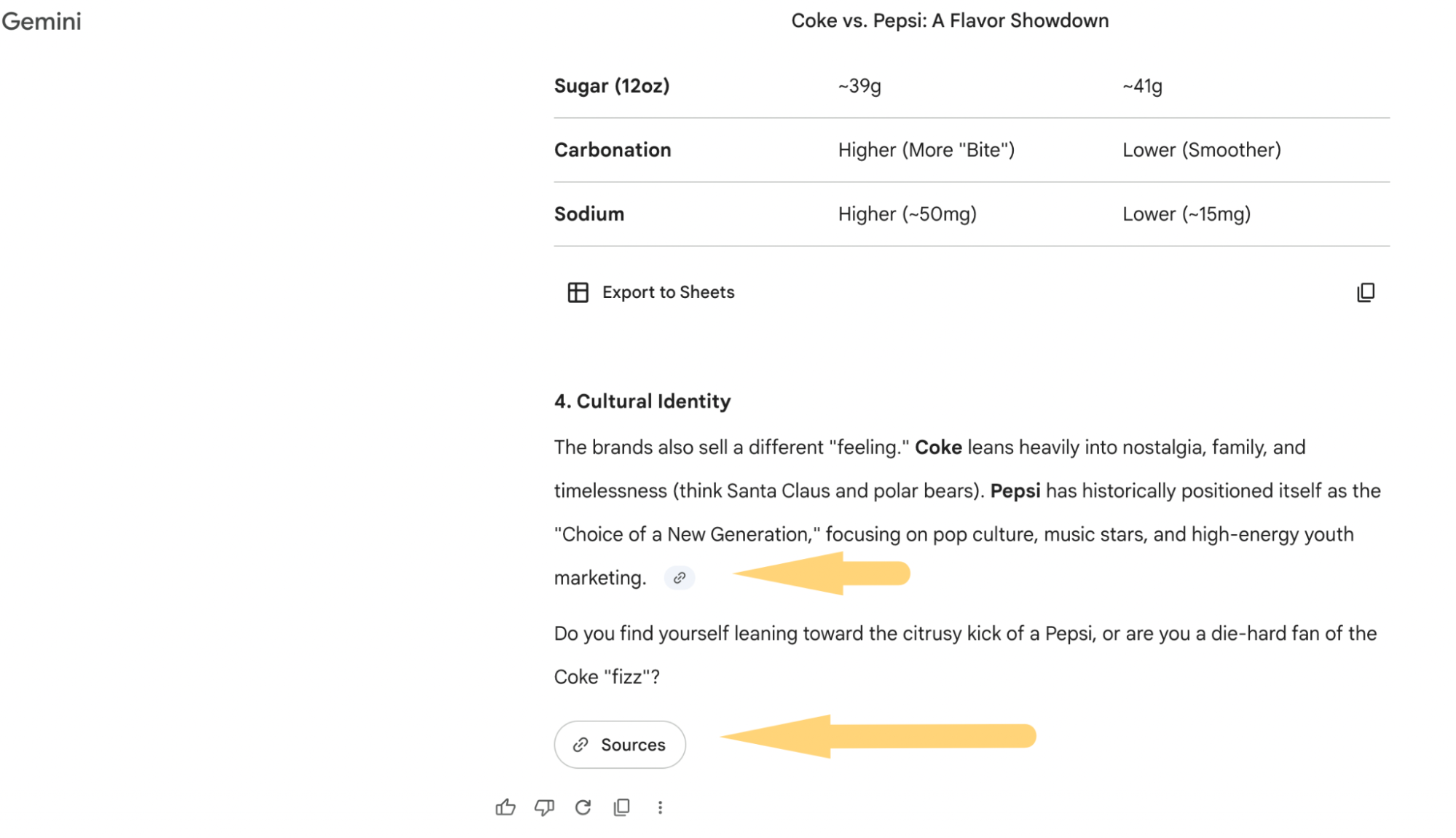
We’ll discuss whether people click on these citations later.
But first, let’s talk mentions.
What Are AI Mentions?
AI mentions occur when an AI platform simply “mentions” a brand, company, product, or term, with or without a link, within a generated answer.
For instance, when I asked what the best digital PR tools were, ChatGPT mentioned “BuzzStream”:
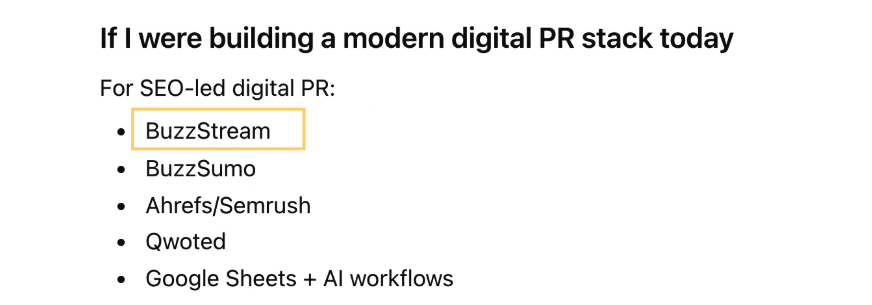
A mention can come in the same answer as a citation, but a citation won’t always show up.
Let’s look at how and why AI platforms use them.
What Triggers Mentions vs Citations in AI Search
Mentions and citations in AI search are triggered by training data and live retrieval.
Training data is everything the model learned before it was released (e.g., web pages, publications, books, etc.).
But the model doesn’t look these up like traditional search; it pattern matches.
Live retrieval is different.
When a query needs more specific or fresh information, the AI system pulls from external sources in real time. Then it grounds its answer (with citations) against what it finds.
This is the image Google shared to help understand how “grounding” works:
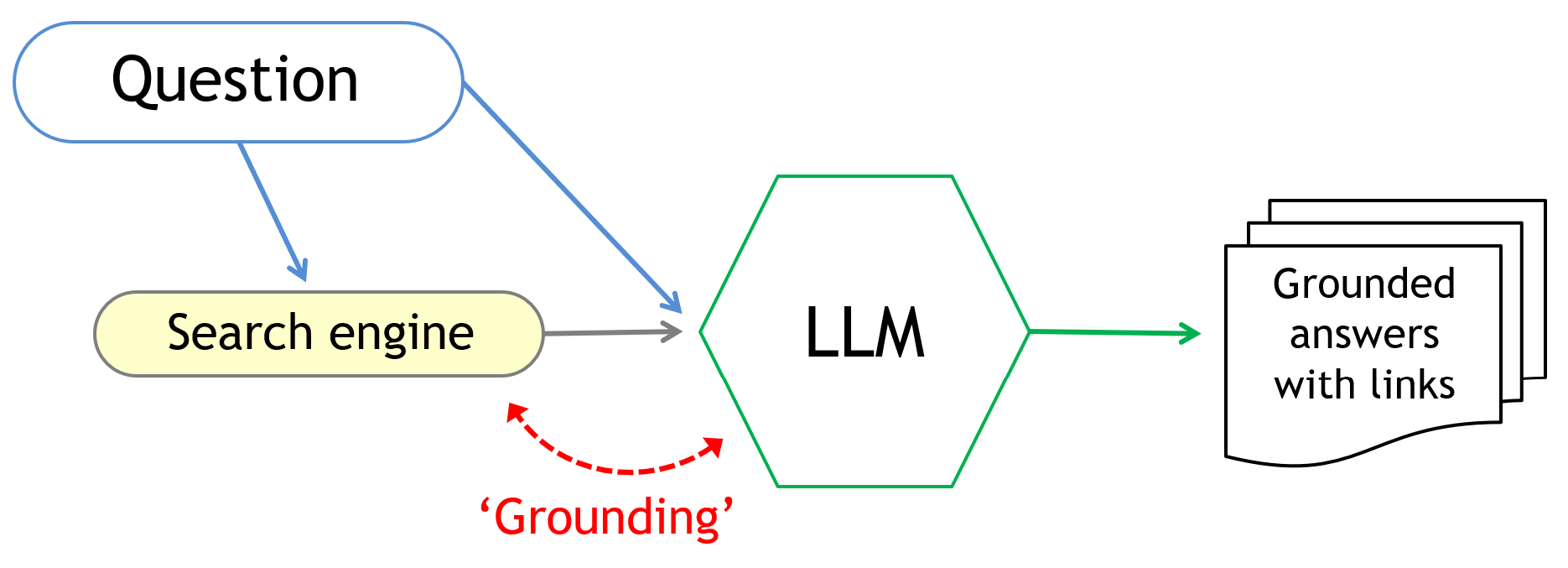
Think of this this way: mentions represent how AI understands your brand based on everything it’s ever seen.
Citations are a real-time collection of sources to support a specific answer.
| Mentions | Citations |
|---|---|
| Can come from training data or live search | Come from live search |
| How AI sees your brand across everything it has seen | Sources AI chooses to support a specific answer |
Though a third layer is emerging called ‘cached’ retrieval, which James Wirth of Citations Labs explained to me, “This is pointed to as one of the reasons why query fan outs (QFOs) are going down in newer versions of AI models.
It’s not that they’re building a public ‘index’ of the web to rival Google, it’s just that as they run QFOs (that they page for), they’re caching and categorizing results and querying against those instead of running a new API call to Google (eg executing a query fan out) every time they want to ground a prompt to generate an answer.”
Now that we know what they are, we need to understand why and how AI chooses what to mention or cite. For this, we need to dive into the research.
How Do You Get Cited By AI?
To be cited by AI systems, content likely needs to be retrievable through search, semantically relevant to the query, and contain passages that are easy for the model to extract (often called “chunks”), understand, and reuse in its answers.
Here’s why:
When AI determines it needs outside info to answer the query, it doesn’t just perform one search. It breaks them into multiple subqueries, a technique known as query fan-out.
So if you search for the best digital PR tools for link building, the model might fan out “digital pr tools”, “link building software”, and “media database tools”, then synthesize everything into an answer for you.
The underlying mechanism is what you’ve heard called Retrieval-Augmented Generation, or RAG.
Here’s what it looks like, and here’s where you need to be included:
1. Performs the search.
The system searches across potential sources. To be cited, you need to be included in the initial search set.
2. Analyzes the search “candidates”.
AI systems then evaluate the candidate documents.
We don’t know exactly what they look at, but it may consider factors like:
- SERP position
- domain reputation
- freshness
- topical authority
- engagement metrics
- Semantic similarity determined by vector embeddings
Right now, we can only rely on others’ studies and data to connect the dots.
For instance, Ahrefs found that 38% of AI overviews cite pages from the top 10 search results, suggesting that SERP position may influence retrieval.
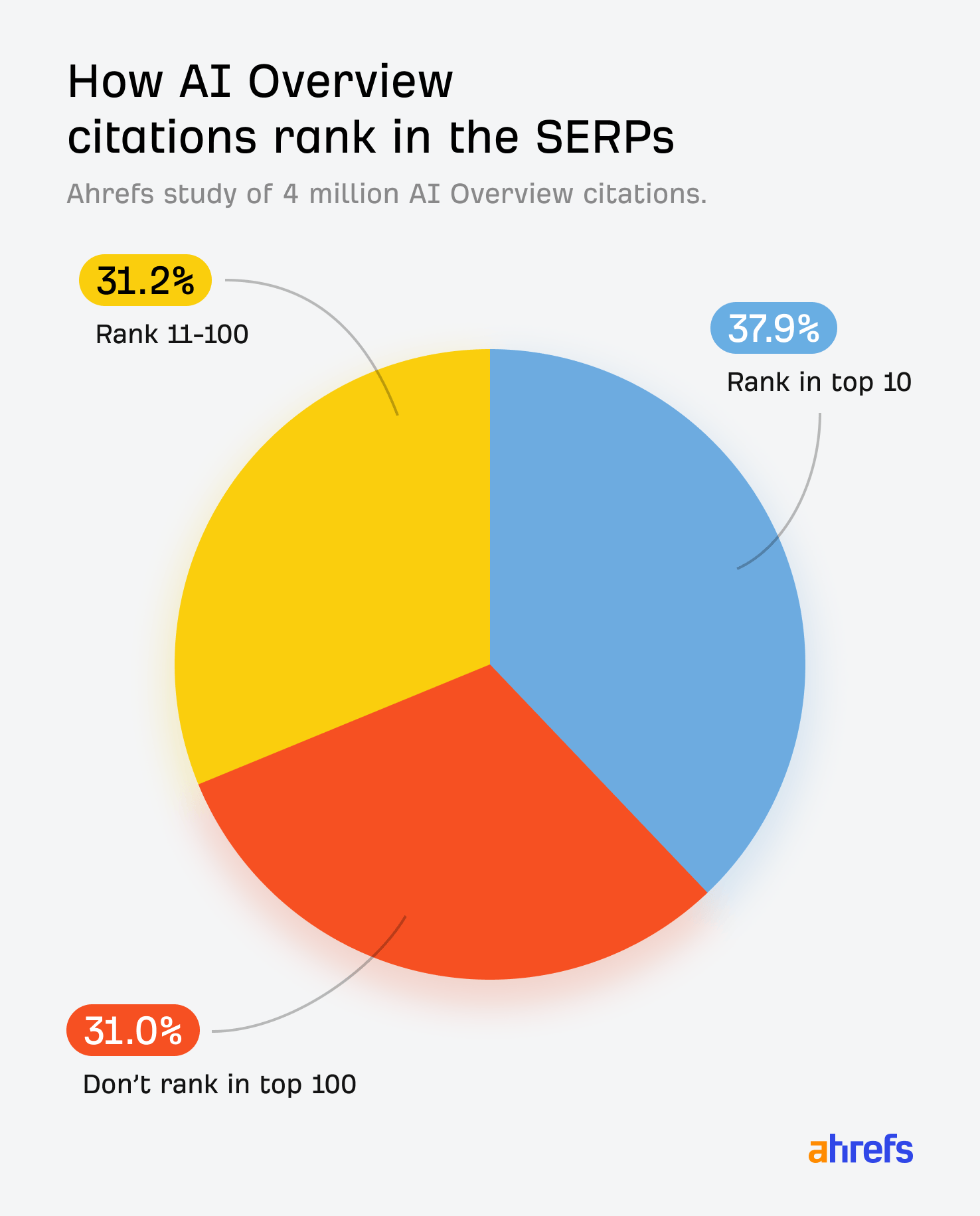
Ahrefs found that AI Overviews tend to cite “fresher” content, so AI systems may take content’s publish date into account.
These are all unconfirmed factors for citation.
3. Passage extraction
Then it retrieves the information in chunks and passages (think small paragraphs, tables, bullets, definitions, etc.)
AI researchers often talk about how, during retrieval, AI systems break your document into chunks and embed them in a vector database.
Here is a fantastic image from the iPullRank team on the concept of chunking:
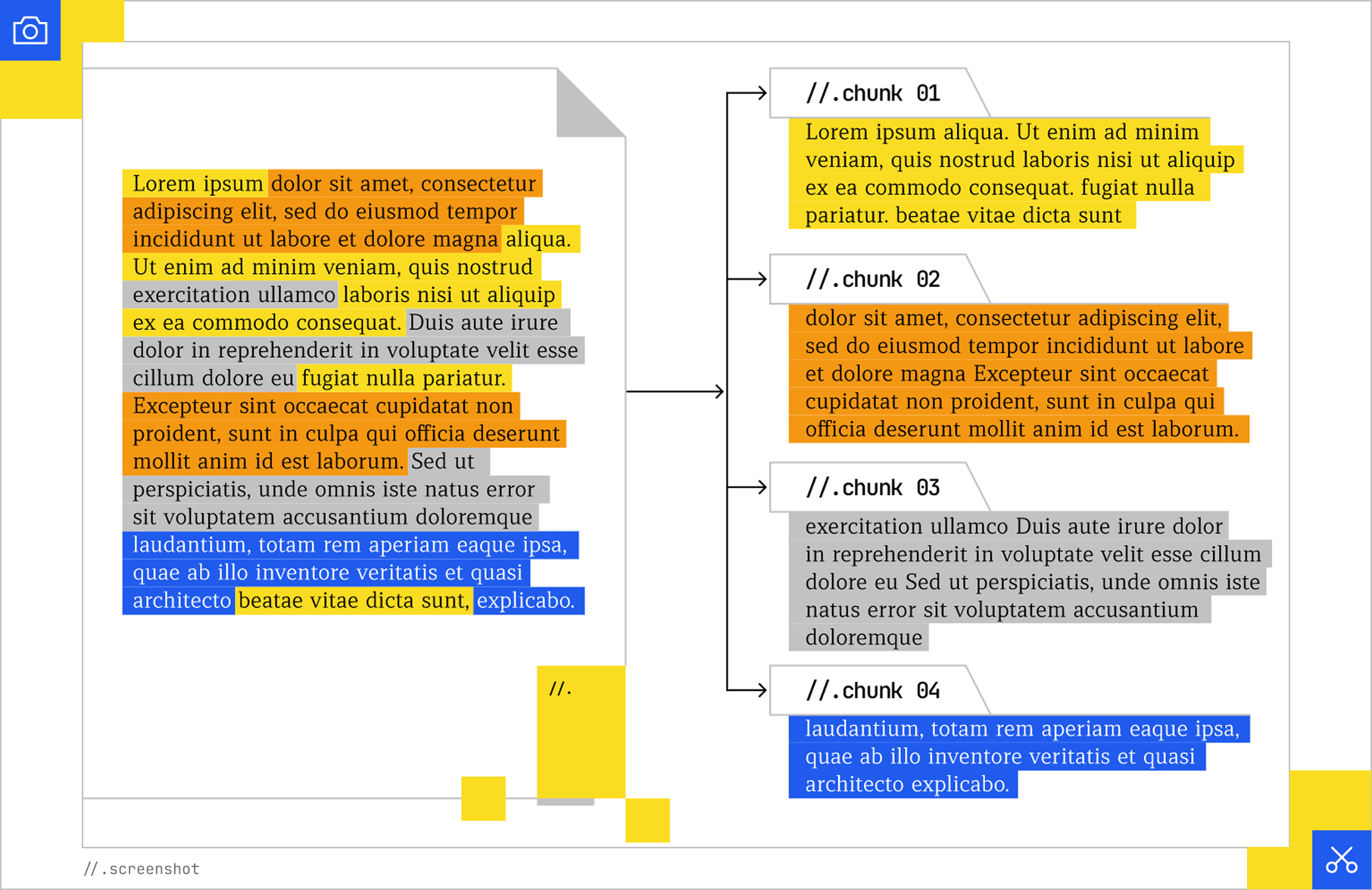
But if the chunk is too disjointed and contains unrelated ideas, it’s seen as less relevant, as this research from Budapest University of Technology and Economics and Nokia Labs revealed.
This means that if I ask AI, “What are relevant links?”, it’s more likely to cite a post on “relevant links” than an “ultimate guide to link building.”
Sometimes, it might only look at the SERP title or search summary and not even read the article.
4. Relevance and grounding evaluation
Then it decides whether the extracted chunks, passages, and information agree with each other, which likely involves some form of semantic relevance scoring.
5. Then it gives its citation based on what it thinks most effectively supports its response.
Keep in mind that the systems are built to cite sources that support their response, not necessarily to provide alternative views, refute what they say, or prevent misinformation.
(For more, I definitely recommend looking into Cyrus Sheppard’s work at Zyppy, where he put together what he calls AI citation ranking factors.)
How Do You Get Mentioned by AI?
You can get mentioned by AI if your brand is strongly associated with the query in the training data or the retrieval process.
At their core, AI systems predict the most probable next word based on patterns it’s learned during training.
During training and/or retrieval, the model isn’t just memorizing facts; it’s building a web of associations between concepts, entities, and terms.
So, the stronger the association between a brand and key terms, the more likely AI is to mention it.
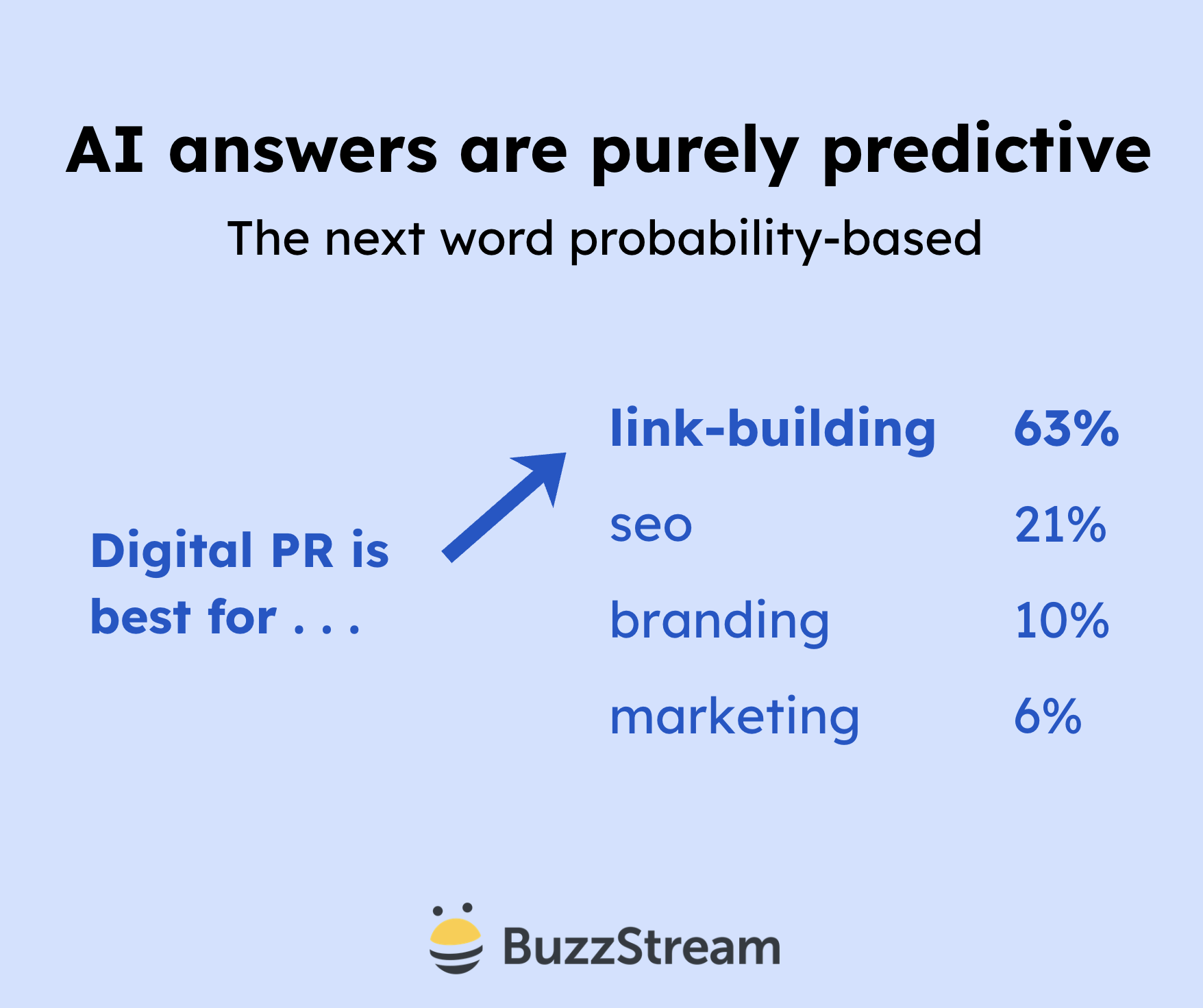
For instance, the more times BuzzStream is mentioned alongside “digital PR tool,” the more likely the training data will group the two semantically.
These are known as “descriptors.”
As James explained:
“AI ‘descriptors’ are the attributes a system associates with a brand.
The more consistently those attributes appear across credible third-party web surfaces, the stronger the association becomes.
Once established, that association can persist through ‘semantic inertia,’ a nod to Newton’s First Law: an AI brand perception tends to stay in motion unless acted on by stronger evidence.
For example, repeated mentions of BuzzStream as a ‘digital PR tool’ make AI systems more likely to treat that phrase as a defining brand descriptor.”
Associations can be on social channels, on a site (e.g., an About Us page), or off-site (think digital PR).
However, as I mentioned before, when the AI system deems it necessary, like when the training data is limited, AI will also perform live retrieval to help support its answer.
So, content surfaced through that retrieval can also result in a mention (even if your brand had no meaningful presence in the training data at all).
Can You Get Mentioned But Not Cited?
Yes, you can get mentioned but not cited, and cited but not mentioned. In our study of citations vs mentions, just 23.1% of brand mentions are backed by a citation vs 69.9% of citations that include the brand’s name in the response text.
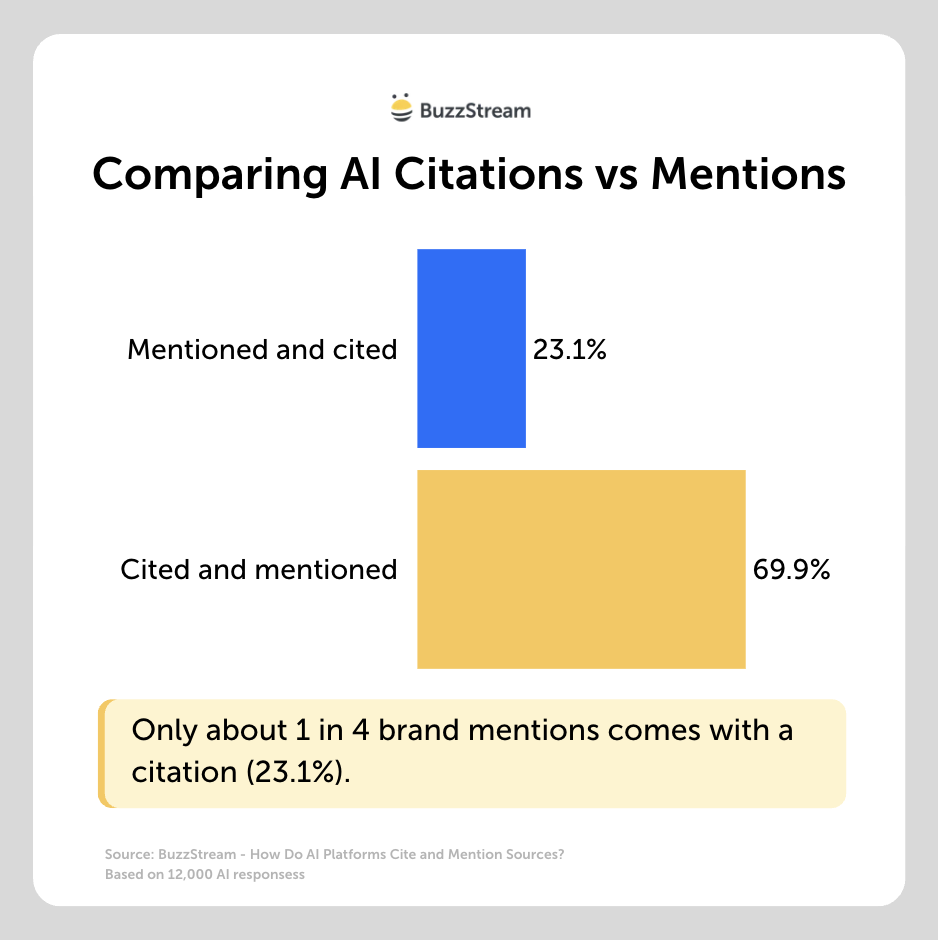
This is also backed up by a study by Kevin Indig, he found a slightly smaller amount: only about 13% of brands are both cited and mentioned. He called this the “ghost citation” problem.
And as we’ll see in the next section, each AI platform varies in how these mentions vs citations occur.
So, let’s briefly touch on how each platform seems to operate.
Each AI Platform Operates Differently
There are significant differences in how AI platforms operate behind the scenes. Some, like Google’s, have access to an incredible search index.
ChatGPT, for instance, has partnered with a lot of publications to train its AI systems.
What this amounts to is a big gap in how these systems work.
Top-mentioned or cited sites may differ across platforms.
When we compared the top-cited sites across three Gemini, AI Overviews, AI Mode, and ChatGPT, you can see very little overlap:
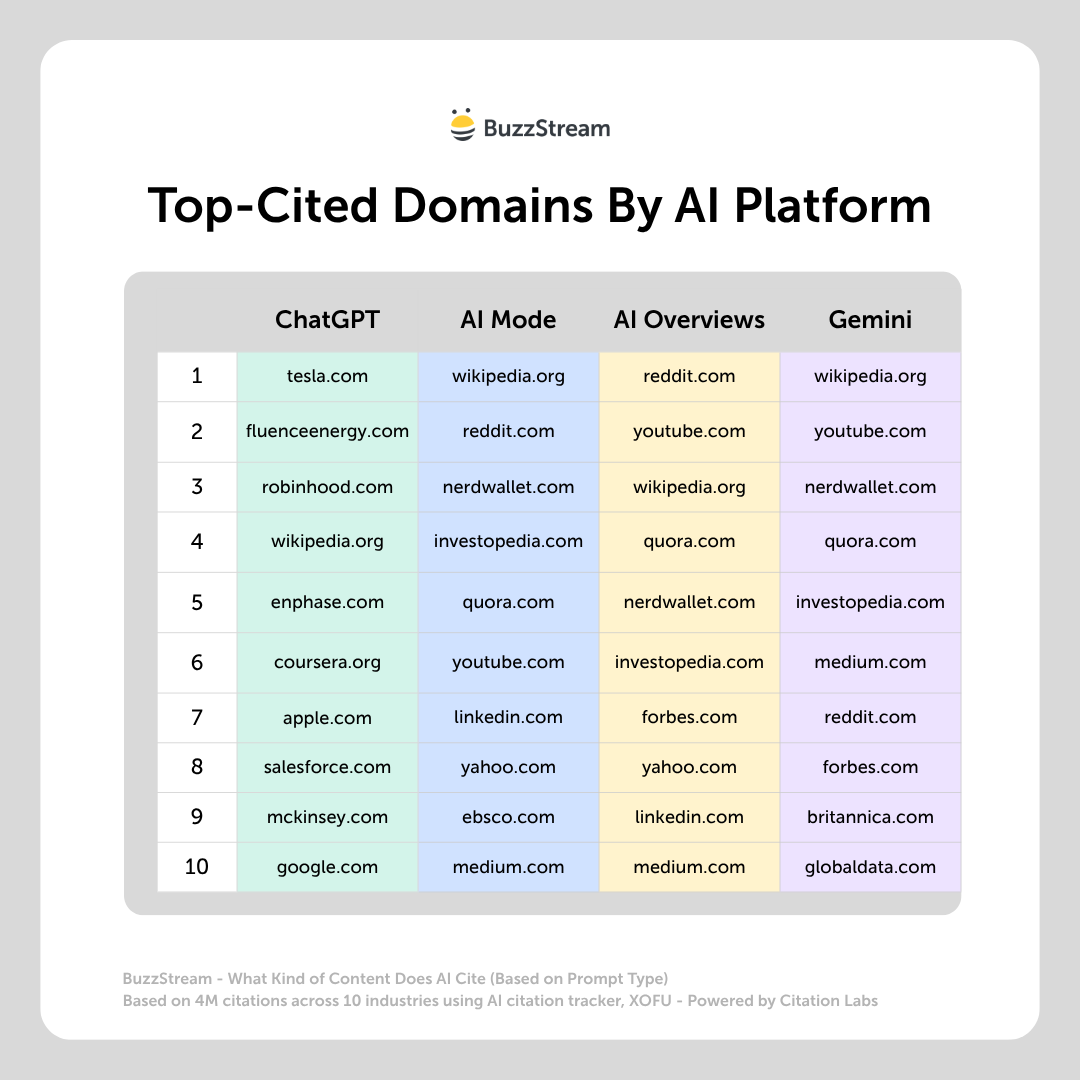
According to a study by Kevin Indig and Omnia, 2% of citations appear only in ChatGPT, Gemini, and Perplexity.
When we measured citation overlap for individual URLs in AI Mode, AI Overviews, Gemini, and ChatGPT, just 0.8% (184 URLs) were cited by all four platforms.
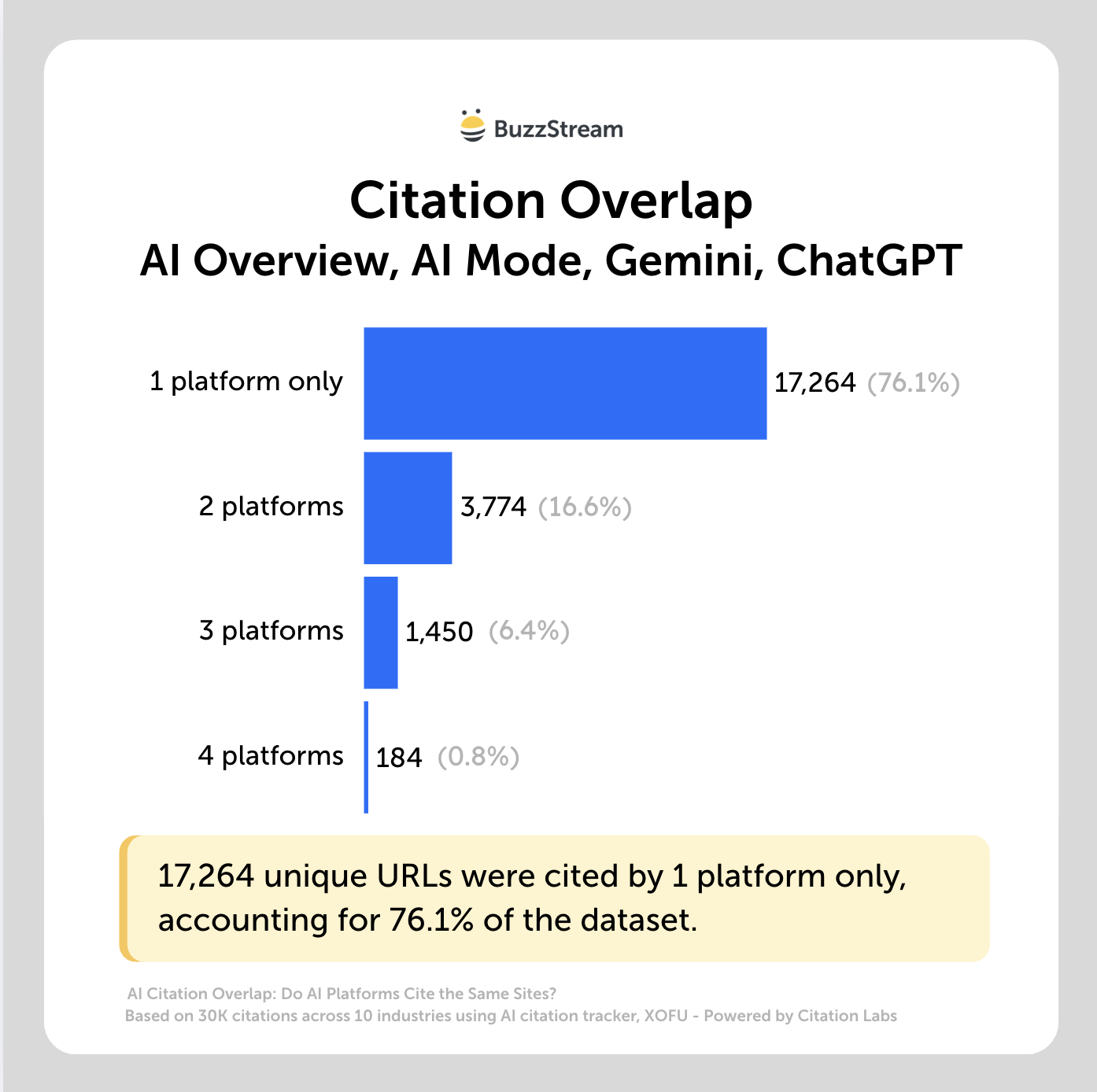
This means that 76.1% are unique URLs.
Should You Measure AI Brand Mentions or Citations?
You should measure both mentions and citations because each has its own merits, but let’s break down why each is important:
Why Measure Brand Mentions
Mentions measure the AI model’s brand awareness across everything it has access to, including both training data and retrieval.
These are the best ways to show how AI understands your brand (and the potential gaps where it doesn’t).
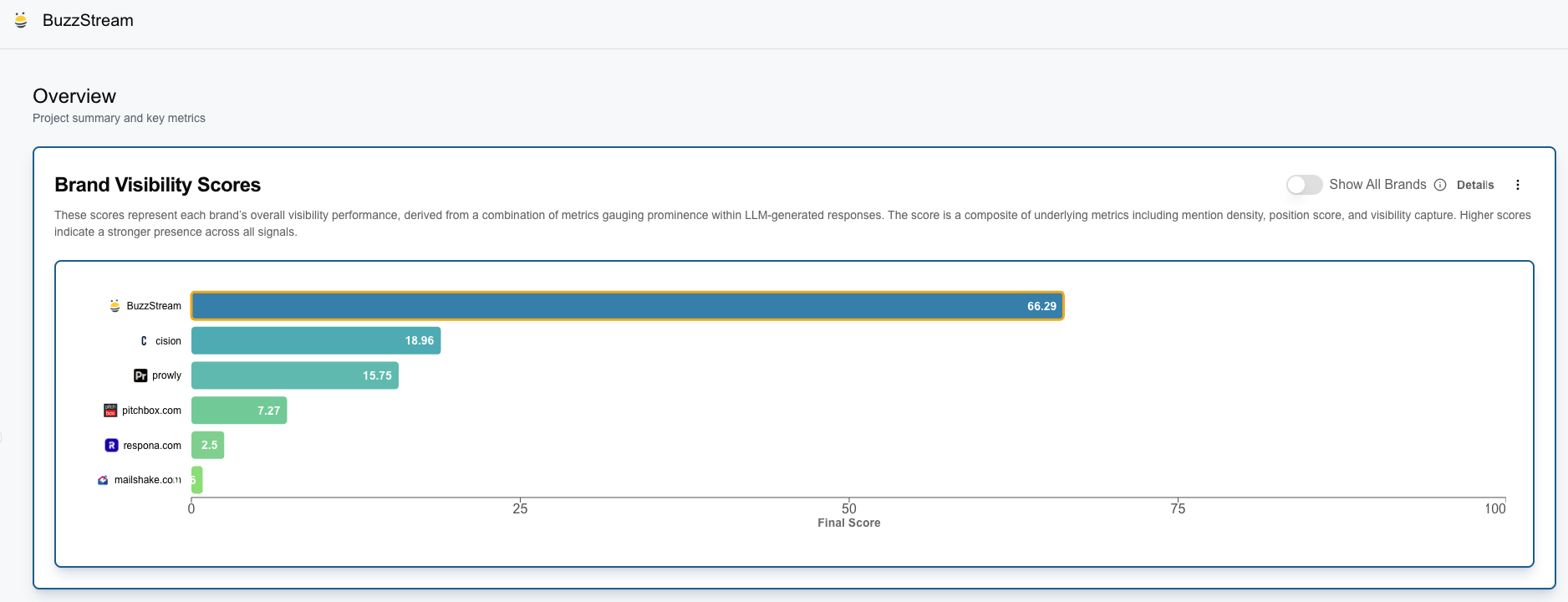
You can also measure brand mentions vs. competitors, which can help you set a baseline. (Xofu calls this its Brand Visibility Score.)
James also mentioned a visibility concept that overlaps with mentions called “recommendation rank”:
“This is the lower-funnel ordered list of 3-5 recommended offerings the AI model has generated based on the prompt/conversation, and heavily influences click-through rate and final selection.
In fact, a recent study showed 74% of users chose the top-ranked item.”
But if your goal is to drive website traffic, measuring brand mentions can be a little nebulous.
Why Measure Citations
Citations are the closest approximation to links, which is why people have gravitated towards them. And clicking them is how you’ll drive referral traffic to your website.
However, they are incredibly volatile.
AI can hallucinate citations. In fact, one study from Ahrefs found that AI sends visitors to broken links 2.87x more often than a typical Google Search.
Plus, we aren’t sure how many people actually click on these, aside from checking referral traffic in Google Analytics (which Google just announced has a new default channel group).
As of now, we only have limited evidence.
Google says yes, they click, but haven’t provided any real click data as of the publishing of this article.
On the flip side, Pew Research found that among 900 US adults, 1% clicked a link in the AI summary when it appeared on a page.
Our study on AI citations and news usage says that 36% of Americans who get news from AI always or often click the cited links.
So, it may depend on the type of query and information provided that prompts a user to click through.
Realistically, You Should Measure Both Citations and Mentions
Each tells a side of the story about your brand’s exposure. One drives clicks, the other awareness. But AI visibility isn’t just one thing. It’s a system with distinct layers.
Training data shapes mentions while retrieval shapes citations.
Query fan-out and RAG determine what gets pulled, chunked, and surfaced. But because each AI platform runs its own retrieval with its own logic, there’s no single lever to pull.
What this means, practically, is that optimizing for citations or mentions is about managing reputation across multiple platforms simultaneously.
Your brand needs to be present enough to register in training associations and your content needs to be structured well enough to survive all of the chunking and retrieval evaluation when AI goes looking in real time.
Track both, but understand what’s actually driving them.

 Check out the BuzzStream Podcast