
 End-to-end outreach workflow




Table of Contents
- News publications account for 14% of AI citations in the study.
- Citations from news publications primarily come from decision-making prompts. (18%)
- True news content beats out affiliate-driven news content in AI citations.
- Syndication (6%) and newswires (0.21%) deliver minimal AI visibility.
- ChatGPT cites internal newsrooms far more (18%) than other platforms (~3%).
- Energy (31%) and Entertainment (18%) industries have the most news-based AI citations.
At this point, there are numerous studies floating around that cover AI citations. But rarely do I see any that take into consideration the kinds of prompts that are asked.
For instance, prompting Gemini to suggest the best headphones will most likely yield citations from listicles and reviews.
But asking Gemini what it thinks of Bose as a brand will return wildly different types of citations.
Using XOFU, an AI citation monitoring tool powered by Citation Labs, we analyzed 4 million citations from across 10 industries and 3,600 prompts (which you can see here) to understand how prompt type influences AI citations in ChatGPT, Google AI Mode, Google AI Overviews, and Google Gemini.
We broke our prompts into three distinct categories:
- exploratory/informative (aka top funnel queries)
- evaluative/decision-making (aka bottom funnel)
- general brand awareness
We collected data for a week starting in January. 27, 2026.
For this analysis, I’m going to focus on citations from news publications, given that BuzzStream’s user base is primarily news-focused.
This study is part one of a multi-part analysis, so stay tuned for more.
So, without further ado, here’s what we found:
News Publications Make Up About 14% of All Citations
Overall, articles from news publications account for 14.09% of the citations and are the second-most visible citation type.
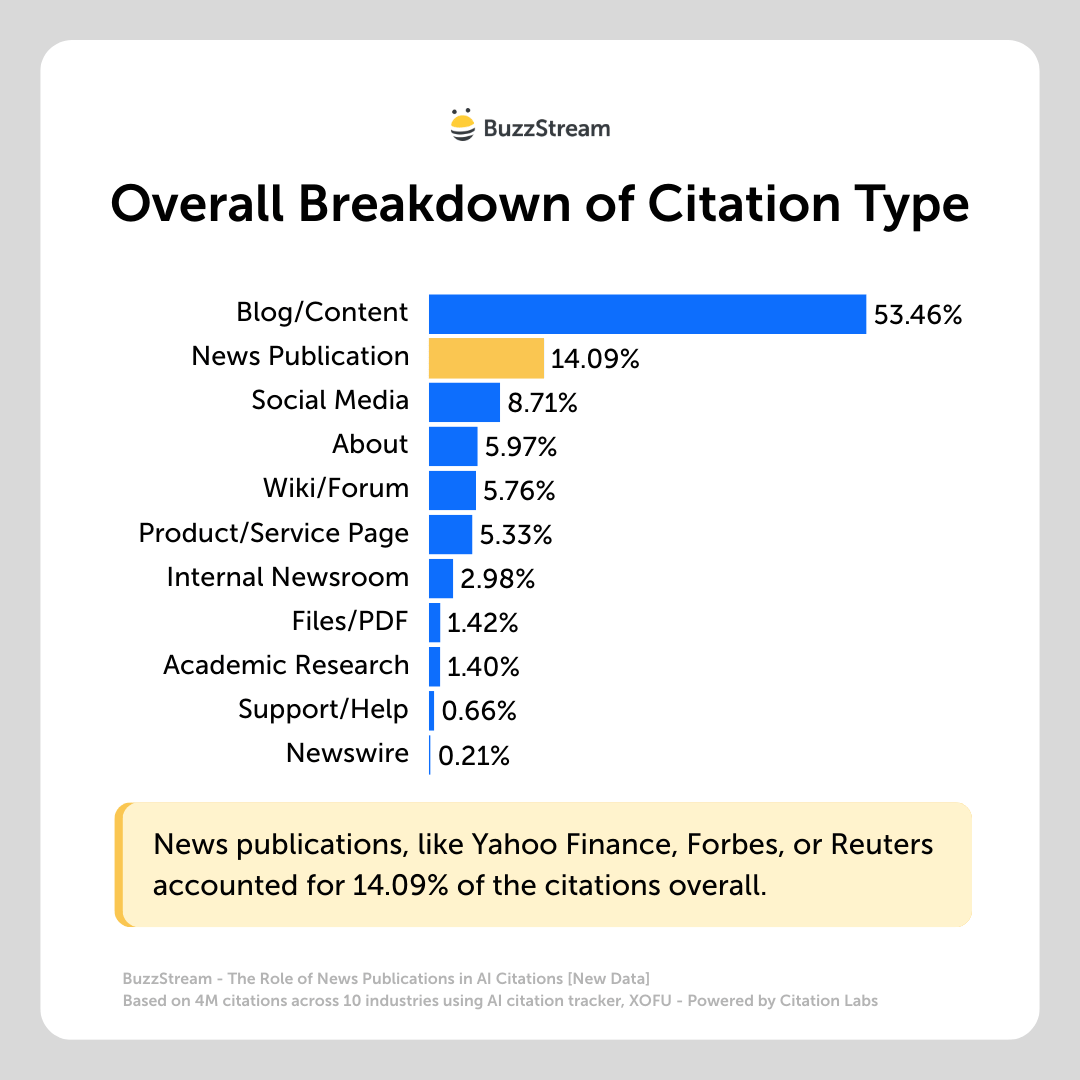
(As I said, Blog/Content makes up over half of the citations, but those results will be covered in a separate analysis/post.)
Top News Sites that Appear in AI
Here were the top publications that showed up:
| Rank | Domain | Citations | % of Total News |
|---|---|---|---|
| 1 | yahoo.com | 30,464 | 5.42% |
| 2 | forbes.com | 25,692 | 4.57% |
| 3 | seekingalpha.com | 18,105 | 3.22% |
| 4 | reuters.com | 15,515 | 2.76% |
| 5 | cnbc.com | 15,171 | 2.70% |
| 6 | nasdaq.com | 13,660 | 2.43% |
| 7 | rechargenews.com | 13,423 | 2.39% |
| 8 | businessinsider.com | 12,854 | 2.29% |
| 9 | cnet.com | 12,521 | 2.23% |
| 10 | bloomberg.com | 10,801 | 1.92% |
As we can see, Yahoo and Forbes dominate this list.
But, if you stopped here, this list would lead you to incorrect conclusions (and probably some confusion—like why is seekingalpha.com so high?)
However, as is stated in the title of this piece, we don’t want to just look at the overall number, because that is where I think most studies fail to tell the true story of what is happening.
Instead, we need to dig into the prompt types to understand more.
Top News Sites By Prompt Type
To better align with this new prompt-driven way of thinking, here are the top news sites by prompt type:
| Rank | Brand Awareness | Evaluative | Informational |
|---|---|---|---|
| 1 | yahoo.com | yahoo.com | forbes.com |
| 2 | techtarget.com | seekingalpha.com | cnbc.com |
| 3 | usnews.com | rechargenews.com | yahoo.com |
| 4 | hospitalitynet.org | nasdaq.com | hospitalitynet.org |
| 5 | businessinsider.com | reuters.com | cbsnews.com |
The story changes significantly depending on the type of prompt. Yahoo is really the only recurring publication.
Let’s next understand how prompt type impacts news publications.
News Publications are the Least Likely to Show Up in Brand Awareness Prompts
Citations from news publications were the least frequent for brand awareness queries (7.26%).
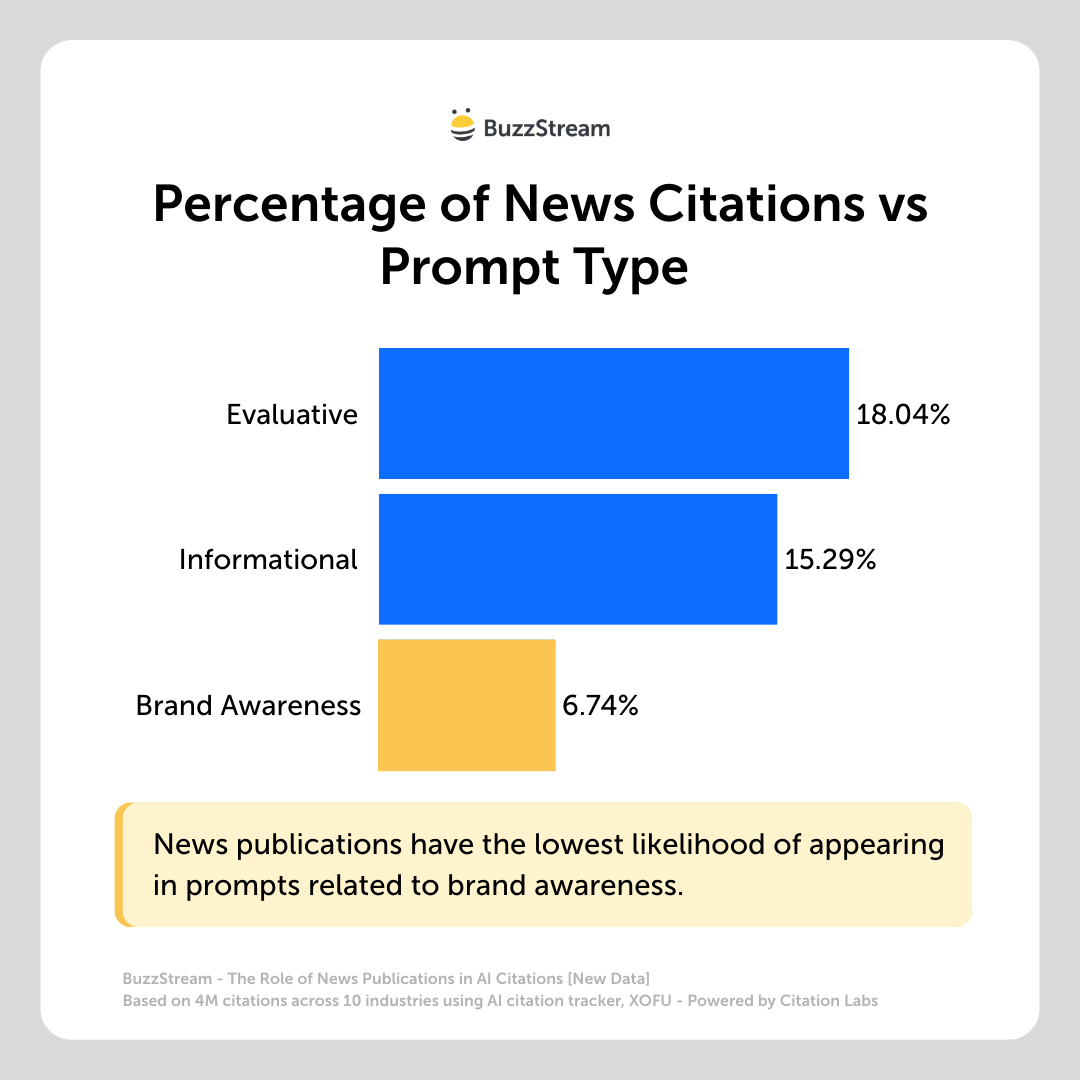
This was a surprise and consistent across all AI technologies within the study.
As an example, here are a few brand awareness prompts:
- Why is Delta important in travel?
- What is Chase known for?
- What role does HBO play in media & entertainment?
These are prompts I designed for people who might want to learn more about what a company does or is known for.
Of course, there are many ways to define brand awareness, and direct brand search is just one of them. However, this does show that AI may behave differently than many others (myself included) may have expected when it comes to citing publications for these types of queries.
So, if news doesn’t show up as much in brand awareness prompts, let’s look at what types of prompts tend to generate responses featuring news citations.
News Citations Have the Highest Likelihood of Showing Up in Evaluative, Decision-Making Prompts
Out of all of the citations coming from evaluative prompts, news publications appear in about 18% of them.
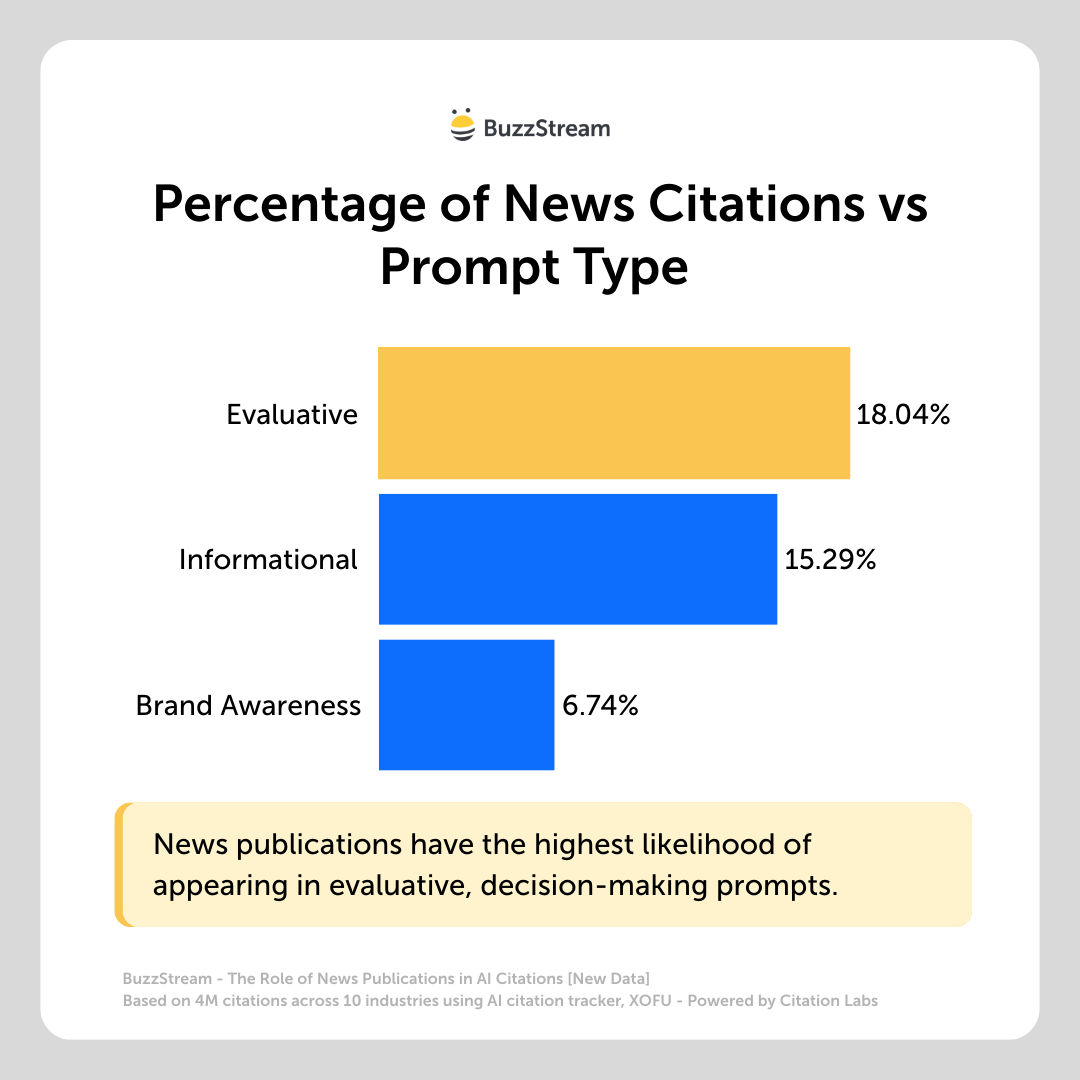
In our study, most evaluative prompts were head-to-head comparisons, simulating the bottom of the funnel, where a user might be ready to make a purchase decision.
- Is Robinhood more expensive than E*TRADE?
- Is Sony better than Bose?
- Nike vs Adidas: Which is the better option?
You may expect to see heavy affiliate content in these citations, like this piece from Runner’s World that compared Adidas vs Nike, but we saw something different.
It seems that true news still wins across the board…
True News/Editorial Content Still Primarily Cited Over Affiliate Content
When comparing citations of news/editorial stories with affiliate content, 81% citation are from true news content.
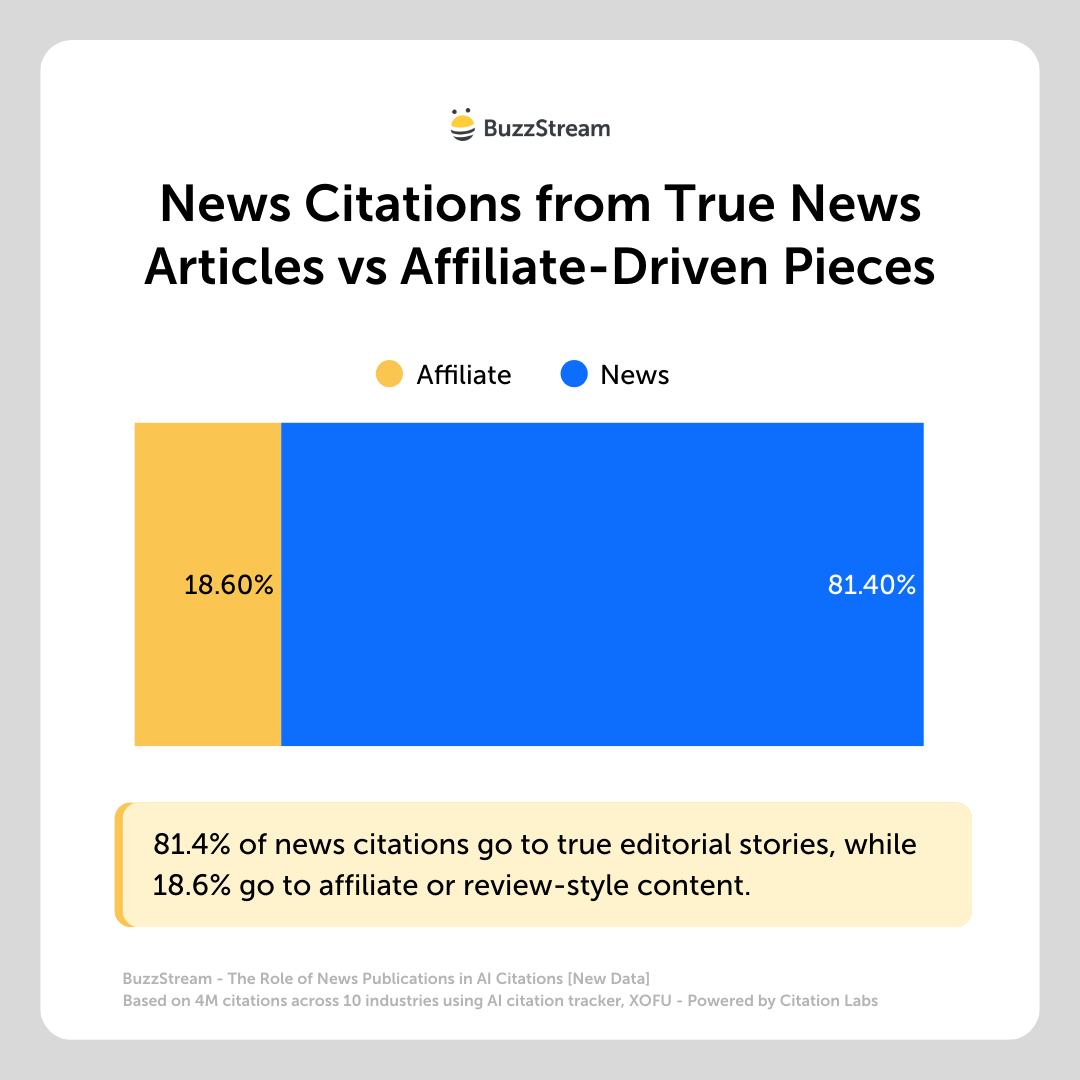
The only major difference was with evaluative prompts.
Affiliate/Review/List-type content is cited less than half the time (39.07%) for evaluative prompts, just 8.67% for brand awareness prompts, and 1.52% for informational prompts.
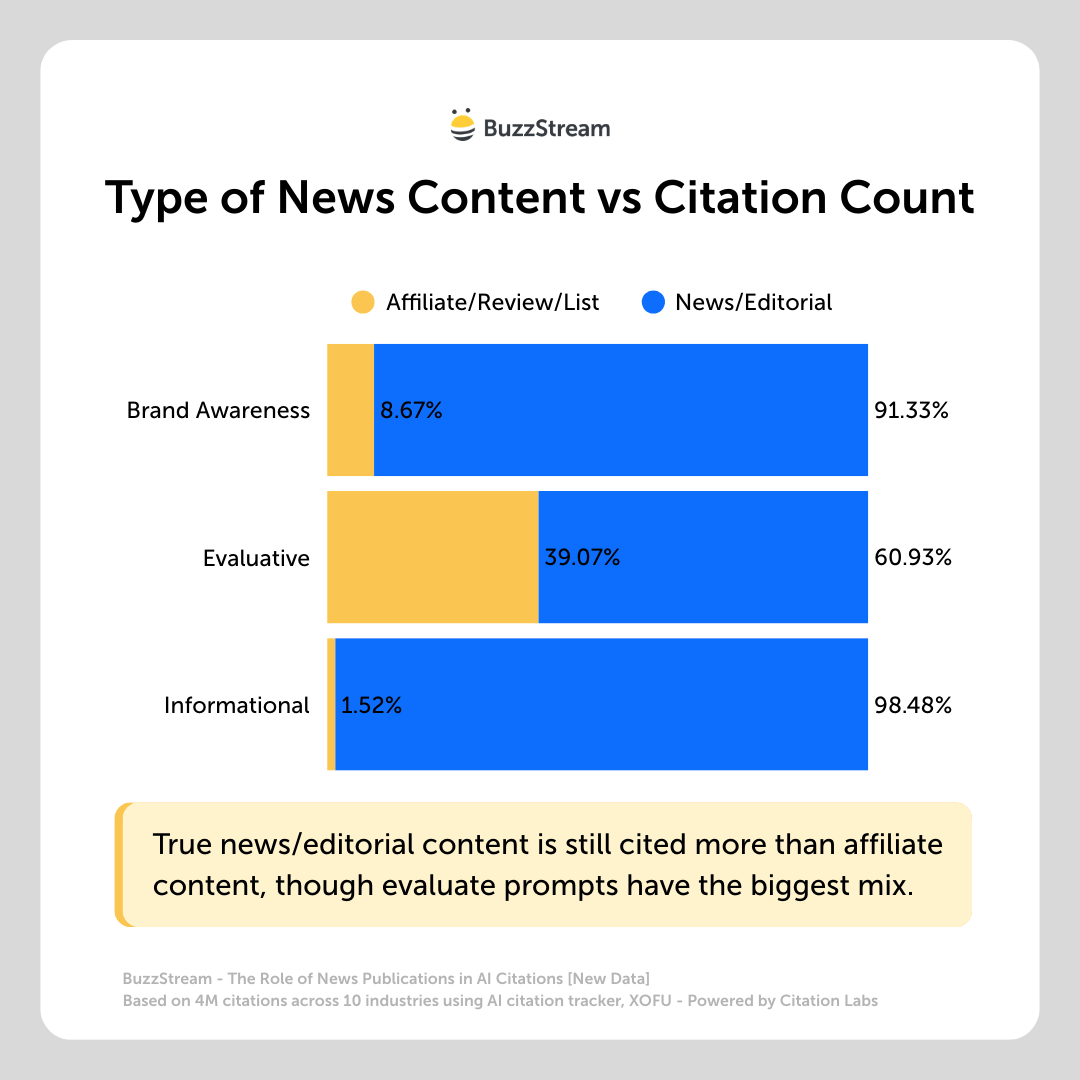
But true news stories still make up the vast majority of citations.
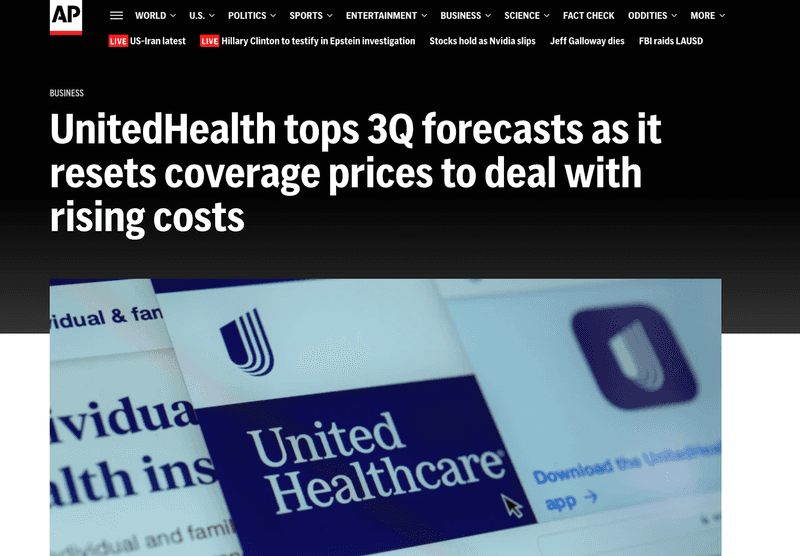
For instance, when prompted, “UnitedHealthcare vs Aetna: which is the better option?” ChatGPT cited this article from Associated Press:
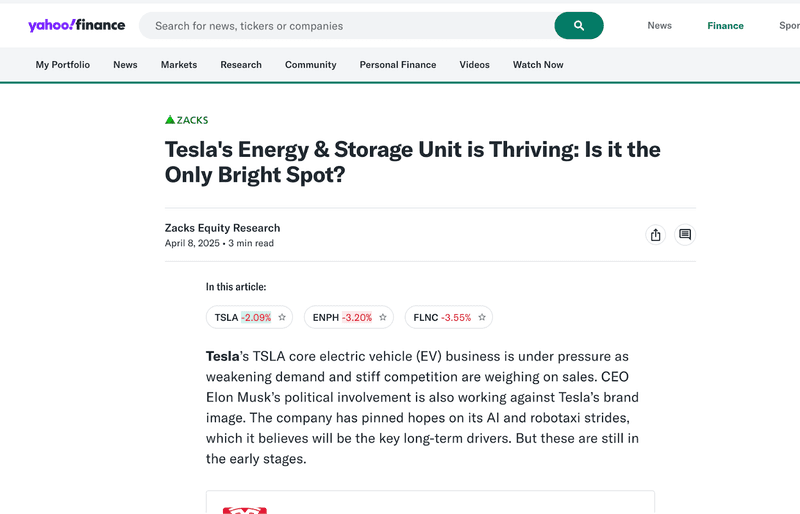
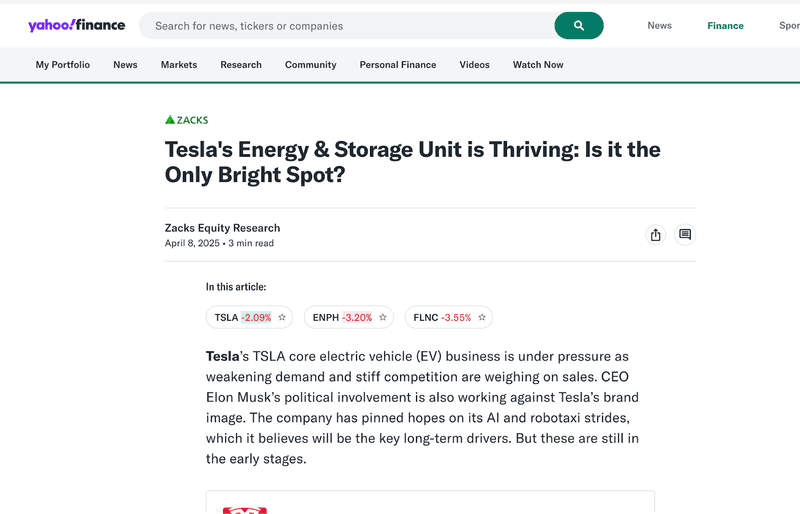
Or when prompted “Is Tesla Energy more expensive than Fluence?”, Google AI Mode cited this syndicated article from Yahoo! Finance (originally written by Zacks Equity Research).
This brings up a great following question: what role does syndicated news play in AI citations?
For most digital PRs, syndication is a great way to increase content viewership. Some even count syndicated links as unique links for their clients (as we saw in our State of Digital PR 2025 report).
But for AI, does syndication help increase exposure?
Syndicated News Content Shows Up in Just 6% of All News Citations
Out of all of the news citations in our dataset, 6.2% were from syndicated news pieces (0.9% of the entire dataset).
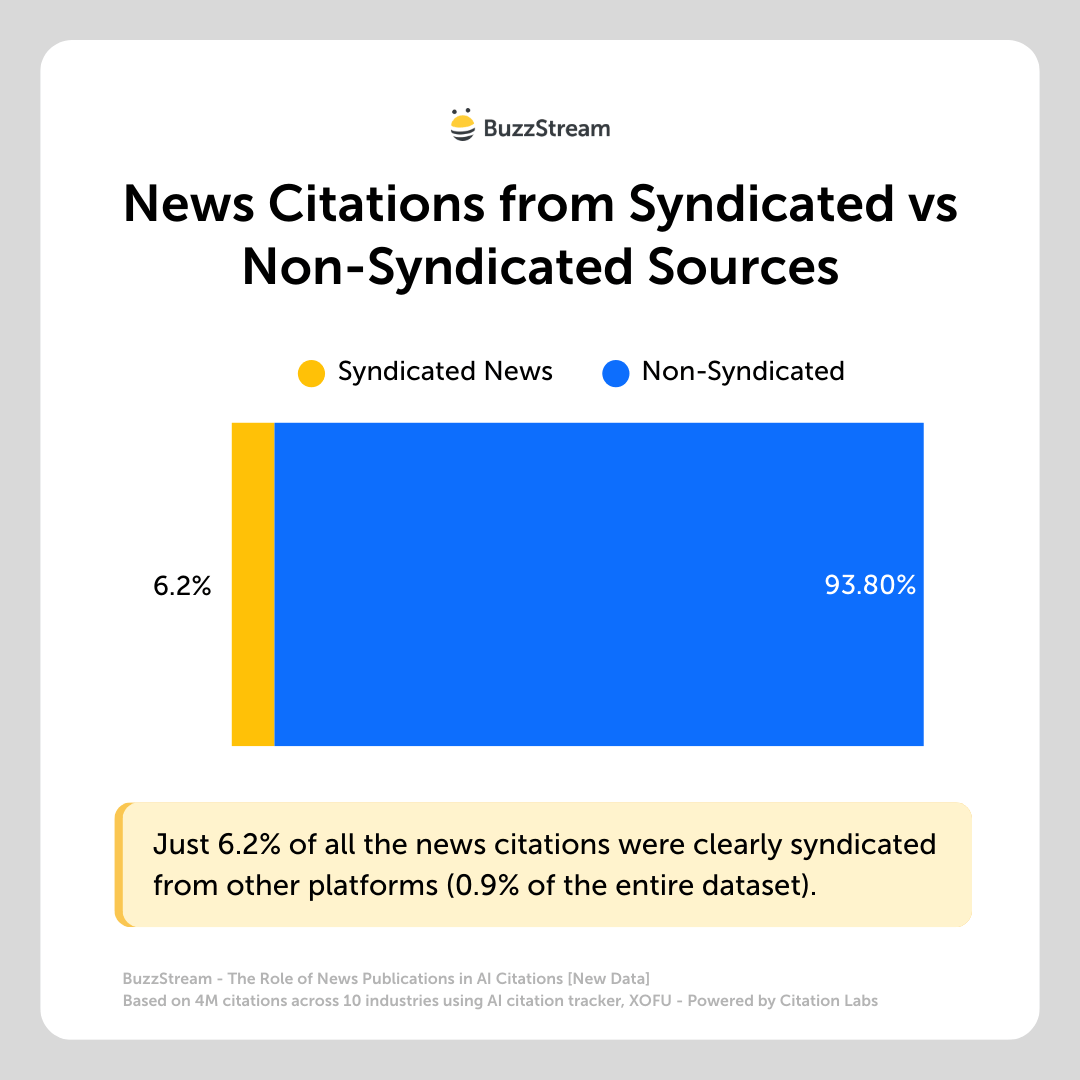
For this analysis, we looked at clear syndication networks (MSN, Yahoo).
We also analyzed the authors of every news publication using ListIQ, and at any point where the author name differed from the publication, we flagged it and manually confirmed.
For instance, when prompted “Is Tesla Energy more expensive than Fluence?”, Google AI Mode cited this syndicated article from Yahoo! Finance.
This methodology isn’t foolproof, given that some sites simply repost press releases without labeling them as press releases, but major publication sources, like MSN and Yahoo, don’t seem to be prioritized by AI search engines.
One type of site that typically syndicates through networks is local news sites.
Local News Sites are Virtually Non-Existent in Citations
Local news sites account for 0.18% of the total news citations.
This includes local radio stations as well.
However, we didn’t really have any local angles in our prompts. For hyper-focused prompts, I’d expect to see a lot more there. (Perhaps another study.)
Similarly, press releases picked up through syndication appear even less.
Press Releases Published Through Syndication Channels Barely Appear in News Citations
Press releases on these syndicated news channels, such as Yahoo and MSN, account for just 0.32% of the news citations and 0.04% of the entire dataset.
An example would be this press release placement on Yahoo:

This release originally appeared on GlobeNewswire.
But if they don’t get picked up through syndication, it seems they’re left out of citations.
Direct Citations From Newswires Make Up Less Than 1% of the Entire Dataset
Citations from newswires like PRNewswire made up 0.21% of the entire analysis.
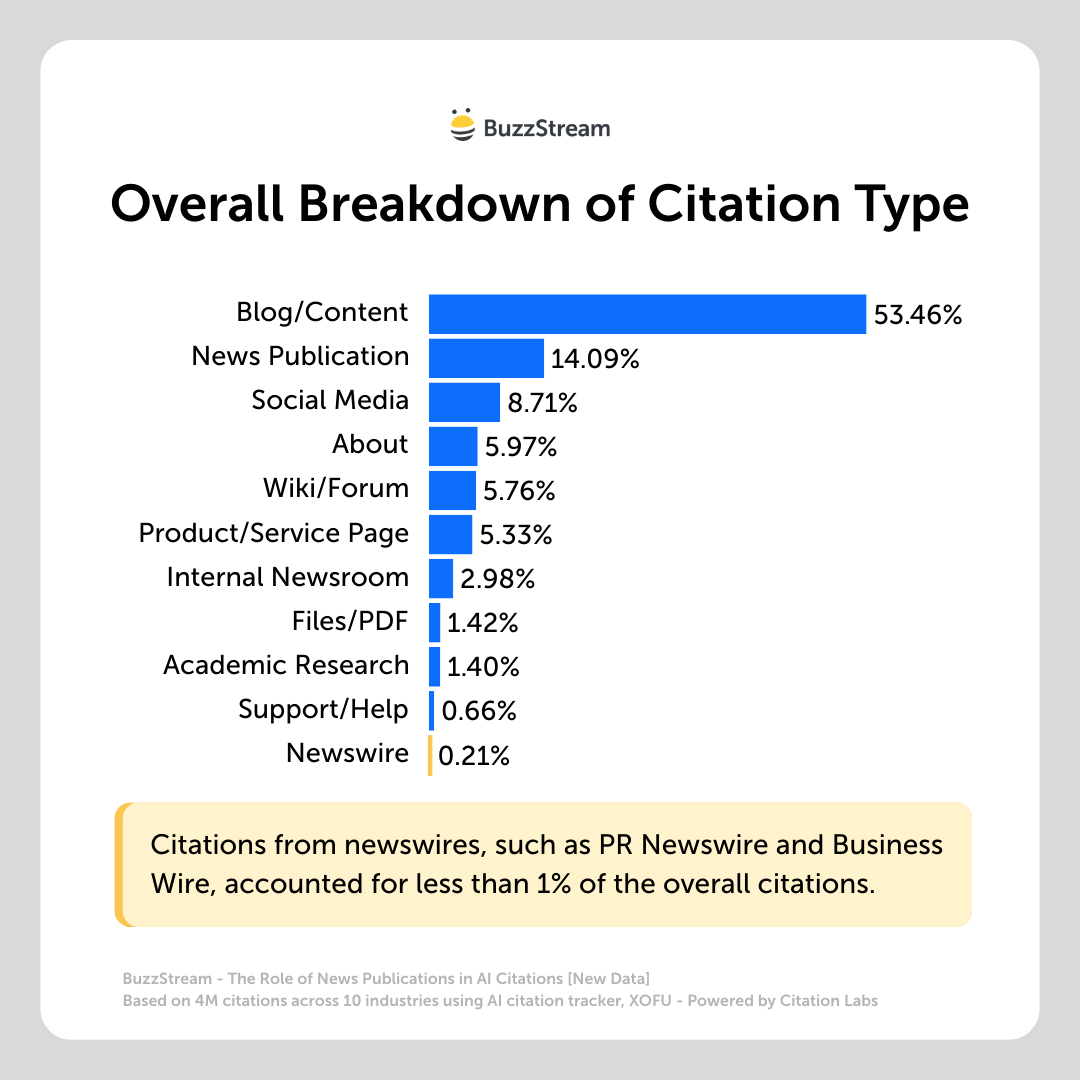
They are most common in exploratory/informational prompts, but still just 0.37% of the time.
So, the suggestion that you can just put out a press release on a newswire doesn’t seem like it will get you any exposure in AI.
But this doesn’t necessarily mean that press releases are useless in digital PR.
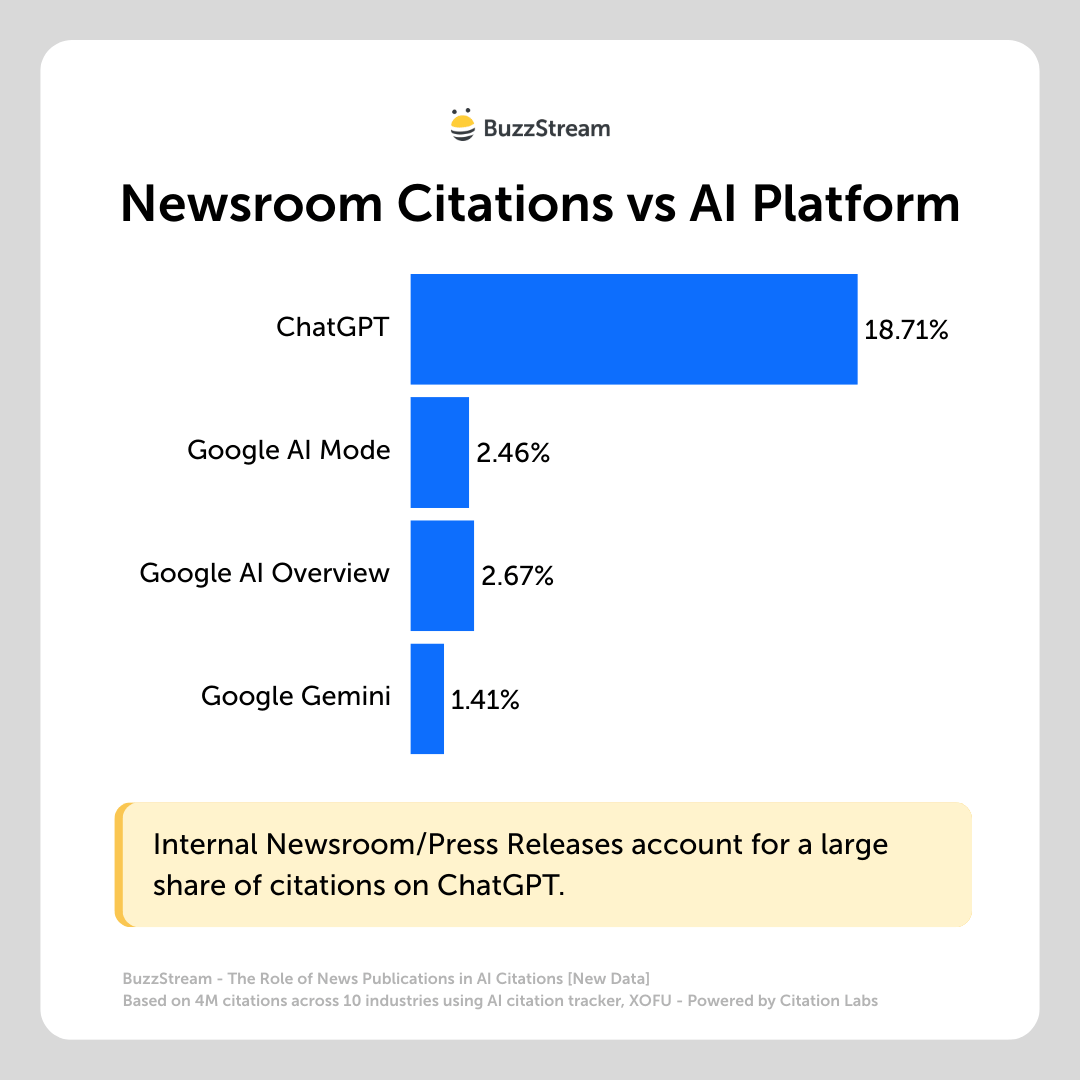
Owned newsrooms and press releases seem to play a much bigger role for some AI channels.
Internal Press Releases/Newsroom Announcements Play a Bigger Role on ChatGPT
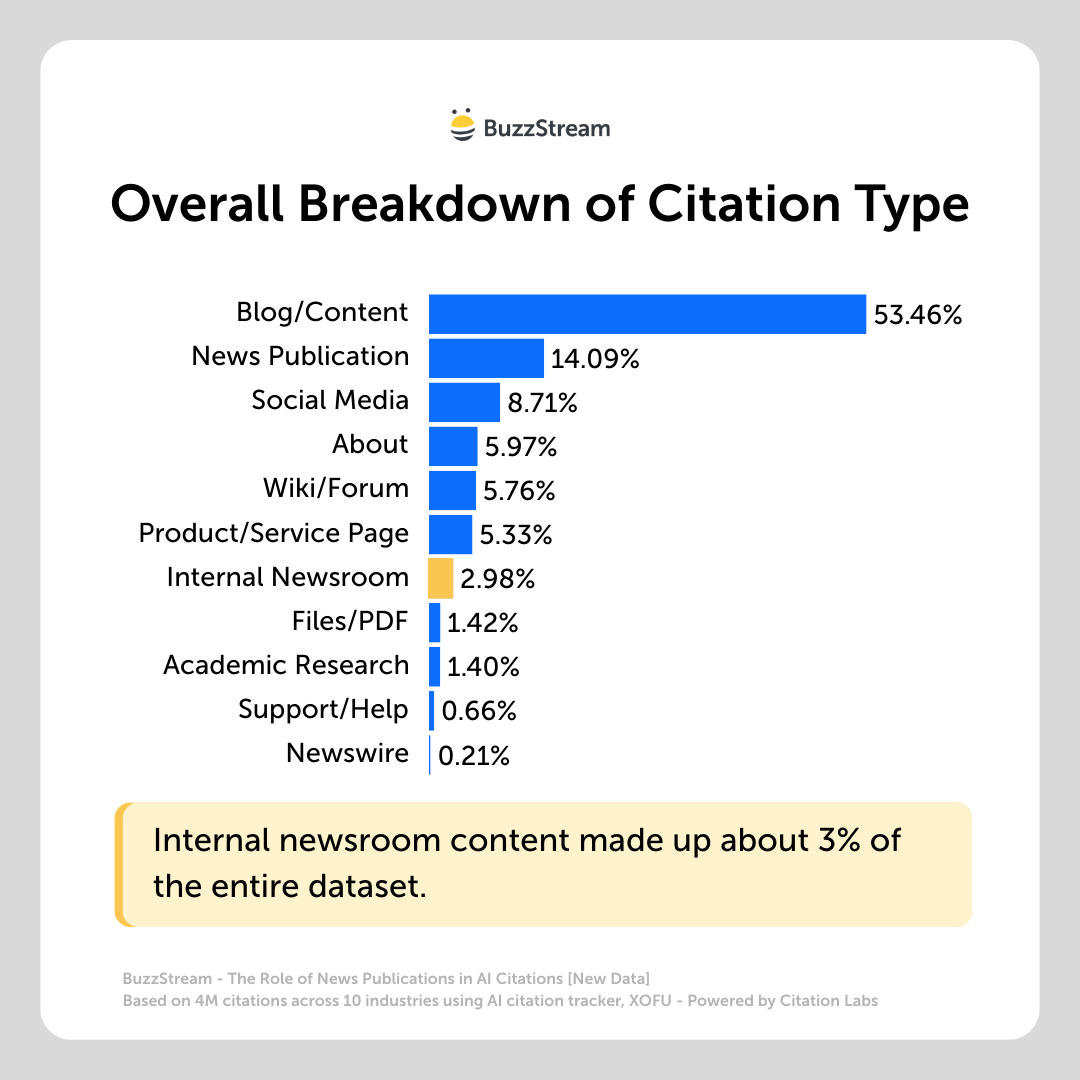
Overall, internal press releases and newsroom content accounted for just 2.98% of the citations.
Up until now, most of the trends I looked at were fairly uniform across AI platforms.
But on ChatGPT, we see that internal press releases and newsroom content made up 18.15% of the citations.
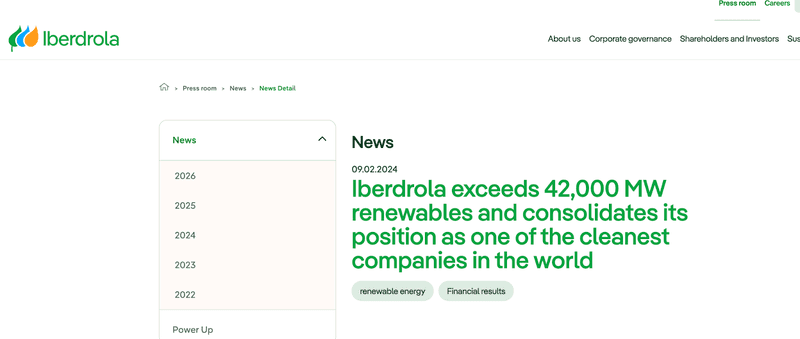
For instance, when I prompted ChatGPT with “What is Iberdrola’s role in renewables?”, I received this press release from their website, which states that “Iberdrola exceeds 42,000 MW renewables and consolidates its position as one of the cleanest companies in the world.”
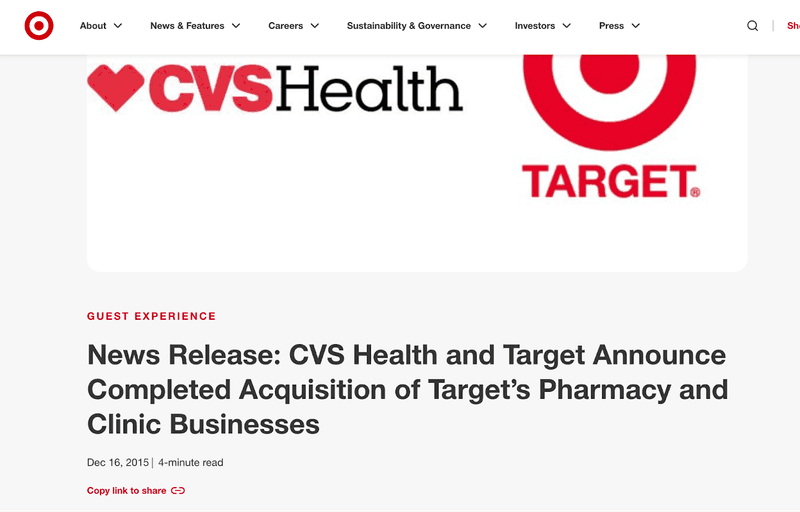
Or when I prompted “What products or services does Target offer?”, ChatGPT cited this press release (from 2015!) found on Target’s corporate subdomain.
So, internal newsrooms is an interesting strategy to consider for those who seek exposure in ChatGPT.
But again, there are nuances all throughout this data. The last place to look is the industry breakdown.
Energy and Entertainment Make Up Most of the News Publications Cited
Energy makes up 31% of the citations from news publications, and entertainment is second at 17.57%
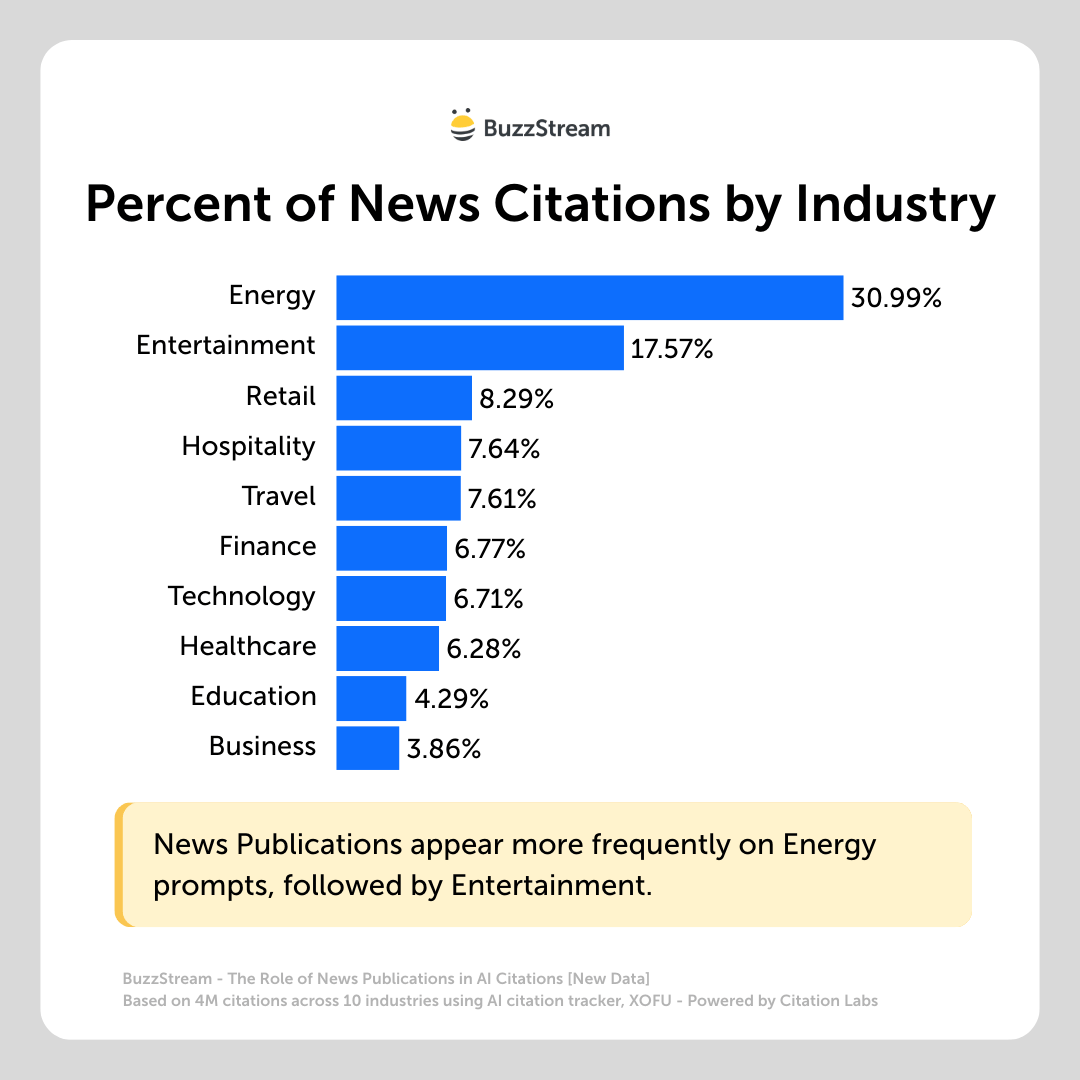
The prompts for business-related brands show up the least.
What Kind of News Should You Focus on if You Want to Get into AI Citations?
It all depends on the prompts and the kinds of citations you are after.
Based on my prompts, evaluative queries, and head-to-head brand comparisons, the most news citations were received.
AI citations heavily favor:
Head-to-Head Comparisons, like:
-
- Reuters – Adidas Targets Larger U.S. Market Share as Nike Struggles
- Nasdaq – Nike vs Adidas: Who’s Winning the Race?
Cost / Price Analysis, like:
- Mashable – How Much Does HBO Max Cost Per Month?
- PCMag – Amazon Prime Membership Price: All the Perks Explained
- Electrek – Tesla Reveals Megapack Prices
Market Share Shifts, like:
- Reuters – Adidas Reports Fourth-Quarter Sales & Profitability Gains
- MacRumors – Apple Leads in Smartphone Resale Value
Performance Rankings, like:
- ClimateTechDigital – Top 10 Energy Storage Companies
- Travel + Leisure – Most On-Time US Airline for 2025
Investment or Business Updates:
- Reuters – Equinor to Inject Nearly $1B into Ørsted Following US Setbacks
- Forbes – Walgreens Preps for New Owner, CVS Health Tries Smaller Drugstores
Price Hikes & Pricing Transparency:
- Collider – Is HBO Max Worth It?
- Fast Company – Spotify Just Announced Another Price Hike — Here’s What’s Really Driving It
But again, this is based on my specific prompt set.
The other thing to consider is that I focused only on major brands, which probably lend themselves to earned coverage even more than smaller brands.
Publicly traded companies get mentioned by the news when stock prices fluctuate, for instance.
Or if a major entertainment platform like HBO increases costs, it would inevitably get covered by the news rather than a small-market B2B Saas business.
But I actually think that looking only at big brands strengthens the argument a bit.
News about a brand is more likely to get coverage than content created solely to generate links. And if your brand is unknown, it’s going to be tough to get cited by AI.
So, should you just give up?
No, but know that to earn organic media mentions as the big brands do, you need exposure to build your brand into something news wants to talk about, not just chase links.
Let’s make it real:
WalletHub releases city index studies consistently to generate backlinks.
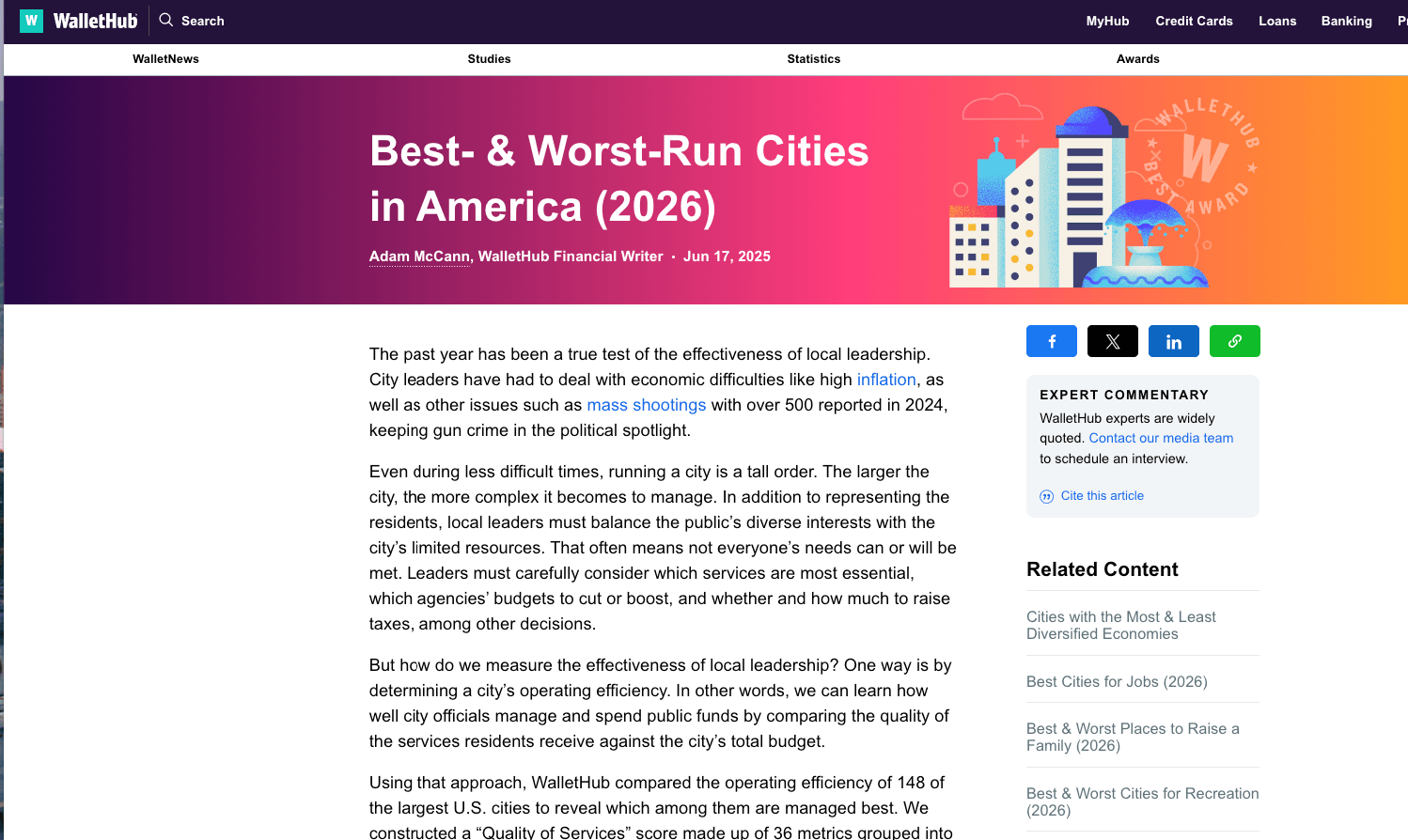
But these are part of a consistent strategy to develop and establish WalletHub within the industry.
WalletHub is now known for these reports, which raises its profile.
So, it’s not about chasing links; it’s about building a meaningful brand that the news wants to talk about.
Garrett’s Thoughts
I was lucky enough to partner again with link-building expert Garrett French and his team at Citation Labs to get us this data (check out our Link Building Trends Report for our first collaboration), and I wanted to give Garrett a chance to share his thoughts on the study as well.
His first overall thoughts were more about how to interact with the data itself.
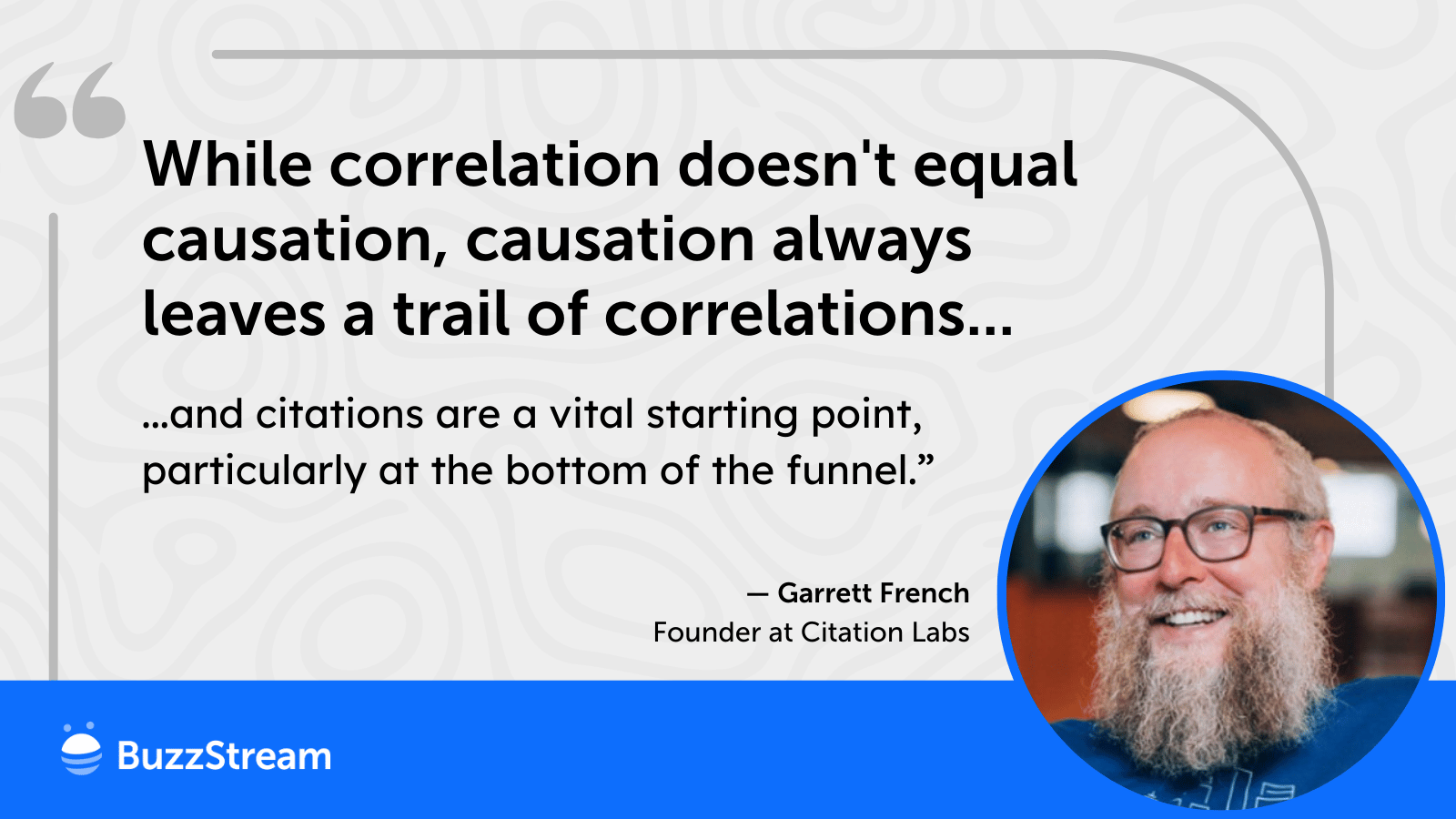
“While correlation doesn’t equal causation, causation always leaves a trail of correlations… and citations are a vital starting point, particularly at the bottom of the funnel.
In a black-box AI system where we can’t look at the exact source code or algorithm, we don’t need to prove 100% causation to guide a strategy and inform the significance of our correlations.”
Here are his main thoughts on how to show up in AI:
1. Pitch “industry landscape” pieces if possible. Give journalists access to data or product trials that specifically highlight how your brand solves a problem compared to the legacy approach. You want to be in articles titled “The State of X Software in 2026” if you can get them!
2. PR teams need to map out the “evaluative constraints” of their target buyers and secure editorial coverage that explicitly answers those specific questions and constraints with data-supported best practices and guidance.
3. A deep, technical review in a niche B2B trade publication or a highly respected editorial review site is now exponentially more valuable than a brief mention in a massive, generalized news outlet or an affiliate-heavy listicle.
Part 2 Coming
Based on our data, the thing that really drives AI citations is blog posts/content. Stay tuned for part two of this analysis, where I’ll break that down as well!

 Check out the BuzzStream Podcast