 End-to-end outreach workflow



Table of Contents
- SEO isn’t going anywhere — but SEOs who aren’t adapting are in trouble.
- Old-school spam tactics are working again (for now).
- There’s no excuse not to own your brand’s message.
- Reputation management now goes beyond your website.
- Build your footprint now, before the big spenders lock it up.
Marketers seem to be jumping at the next shiny thing to capture AI exposure, with no clear direction on what will work in the future.
But what if where we needed to look was in the past?
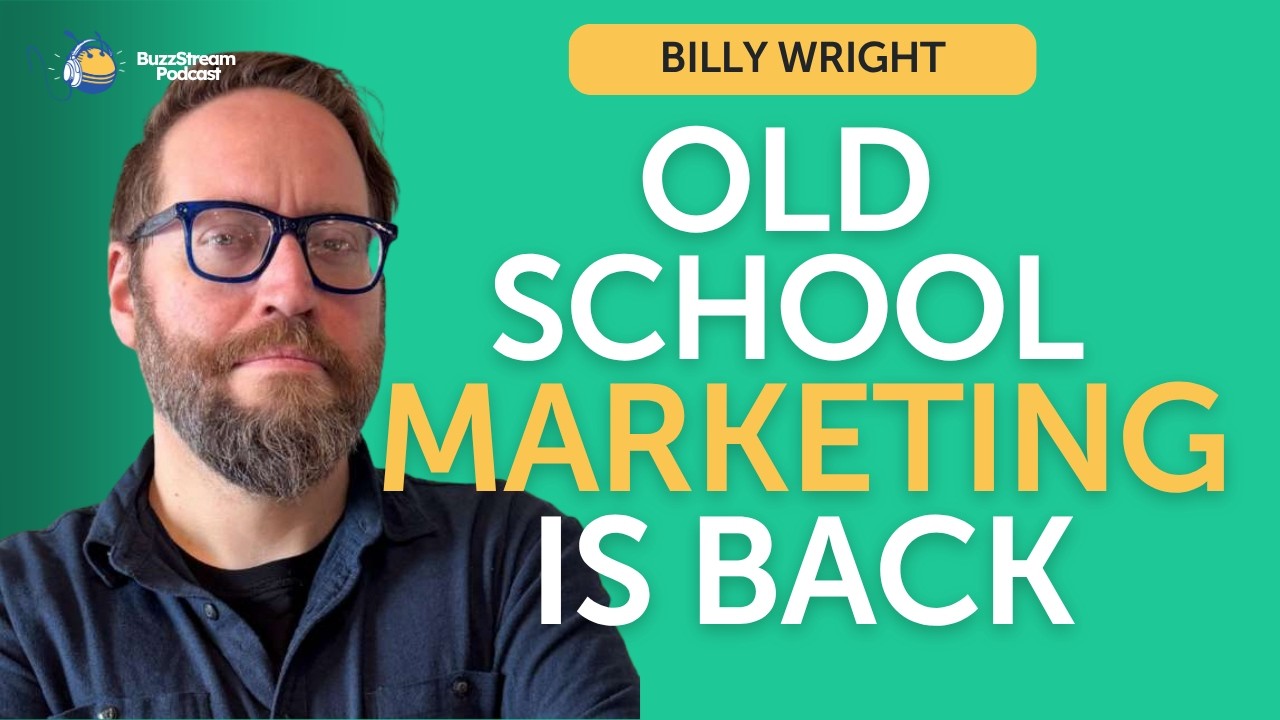
My guest this week is Billy Wright, head of AI and marketing innovation at Direct Online Marketing. I’ve been checking out their blog, and he’s got some great takes on why we should look back at tried-and-true traditional marketing tactics to help us get into AI answers.
We get into Billy’s (very) old-school SEO and GEO experiments, why reputation management is now everyone’s job, how small businesses should spend limited time and money on GEO, and what agentic AI is about to do to marketing.
Let’s get into it.
Below is a slightly edited transcript:
GEO or AEO — what do you call it?
Billy Wright: Yeah, and we’ll probably talk about it at some point, but AEO to me is something different.
Right now we’re dealing with a lot of GEO. To me, AEO is agentic engine optimization.
Are SEOs who aren’t adapting to AI finished?
Billy Wright: It’s a heavy question. I think SEO is not going anywhere. SEO as a holistic concept still exists, is still necessary, and is still your bread and butter.
Optimizing your website to rank within Google — because Google gets the most visibility — is ideal.
Any SEO who is not adapting, though, is probably not a great person to work with, because SEO by its nature changes constantly.
If you’re not already adapting to AI, I can’t imagine what you’re doing.
It’s definitely shifted everything I work on in many different and surprising ways.
The way we look at success is different, the way we look at interactions is different, and the way we look at Google’s understanding of content is different. I can’t imagine being in the SEO world and not adapting to it in some way.
Are old-school SEO tactics working again?
Billy Wright: Before I say anything crazy: when we work with our clients, I’m always doing everything above board. Everything is clean and totally spotless.
That being said, I do a lot of personal tests, and we’re always experimenting.
We’ll test things we would never in a million years implement for a client, because we want to see whether they still carry some kind of weight.
We’ve tried a lot of stuff from the early days. I started building websites in the 1990s.
When I started in SEO, I don’t remember what the algorithm update was — the “false alarm” update or something, around 2006 — that’s when we really started getting into it.
A lot of the spam from that world — stuff you’d assume Google put the kibosh on and that’s never going to work again — is starting to work again, in a way that’s really surprising. We’ve done a lot of stuff that’s healthy but still much closer to early SEO, in finger quotes. And I’ve done a lot of stuff that’s very unhealthy just to see if it works.
I’m going to tell you something crazy just on this podcast.
I created a white-on-white website with content about a fake brand I made up. I put it out there and, man, it ranked within about three days for the terms I was going after. White text on a white background.
Then I got crazy and made it blink — and it still picked up the content and put that content into AI.
A lot of the early-days stuff people were trying is strangely working again.
Now, it’s not going to live forever, and it’s going to be outdated soon.
That’s the name of the game with SEO in general, but AI optimization is changing especially fast.
We started early at our agency — about two years ago is when we first started talking about going all in on AI optimization and what we could do to really own the space.
What we were doing six months ago no longer works. Stuff we were doing three months ago is not working. So we change constantly.
We still see stuff you’d never expect, though. There was this old website — I can’t remember the name, earticles.net or whatever — stuff like that just popping up out of nowhere, even though it’s been outdated and not working for ten years. AI has a mind of its own, and the algorithms within AI are dumber than the search algorithms Google was originally working with.
What have those tests taught you about how AI models work?
Billy Wright: Yes. The biggest thing we’ve gleaned from all of this is that there is no excuse for you not to own the messaging around your own brand.
You can create content about yourself, put it out anywhere, and it will get picked up.
Now, whether you’re doing that in a kosher and clean way — putting out truthful, factual content — is very different.
But if you’re a brand having issues with reputation management, it’s absolutely within your wheelhouse to create content, get it published on a third-party site, get it into PR, get it across the web, and get it picked up very quickly.
We’re starting to see this with traditional Google too: when you create content and it gets read, it gets picked up and re-ranked so fast.
And with AI, it’s even faster.
We typically put out a press release when we work on something bigger, and for a while we were testing how quickly press releases got picked up by AI systems.
Sometimes I can put out a press release about a completely unknown brand — about an update to their site and how they’re selling something — and get it indexed in ChatGPT in about twenty minutes.
It’s a very different world than what we were previously working with, where we had to wait to see if we got indexed.
The Google index is very different from the way other things are indexing. We’ve had a lot of learnings from it, and I’m a nerd, so it’s super exciting for me. I love this stuff.
Which platforms and channels will carry more weight in the coming years?
Billy Wright: I absolutely think there are, and we’re already starting to work with a lot of them.
Right now, obviously, everybody’s obsessed with Reddit. Reddit’s getting picked up like crazy, it ranks like bonkers on Google, and it shows up in ChatGPT as a major source.
We’ve done a lot of Reddit optimization.
But in my opinion, it’s not going to last.
This is probably conspiracy-theory talk, but Google has created profiles you can own within Google Search Console.
They’re really trying to understand and verify the users creating content on the web and pull that data into Google. My opinion is that at some point, Google will have a competitive replacement for Reddit — given the way they’re allowing you to comment on things, and the test they did a couple of years ago with leaving notes on search results. I think there’s a world where a Google-created version of Reddit exists.
That being said, news about you out in the world that isn’t by you is much easier to influence than it used to be.
Whether it’s the replacements for Help a Reporter Out, or things like Qwoted, where you can get statements from your brand included in major news sources — that’s always going to be very important.
Your social media presence is going to be very important too, but not in the way people may be looking at it right now.
I think it’ll be more about how you interact, and how you respond and comment to your users. Owning the message back to people, and having them agree with you, is going to be very important.
One thing I think a lot of brands are missing out on right now is video.
A lot of people are creating video content, and I think it’s going to be much more important, because video is harder to fake with AI when it’s about your software and what you’re actually doing.
Anybody can create AI videos right now.
But actually showing a walkthrough of your software, or a walkthrough of your buying process, is much harder to do with AI. Doing that in a way that’s optimized, that makes statements about your brand, that really owns your message, and that shows how easy it is to use — that stuff’s going to be very important.
Any Tom, Dick, and Harry can create AI content at this point. The things that really set you apart are the ones that are harder to fake, and it will get more and more like that as we move on.
If the game is providing value AI can’t, how does reputation management fit in?
Billy Wright: Reputation management is incredibly important from a user perspective — when you’re trying to make a purchase, trying to trust a company, trying to find a healthcare provider.
For the bot, it should be exactly the same. Doing good research on a person or a business is important for a bot to understand that you’re legitimate and that it should recommend you.
That’s going to become more and more important.
If you have bad reviews, if people talk about shipping being slow, all of that is going to negatively impact you in AI. And it already does.
When we audit prospects and ask AI questions about them, it’s pulling in those customer complaints to decide whether it’s going to recommend somebody or not.
Those are all opportunities. When you have a lot of cons about you, it’s an opportunity to create content that turns them into pros.
If someone says it took a long time to get their purchase completed and it was a long process — well, it was a detailed and very careful process, managed from start to finish.
There’s a way to turn everything to the positive.
If you do that well enough, and in enough places where it’s legitimate, you can start to own your messaging a little better than you do right now.
That’s going to get more and more splintered around the web. I alluded to it, but it’s more than just websites.
Look at the future of this: you’re going to have agents, and we’re already testing agents that crawl through people’s email and things like that.
How do you respond to customers who’ve had bad experiences?
What are the things they say to you?
Those things are the next level. Owning your email marketing, your newsletter, your customer service — that back-and-forth content is incredibly valuable for agents crawling through your stuff.
If you’re not providing great customer service through email, if you’re not reiterating your message when you email somebody — stating why you’re the best at what you do and that you really want to help them — all of that is going to be visible at some point, and it’ll really damage you.
The one thing people need to take into account, no matter how long you’ve been doing this, is that it’s no longer just about your website or some other website.
It’s about your entire online experience.
If you don’t optimize that properly and carry your reputation across all of it, AI is going to find the parts where you’re not shining and really pull those in.
How do you get siloed teams like SEO, PR, social, and email on the same page?
Billy Wright: We’ve been really lucky. A lot of people have read the writing on the wall and said, “Okay, you’re right, we’ve got to hit this all together.”
In these situations, it takes, number one, education. People don’t realize this stuff is all starting to blend together. Number two is leadership. If your leadership isn’t saying, “We’re all on the same page, we all have the same goal,” then you’re going to be splintered, and so is your performance.
On education: I’m not going to give any details, but we talked to a sales team yesterday who had no idea we were doing this kind of stuff. We found out they were sending emails to all of their prospects — about once a week.
Every single time they send an email is an opportunity for us to optimize that email with messaging that, at some point in the future, creates a web where people — or their inboxes — know about this brand everywhere.
That gives them an opportunity to retarget and an opportunity to get ranked. They weren’t doing anything about that, so we got to have an actively progressive conversation with them about how to increase their marketing visibility.
The second part is that their chief revenue officer said, “Yeah, I want everybody working toward this goal.” If just sales or just marketing is going toward this, it’s two separate channels and you won’t hit the same kind of results. It needs to be a unified front.
Where should small businesses with limited time and money start with GEO?
Billy Wright: The number one thing is ownership of your message. Everybody should be owning their website in a way where you’re talking about yourself as much as you can — why you’re the best at what you do, and why Google should care about you compared to your competitor.
If you’re not explicitly stating that everywhere you own — your website, your social media, even your login page if you’re a SaaS company — you need to. There’s not a lot of cost to start. On your website, you can write whatever you want about yourself.
The second part is your social media accounts.
Own those.
Put everything about you out there: why you’re great, your reviews.
Start getting it through. There’s not much difference between how that starting point should have looked five years ago and now.
Next is to start telling people who don’t know about you about you. Get PR out there and put out press releases. Include that messaging about why you matter and why you’re better than your competitors — in a way where you can get away with it.
And then, fourthly, start to prep. When I talk about agentic optimization, we’re talking a couple of months away, not next year.
We’re working with people right now, actively marketing them, so that when this hits — when the Gemini Spark agent goes live for everybody, when everybody has something living on their phone that’s constantly looking through their email, their texts, and their voicemails and telling them who they should and shouldn’t buy from — they’ve already started creating that content.
When you email a customer or client, that’s a spot for optimization. When they buy something from you and you send an invoice, that’s a spot for optimization. When they have a complaint, that’s a spot for optimization.
So own all the messaging you can. It doesn’t cost a lot of money. It just takes a lot of effort.
Can you fake it if your messaging doesn’t match what everyone else says about you?
Billy Wright: Yes — and if this were improv, “yes, and.”
You need to do both. You need to fix the situation you have, but you also need to back up what you say.
If you’re saying you’re the best running shoe, Google’s going to go, “Okay, tell me why.” And you need to be able to provide why.
Show the good reviews you have and create content around them.
Show good experiences people have had. Give it user-generated content that shows people having a great time.
Give it some kind of nugget it can grab onto.
A lot of people are going to complain on the internet, and AI and the algorithms know that.
Bad reviews are taken with a grain of salt, because the number one generator of reviews is a bad experience.
But if you want to be seen as a good experience, you need a lot of data to back up why it’s a good experience.
So when you create content — like I said, own your message — make sure you’re filling it with a backlog of proof: “This is why we worked with this person, and here’s what we saw.” Case studies, where someone actually found success, are super valuable. Those are also the kinds of things you can push out as a press release.
For example: we saw this SaaS client increase leads by 35% in the first month by giving them GEO. Those are the kinds of things we can back up and show why, and that gives it more credence.
What is agentic engine optimization, and what does it mean for marketing?
Billy Wright: I tried to give a goofy explanation of this internally the other day.
“Agents” is kind of a broad term. But it’s a way of looking at the web and the internet in AI that’s more interactive with your experience as a person — with your background and everything you do online — and informed by that, more so than just crawling through websites.
The example I gave in that goofy walkthrough: imagine a year from now, you’re on a dating site — I won’t name one for promotion reasons — and someone liked you. You got a message, and it landed in your inbox. That agent can read through your Gmail and say, “This person wants a first date with you.” It’ll also say, “Hey, you ordered DoorDash three times last month from this Thai restaurant, and you got Spicy Level 7 Pad Prik King all three times. Maybe you should ask him if he wants to get Thai food with you.”
It’ll prompt you: “Do you want to ask him to go get Thai food?” And if you do, in the future state, an agent can say, “Hey, she’d like to get Thai food with you. You want to make a deal?” Blah, blah, blah.
When we say near future, we mean 2027. This is happening. That kind of world is going to have a lot more opportunities and different types of optimization than what we have now.
If we look out a couple of years past that, I think we get into a world where it becomes a lot harder for a small business with no visibility and no notoriety to get recommended. Everybody’s already going to have so much data built up about all these other brands and websites — in their email, their browsing history, their watching history — that being a brand-new business with no advertising budget is going to be very, very hard. So if you can start building that out right now, you start to build the data that feeds it over the long run.
In 2028 or 2029, I think you’re looking at a world where out-of-home advertising becomes very impactful in a way it isn’t currently. If no one knows about you, and they see a billboard or an ad while they’re waiting at the airport and they Google you, that’s a mention of your brand that’s never happened before. It’s sudden, it’s brand new, and it’s happening in a specific area — and the people in airports Googling all the time might be in the business world.
That’s going to influence AI and the algorithms to understand you in a very different way than right now, and I think it’ll be much more valuable than it already is.
Right now is your opportunity to get in before this stuff really goes mainstream and get some kind of foothold. People with a lot of money to burn are going to try to own this space, and they’re going to push down on a lot of the small businesses trying to gain that visibility.
When I was talking about this last week, I compared it to the music industry. The music industry is already like that world. If you’re a small band and you put a song out on Spotify, you’re not going to get any visibility. What’s the reason to recommend you over all these other groups with all this backing? There’s already financially created popularity pushing bands that are backed by different companies.
We’re going to get to that world with business and e-commerce. We’re not there yet, and there’s still a lot of opportunity to grow. So grab on now and own whatever you can before we get there, because it’s going to start getting pulled away from you.
I’ll stop ranting, but the other part is — and this is going to sound conspiracy-theory — right now we still have the ability to own a lot of what we do online. Some things are getting pulled back. A lot of things are subscription-only now, and you don’t own the digital rights to the things you create. But it’s not completely that way yet.
You still own your website. You can still put content there without paying anything but a hosting fee or your registrar fee. It’s not insane to think we’re five years out from websites starting to have an issue — where websites aren’t real anymore.
Billy Wright: Because what’s the reason to have a website once that’s all taken away from you? So right now, grab whatever you can, own it, and put your messaging on it, because you still have that ability.
What haven’t we covered that people should know?
Billy Wright: One thing we haven’t talked about is whether it’s okay to use AI to create content. Everybody’s using it, and it saves everybody money. The short answer is yes.
But it’s the same as making statements about your brand. You can create any content you want — but so can everybody else now. There’s no barrier to entry for creating written content, video content, or images. So what’s the reason yours should show up compared to anybody else’s?
If you’re not giving Google a reason to believe in you — with a unique perspective, quotes from your company, or some kind of data to back up what you’re saying — you have absolutely no reason to expect to rank for the content you create.

 Check out the BuzzStream Podcast