
 End-to-end outreach workflow




Table of Contents
- BuzzStream is best for relationship-first outreach; Pitchbox is built for high-volume, automated link building.
- BuzzStream’s biggest advantage is its integrated CRM, which gives teams shared access to every contact’s emails, replies, notes, and campaign history.
- Pitchbox stands out for automation, with prebuilt campaign workflows, AI-assisted personalization, automated reply handling, and broader SEO integrations.
- BuzzStream starts at $49/month, while Pitchbox starts at $210/month, and their limits differ: BuzzStream caps database contacts, while Pitchbox caps monthly outreach emails.
There are consistent ongoing conversations on Reddit about link building tools, BuzzStream vs. Pitchbox, and understandably so.
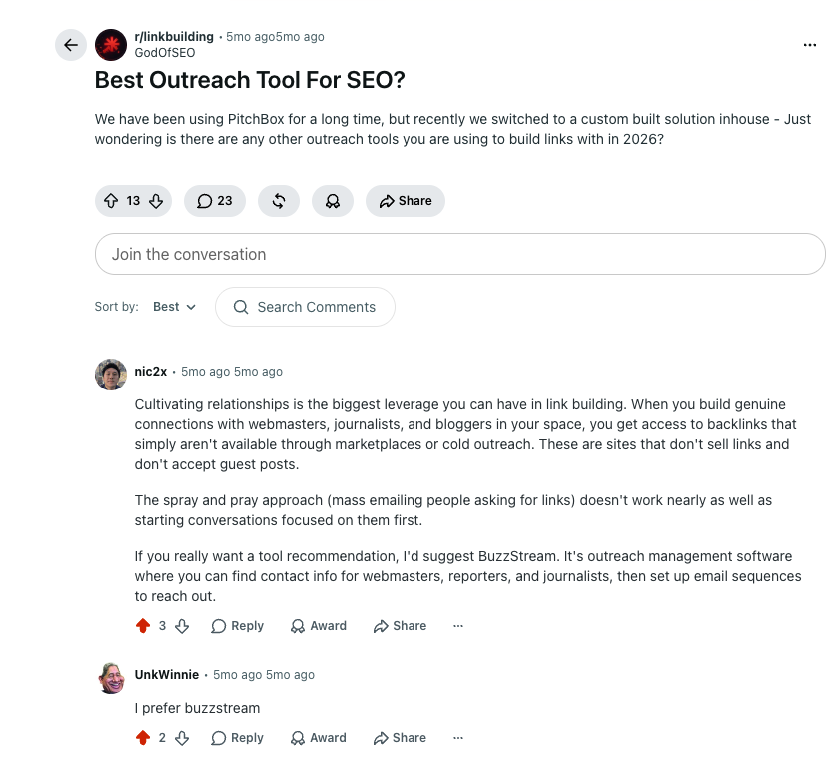
Both have been around for a long time and built quite a following.
But if you are trying to understand the best email outreach tool, the commentary really shows that the outreach tactics behind the tool dictate which is best for you.
We actually refer potential customers to Pitchbox when we think their tactics or outreach style are better suited elsewhere.
In this post, I’ll help you understand what each tool is built for, how they compare head-to-head on their main features, and why the type of outreach you are doing matters as much as the tool itself.
So, here’s our comparison of BuzzStream vs Pitchbox.
What BuzzStream Does
BuzzStream is an end-to-end email outreach platform built around relationship management for link builders and digital PR pros.
It covers the full workflow:
- Research and find prospects
- Build and qualify lists
- Personalize and send pitches
- Automate follow-ups
- Track conversations and team activity
- Report on campaign performance
For me, the CRM component is what sets it apart from a bulk email tool.
Every contact has a full history: emails sent, replies received, team notes, links earned.
That context travels with the contact across every campaign, which is key to relationship-building and personalization.
In 2025, BuzzStream also launched ListIQ, an AI-powered tool that helps build media lists directly from Google News.
What Pitchbox does
While BuzzStream is CRM-first, Pitchbox is an automation engine for SEO agencies running high-volume campaigns.
You pick a campaign type, follow the flow, start sending.
If you’re handing off outreach to contractors or an overseas team, those guardrails are a real plus.
In 2025, Pitchbox also added many new AI tools that can automatically read and respond to prospect replies, negotiate terms, and follow up with non-responders on a set schedule.
BuzzStream vs. Pitchbox: Head-to-Head
Here are some overall comparisons for different workflows.
Prospecting and List Building
Both tools let you build prospect lists from web and news searches.
Both integrate with SEO tools so you can qualify the sites.
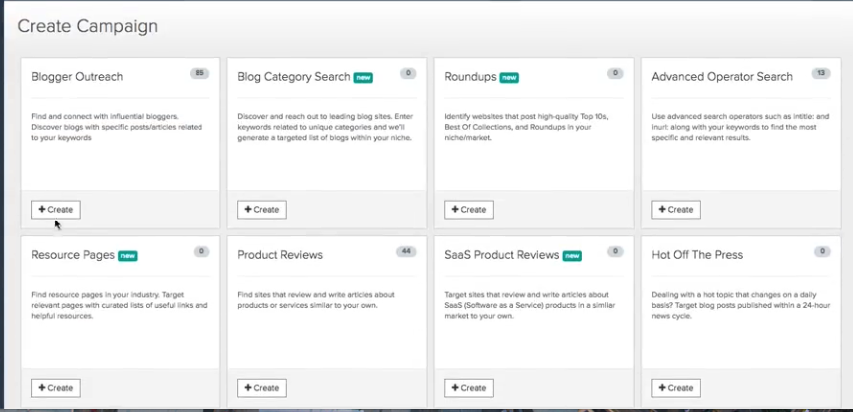
One thing Pitchbox does genuinely well: the platform ships with prebuilt campaign types so a new team member or freelancer can get started with minimal ramp time:
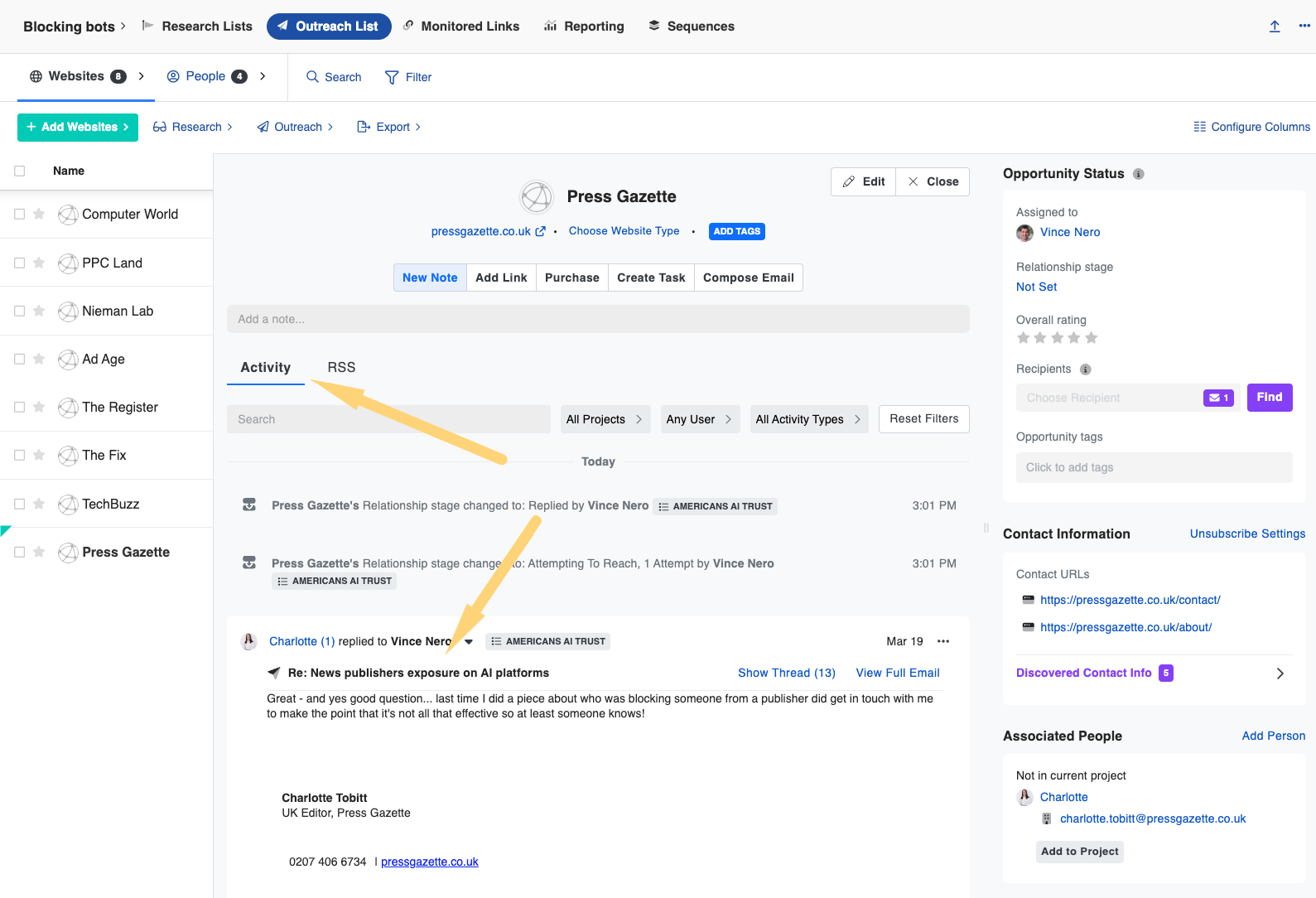
But the bigger difference is what’s stored per contact.
As I mentioned, BuzzStream keeps a full contact history- past emails, replies, notes, and campaigns- viewable while you’re actively prospecting.
To me, this is the single most important feature for doing outreach at scale. These days, as people get inundated with AI slop emails, standing out with real email messaging can make a real difference.
You can see whether you’ve pitched this journalist or blogger before, what they said, and what worked.
Here’s a breakdown:
| Feature | BuzzStream | Pitchbox |
|---|---|---|
| Web and news search prospecting | ✅ | ✅ |
| SEO metrics (DA, backlinks, etc.) | ✅ Ahrefs + Moz | ✅ Ahrefs + Moz + Semrush + Majestic |
| Chrome extension for prospecting while browsing | ✅ BuzzMarker | ❌ |
| Prebuilt campaign templates | ❌ | ✅ Blogger Outreach, Roundups, Resource Pages, etc. |
| Full contact history visible while prospecting | ✅ | ❌ |
| Best for | Relationship-first, trained teams | High-volume, freelance, or outsourced teams |
The honest comparison:
If your goal is relationship-first outreach with a trained team, BuzzStream’s customization is worth it.
If your goal is get-in, send-a-lot, move-on, Pitchbox’s template structure works best.
Email and Personalization
Both platforms let you create templates, track opens and replies, and automate follow-ups.
Both have bulk-sending capabilities and the ability to personalize individual emails.
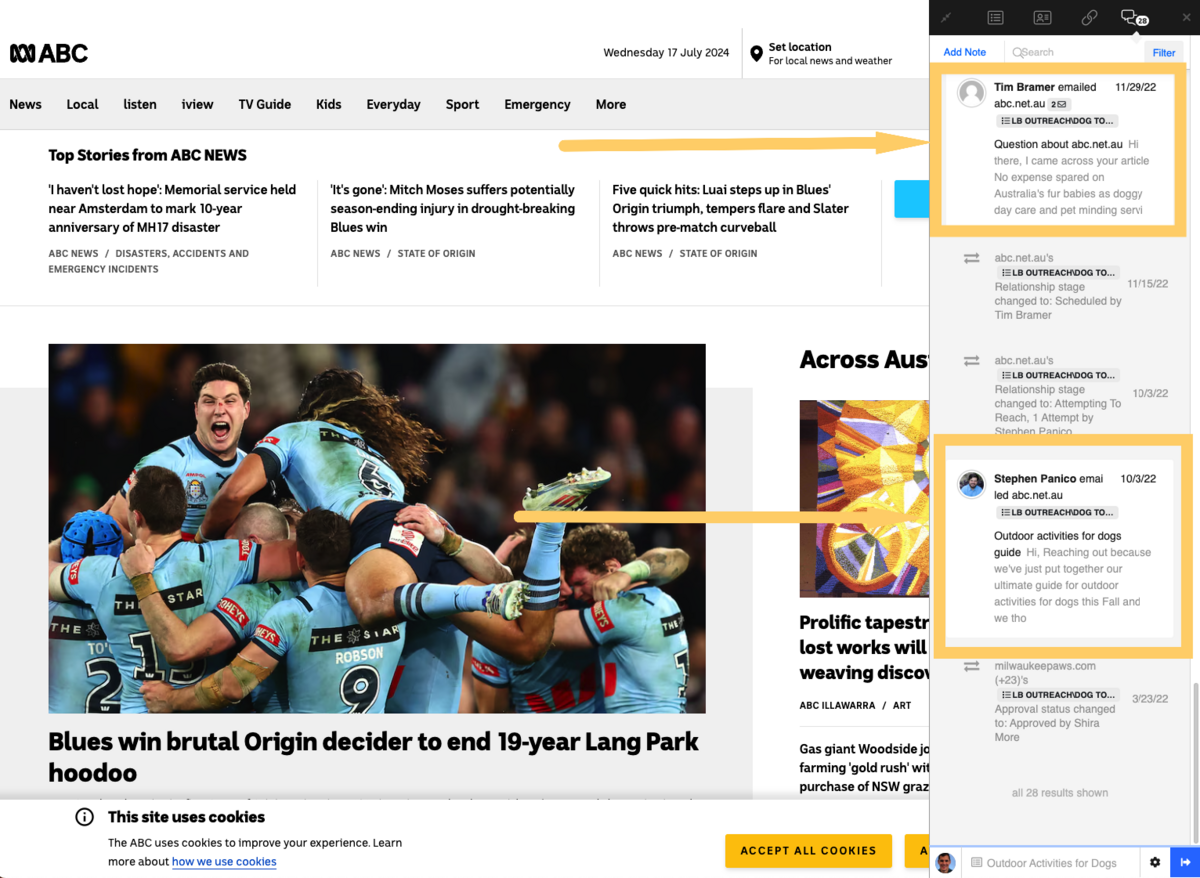
But again, BuzzStream’s differentiator is that you can personalize each email based on previous information.
With BuzzMarker, a free Chrome Extension that syncs with the BuzzStream database, users can see a contact’s history, notes, and other helpful information without leaving the website.
Pitchbox’s AI tools are its differentiator.
It generates tailored content, custom praise paragraphs, and references to a blogger’s recent work, designed to make large campaigns feel individual.
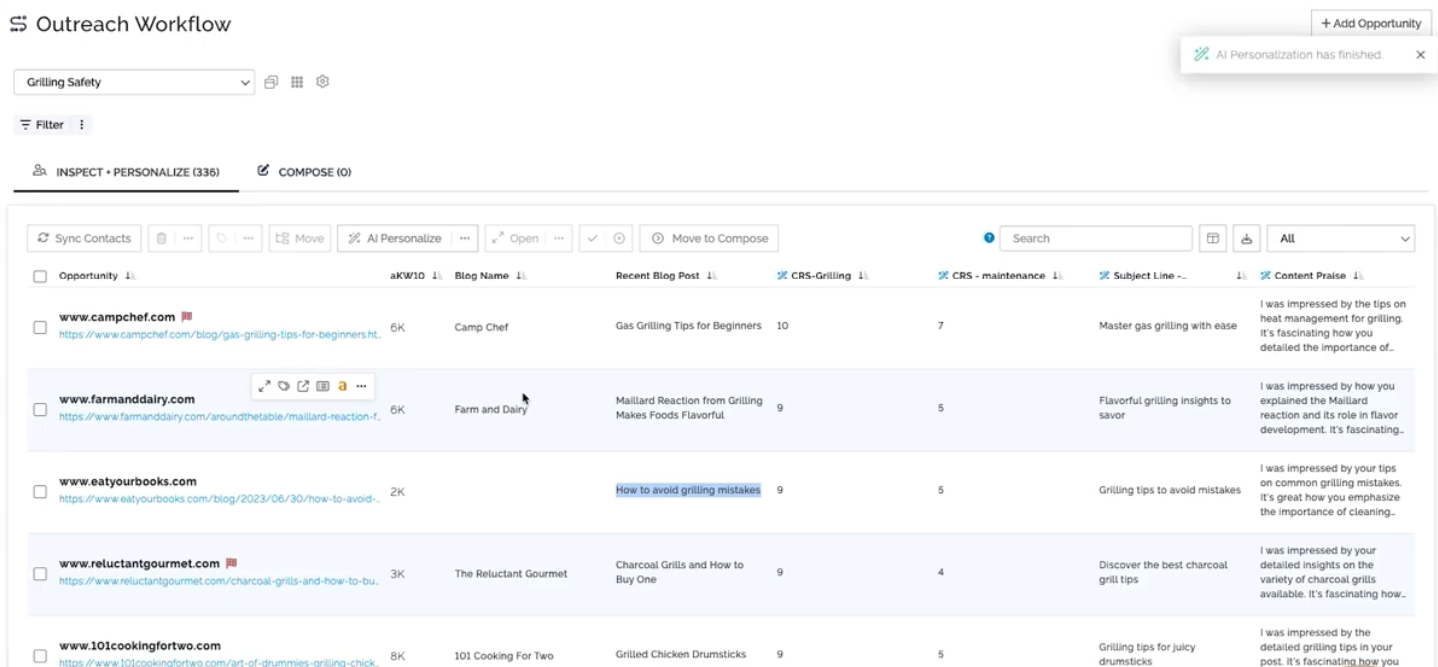
This is a definite highlight if you trust AI to personalize without it sounding like…AI.
Here’s a breakdown:
| Feature | BuzzStream | Pitchbox |
|---|---|---|
| Email templates | ✅ | ✅ |
| Open and reply tracking | ✅ | ✅ |
| Automated follow-up sequences | ✅ | ✅ |
| Bulk sending | ✅ | ✅ |
| Personalization using contact history in the compose view | ✅ | ❌ |
| AI-generated personalization at scale | ❌ | ✅ |
| Personalization without leaving the prospect’s site | ✅ BuzzMarker | ❌ |
| Best for | Manual, context-driven personalization | AI-assisted personalization at volume |
The honest comparison:
If you want AI tools that will craft emails and personalize them, Pitchbox is the better choice.
If you need a flow to personalize emails yourself, especially using contact history, BuzzStream has the edge.
Relationship Management and CRM
This is the sharpest difference between the two tools.
Pitchbox has a new-ish link partners CRM feature, but it operates as a separate workflow from prospecting and outreach, where you need to add contacts as partners.
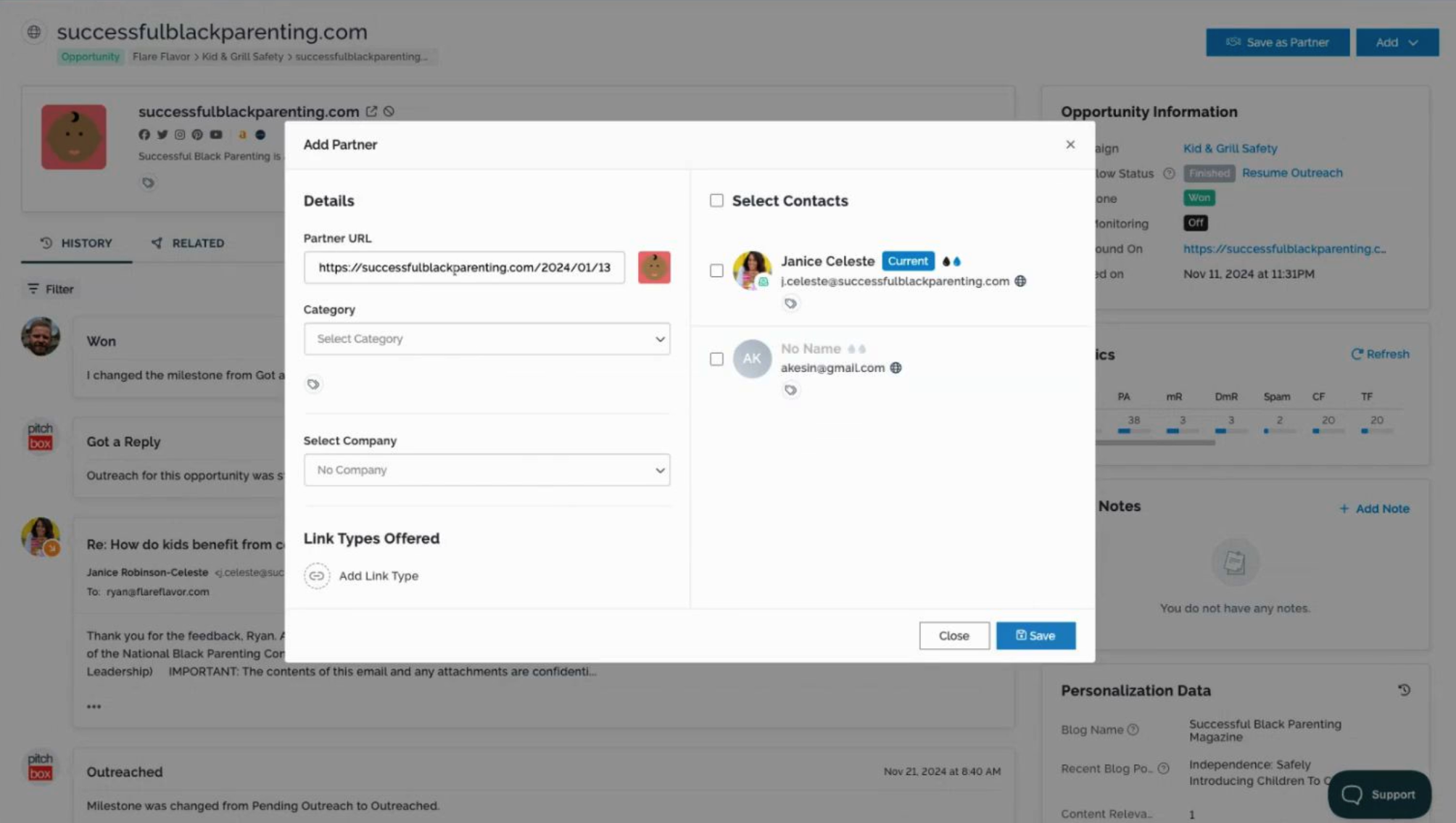
BuzzStream is a CRM first.
Contact history, team notes, and relationship stages are built into every interaction with every site.
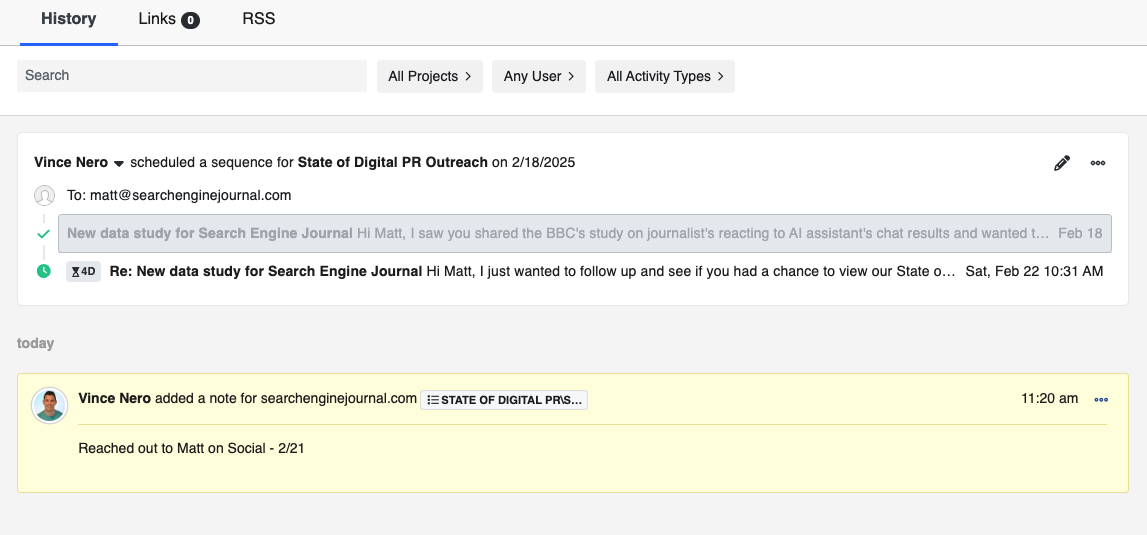
Another key feature of BuzzStream is that this contact history is shared with all team members.
| Feature | BuzzStream | Pitchbox |
|---|---|---|
| Contact history tracked automatically | ✅ | ❌ |
| CRM integrated into prospecting and outreach | ✅ | ❌ Separate module |
| Shared contact history across team members | ✅ | ❌ |
| Relationship stage and status tracking | ✅ | ✅ Link Partners CRM |
| Duplicate outreach prevention | ✅ | ❌ |
| Best for | Teams managing ongoing journalist relationships | Teams tracking link partners at scale |
The honest comparison:
As I said, BuzzStream is CRM-first, and that’s where it has the biggest edge over Pitchbox.
If building and maintaining relationships are important to you, BuzzStream is key.
Reporting
Both tools offer campaign reporting.
BuzzStream reporting covers email performance (open rates, click rates, response rates by template) and project-level results.
The Professional plan adds team performance reporting and unlimited customization.
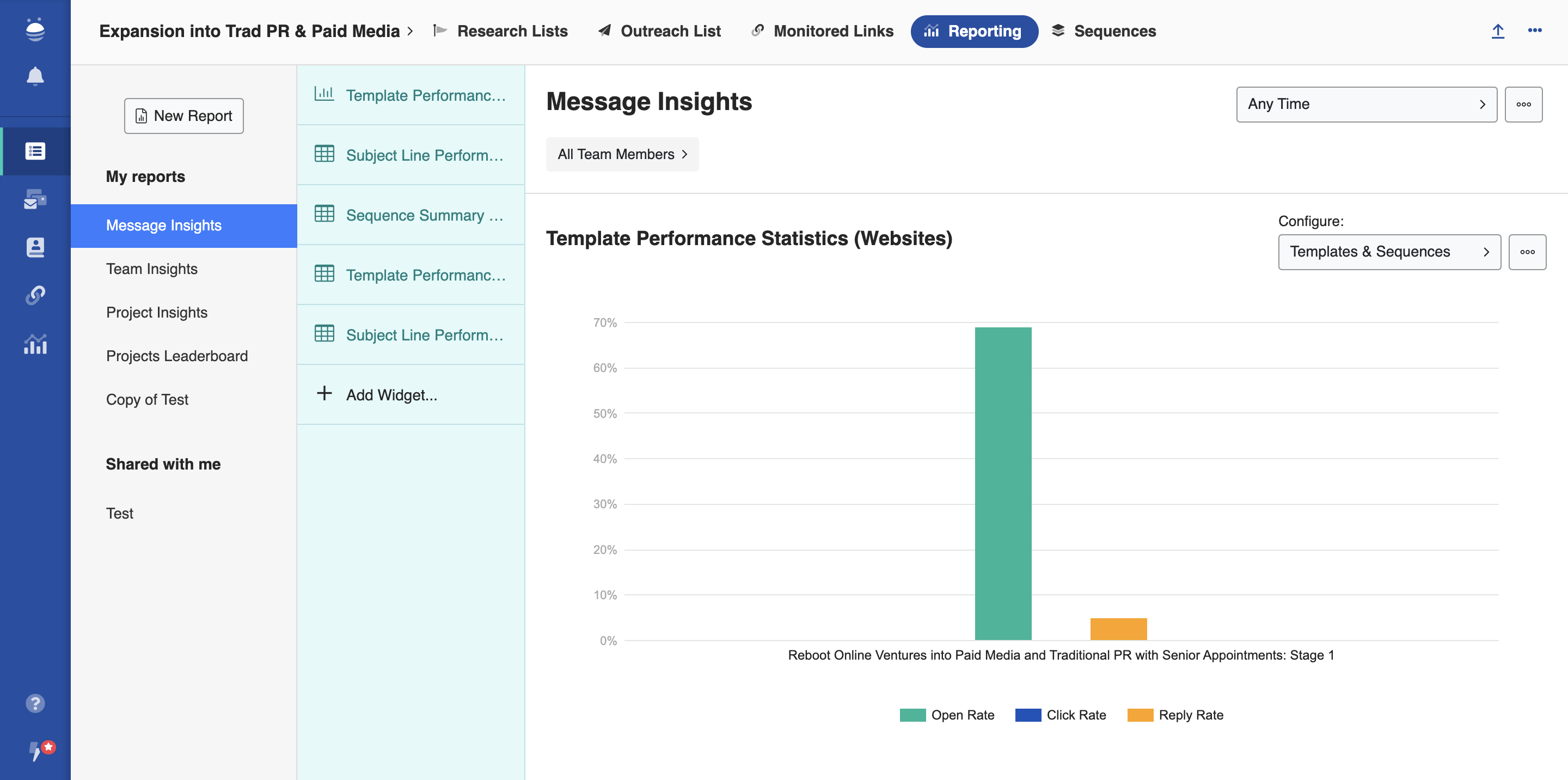
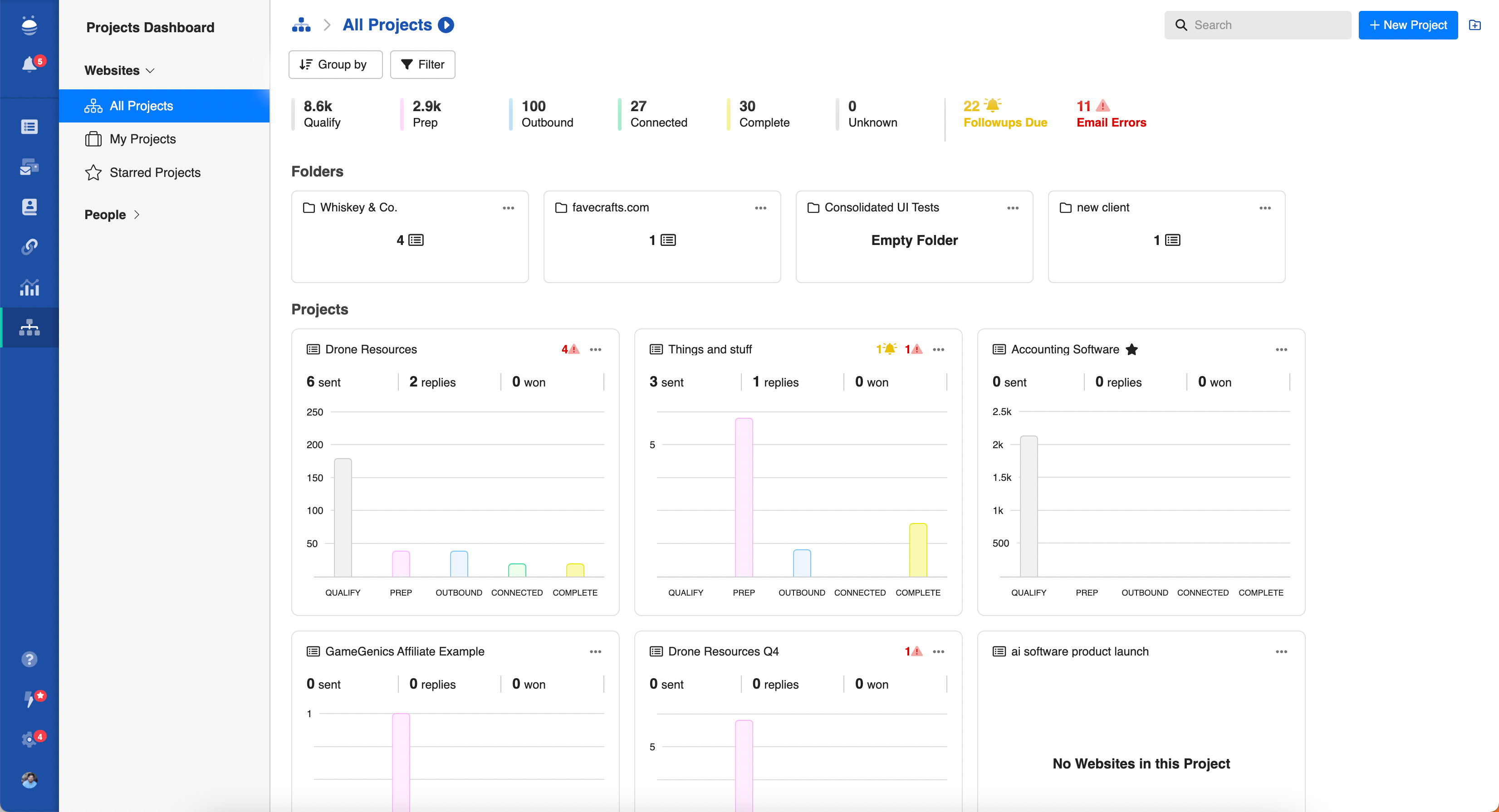
BuzzStream also has a Projects Dashboard view, giving a full overview of all active projects:
Pitchbox offers detailed campaign analytics, including response rates, acquired links, and outreach performance, and adds white-label reporting on the Advanced plan, which matters for agencies delivering client reports.
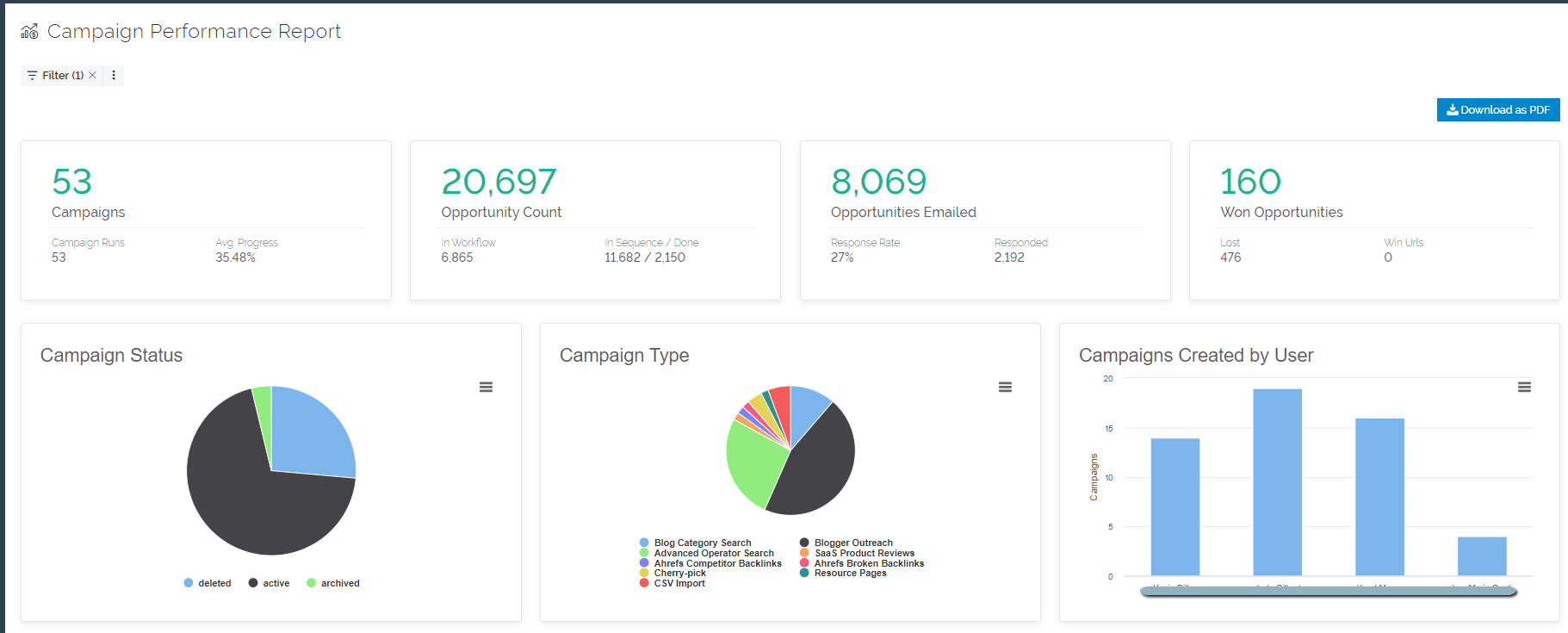
Here’s a breakdown:
| Feature | BuzzStream | Pitchbox |
|---|---|---|
| Email performance reporting (opens, clicks, and replies) | ✅ | ✅ |
| Template performance comparison | ✅ | ✅ |
| Team performance reporting | ✅ Professional plan | ✅ |
| White-label reporting | ❌ | ✅ Advanced plan |
| Google Data Studio and Looker Studio integration | ❌ | ✅ |
| Custom report builder | ✅ Professional plan | ✅ |
The honest comparison:
Fairly equal abilities here depending on the plan, though the integration with Google Data Studio is a nice differentiator for Pitchbox.
Integrations
Both have API capabilities and integrate with most SEO tools.
BuzzStream integrates with Ahrefs (Domain Rating, Backlinks, Referring Domains), Moz (Domain Authority, Inbound Links), and Hunter.io.
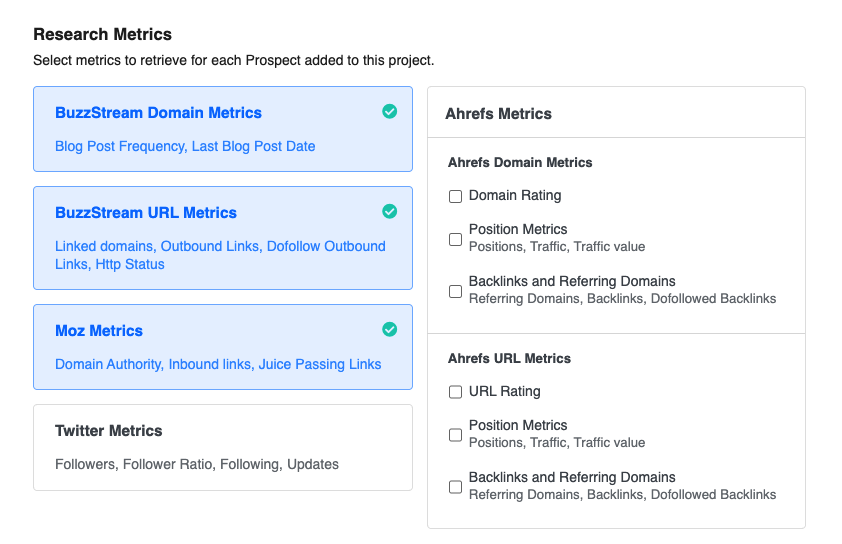
It also includes BuzzStream’s own domain metrics, such as blog post frequency, outbound links, dofollow outbound links, HTTP status, and more.
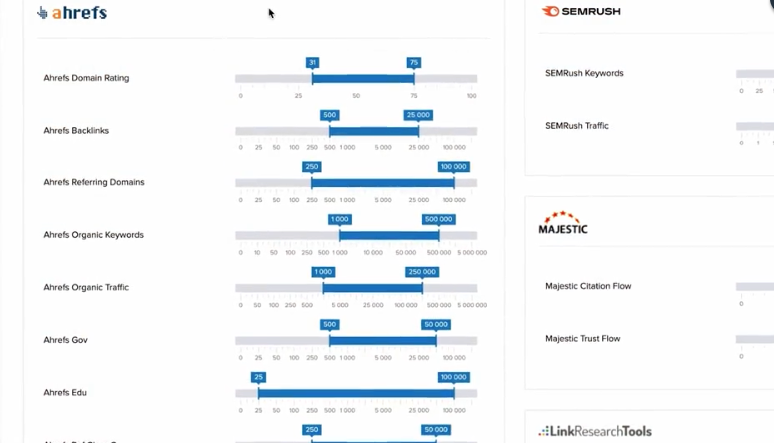
Pitchbox integrates with Ahrefs and also supports SEMrush, Majestic, Slack, Zapier, and Google Data Studio.
If your workflow is built around those tools, that matters.
Both also have API capabilities.
Here’s a side-by-side comparison:
| Integration | BuzzStream | Pitchbox |
|---|---|---|
| Ahrefs | ✅ | ✅ |
| Moz | ✅ | ✅ |
| Semrush | ❌ | ✅ |
| Majestic | ❌ | ✅ |
| Hunter.io | ✅ | ❌ |
| Slack | ❌ | ✅ |
| Zapier | ❌ | ✅ |
| Google Data Studio | ❌ | ✅ |
| API access | ✅ Professional plan and above | ✅ |
| Proprietary domain metrics | ✅ | ❌ |
The honest comparison:
BuzzStream has Ahrefs and Moz because we believe they are two industry standards.
But Pitchbox definitely has more SEO metrics integrated into its platform overall. If tools like Majestic or Semrush metrics are important to you, that’s a serious consideration.
Pricing: What It Actually Costs in 2026
BuzzStream’s Starter is $49/mo while Pitchbox’s Pro is $210/mo on a monthly plan or $300/mo billed annually.
But the more apples-to-apples comparison for an active small team is BuzzStream Growth ($174/mo, 3 users, 25,000 contacts) vs. Pitchbox Pro ($210/mo, 2 users, 50,000 contacts).
BuzzStream:
- Starter: $49/mo
- Growth: $174/mo
- Professional: $424/mo
- Custom: from $999/mo
Free trial available. No contract required.
Pitchbox:
- Pro: $210/mo
- Advanced: $420
- Scale: Custom pricing
Free trial available (guided onboarding with a Pitchbox trainer).
That said, the billing models differ as well:
BuzzStream limits you by the number of contacts in your database.
Pitchbox limits you by the number of emails you can send per month.
Here’s the head-to-head breakdown:
| Plan feature | BuzzStream Starter | BuzzStream Growth | Pitchbox Pro | Pitchbox Advanced |
|---|---|---|---|---|
| Monthly price | $49 | $174 | $210 monthly / $300 annually | $420 monthly / $600 annually |
| Users | 1 | 3 | 2 | Unlimited |
| Contacts | 500 | 25,000 | 50,000 | 200,000 |
| Outreach emails per month | Unlimited | Unlimited | 2,000 | 5,000 |
| Email accounts | 8 | 24 | 2 | 6 |
| Workspaces | 1 | Multiple | 1 | 25 |
| Free trial | ✅ Self-serve | ✅ Self-serve | ✅ Guided | ✅ Guided |
| Contract required | ❌ | ❌ | ❌ | ❌ |
The honest comparison:
For teams sending a high volume of emails, Pitchbox’s per-email model can become a constraint faster than BuzzStream’s.
Both offer free trials now. Pitchbox’s is guided, and BuzzStream’s is self-serve.
Why the Type of Outreach Matters More Than the Tool
As I said in the beginning, when I see this conversation on Reddit, the choice between BuzzStream and Pitchbox doesn’t really come down to features; it comes down to how you plan to use them.
This is where I may start to sound less objective, but I have the data to back it up.
Targeted outreach gets better results dramatically
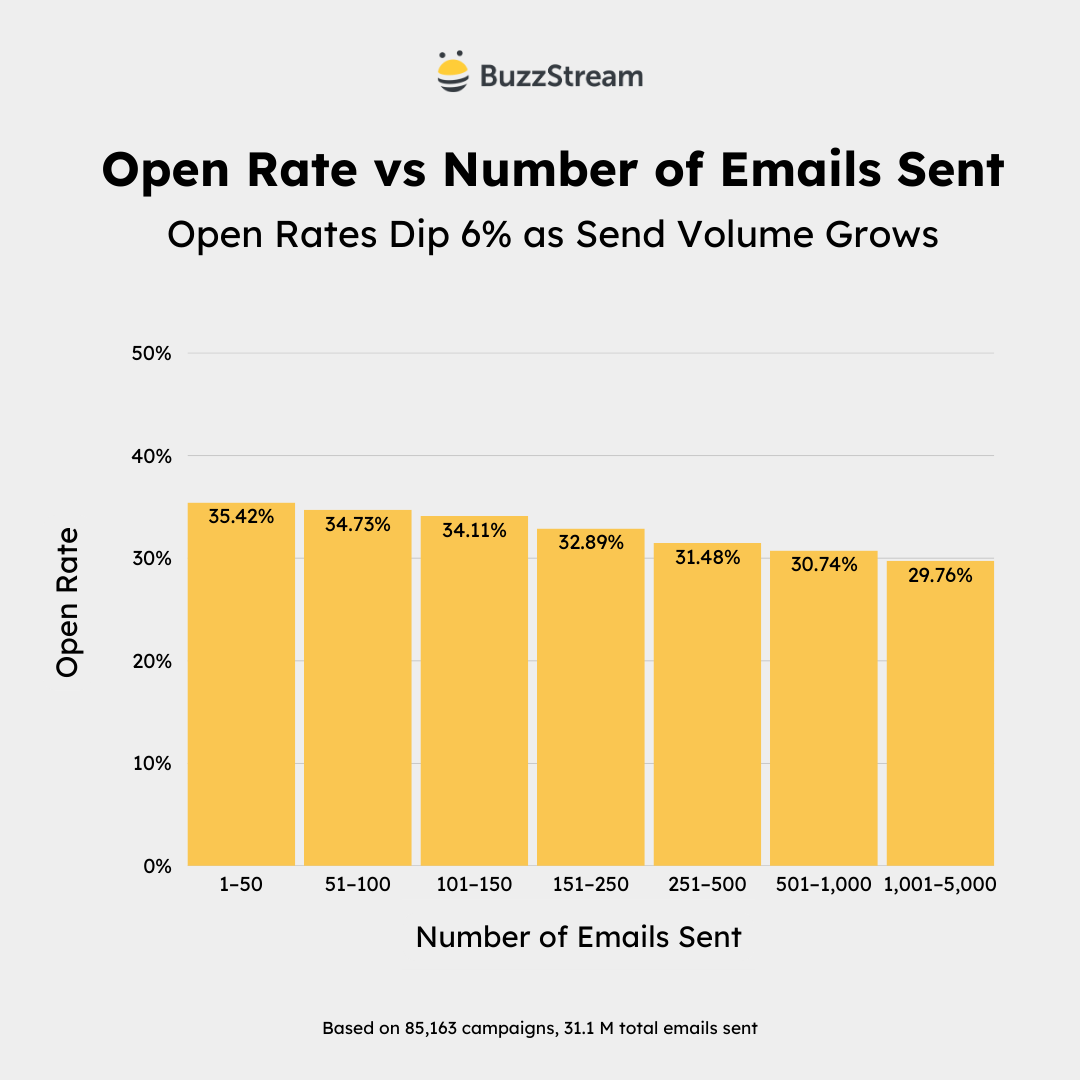
We analyzed over 31 million emails across 86,000 campaigns in BuzzStream.
The finding was stark: the more targeted the outreach, the better the results.
Open rates dropped about 16% as campaign sizes scaled from small (1–50 emails) to massive (1,001–5,000 emails).
Reply rates fell from 1.15% to 0.37% — a 68% drop.
The link data is even more striking.
Campaigns sending 51–100 emails earned an average of 12.08 links.
Campaigns sending 1,001–5,000 emails earned fewer than 3.5 links per campaign — 70% fewer.
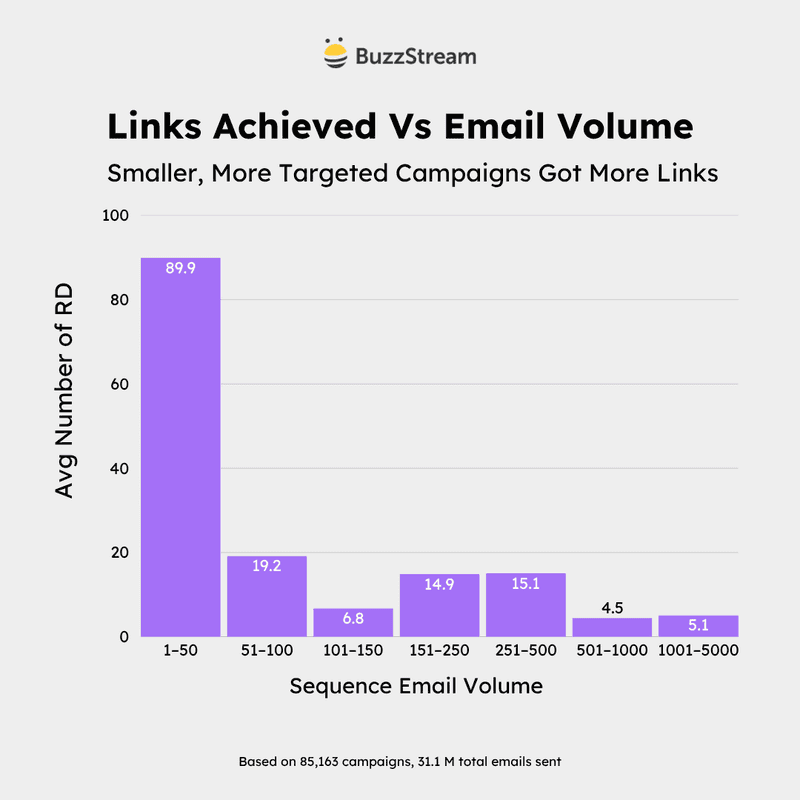
Smaller, more personalized campaigns are what BuzzStream is best suited for.
Relationships yield better results
I analyzed over 1.3 million anonymized emails sent by 17 digital PR agencies across a two-year period.
For each email, I asked one question: had this journalist replied to this sender before?
The results:
- Journalists who had previously replied were 1.5x more likely to open a follow-up email
- They were 19x more likely to respond
This tells us that relationships matter.
Not only that, but recency of relationships matters.
Journalists who replied within the last 90 days were about 30x more likely to reply again versus cold contacts.
After 90 days, there’s a steep drop-off.
After 6 months, warm contacts are still 8x more likely to respond than cold outreach — but you’ve lost the peak lift.
Final Verdict
We refer certain potential customers to Pitchbox for a reason.
If you’re running assembly-line link building at serious scale, it’s a strong tool for that job.
For teams doing relationship-first outreach, BuzzStream is the stronger fit.
It’s a real outreach CRM: contact history, team collaboration, relationship tracking built into every interaction.
It also starts at $49/mo with a free trial. No contract required.



 Check out the BuzzStream Podcast