 End-to-end outreach workflow



Table of Contents
- Think in markets, not continents.
- Build campaigns at the city level.
- A strong dataset means nothing if it doesn’t reflect the real, lived experiences of the specific community you’re targeting.
- Front-load your stat in the subject line.
- Journalists will often copy-paste it as their headline, so write it like one.
- European journalists will ask how your data was compiled, so have a fact-checkable landing page ready before you hit send.
- Study local holidays, editorial habits, and even time zones before you hit send.
- Default to positive angles, especially for lifestyle content.
The media landscape is very different across the world. Different countries, states, and regions all have cultural nuances and localized preferences for news. What resonates in one area of the world most likely won’t resonate elsewhere.
As more teams jump on the digital PR bandwagon, it’s important to understand the nuances. For this webinar, I asked Eirini Theodoridou, Head of International Digital PR; Marc Bulsa, Senior PR Strategist; and Chloe Keys, International Senior Digital PR Strategist, all from Connective3, to join us to discuss international PR.
Here’s the video:

Here’s the deck:
And here’s the transcription:
Introduction
We will be talking a lot about the US and Europe, and how to apply best practices when pitching in an untapped market — or perhaps you’ve already tapped into some of these markets. We’ve split the presentation into three parts, just to make sure we have a lot of checklists and tips on how to best target any strategy for any market, to help you kickstart your journey, and then some Q&A.
So, to kickstart our conversation — it will be more of a discussion — we’ll be talking about international PR. It’s going to be a no-brainer to say that we’ve seen a lot of international PR practices evolve over the past few years, not just in the UK but internationally across Europe. It’s about spelling and send times, but it’s not just that.
In general, digital PR has changed a lot.
Even if you’re just tapping into it today, or you’ve been working in digital PR for a long while, you’ll agree that with all the Google updates and algorithm changes, it has changed a lot — it’s all about relevancy.
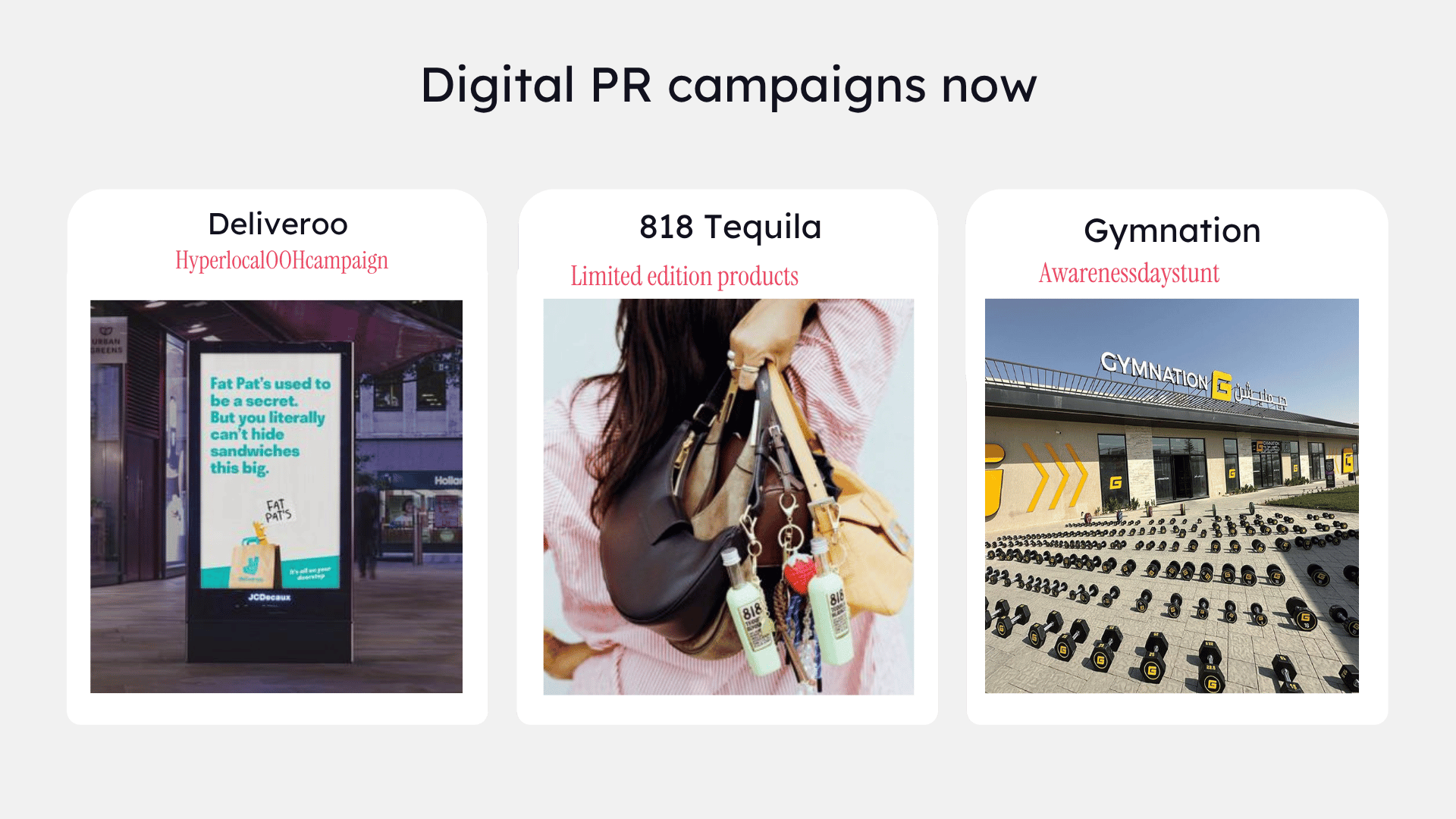
We went from campaigns that some people will obviously have seen before — the listicles, the dream jobs, the “best cities for X” — to more all-around, connected campaigns that work harder for you.

Not just by attracting media attention and online publications, but also attracting social media attention, and perhaps even incorporating out-of-home practices like taking over gyms, as you can see here. These are just some examples from key brands I think are known worldwide, and they’re quite more on the creative side, which is something we’re focusing on in 2026.
The types of campaigns in digital PR have also changed a lot. A great example — this is part of the digital PR report that BuzzStream does every year — we went again from your listicles and “best cities for ads” to more data-led content, expert commentary, and case studies.
The way we pitch to journalists has changed a lot, and the formats that actually bring links have changed dramatically.
The industries that used to be easier to get links in can now be more difficult. Again, this is part of a study — you can see industries like education, fashion, and tech have all proven a bit harder to earn links in.
The European Landscape: Culture Over Translation
So what’s the big difference between the US and Europe? I think we treat Europe as one big market, but if you think about it, there are 24 official languages across Europe and 7 different time zones.
It’s a continent, not just a market. A common misconception is: “I’ll just translate my release with some EU destinations — it’s got Spain on there, it’s fine, that’ll do the trick.”
But in reality, to achieve successful multi-market execution, we’ve got to translate culture, not just language. We’ve got a whole lot of blogs on our website that talk about different markets — Spain, Italy, France, etc. — that you can have a look at.
But I thought it would be good to show you what it actually means to know your market.
If you put France into ChatGPT and ask for the 13 regions of France, it’ll just come up with those.
But if you know the history — I think it was about 10 years ago — we went from 22 regions to 13. But merging those regions doesn’t mean the people merge their culture with the region next to them.
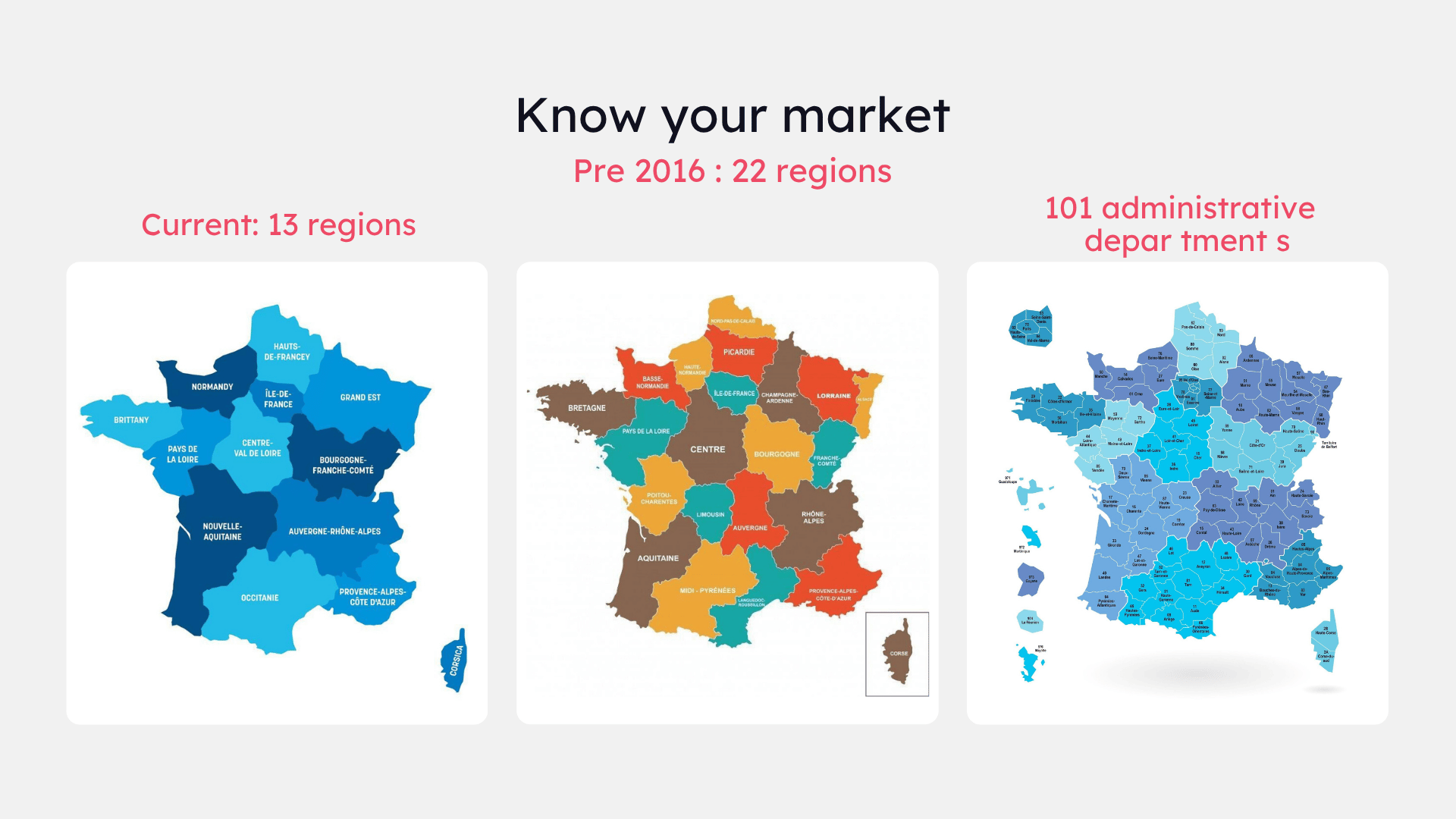
Someone from rural Limousin, which I call the outback of France — there’s nothing going on there — doesn’t share much with someone from Basque Country, which has a completely different culture and language.
They’ve just been put in the same pot. So if you’re outreaching to those people, you need to understand that difference.
If you look at France on the department level, there are 101 administrative departments.
They all have their own foods, their own culture, their own special days. So it’s one worth considering.
So what’s the European landscape like? It’s shaped by fragmented, region-driven media.
We see — especially in a lot of the Latin countries — that regional outlets are more prominent than nationals, and that’s where you need native content, not only for cultural relevance but also for keyword relevance, because at the end of the day, we’re building links for our clients to get better rankings, so we need that keyword relevancy.
Lead times are slow, which we’ll touch on a bit later, and there’s also far more scrutiny — journalists need to check where the data comes from.
They essentially need to know: where did you get that information?
So I guess an actual insight for how to find success in Europe is to understand your market first.
What’s the media landscape like?
Are there cultural differences between different regions?
When it comes to crafting your campaign, you want to prioritise data-led content, because that’s what’s working at the moment — but you have to make sure you’ve got local data to build out all your angles. But local isn’t enough; you also need regional trade coverage if you’re looking at industry splits. It’s really important to target the people you want to outreach your campaign to precisely.
Then you have to localise — you’re not tailoring to a country, you’re tailoring to a city.
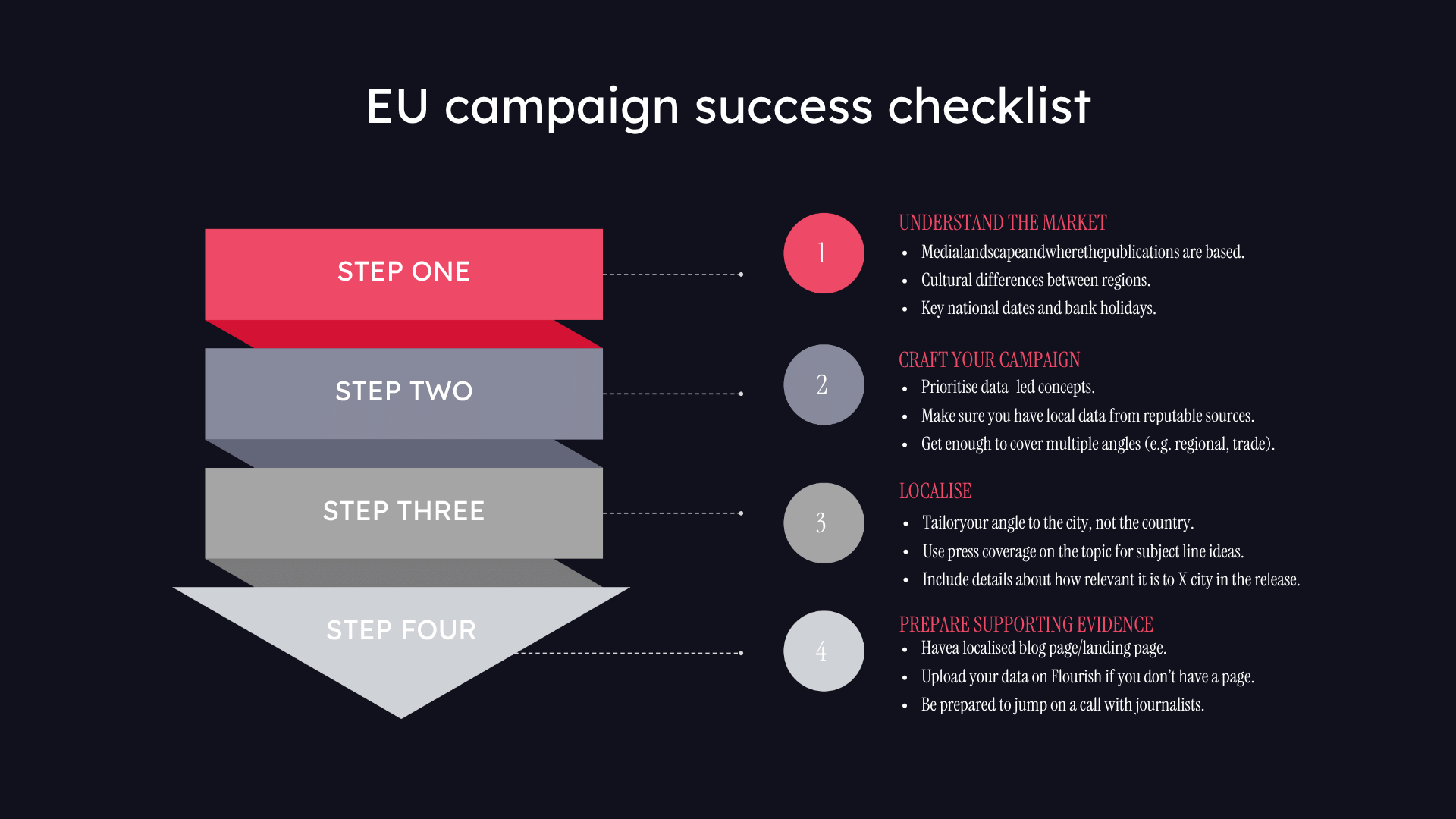
One thing we’ve found is that using previous press coverage to look at headlines and see how you can angle a story works quite well. You need to include details of how this study is relevant to a specific town of 20,000 people.
Finally, you have to prepare your sourcing evidence.
It’s crucial that you have a blog or landing page because the journalist will ask for it to fact-check, and then you can always upload it to Google Sheets or Flourish if you want them to be able to explore it themselves.
Be prepared to defend your campaign, essentially.
The US Market: Nuance, Relevancy, and the 50-Market Mindset
Yes, so — market differences in the US. I think it goes without saying that winning digital PR in the US isn’t a one-size-fits-all approach.

I think one of the most important places to start is reiterating that US success means thinking in terms of 50 different markets — just exactly as Eirini was saying about France — each with its own behaviours, values, and news priorities that must be embedded into everything you do from a PR perspective.
It’s so easy to fall into the trap of treating the US as one single market — outreaching something in Michigan and thinking it’ll resonate the same in Arizona.
It won’t.
And these differences can also be seen on a much more granular level, even state by state.
But I think the real golden rule here is to hammer home that relevancy drives coverage, coverage drives links and results for your campaigns and your clients, and the more locally and culturally relevant you can make your campaigns, the more your chances of success really do increase.
I think the first step I really want to touch on today is hammering home the importance of nuance in digital PR, and realising that it’s so much more than a nice-to-have — it’s genuinely what determines whether a campaign will feel relevant enough to be picked up in the first place.
Here are my top three tips to make sure you hit that nuance mark in US digital PR.
1. Understand local context
Number one: at the ideation stage, the genesis of your idea needs to be essentially rooted in a clear understanding of the local context that surrounds it. For example, are there any local laws or political narratives that would directly influence how your campaign’s narrative could be received or picked up?
2. Data must speak locally
Secondly, data sets are great — they’re amazing — and we sure do need them to really cut through the vast landscape that is US media.
But if they don’t reflect real, lived community experiences, it unfortunately just won’t work. The data sets we pitch need to speak directly to a current issue.
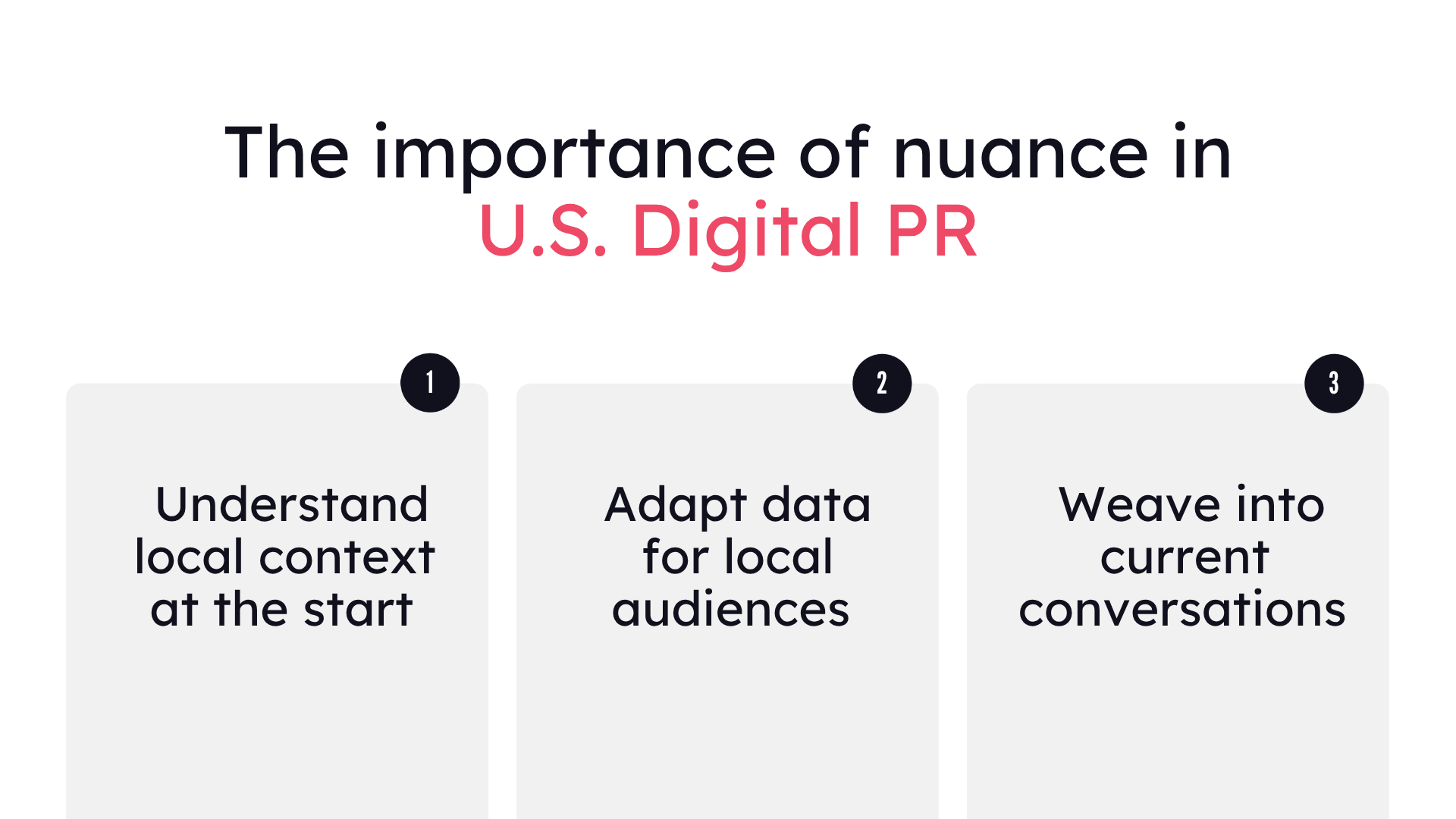
And finally, this “weave into current conversations” notion goes for all markets, but especially in the US.
3. Weave into local conversation
Audiences and journalists are so smart, and no matter how shiny your release or email pitch is, if the content feels disconnected from what’s already being spoken about — or is about to be spoken about — it just won’t work.
US Case Study: B2C Dental Client
I wanted to show you really quickly what understanding nuance can deliver in the US. Our previous B2C dental client operated across a really diverse range of US communities across Arizona, Colorado, Nevada, and Texas.
They had very minimal digital PR presence, and over 12 months we were able to create a media trust blueprint, building them up as a credible dental authority figure in the US.
We put the success down to three things.
When building out their strategy, we really got to know the client, the patients, and the dentists, which enabled us to recognise that across all of our campaigns and all of our digital PR work, it didn’t matter what was relevant to one patient in one area versus another — even though we were all talking about the same topic, which is teeth and oral health, it didn’t necessarily always translate.
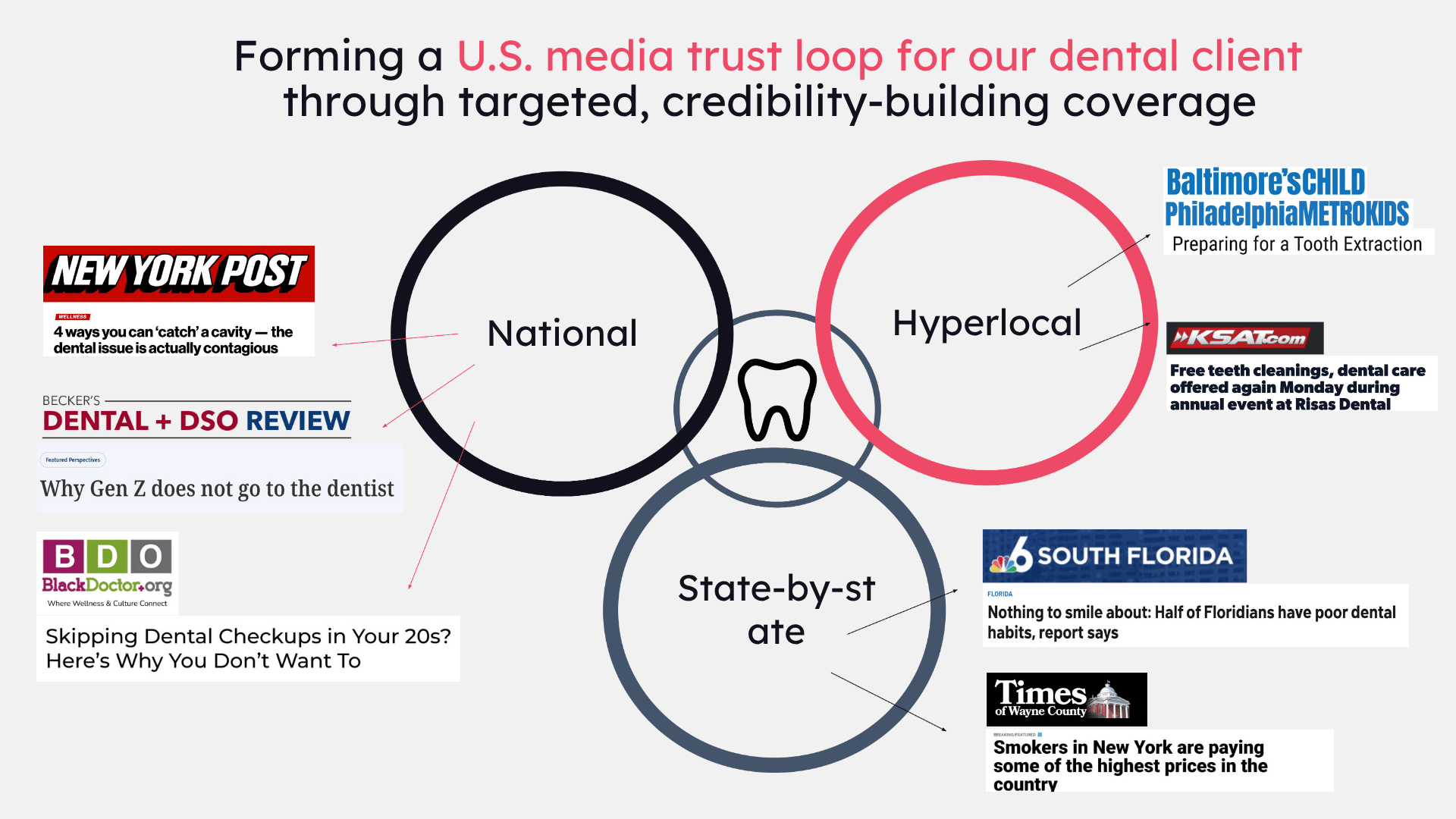
Knowing this, we made sure that every single campaign was backed by social listening data to most accurately reflect what individual communities were talking about in terms of dental topics.
And where we could, to bolster that, we made sure we were able to layer our standard data collection or survey data campaigns with the client’s internal data too, to really make sure we stood out every single time we landed a pitch in a journalist’s inbox.
If we did all these things, that’s what got us the really strong results.
US Case Study: B2B and the Four-Tier Pyramid
What you’ll find is that nuance isn’t exclusive to B2C clients. In my opinion, it’s actually more important in the B2B space, where content is very heavily driven by editorial and economic agendas. Understanding that nuance, we were able to be really successful in the US with a B2B client. So if you have a client in this space or in the finance space, this four-tiered pyramid lays out the approach we recommend for the highest chance of success in the B2B space.
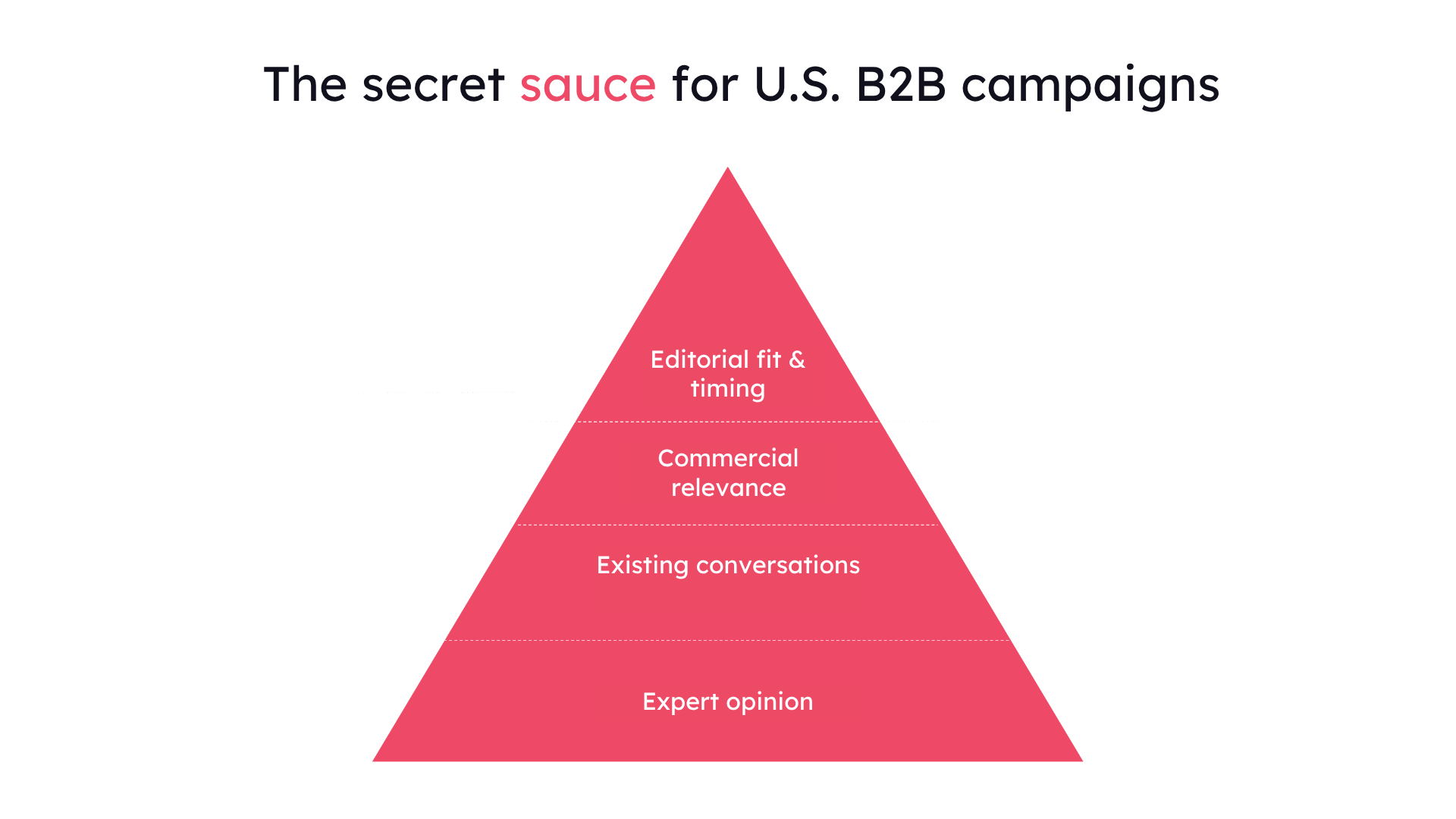
At the bottom sits expert opinion.
Expert Opinion
What we find helps build genuine credibility amongst US editors is the inclusion of strong internal and external expert commentary that goes beyond just presenting a data set — it explains why that data matters. Having a large data set is amazing, fair enough, but it really means nothing to a journalist if you can’t provide opinion on it. You can’t sit on the fence.
Existing Conversations
Next is aligning with existing conversations. Business publications are built around feeling like a natural contribution, talking about the same things repeatedly. We were able to recognise that, and we actually ended up being published on a Texas government site because we were aware of tapping into existing conversations rather than reinventing the wheel.
Arguably, what I think is the most important tier on this pyramid is commercial relevance.
Commercial Relevance
Editorial decisions are driven by commercial audience needs, meaning stories are judged by how well they fit wider narratives around money and growth. So it makes sense why an outlet like Fox Business would want to cover a story that presents a strong business picture, which is what we find for our specific client.
And at the very top — the cherry on the top — is editorial timing.
Editorial Timing
Common sense goes a really long way here. If you’re paying attention to market dates, the economic calendar, and the business calendar, and you’re ahead of those, then editors will be primed to cover your story.
To sum up everything I’ve been saying — for anyone who wants to start doing digital PR in the US, or if you’re a brand wanting to start tapping into it this year — this is what’s working across our clients across a range of different sectors. ‘
Just to note: we know the landscape is super dynamic, but time and time again, we see these four steps standing the test of time.
The most important thing I want to drill in is that success will never come from just having a really strong data set or a really shiny press release.
It comes from, first of all, studying where your audience is consuming news — getting a really high DA link on a publication or site where your audience doesn’t read or doesn’t care about it essentially means nothing.
Researching your publications thoroughly too:
- Does it feel natural when it lands in that journalist’s inbox?
- Is it something that publication covers time and time again?
And reading the cultural room when it comes to topics — as Eirini was saying earlier — localising every single touchpoint, from your data sets to your email pitches.
We believe that if you get a good mixture of all these things right, your chances of success in the US are pretty much increased.
I wanted to leave everyone with a bit of food for thought.
This is a piece of feedback I received from a US freelance journalist a few months ago, during a time when the news cycle was really heavy in the US — a lot of political uncertainty, everything was just going crazy:
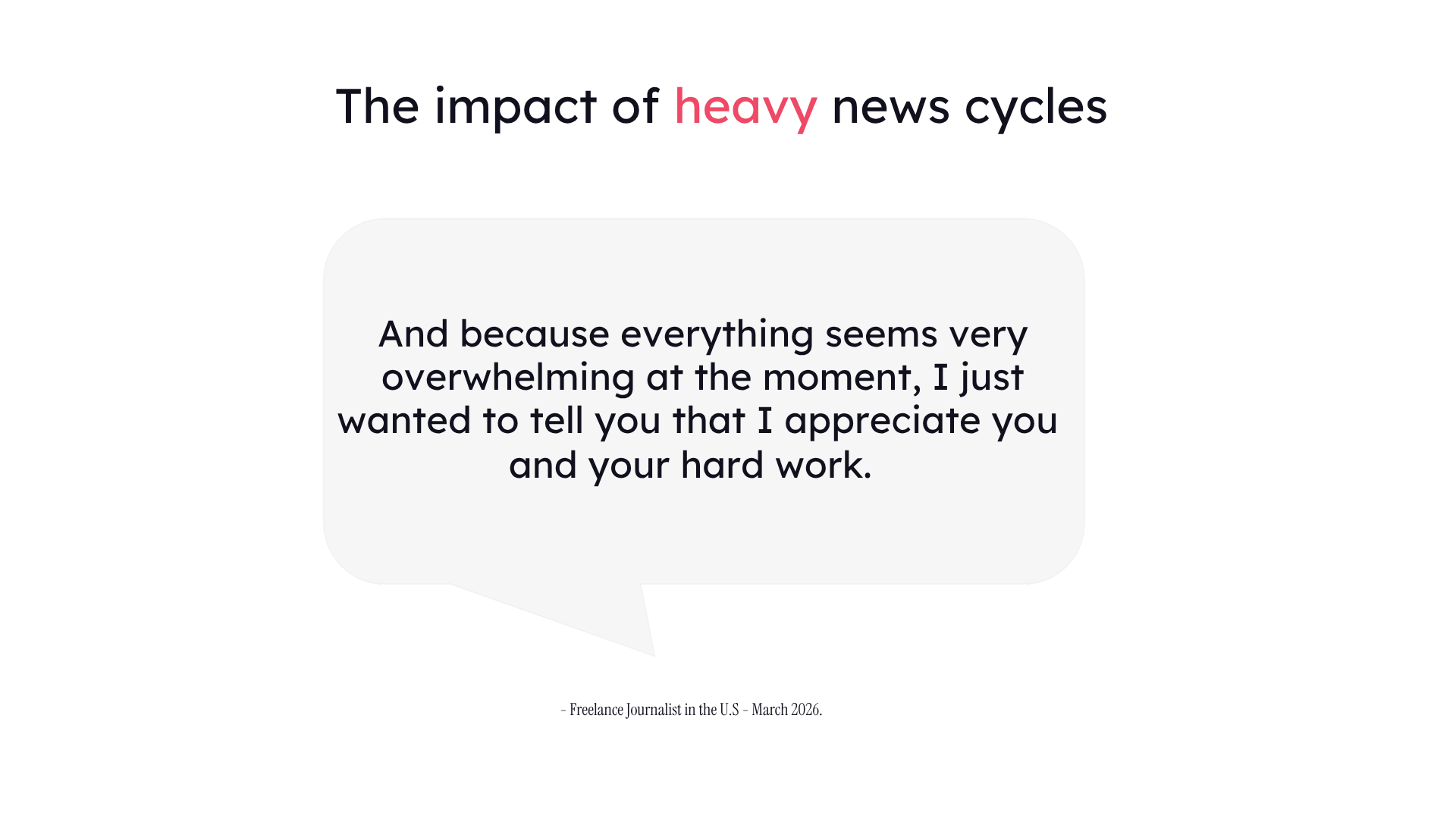
We received this, and it made the wider team reflect on the growing appetite from newsrooms and individual journalists for more positive, solution-led stories that offer relief from heavy news cycles.
So if I were to give my top tip to anyone today that you can implement right away: before you push out your next angle in the US, reflect — is there a way you could potentially make it a bit more positive?
Building a Targeted Media List: Tools and Techniques
So now let’s say you’ve focused on a specific market, you’ve understood the cultural nuances, you’ve built some confidence in understanding what you want to push in those markets — but how do you actually find the best people to reach out to?
Let’s cover the basics first.
I know there’s a great webinar that Vince ran on how to search effectively on Google, specifically if you’re looking for journalists’ email addresses, and that can be the first step here.
We have a few various tools you can use. But the first thing I’d say is: lean on Google.
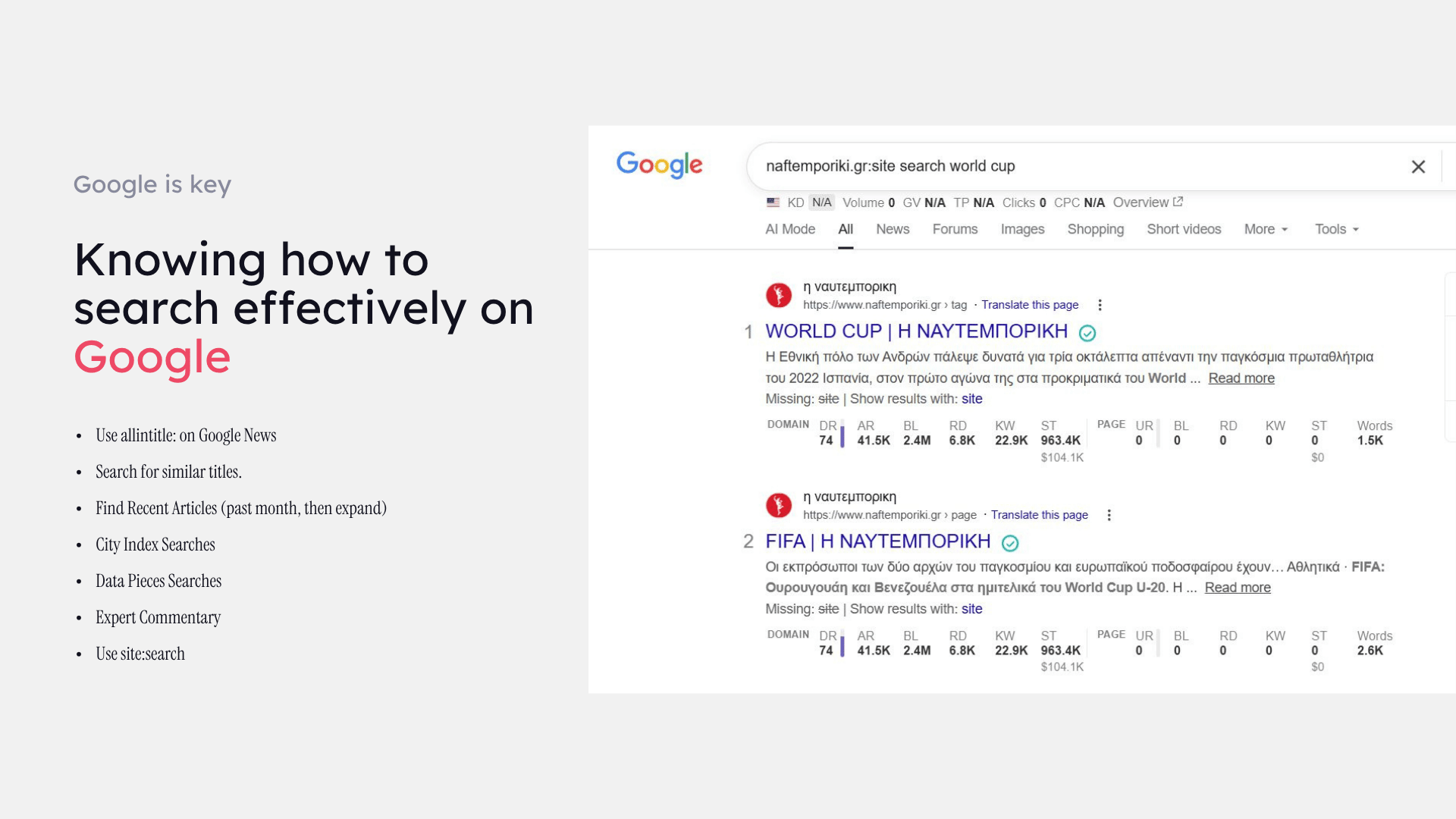
Don’t be afraid to search in a language you don’t know. There are plenty of ways to go about it.
These are some types of searches you can do on Google. The example here is if you were searching for Greek media — if you had a piece of content around the World Cup, you can find publications and hence find the journalist’s email from publications that will be relevant to your story.
DuckDuckGo
Going beyond that, there’s another tool worth mentioning — DuckDuckGo. We like DuckDuckGo.
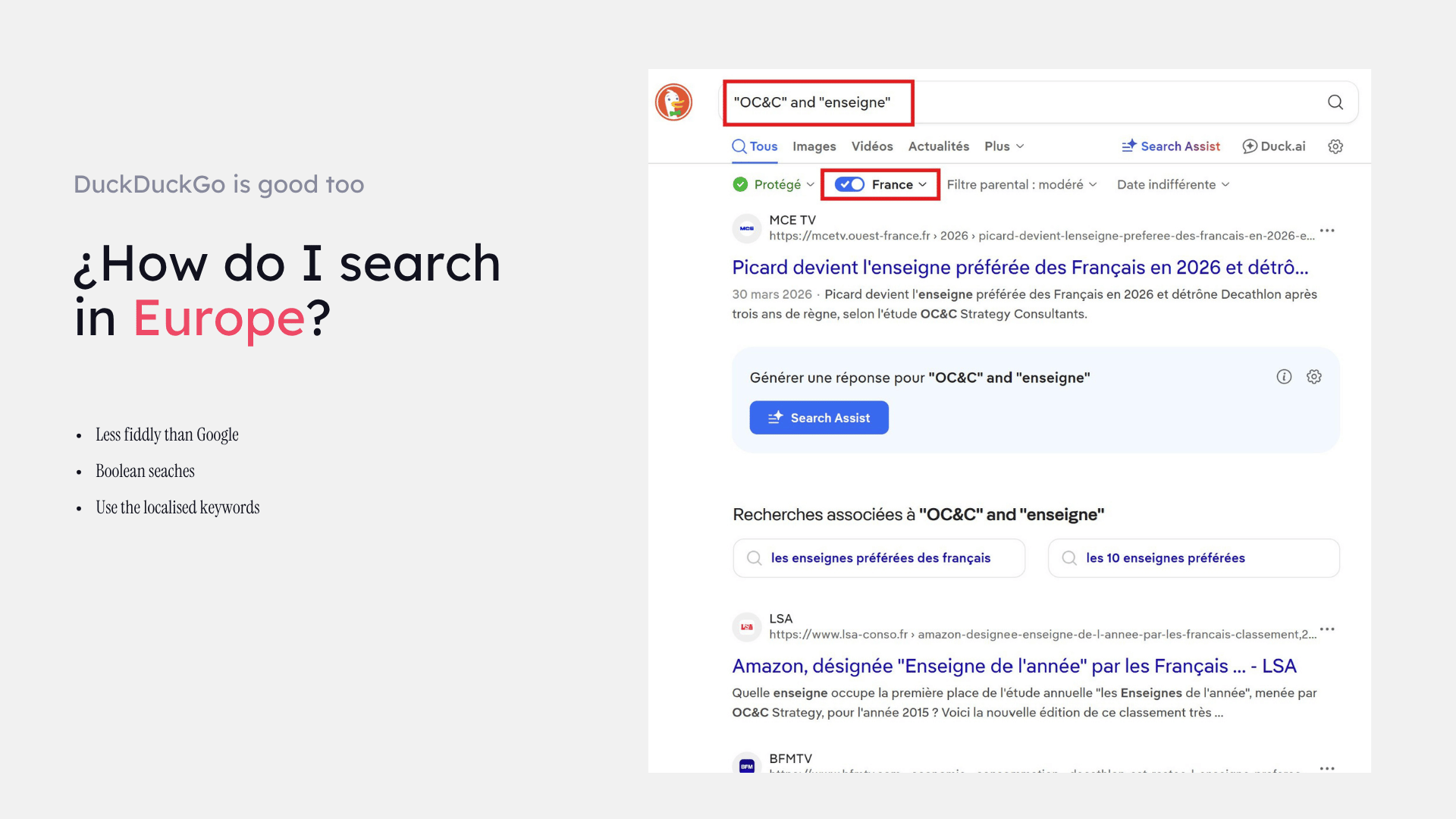
This tip actually comes from one of our RPRs who doesn’t speak a European language but has been able to earn coverage in those markets without knowing the language.
The reason is that on DuckDuckGo, at the header level, you can change the country you’re looking for.
So you’re doing Boolean searches with localised keywords, but when you go into Google you have to change the language and region settings, which can be a bit fiddly.
With DuckDuckGo you can just change it really easily, and I think that helps get the best results, because your UK or US Google is not going to return relevant results for Italy or Spain, for example.
For a more publication-specific example: if you were starting with Google, even just to source names of publications — to understand what the equivalent of The Guardian is in Spain, for example — using advanced search, you would change your region to Spain, change the language of your search to Spanish, and then choose your topic, let’s say “World Cup,” to find publications.
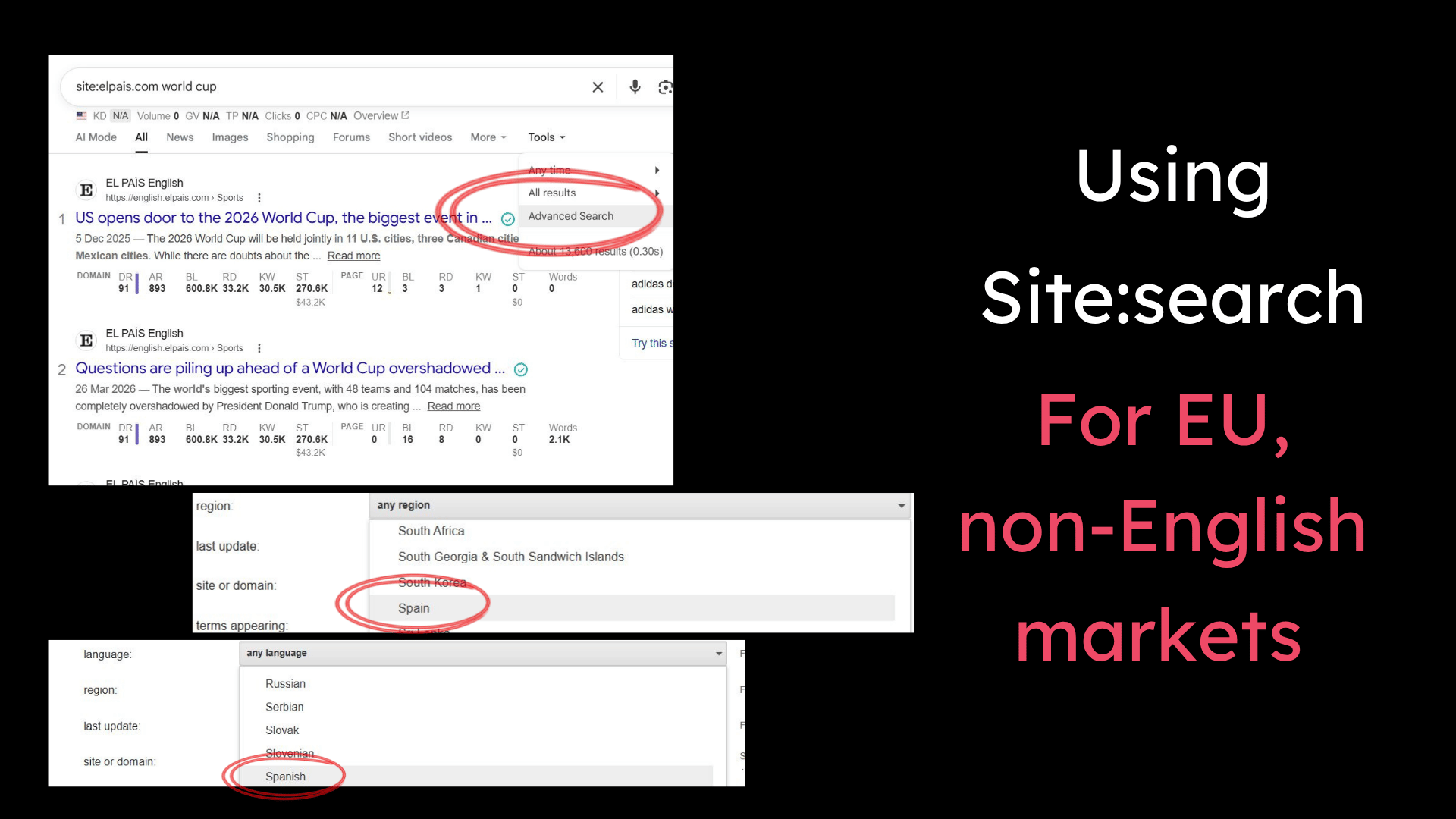
You can see here, as an example, the equivalent of The Guardian is, I think, El País — don’t quote me.
From there you can begin your journey of finding the most relevant publication for your story and then working through to find journalists and their emails.
Another way to find the best people to outreach to is to track media link activity.
Track Media Link Activity
This is based on a paid tool called Majestic, which is mostly used as a content database, but you can actually use their internal tools to track different domains in specific countries, to find journalists or outlets that talk about a specific topic and have linked back to relevant websites more often.
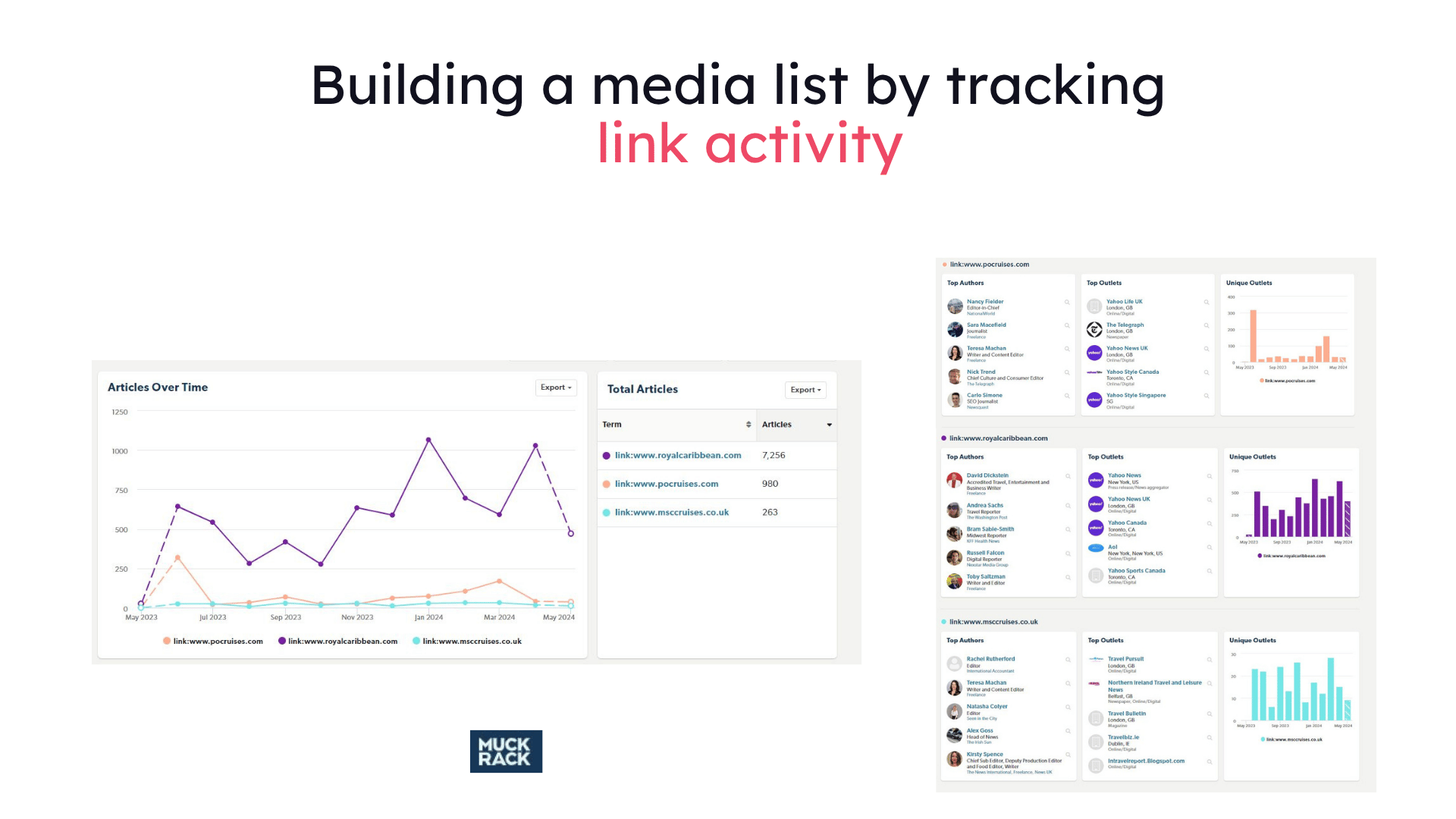
You can then export this from Majestic — or its equivalent — and find the best targets for your topic.
And of course, AI — we couldn’t not mention it, since it’s part of life.
I wouldn’t use an AI tool to create a media list by itself, but it’s nice to use effectively, so think smart, not hard.
BuzzSumo
BuzzSumo would be step one. I’m sure most people here might know it. If they don’t, it’s another tool that helps you track links and analyse topics, and it has a really nice feature called the Backlink Analyzer.
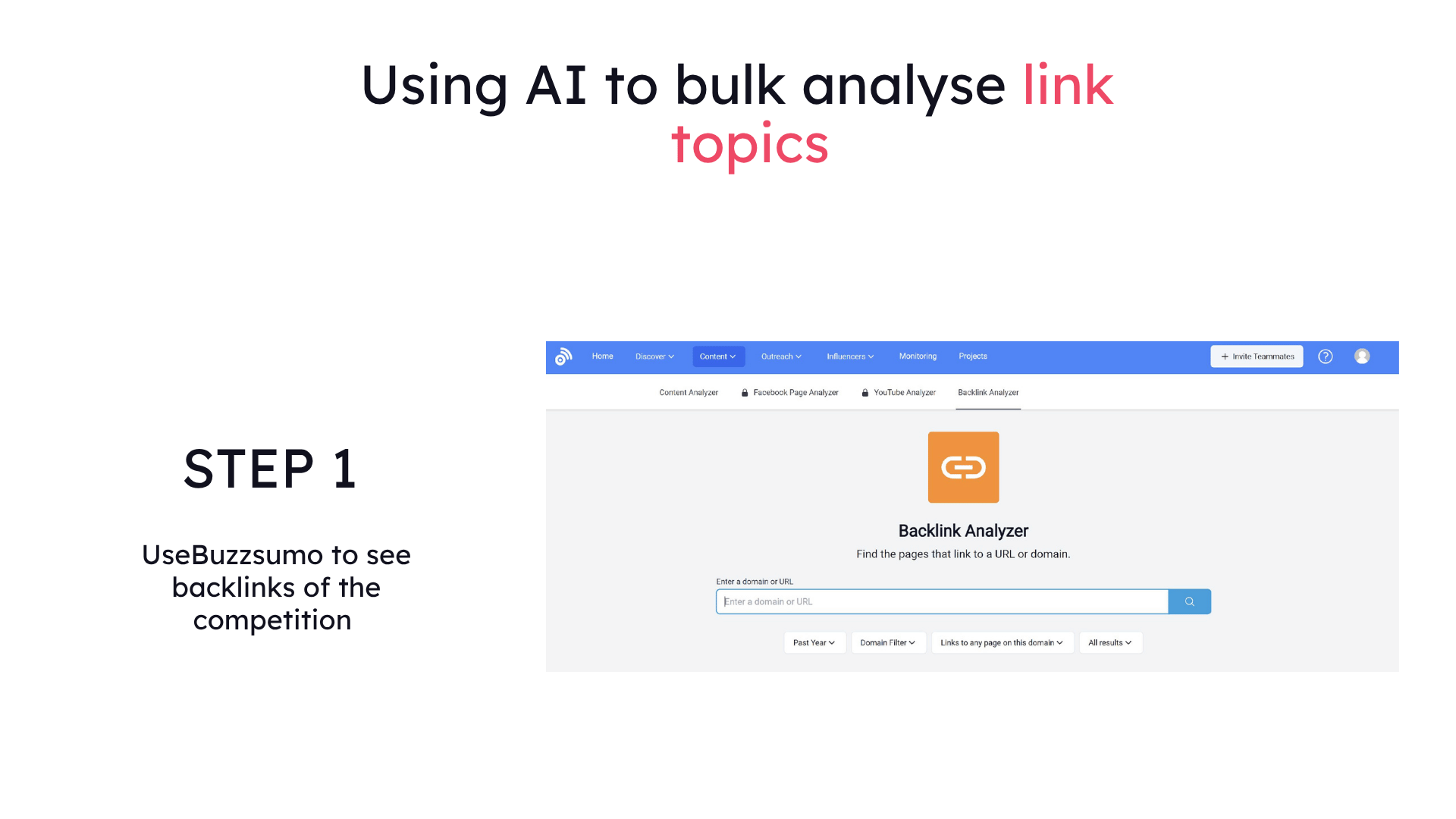
You can input any travel topic — let’s say you have a travel story for a cruise client — and export the results from BuzzSumo to see backlinks linking back to that specific topic for a specific country.
ChatGPT/AI
You can then upload this list of backlinks to ChatGPT, ask it to analyse the linked topics, and find how many people from a given publication have linked back to those topics over time.
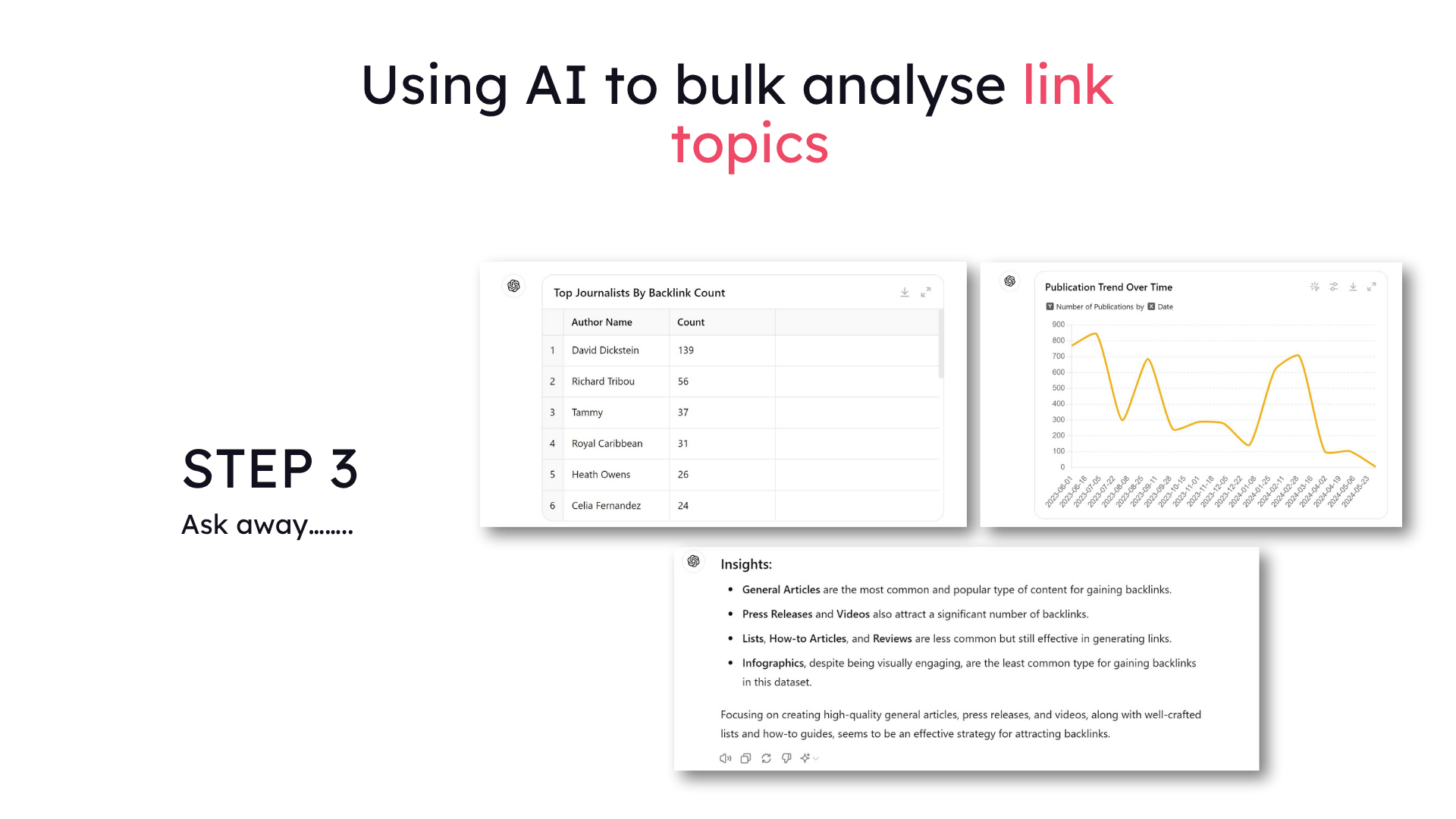
This lets you time your pitch perfectly, and then to find the exact journalist’s email, you can often just go to their Twitter page — most people have it in their bio — or go to their publication and figure out the email format.
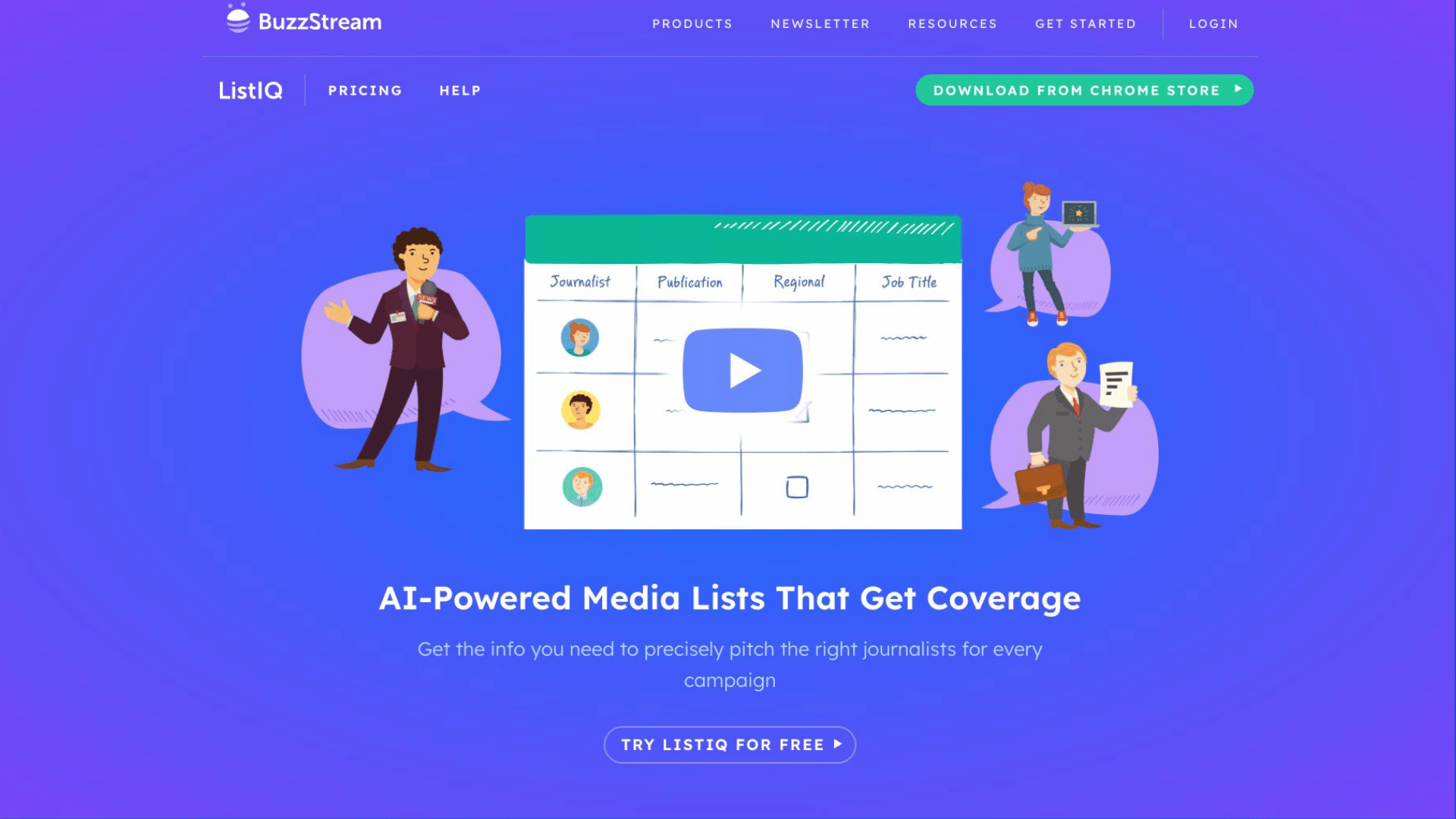
ListIQ is also something worth trying if you haven’t before. We use BuzzStream primarily for our outreach internally, but ListIQ is a good tool to cut back time on all those manual steps I mentioned — finding publications relevant to your topic, across different markets, and sourcing journalists’ emails.
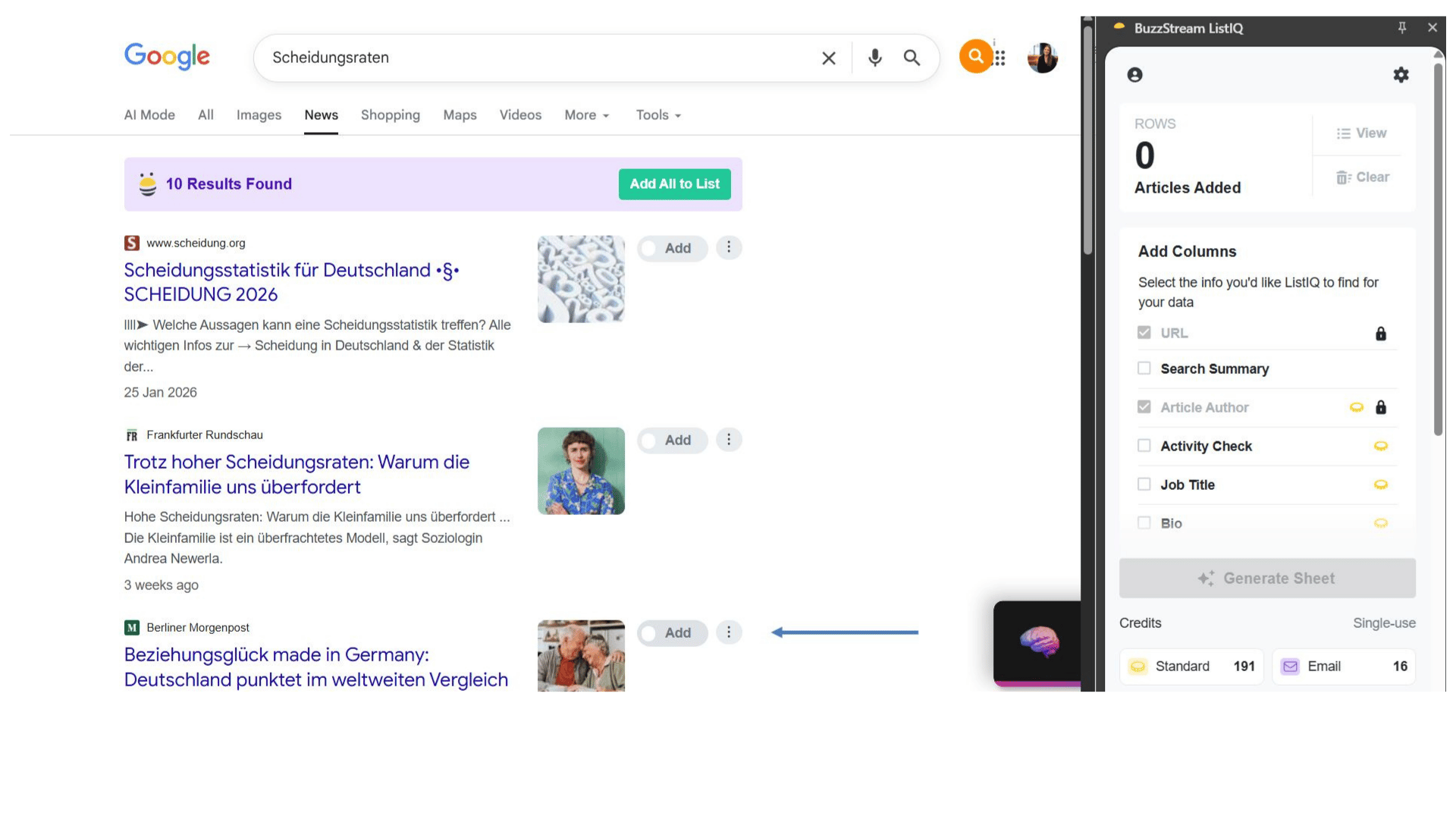
If you have the Chrome extension, you can input an example — say a Germany-specific piece where you want to find German journalists. Let’s say it’s about divorce rates or relationships.
You would go on DeepL — this is the only free translation tool we lean on internally, and while it’s not perfect, it’s definitely good for this purpose.
You’d check the specific term, search it on Google, then use the Chrome extension — as you can see in the screenshot on the right — and choose the most relevant publications for your topic.
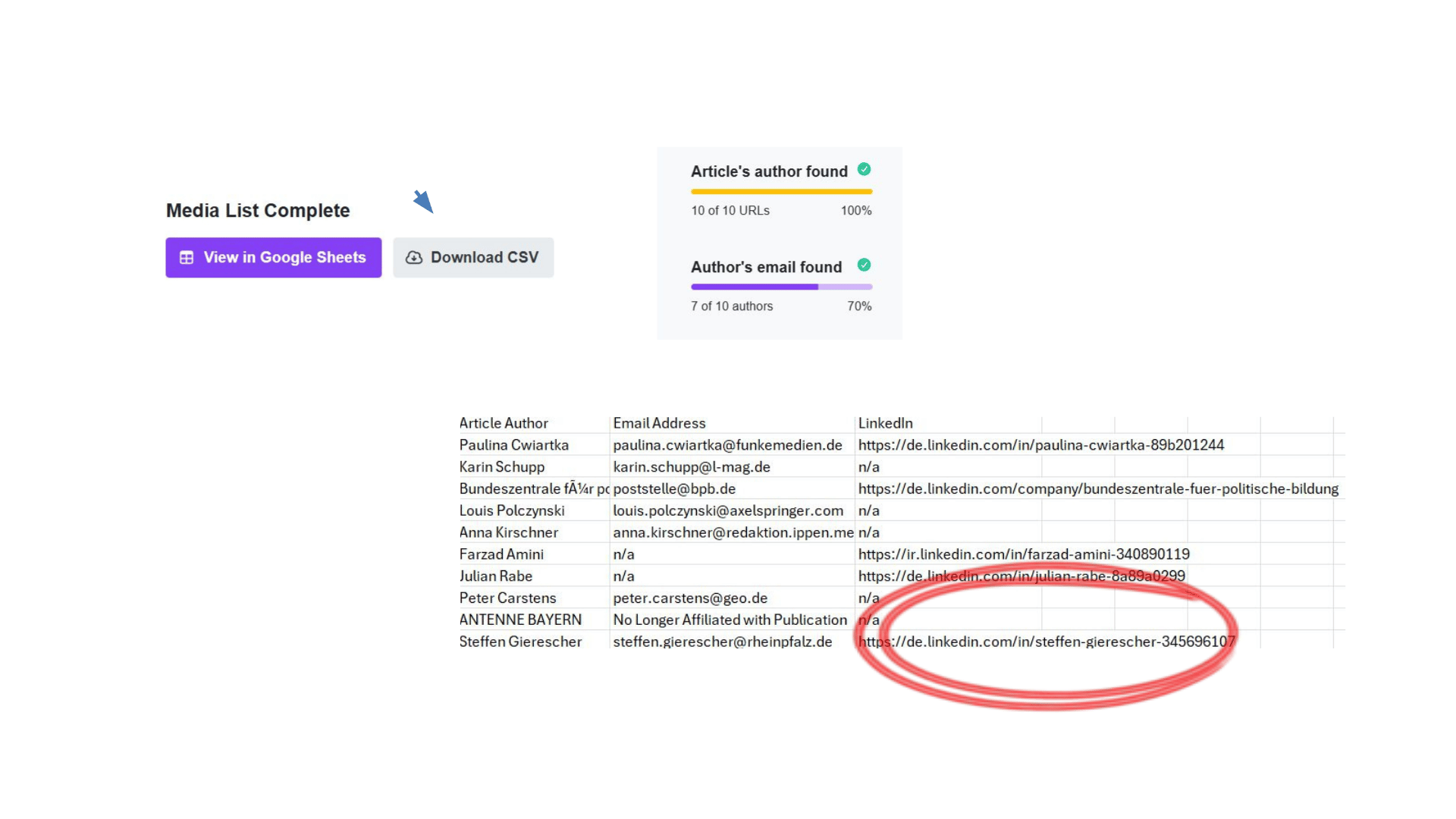
You’d click “Add to your media list” and, apart from the URL and article, make sure you select the author, email, and social media fields so you have the journalist’s LinkedIn.
That’s one way we’ve found works best to cross-reference how current and accurate the information is for these journalists.
Journalists do tend to switch publications, go freelance, or change beats — so check their LinkedIn, see if they’ve moved recently, and make sure the most recent article they’ve written is on the same topic as your press release. Spend more time here, because a tailored, accurate media list will make or break your campaign.
And here’s a little checklist for you to take away if you’re starting in an untapped market and looking to build a tailored media list.
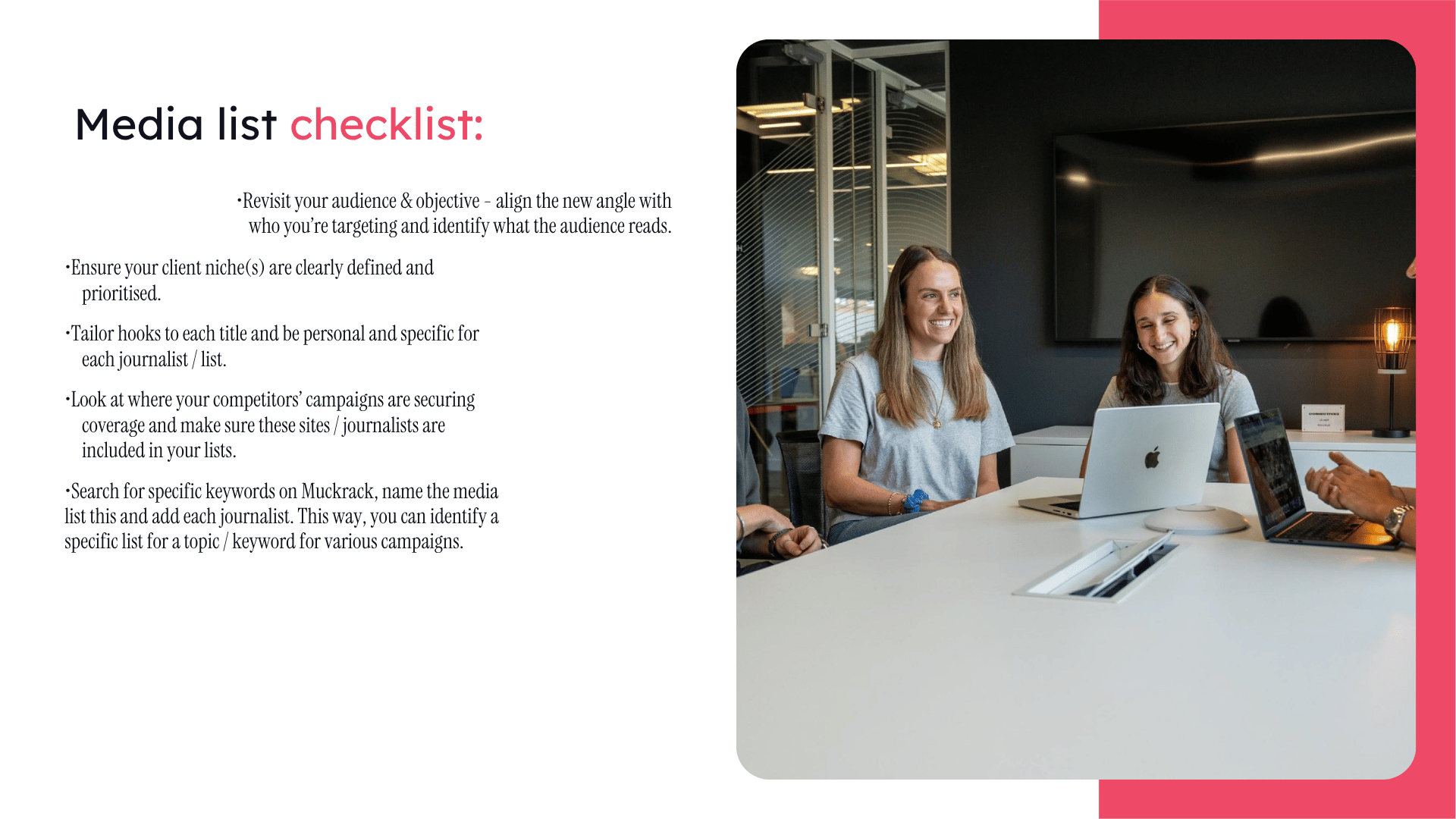
This is a good starting point, in addition to the tips we’ve just covered.
So — let’s say you do have your tailored media list, you’ve chosen the best market to focus on, and you’ve understood the cultural nuances.
How do you actually build the perfect pitch?
Crafting the Perfect Pitch: Subject Lines and Standing Out
Yes, so — anyone who works on accounts with me will know I always harp on about this one phrase: a great story poorly pitched doesn’t get seen.
I think this deserves its own slide, because even with the strongest campaign idea and the strongest data set, it won’t land if it doesn’t cut through in the inbox.
To be transparent, it’s not something to get paranoid or super worried about, but there are a few things you can do to pull out all the stops and make sure your email stands out in a journalist’s inbox.
We know that journalists are incredibly time-poor and incredibly stretched. As PRs, we don’t want to add more to their plates, so we must work on the assumption that they will only read our subject lines. So what do you do from there?
Use Buzzwords
Tip number one: because the subject line is our first point of contact with a journalist, lead with buzzwords to instantly signal the value of your pitch.
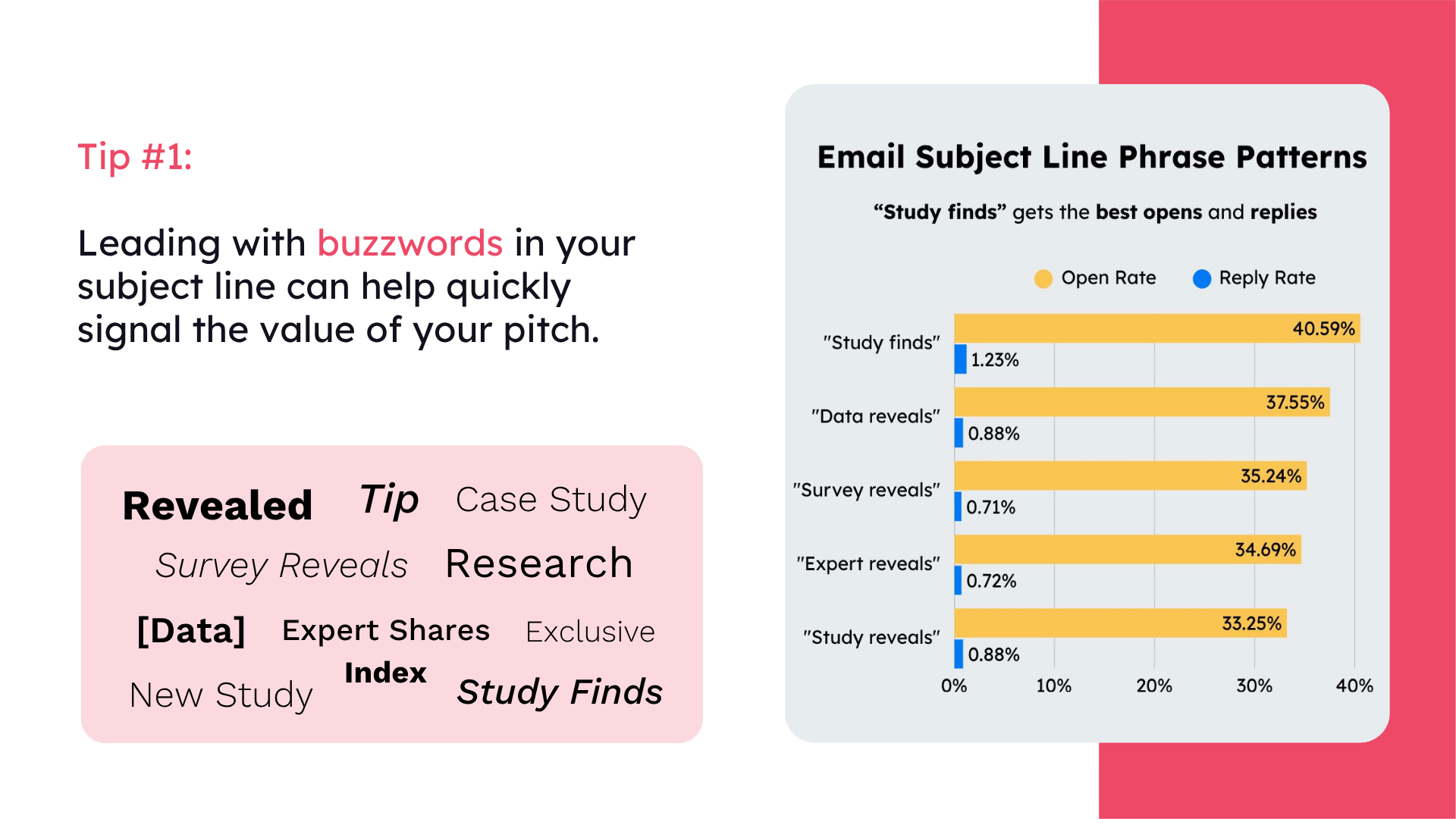
A really great study from BuzzStream analysed common phrases used in terms of open rates, and it’s really interesting to see just how different the performance is depending on whether you use words like “tip,” “revealed,” “case study,” or “research.” Our biggest tip is to use buzzwords to instantly stand out.
Some other little tips to really capture that five-second attention span — and we find these apply no matter the market, whether Italy, Spain, or Germany — follow these three self-reflection questions to really increase your chances of getting that open.
Number one: realistic bias. If I can’t summarise the angle in a short sentence, a journalist won’t be able to do it for me.
Make sure you can briefly summarise the main angle you want to get across in a nice, short phrase for your subject line. Think in headlines from the ideation stage right the way through.
Match the Journalist’s Tone
Number two: does your subject line match or sound like the publication’s tone of voice? This is where AI or your favourite LLM can really help, because you can quickly put in a prompt like “give me the 10 most recent headlines this publication has covered.”
If your subject line doesn’t match their tone, you’ll need to go back and do your homework.
Front Load a Stat
Number three — and in my opinion the most important — have you front-loaded the data or stat?
There’s no point having a really strong survey stat or indexed statistic if it’s hidden inside a press release. Make sure it’s front-loaded at the start.
The proof is in the pudding: at C3, we find — most of the time — that journalists will literally copy and paste the subject lines we outreach.
The top example shown here is a campaign I was outreaching for our lifestyle client, and it literally did get lifted and uploaded onto a North Carolina news site.
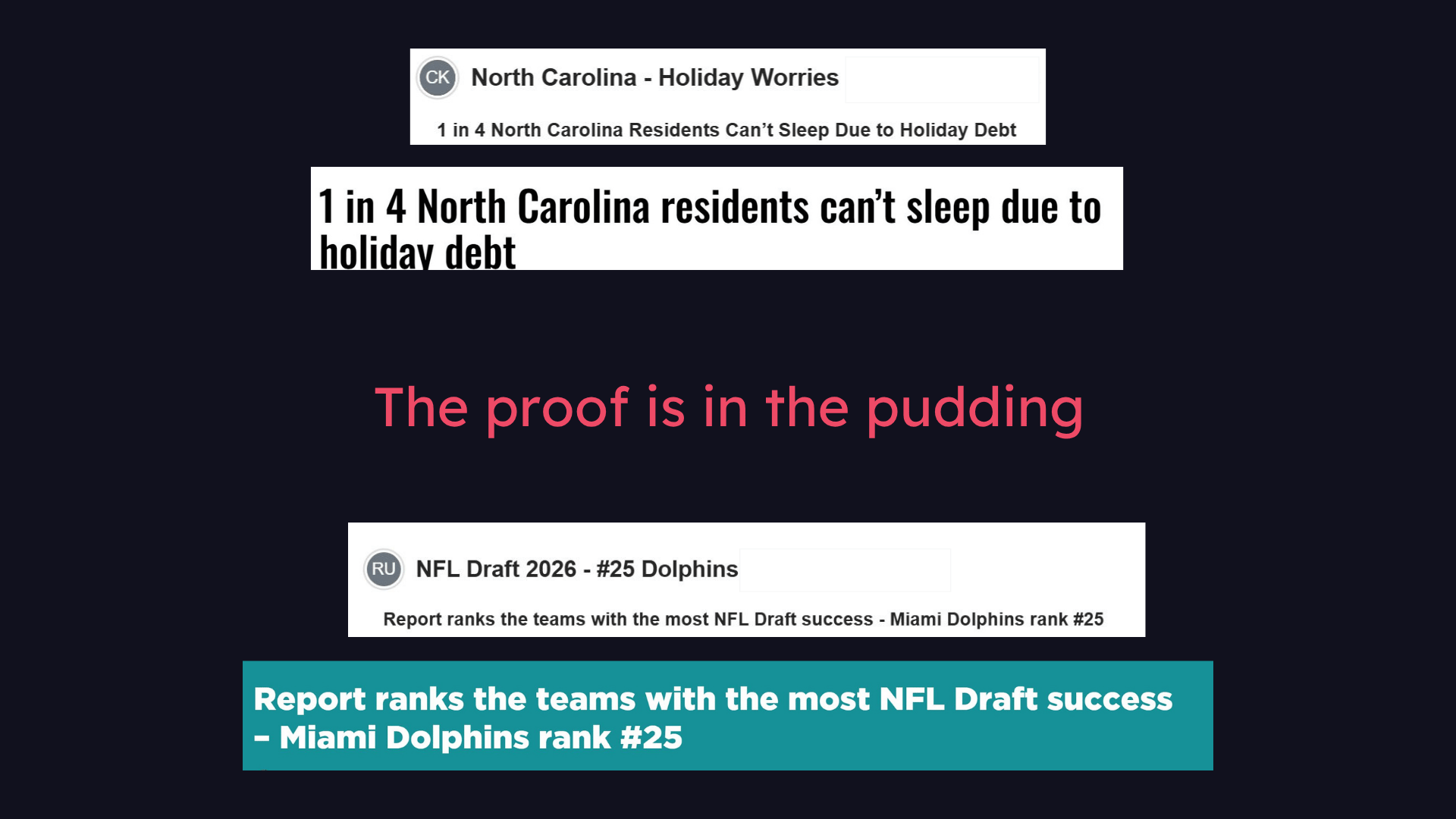
And one of our team members working on NFL Draft campaigns repeatedly finds that journalists love to just copy and paste.
I think this tells us everything: the story is clear, it’s relevant, and it’s ready to use.
Localising Your Pitch: One Story, Multiple Markets
So, touching on the perfect pitch — let’s say you’ve written it perfectly, you have the perfect subject line, it’s data-led and relevant to the journalists on your media list.
How would you make it resonate locally?
How would you make sure your pitch works harder for you?
This is one of my favourite things to quote on.
You wouldn’t spell “favourite” like that in a US pitch.

So why would you pitch Spain to a Spanish publication using an EU-wide data set that doesn’t include Spanish data, or pitch a Cypriot data set to Greek media just because they speak the same language?
There are so many different cultural nuances you need to take into consideration before you even click send.
We have three key markets where we’ve seen the most differences.
Obviously, when we say “Europe,” most of the time we think Italy, France, and Germany — the major economic markets. So, as a practical example: how would the same data set work differently for each of those three countries?
We had a travel client with a campaign around cycling, and the same data set got picked up three different ways across those three markets.
United States
For the US, it was around school holidays, and the timing was perfect for a family-friendly angle: “What are the best family-friendly cycle destinations in the US?” It was a more light-hearted, country-wide piece.
It got picked up by some regionals and radio stations, with the major takeaway being on the positive side, without getting into the nitty-gritty of infrastructure data.
France
For France, a city pride angle performed better.
We localised it by city — places like Paris and Bordeaux — and it got picked up with a hook around the best French cities for cycling.
City pride is something they care about deeply.
Italy
In Italy, the core idea was the same but the pitch was different, because we saw that a lot of people in those areas were more interested in fitness.
We included data on infrastructure — specifically which cities had better roads and cycling routes — and the local city angle that got picked up was that Bologna was the best city for amateur sport.
It was a sport angle that got picked up by major outlets: “The best cities for cycling and running.”
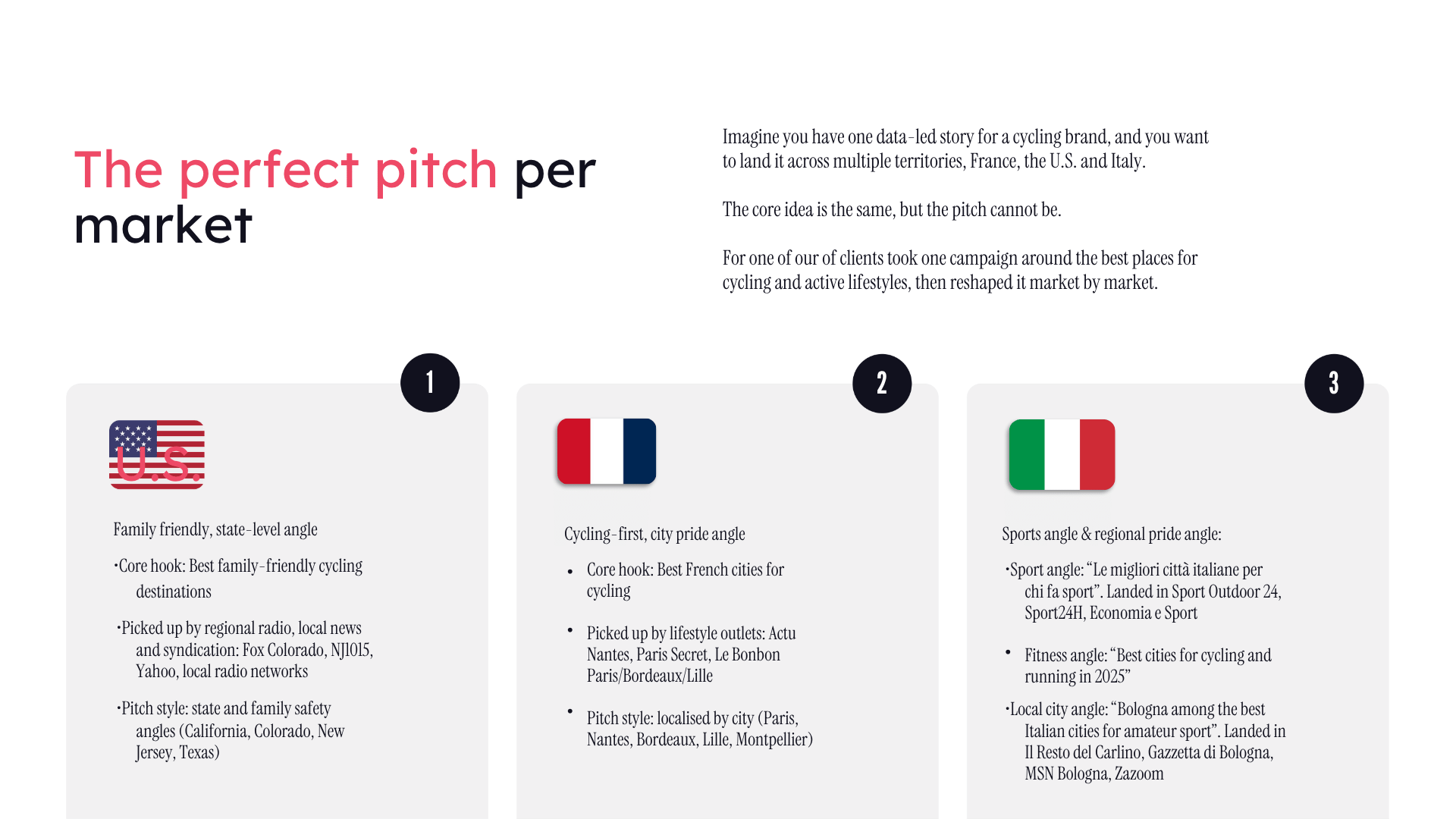
If we had pitched the family-friendly angle in Italy, it wouldn’t have worked — it wasn’t well-timed to school holidays, and it wouldn’t have resonated in cities that aren’t known for good cycling infrastructure or amateur travellers coming specifically for cycling routes.
B2C vs. B2B: Key Differences Across the US and Europe
When we think about pitching, we often think in terms of B2B and B2C.
The key takeaways we’ve found for B2C across the US versus Europe: in the US, lead times can be longer, and you need to take that into account in your roadmaps.

Make sure your outreach timeline is longer, and don’t shoot yourself in the foot by not allowing enough time. Also account for time zones, which we’ll cover more on shortly.
In Europe, local angles work best, as we’ve said. Another key takeaway is that lifestyle, B2C consumer-led studies need to be positive. If you’re pitching finance content, you can be a bit more critical — frankly, nothing is going particularly well financially in the world right now — but lifestyle needs to stay positive. We don’t have tabloids in Europe, or they’re far less prominent, and that creates a need for positive news.
When it comes to B2B, expert commentary becomes critical in the US. We also see embargoes being important — sharing the data in advance with insights, so we can pitch in and get coverage ahead of time.
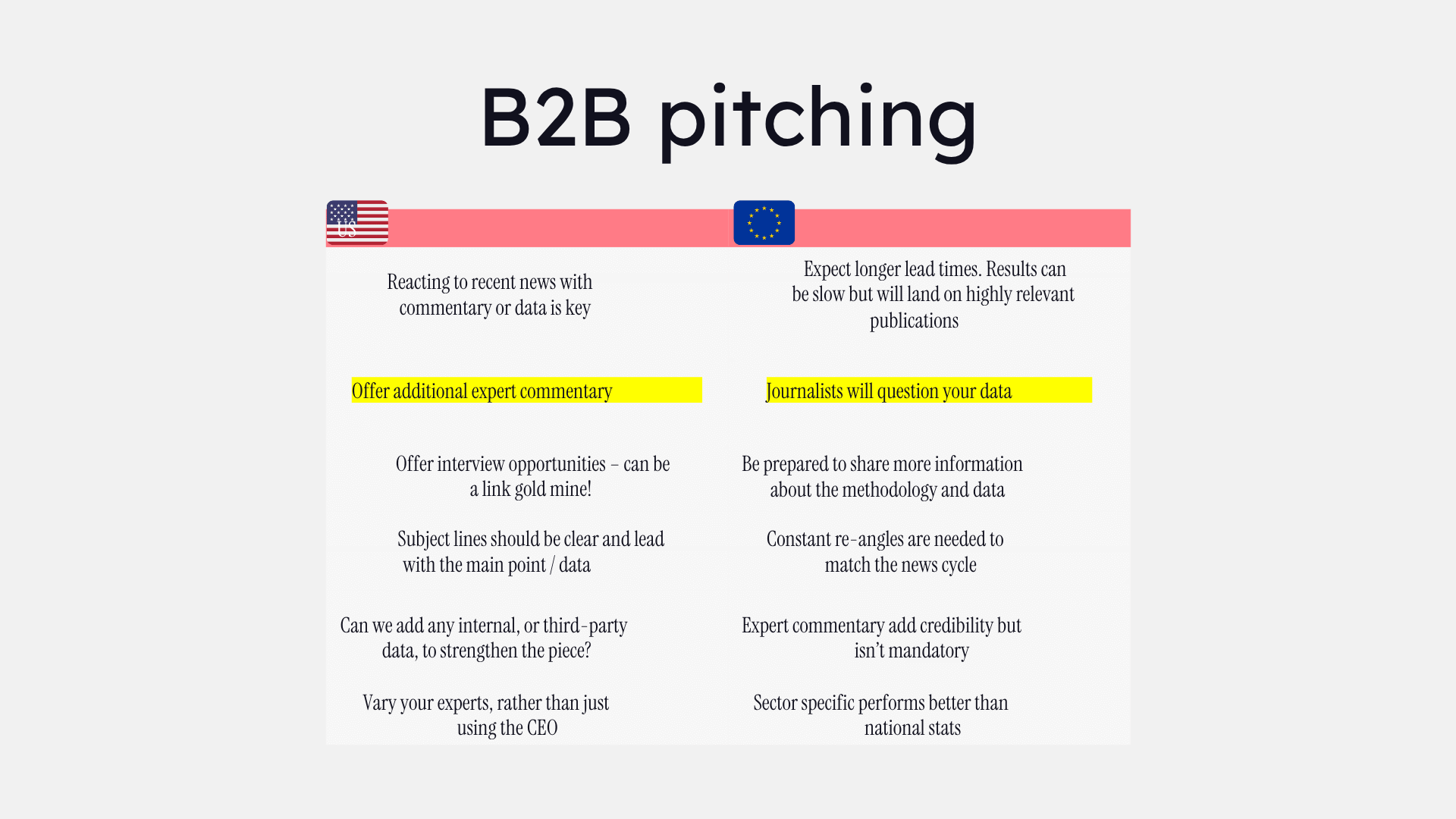
In Europe, the most important thing is that journalists will question your data.
They will literally ring you and ask:
- “Can you tell me more about this data set?
- How was the data compiled?
- How many people did you survey?
- What was the gender split, the city split, the industry split?”
You need to be prepared to share far more information than you would for a lifestyle piece.
In practice, for B2B outreach, we used a national catalyst in France.
We chose a topic from a client’s industry report — it was a 90-page report — and worked out which angle would resonate in the French media landscape.
We aligned it to media trends to maximise national traction, then leveraged our contacts at those nationals to help strengthen the credibility of the campaign.
If you see a study featured in The Guardian, El País, or a major European outlet, you’re more likely to trust it.
That’s exactly how it plays out — to the point where brands featured in the ranking are making LinkedIn posts about being included, and our client’s name and that ranking in that major publication is being referenced in articles.
For B2C outreach, it’s local insights for local press.
The cycling study we did for Spain and Italy involved looking at national holidays and building a data-led campaign with specific angles crafted for local outreach — not just “we’re sending this to Italy, to Bologna, to Milan.”
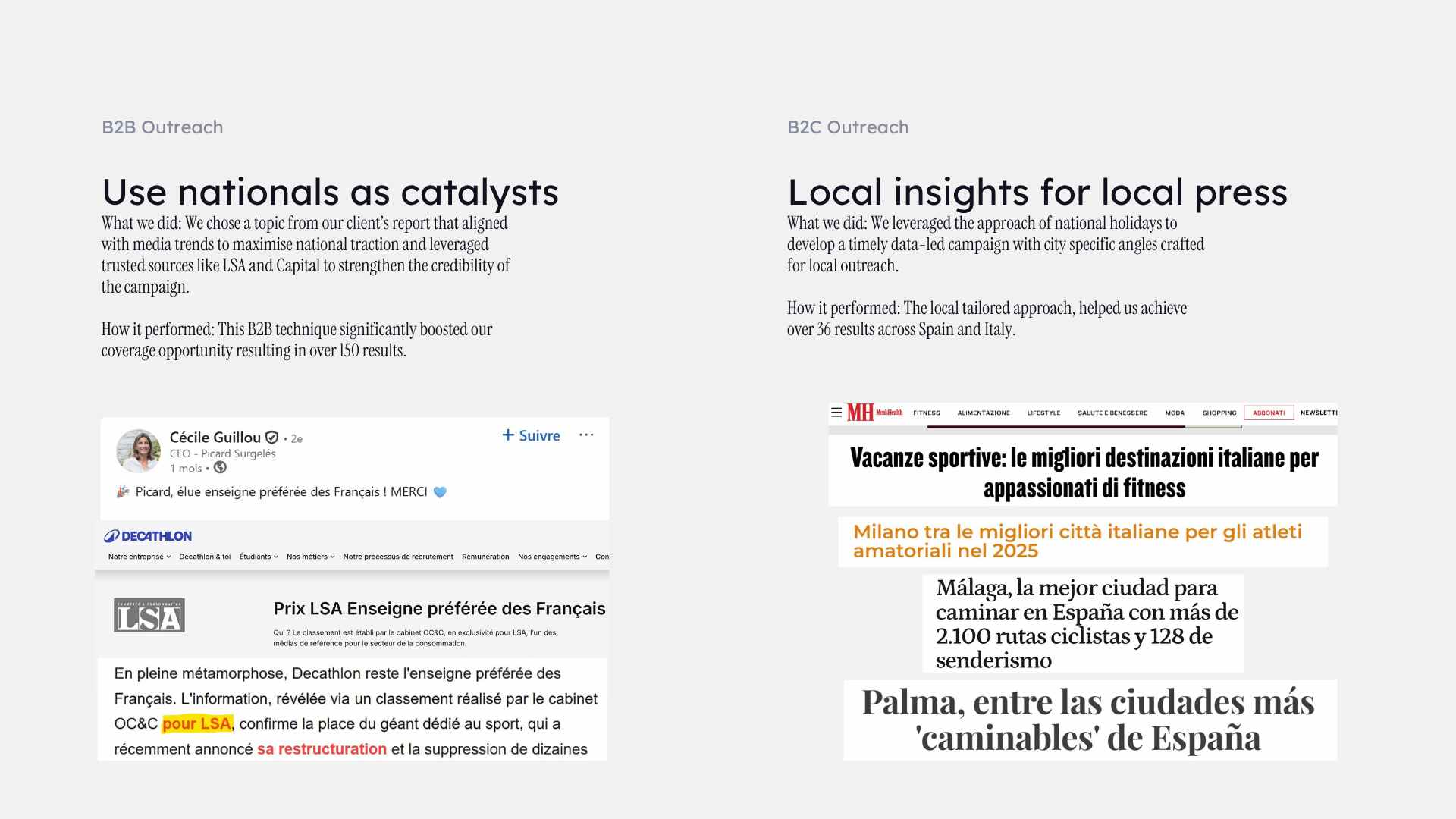
You can see in the subject line for Málaga that it includes data specific to that city within the headline, which shows how it’s done.
Timing Your Pitch: Calendars, Holidays, and Editorial Habits
I appreciate there’s a lot of information to take in here. We’ve tried to compartmentalize a lot of insights and links on how to make your pitch newsworthy and how to get a head start on the best times to pitch per different markets.
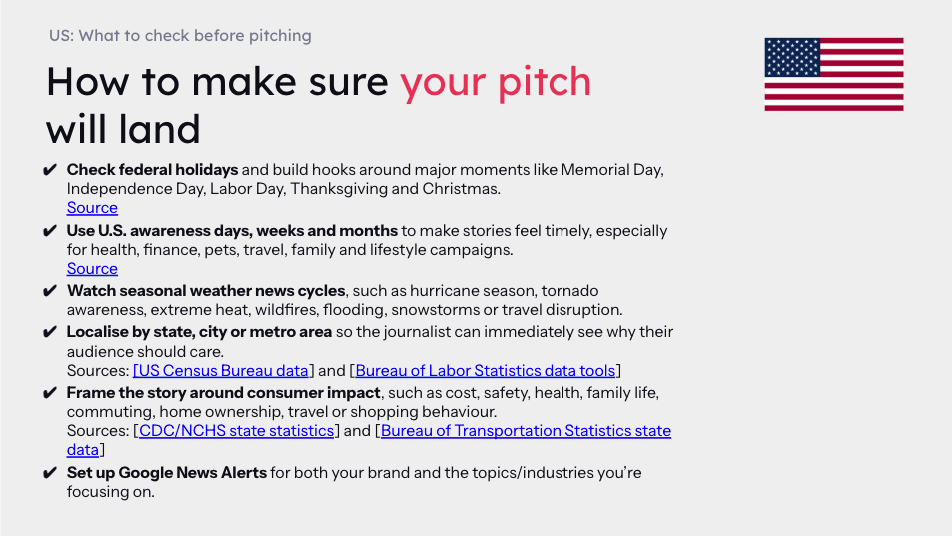
For the US, there’s the well-known factor of multiple time zones, weather, and so on.
It does make sense to take all these variables into account regardless of your topic or industry, and to act like a local, think like a local.
It’s really hard to keep track of everything, so these are a good starting point.
Obviously, there are federal holidays, but each state also has its own specific holidays that differ from other states.
Even local authorities differ, and there are different weather events each state is known for — hurricane season, tornado awareness, extreme heat periods, and so on.
What we tend to do internally is set up Google Alerts on different topics we’re focusing on for different clients or industries.
That way, whenever something is picked up in the news, we can be the first to react.
It could be anything from sports like the NFL, to consumer impact stories around cost, safety, health, family — anything that locals would stop and read about while scrolling on their phones because they’re from that state or that city.
It’s hard to be a genuine local across so many different markets, but this is a good starting point.
The same goes for Europe, though there it’s not something we’d suggest doing with a single US-wide story — we’ve never seen a single pan-European pitch really land effectively. You need to get more granular with your research.
These are some good starting-point data sources to begin your journey.
Yes, there are many more links out there for different countries, often in different languages, so if you don’t know those languages, start here.
Look at awareness days, time zones, and how each country is divided — from a governmental or cultural perspective.
Some countries have different dialects. Consider the main religion, the public holidays — Easter, for example, is celebrated differently in different countries across Europe.
There are name days and bank holidays that vary country to country.
Just as an FYI, tomorrow there’s a bank holiday in parts of Europe, but it’s not on a Monday as it would be in the UK, so that’s something to think about.
One final point specific to Europe is editorial habits, and I think we have the expertise internally to make this statement: it really is culturally quite different from UK or US media.
Such a relatively small geographical region has such a vast range of editorial guidelines and habits.
In the UK or the US, you’d never pitch a story on Black Friday, for example, regardless of whether you’re news-jacking something happening right now.
But in a lot of European countries — Greece is a good example — the media landscape is smaller, yet they’re really hungry for news.
They’ll react really positively to a pitch at almost any given time, especially if it’s tailored to them and their region, and specifically covers the topics they focus on.
They don’t have the same “I only pitch to my editor at 10am” rule.
There are so many differences.
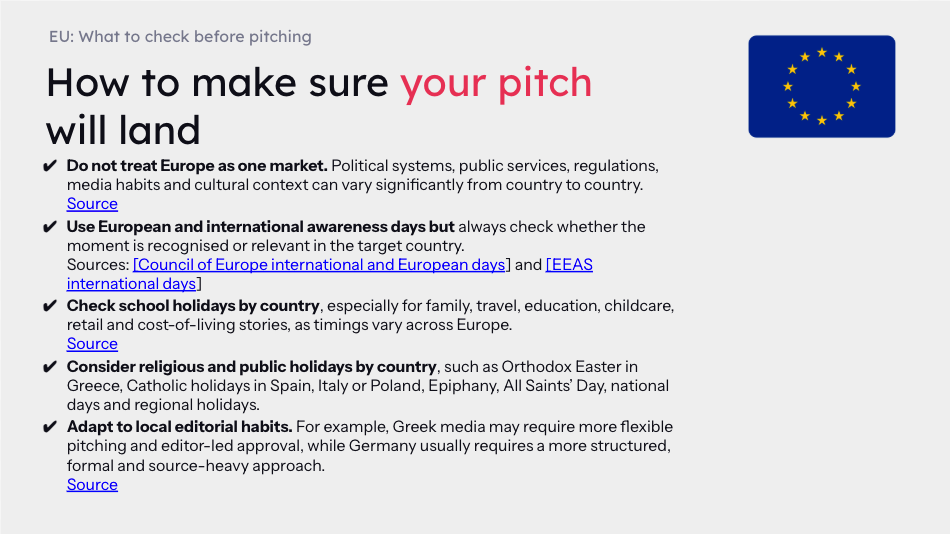
The examples here, which you can take away, I’d definitely suggest paying attention to when the main news publications in each country publish their articles, just to understand what’s best for you and the best practices for pitching.
Making Your Pitch Human: Templates, Send Times, and Follow-Ups
Another top tip — and we do love our tips — what we’ve seen work best, especially when outreaching a story in an untapped market where journalists aren’t used to getting emails from PRs, is to help them by essentially writing the article for them.
What we do internally — and it’s worked really well to cut back the back-and-forth of explaining what digital PR is and why we’re reaching out — is to include a specific sentence on our page.
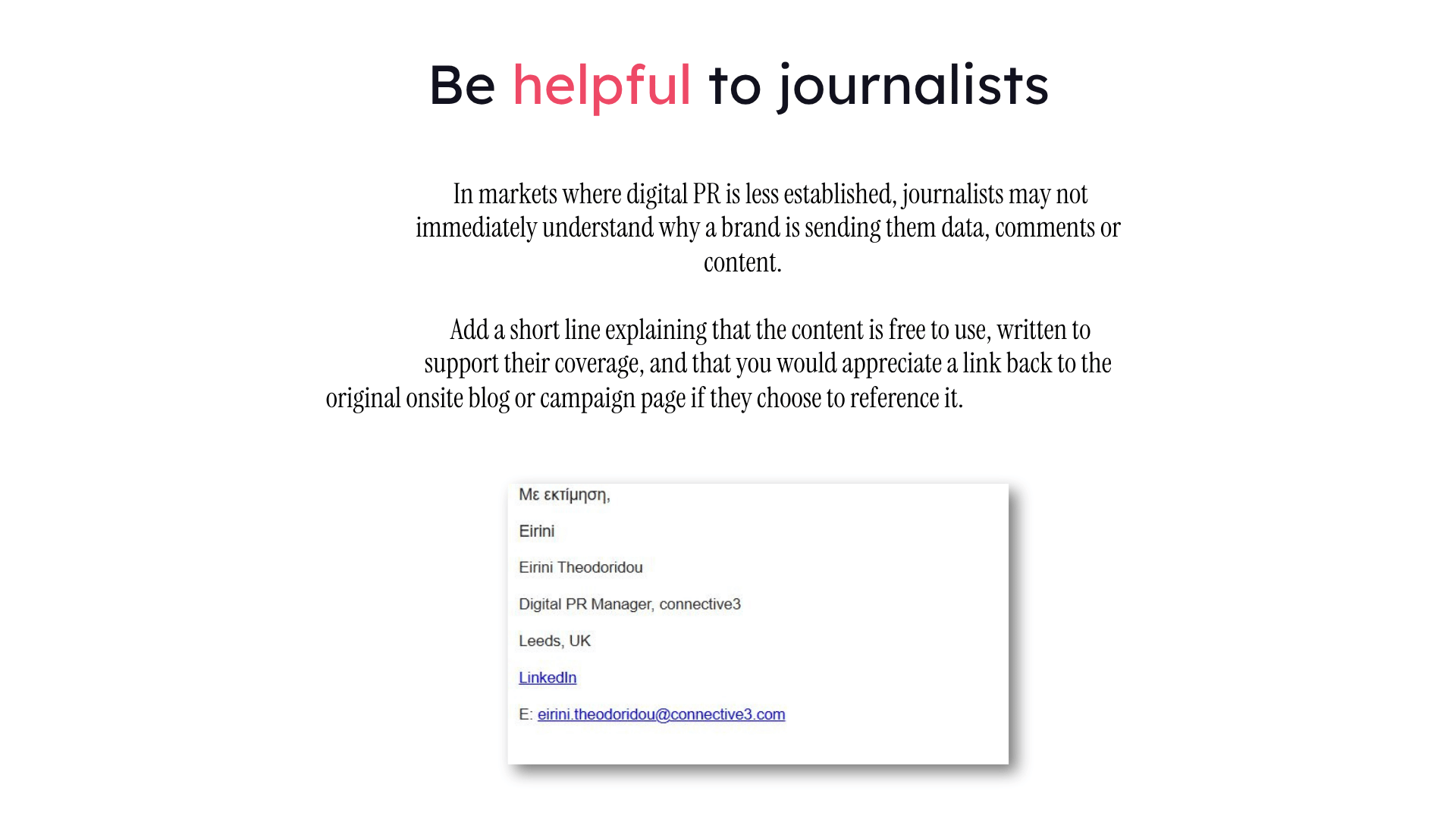
You can tailor this however you like: “We are sharing this because we represent X brand, and it’s free to use. It’s been editorially tailored for your publication. If you need more information, feel free to reach out.”
I’ve also started including my LinkedIn as a hyperlink at the bottom of my pitches. You can add your phone number, but I wouldn’t recommend that if you’re sending to many countries whose languages you don’t know — they might ring you and you won’t be able to respond. But it makes your pitch more human, and it does cut back time on educating journalists about what digital PR is.
On the question of when is best to send a pitch — and putting data behind it — we’ve analysed a lot of data from the past four years of pitching US stories internally across a range of industries.
You can see here a little overview of analysis from our BuzzStream data, based on projects across different clients and each state.
We’ve identified what percentage open rate you can expect per state, and when you’re most likely to get your email opened.
For example, a journalist in Nevada is most active between 6 and 7am, with up to a 63% open rate in that window.
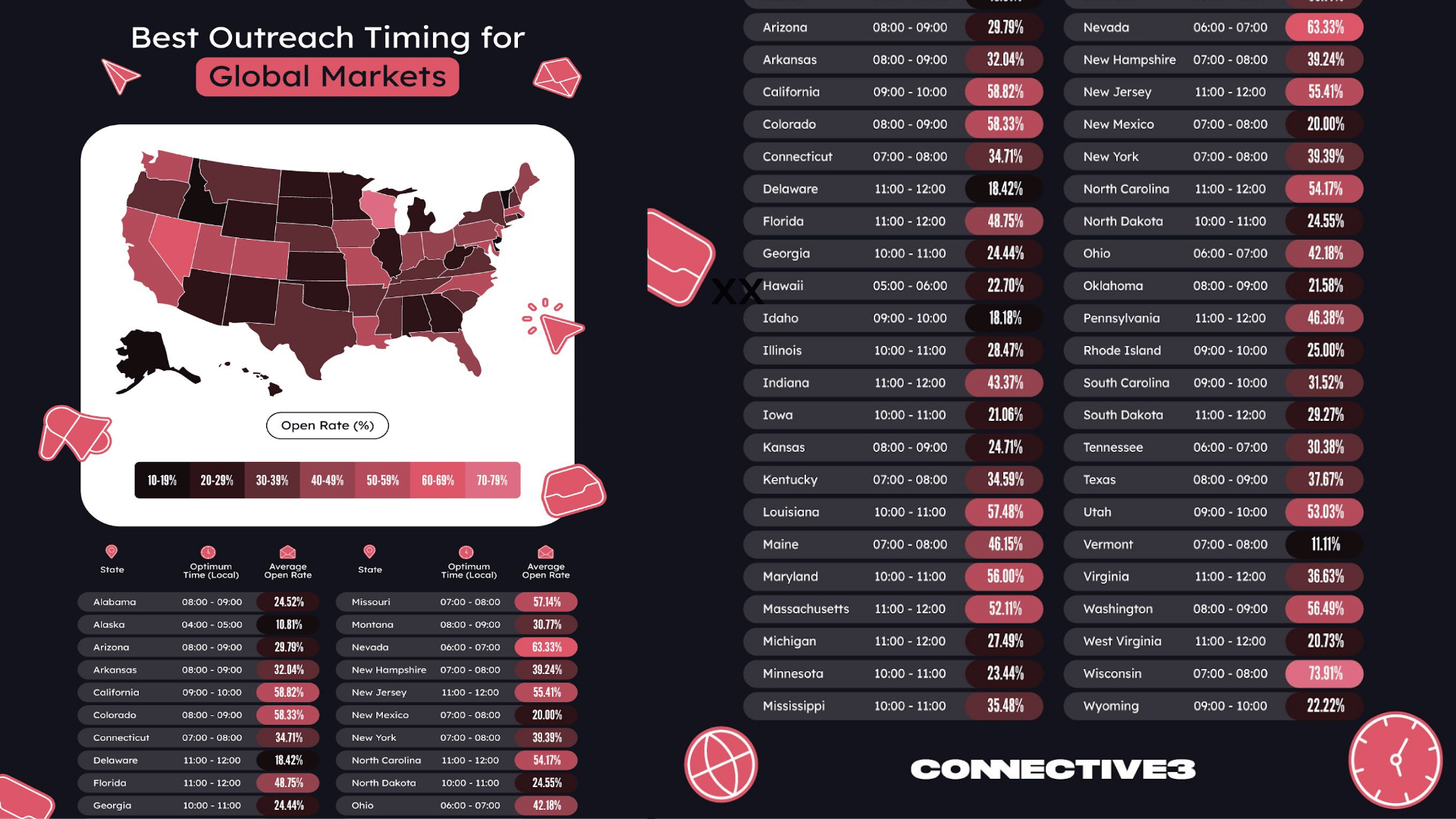
In North Carolina, the peak engagement happens mid-morning, with the highest open rate of around 54% around 11am to midday — which is quite unusual, especially if you’d expect journalists to open emails earlier before pitching to their editors.
Another tool we want to share: if you’ve already earned coverage in a publication that’s written in a language you don’t know — most likely a European market — we have a list of copy-and-paste templates for chasing a link, which we call follow-up templates.
They’re all hyperlinked here for you to take back and check. There are specific instructions on how to input your own link for whatever domain you want to chase.
Most likely, if this publication isn’t used to getting pitches from PRs, they’ll be more likely to add a link. So we want to give that to you to use.
If you have any more questions or want us to sense-check your European pitch, we’re here.
Q: What’s the Formula for Success in Italy?
Yeah, so — the formula for a successful story in Italy. I read this question, it’s very interesting. Italy has been one of those markets that’s harder to crack in Europe. To be fair, Greece I’d say is easier — they’re really hungry for information, especially if it’s tailored to them. But for Italy, based on our experience, and bearing in mind I’m not a native but we have worked with Italian natives in the market — I would say they are really data-led.
They do like their data. They do like exclusives. The media landscape there is actually quite competitive, but it’s also smaller than other major European markets like France and Spain, and there isn’t a huge hunger for listicles or country-wide city comparison stories.
So I would say: before formulating a strategy for Italy, spend time building journalist relationships.
This can make or break a campaign regardless of the territory, but for Italy specifically, I’d make sure to craft the perfect opening pitch and outreach to journalists who are relevant to the industry you’re focusing on.
Ask them: “What do I need to do to get featured in your publication? What are your editorial guidelines?” Spend time one-on-one with them.
Ideally you know the language, but even if you don’t, try to be their right-hand person in helping them formulate a story. They’re really keen on exclusivity.
And as we said at the start — get to know your market.
Where do you want to outreach your study?
Do those cities have a lot of publications? Sometimes it’s not the biggest cities that have the most media coverage, so you’ve got to think from a link-building perspective as well. Know the region, make sure it’s localised, have multiple angles ready, and if you need any more help, send us a LinkedIn message.
Q: How Effective is Pitch Personalisation?
I think we might all have different answers to this.
I won’t speak for everyone, but one of the team members who isn’t here today is probably one of the best at doing this effectively. When I tried it at the start of my PR journey — outreaching in the UK for UK journalists — it was something I attempted, but it didn’t work for me. Everyone has their own style. It felt forced. I think it works best when you can see that a journalist is very likely to cover PR stories, and that’s something you get a feel for over time.
I wouldn’t pitch a story to a journalist at a national publication saying “I saw you cover X,” because this person might be covering so many different beats and it might not even register with them that I read one of their stories. But if it’s something really niche, or perhaps an untapped market, I’d potentially do it — though it’s not really my style. Chloe, I think it’s better coming from someone who actually uses it regularly.
Yeah, historically, when I first started in PR, I was obsessed with personalising every single email. But upon reflection — as Eirini said — it can come across as quite fake and forced, and journalists are so attuned to us these days. Digital PR isn’t a new thing, and they can easily catch on.
What I find most beneficial is: if you’ve got a media list of around 30 really strong contacts, for maybe three to five of those, if a journalist has covered something very similar within the last six to twelve months, I would reach out and say, “Hey, I noticed you covered this — I actually have an updated angle or updated data set that I think adds to your piece.” That way you’re inserting yourself much more naturally, rather than just popping up out of the blue and saying, “Hey, I noticed you published this — cover my thing instead.” It makes it feel more organic.
But personalisation doesn’t always mean that classic opening line of “Hey, I noticed you wrote this — here’s mine.” Sometimes, journalists are genuinely just grateful that you’ve even pitched them something that reflects their beat. One quote we got recently from an Axios journalist was that he’s just grateful to receive a relevant pitch these days. So I think personalisation can go two ways. I hope that answers your question, Vince.
Q: Is it more or less effective in different countries?
I think again in Europe it depends who you’re pitching to and what you’re pitching. Take France, for example — they use a lot of interns in those big regional outlets, so it won’t always be the same person covering a story. There’s no point doing it if you’re targeting a newsroom intern or a fairly junior journalist who’s going to move on. But if you have a long-standing relationship with someone you know is the head of their editorial department, then yes — you’re going to want to show that you have a genuine interest in their publication and what they cover.
It also depends on what you’re pitching. If it’s a new study, not so much. But if it’s something that relates directly to an article published two or three days ago — maybe a week before — and you’ve got data that adds to it or offers a contrasting perspective, then I’d absolutely reference it. “I read your article about this. I’ve got data that supports your piece” — or that offers another angle. It shows you’ve read their work and that you’re either adding to or challenging their claim. It feeds into that whole notion of credibility and getting your client positioned as a thought leader.
I’ll put myself out there here: I know I just said I wouldn’t always personalise a pitch like that, but what I do — and it might sound a bit stalker-ish to some people — is do my research when I’m outreaching in untapped markets or on really niche topics. For example, I’m not a football fan, but I had a pitch for some European football teams and was trying to get coverage in really relevant publications, which is hard because they have their own editorial guidelines and internal experts who write their own opinion pieces.
They don’t need PR. So I had a pitch about football stadiums in a specific region. I found the most relevant journalists for that publication and topic, and I went on one of their public social media profiles — they were very vocal about their favourite football team. So my pitch was tailored to their favourite club.
I did get coverage — not a link, because the publication had a no-follow/no-linking policy — but I got a reply. I got into their inbox and they said, “Send me anything relevant you have.” The pitch was relevant to their beat, but grabbing their attention by referencing their favourite team didn’t hurt. Obviously my pitch was a general one — “these are the best stadiums for X” — but the entry point was tailored to their personal interest.
So, if you have something niche, I’d suggest doing a bit more research.
They are people. They have their own agendas, their own preferences.
You might grab their attention by connecting on something personal, but that doesn’t mean they’ll cover it — it just means you might get the open.
I’d definitely encourage it.
Q: Can Case Studies Work Internationally?
Eirini (50:56)
I would say the best people to speak to this would be from the UK team, who have been doing it for a long while. In short, I haven’t done it in European pitches — potentially because it’s hard when you’re not on the ground. I wouldn’t feel comfortable using people’s case studies unless it was someone well-known.
What I have done — it’s not quite a case study, but it’s about providing more local expertise to strengthen the story — is lean on local expert commentary. For example, I had a car-related release with European data about congestion, about how much time people spend behind the wheel. I found the head of traffic — whatever that role is called in different countries, because it varies — and I emailed them first, reached out to them to give a comment on the data.
The data was already there, so I was doing the journalist’s job for them. I made it really local with someone from their own region, and I gave them data they didn’t have.
So that’s the notion of a case study, but it’s not quite the same as what we have in the UK, where there are Facebook groups where you can find, for example, someone who went to a Harry Styles lookalike contest. That’s quite a commercial, UK-specific thing. I wouldn’t do that if I’m not on the ground.
I think it needs to progress in Europe, because there is an appetite for it — journalists do want more case studies. And I think that’s where video plays a role, because in Europe, journalists are very critical about fact-checking.
If you just send quotes, they could have been written by AI. There needs to be living proof: “Is this person real? Are they relatable to our readers?”
That’s why a PR-plus-social approach works well — you’ve got living proof that’s very shareable, and your experts are clearly who they say they are and relevant to your audience.
Q: How Do You Choose the Best Story to Pitch?
Yeah — instant gut feeling. You need to earn attention quickly, and the best way to do that is through a really strong data set. If you’re starting anywhere, don’t push out a storytelling narrative without data behind it, and don’t sit on the fence in your expert commentaries. I would 100% start with a really strong data-led campaign, either by going out and collecting the data yourself and building an index, or by using your client’s internal data. That would be my top tip.
Best story — I don’t know, gut feeling is good, because if you’ve done everything right, if you’ve done your research and have the perfect pitch, I would say: go positive first. That’s a good rule of thumb.
If it relates to you, it will relate to whoever you’re targeting — if you’ve got the market knowledge. And I always start my PRs with the hook: why is this relevant now? It doesn’t have to be something that’s been talked about this week, but why is it an issue, or why does it matter right now? That’s just what makes a story good.


 Check out the BuzzStream Podcast