
 End-to-end outreach workflow



Table of Contents
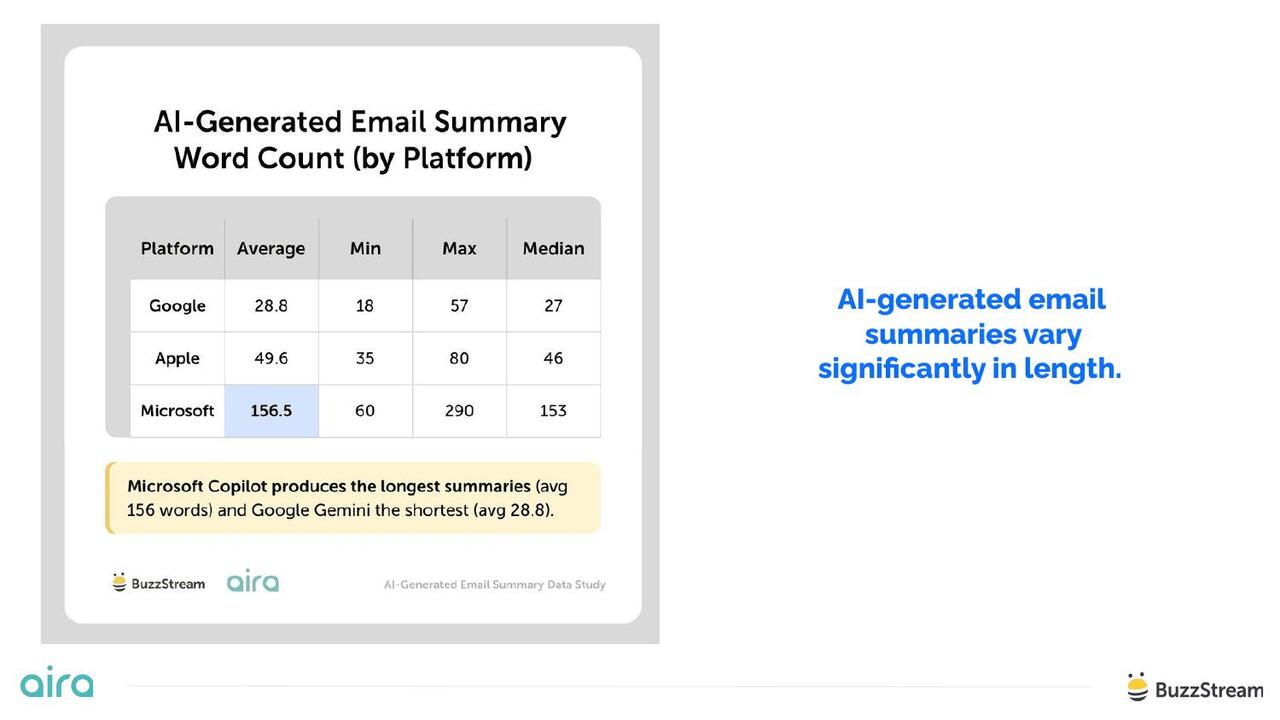
- Across 106 email templates and 13 campaigns, Google, Apple, and Microsoft’s AI summaries varied enormously — Microsoft Copilot’s averaged 156 words, Google Gemini’s just 29.
- Bullet points were the single formatting technique that most influenced what AI pulled into a summary (up to 92% inclusion on Microsoft).
- Tables, bold text, graphics, and attachments had little to no impact on what AI chose to surface.
- AI misrepresented the original pitch in up to a third of summaries.
Journalists are leaning on AI more than ever to get through their inboxes and that means the way your pitch gets summarized by a machine may matter just as much as how it reads to a human.
To dig into what’s actually happening when a journalist hits “summarize” on a pitch email, I sat down with Chloe Osunsami, Head of Digital PR at Aira, and Alex Fiske, Digital PR Lead at Aira, to walk through a joint BuzzStream x Aira study analyzing hundreds of pitch emails across Gmail, Apple Mail, and Outlook.
Note: We published two versions of the study. The BuzzStream study and Aira’s.
Here’s the video:
Here’s the deck:
And here’s the transcription:
Why AI-Generated Summaries Matter
Chloe: To jump straight into it — the Muck Rack State of Journalism 2026 report highlighted that AI adoption among journalists has climbed to 82%.
ChatGPT and Gemini lead the way, and they’re using it for everything from brainstorming and research and fact-checking through to SEO optimization.
Which is probably unsurprising, because they are very busy, as we all know.
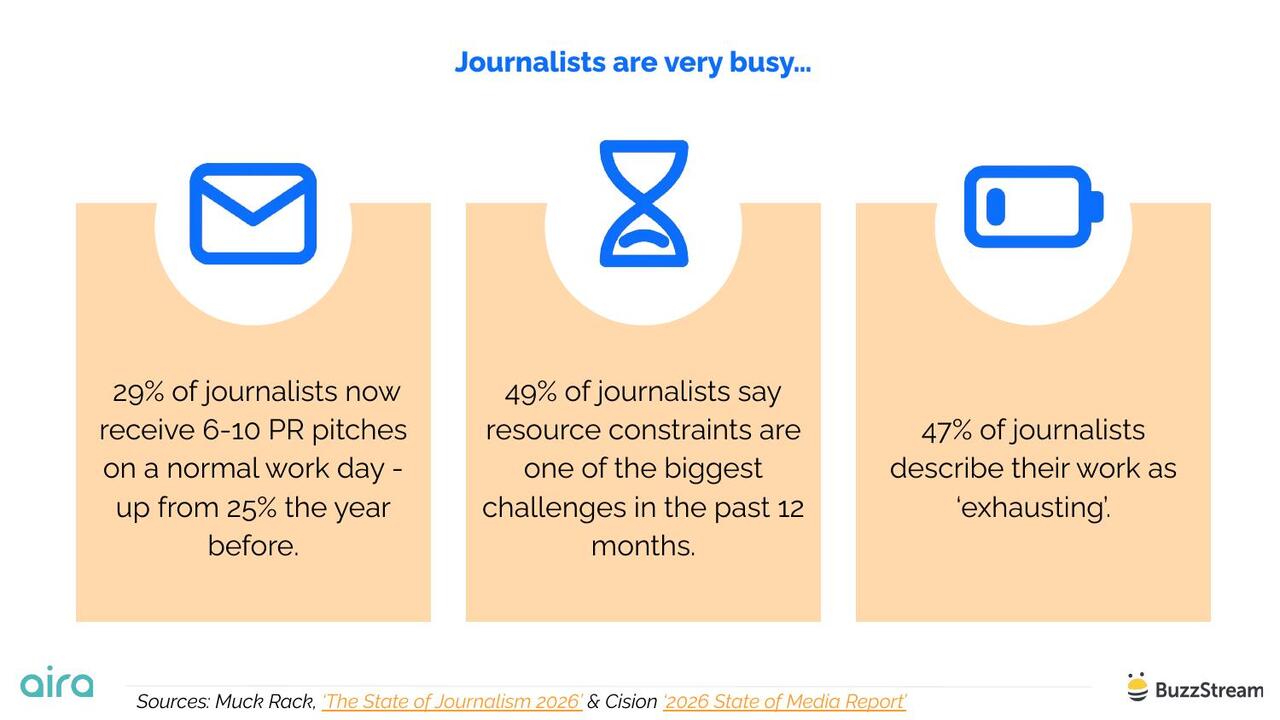
About 29% of journalists receive between six and ten PR pitches a day.
That’s up from last year. On top of that, an additional 17% receive over three times that daily or weekly.
Then you’ve got the fact that almost half say resource constraints are one of their biggest challenges, and 47% describe their work as “exhausting.” It’s a little sad, really, but it shows the extent to which they are busy in their roles.
We do expect that journalists are experimenting and trying new things to help with all areas of their role, but one key area that’s time-consuming is reviewing inboxes.
We think they’re probably using AI across all the main providers — Gmail, Apple Mail, Outlook — because they all have AI summaries that are pretty quick to click.
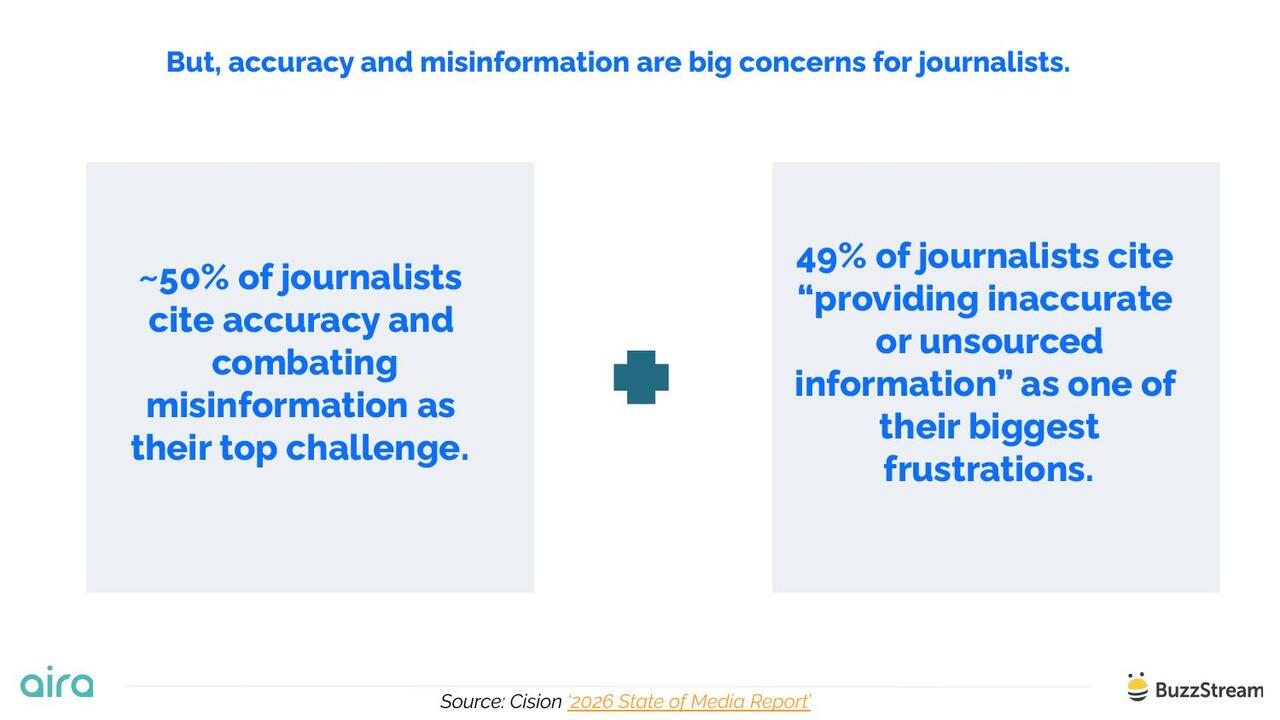
With that in mind, accuracy and misinformation are also big concerns and frustrations for journalists right now.
About half cite them as a top challenge, and inaccurate information as their biggest frustration.
So that’s why we believe it matters right now. We know it’s still early days and everything is progressing fast, but because journalists are busy and already using AI, we’re making the assumption that they’re experimenting with ways to review their inboxes.
Vince: I had one overall question with this study — when we’re thinking about the ways AI is being integrated, do you think reply rates are going down?
I’ve heard anecdotally that more things are getting packed into AI spam blockers, where journalists are creating tools that look for AI signals as almost a first layer of defense — whether pitches get rejected, marked unread, or archived immediately.
Have you felt that or heard anything like that?
Chloe: Alex, feel free to add, but one of the stats from one of the reports said it’s not a huge percentage, but 13% are using AI tools built specifically for their newsroom. I wouldn’t be surprised if they have specific AI checkers to rule things out already. Alex, have you seen anything in open rates?
Alex: I’d definitely say there’s been a reduction in journalists replying directly, and I think that correlates with the fact that they’re getting one and a half to two times as many pitches a day.
It gets to the point where if a journalist actually replies to you — even to say it’s not a good fit — it’s quite an amazing feeling, because that used to happen a lot more regularly than it does now.
One thing I want to find out from a journalist is whether they’re building software internally where, as soon as a pitch comes in, if they can see it’s 100% AI-written, it just goes straight into a bin.
I do wonder if that’s something they’ll eventually have, because it would filter real stories and real people from the AI side of things.
Vince: One of our podcast guests, Carly Martinetti, shared a journalist ChatGPT prompt that had been built, and you could see all the things it looked for — keywords like “delved,” overuse of certain phrases, that sort of thing.
I asked about this on Reddit in anticipation of this webinar, and I didn’t get an overwhelming “yes, this exists already,” but I’m sure it’s out there.
Alex: Interesting side note — I saw this morning that we had some coverage from MSN, and it actually said on the article that it was AI-curated.
It plainly said this wasn’t written by journalists, that AI was used to create it. So I wonder if there’s going to be a time and place for a journalist to write an article versus a platform that just curates the content and creates the article itself. It’s interesting that they were upfront about it, because normally MSN is just a syndicated site picking up from other publications.
Vince: Yeah, definitely.
But let’s power on.
The Study: How We Analyzed the Data
Chloe: So that opens the question of how AI is summarizing pitch emails, and whether it’s actually showing the key aspects you’d want it to, to represent the study or the expert in the right way.
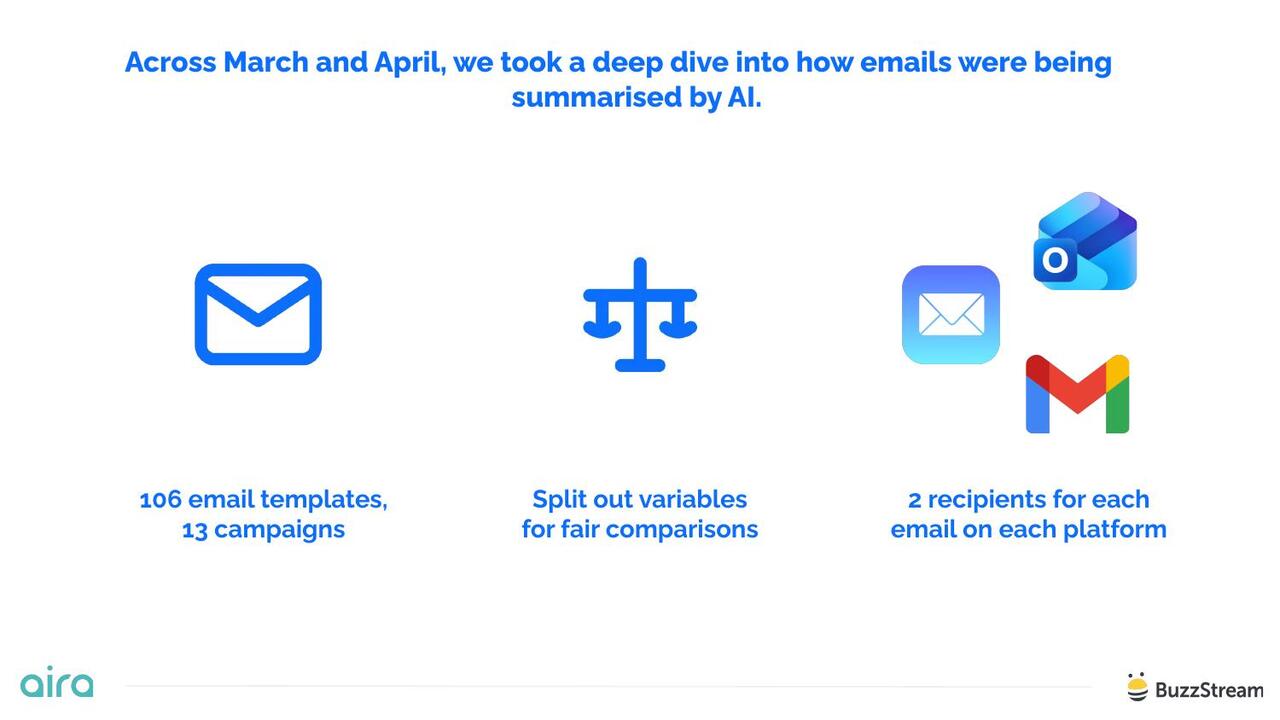
Throughout March and April, we took a deep dive into a number of emails.
We used 106 email templates across 13 campaigns — between roughly four and eleven templates per campaign — and split out specific variables so we could compare a first email to a version with a changed variable and make fair comparisons.
Each email was sent to two recipients on each of the major platforms: Google, Apple, and Microsoft.
That let us see how the different AI assistants were summarizing the emails.
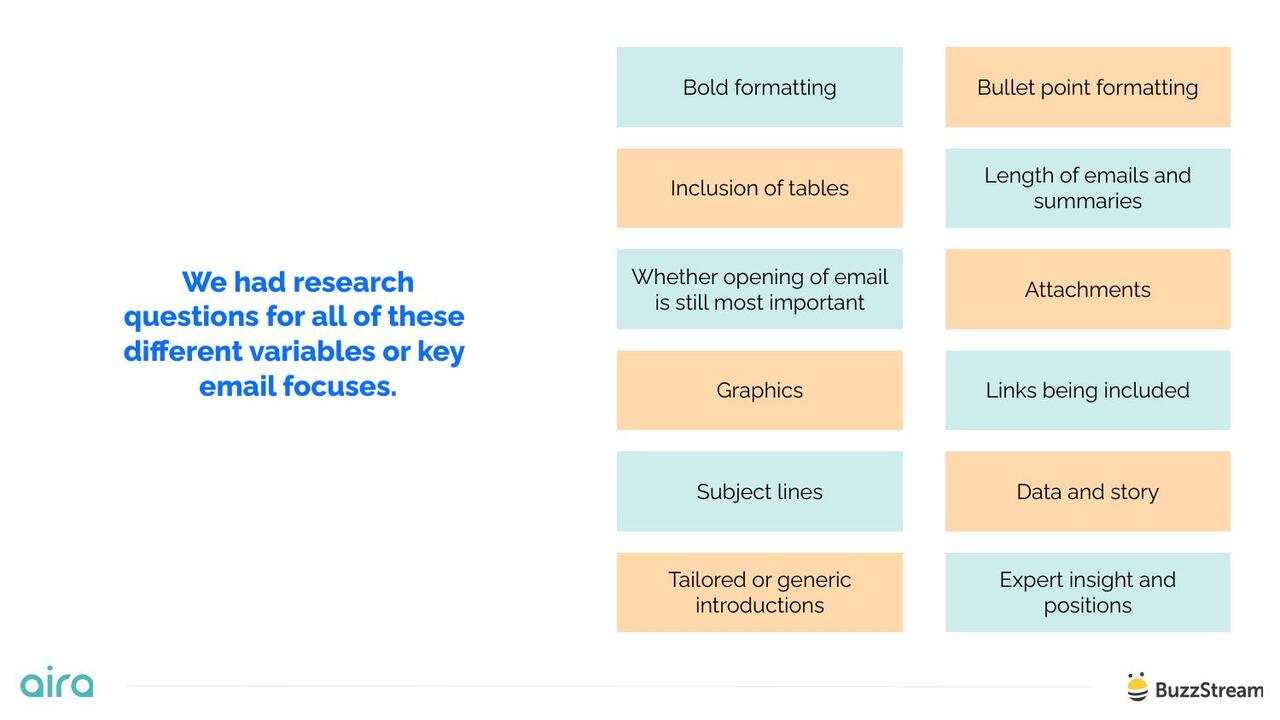
We had a number of research questions about different variables and key email focuses — techniques like bold formatting, bullet points, attachments, links, and whether tailored or generic intros have any impact on the summaries.
That led to about 626 emails that we analyzed across all these key points. Now we’re going to jump into some key findings.
The Key Findings
Alex: Firstly, we looked at the AI summaries by length, just to see the difference in what it picks up when you send a pitch email.
Microsoft was by far the longest — it got to the point where once we pressed summarize in Copilot, it was almost rewriting the entire pitch email.
That was very different from Google, which would usually give you two to three bullet points max, and that was enough to summarize it.
Some journalists would probably prefer the Gmail route where it’s short and sweet, but Microsoft could be good for journalists who want more of a deeper dive.
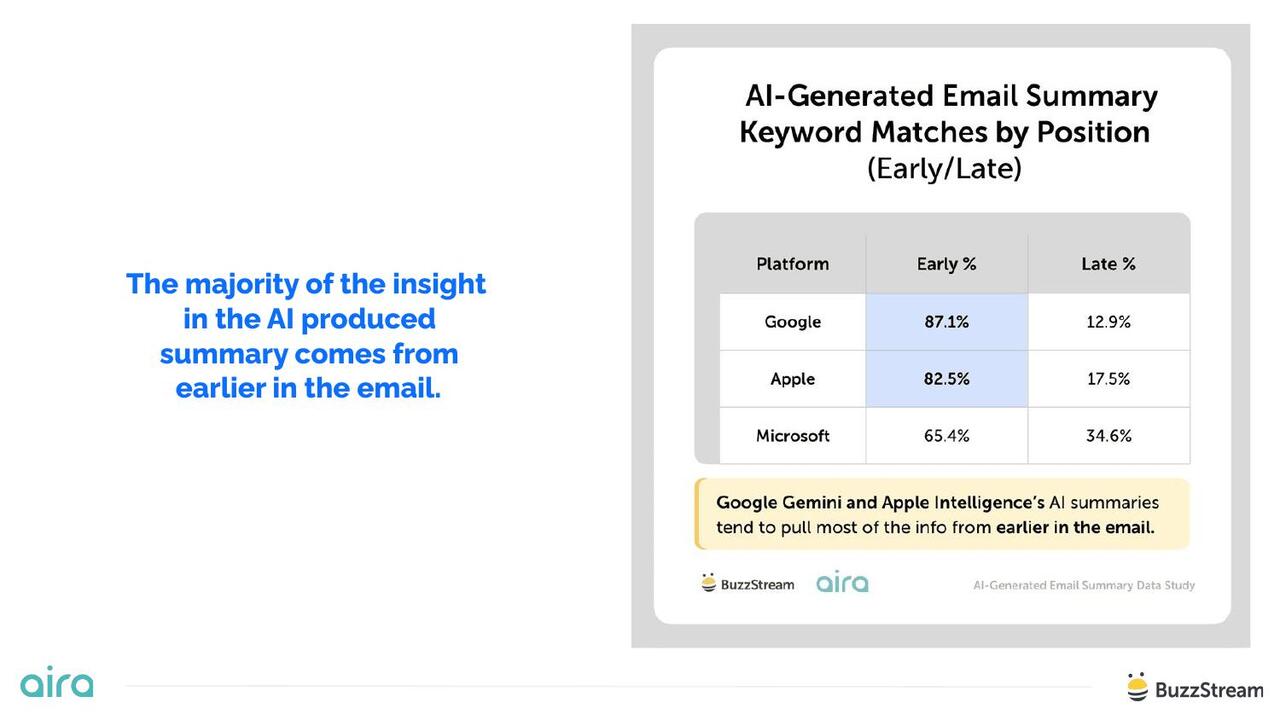
The majority of the summaries came from earlier in the email.
Most PRs who send pitches to journalists know that the start of the pitch is crucial, and the summaries here match that — content at the start of the email was more likely to be cited across all three platforms.
More specifically, we looked at summary subject line keyword match and keyword inclusion rates.
It was interesting to understand the difference between the three platforms and whether your keyword within your subject line actually mattered for an AI summary.
“Expert quote” performed well on Google and Microsoft, but Microsoft included a lot more of the words in general, based on the fact that its summary is just longer.
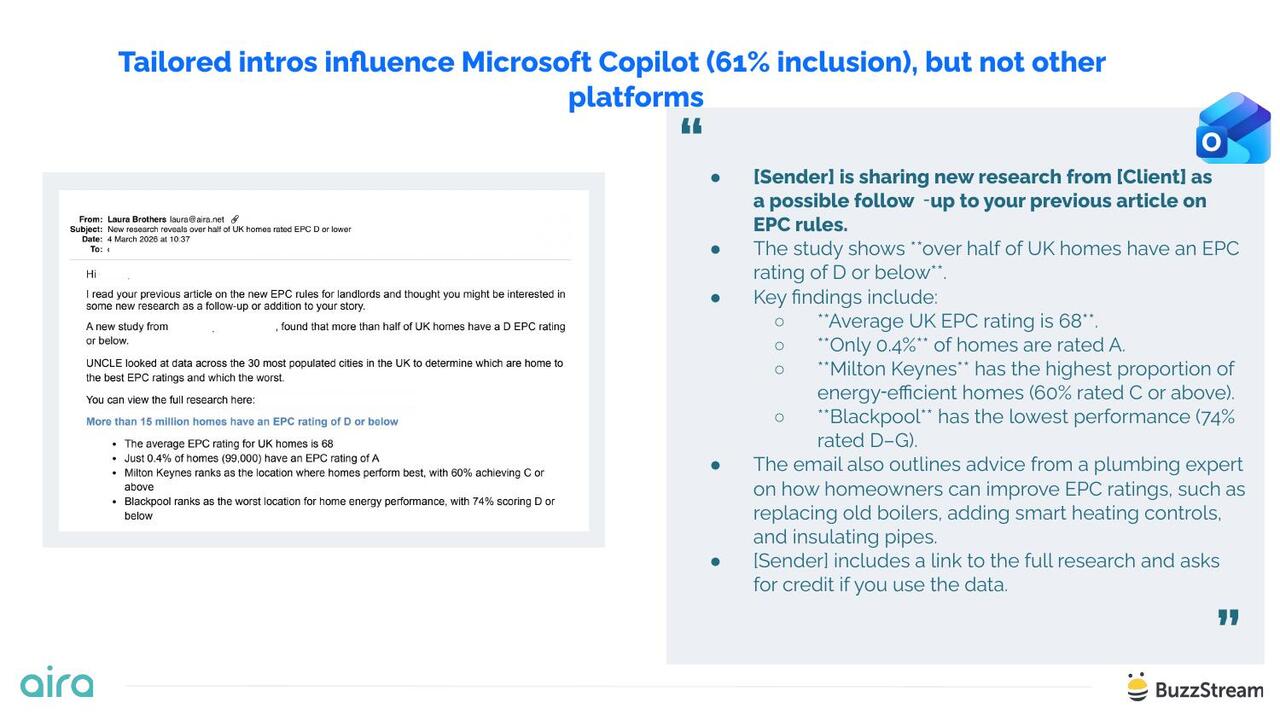
One thing that was really interesting is tailored intros and how they influence AI summaries — it was actually only Copilot that referenced this in its summaries.
As PRs, we know that if we can make an email tailored, whether that’s commenting on a previous study a journalist has written, it’s really important, but only Copilot was the platform that actually referenced that within its summary.
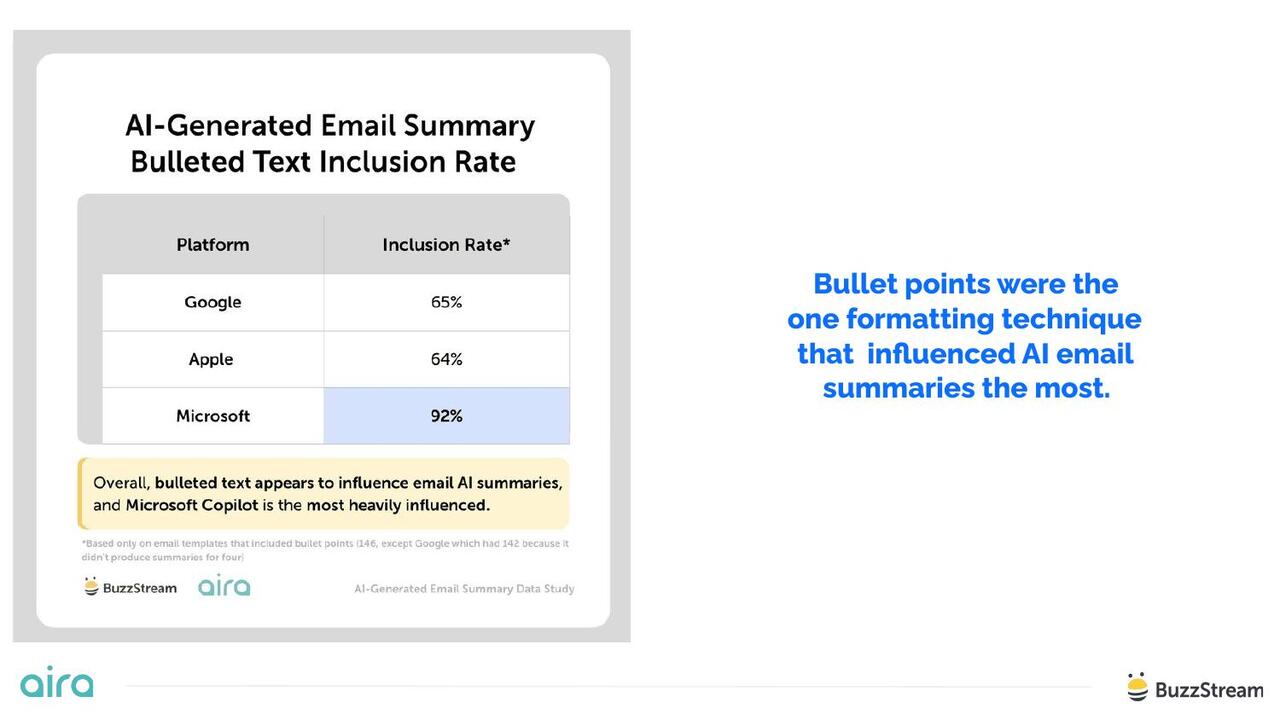
Bullet points were the one formatting technique that really influenced things a lot. PRs on average use bullet points — it’s a good way of summarizing the key story you’re telling — and they were really prevalent across all three.
With Google in particular, a lot of the time the two or three bullet points would almost match the bullet points we actually put into the pitch.
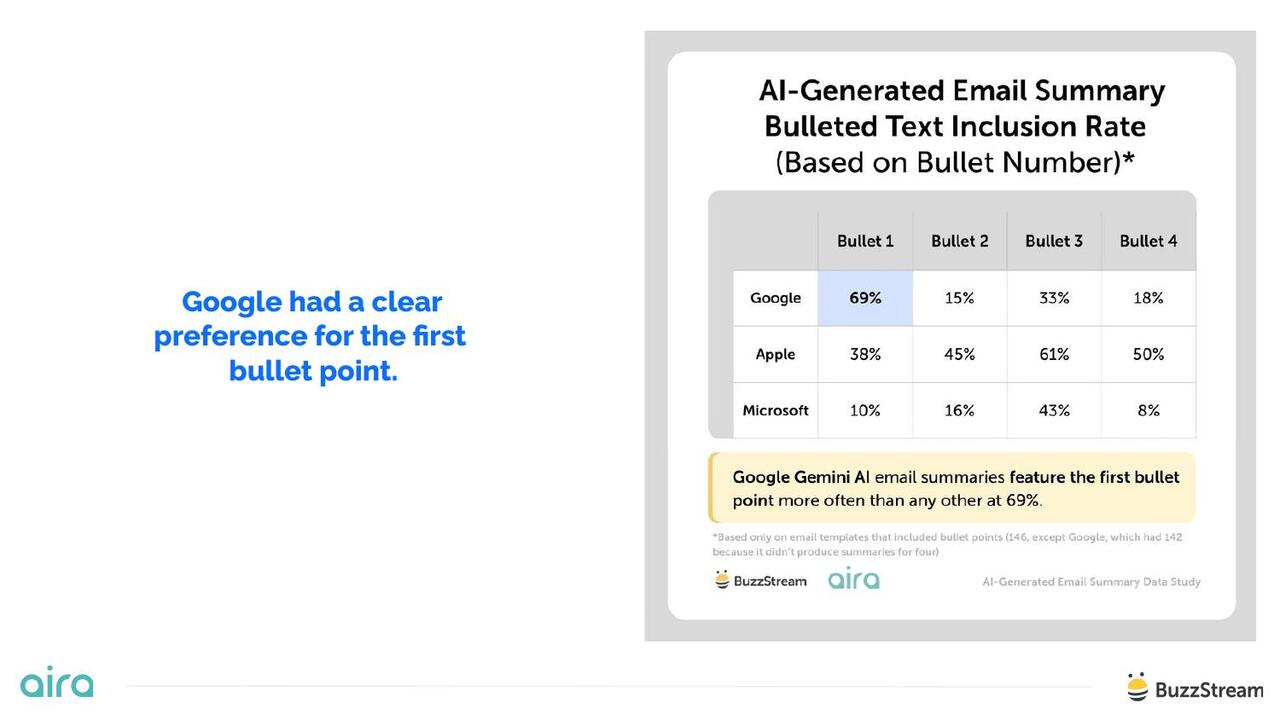
Google had a clear preference for the first bullet point — nearly 70% included information from the first bullet point we’d include in a pitch.
On average, we use about three or four bullet points, so it goes to show that the first one really matters.
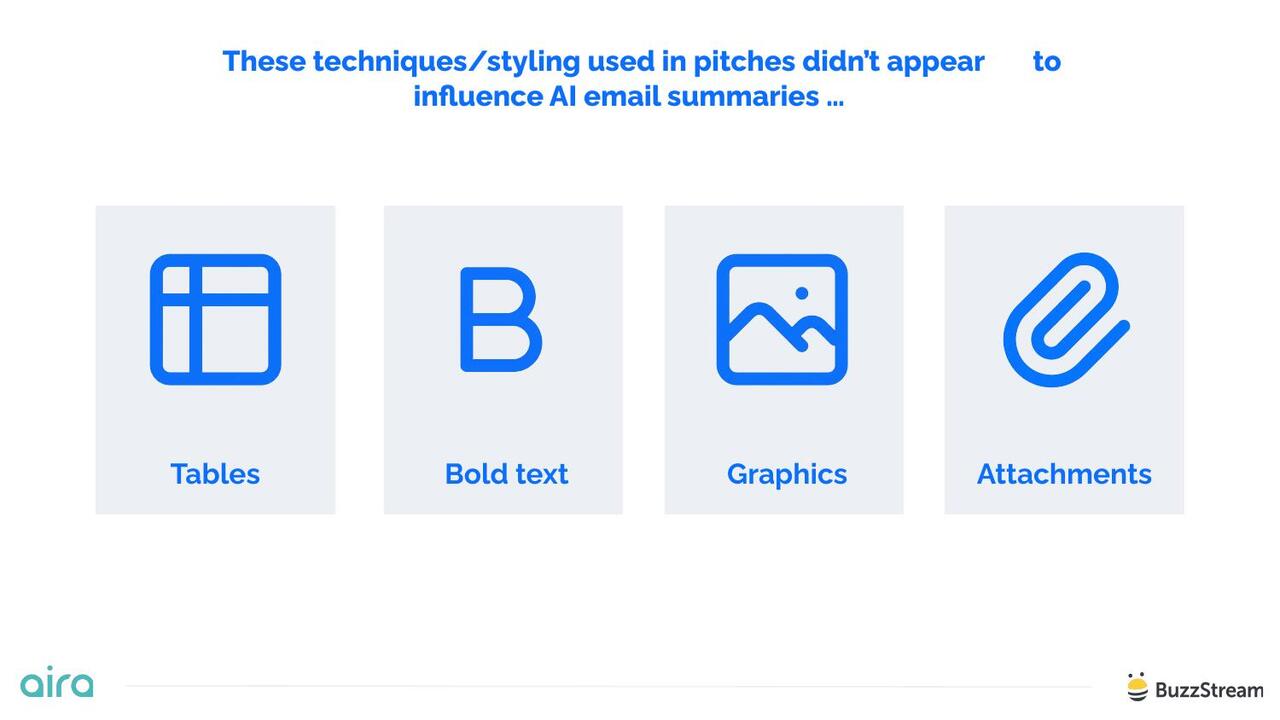
Interestingly, when we experimented with things we wanted to include and things we didn’t, these four essentially didn’t appear at all in the summary: tables, bold text, graphics, and attachments.
We kind of knew attachments might be a challenge, same with graphics, in terms of what AI can and can’t read. We had fun experimenting with bold text — highlighting an expert in bold, highlighting key statistics in bold — but it didn’t really seem to make much difference.
Vince: With Microsoft, my overall takeaway was that a lot of this stuff seemed to work because they just had such long summaries, right, so it would show up most of the time. But my bigger actionable takeaway is that bullet points are super important.
Do you have any recommendations — two bullet points, three, five? Is there an optimal number?
Alex: I don’t think there’s one number — it depends on your story. If you have three stories within one campaign, a bullet point per part would be very good; it gives journalists a really quick snapshot of what your campaign’s about. Once you get past three bullet points, it starts to look long and fluffy, and you don’t want those to be too long either.
The best way to think of it is that the bullet points you add are basically new subject lines. If your original subject line doesn’t work for a particular journalist, you’ve given them two or three alternatives to think about the story. From a visual standpoint, I wouldn’t go more than three.
Vince: That gets back to this idea of the actual length or amount of information you give a journalist. On larger reports, you sometimes get the urge to give five bullet points because it’s a big city index study and you want the top ten. Is there room for something like “micro-pitching,” where you hone in on the smallest, most focused angle possible and pitch less — especially with platforms like Gmail that we know are pulling from smaller chunks and writing smaller summaries?
Chloe: I’d say still having the detail in the email — it doesn’t need to be extensive, but having that detail means once they’ve read the short AI summary, if they’re interested, they’ve already got more context. And if you have a link through to the rest of the content, they can go there for even more.
It kind of needs to be the step between the really short summary and the whole piece of content with all the data — somewhere in the middle. It’s hard to say an exact length; it really varies based on the story and how in-depth it is.
Vince: One other question — should we be optimizing for Gmail, Microsoft, all the above?
I did some research to see if I could find anything about Google Workspace versus Microsoft 365 usage among journalists specifically. We don’t have that data directly — we have email addresses, but if someone has a Gmail address, they’re not necessarily using Gmail as their client, could still be Apple Mail.
The research I found skews more toward Google — especially in B2B — roughly 40% Google, 30% Microsoft 365, and a mix of other stuff.
Chloe: I’d say at the moment we probably need to optimize for all three, since we don’t specifically know the split in journalism. But there are takeaways that make sense across all three, which we’ll get to.
Alex: I think it’s just too early to fully understand the movement toward journalists using AI. If we just knew what platform everyone used most, life would be a lot easier — or harder. I think it comes down to your story needing to be good and engaging.
If you tick those boxes, the chances are an AI summary is going to do you a favor.
It kind of feels early in terms of which one to optimize for, but there are definitely similarities across all three that let you nail the basics.
Vince: And I think that gets back to almost a curiosity gap — it doesn’t have to be the first bullet point, just has to be early in the email.
Then the bullet points can be the supportive data, the most important supportive data, put first or second. I think that was my big “aha” from reading this: hook the reader right away, and you’re probably going to hook the AI in the same way — you’ll get it to use that same terminology and reflect it.
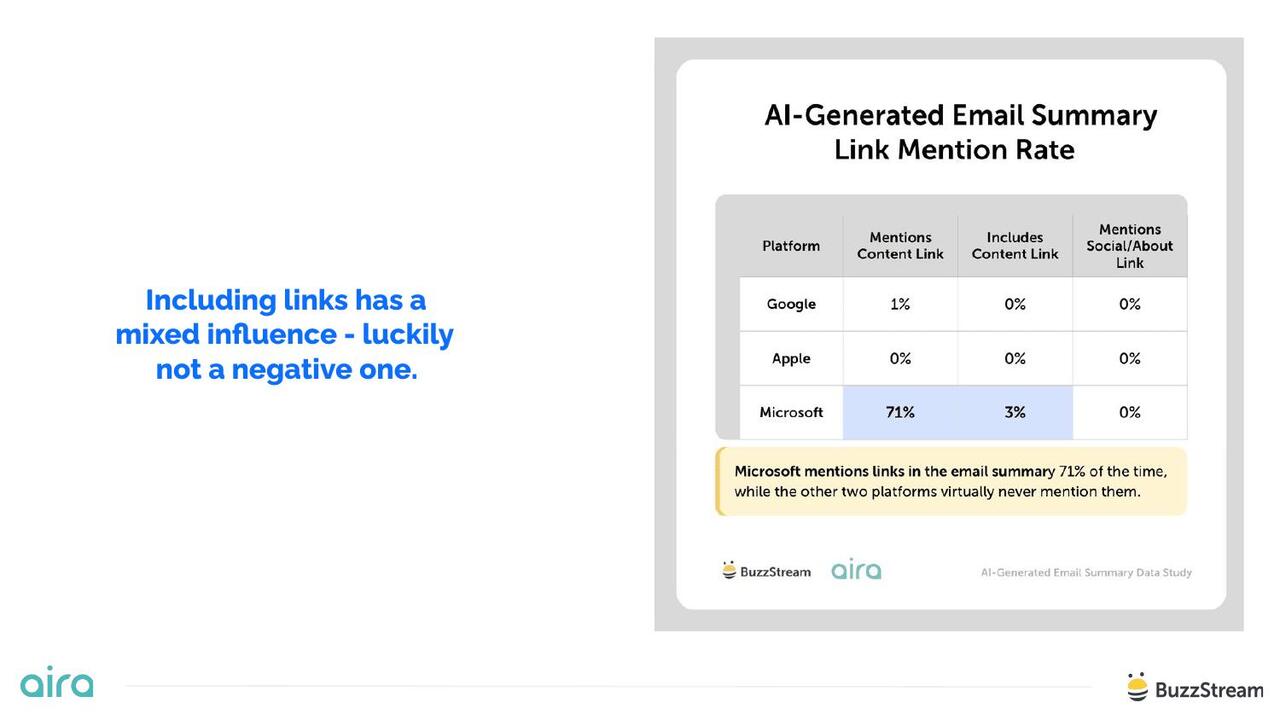
Chloe: Some extra findings — luckily, including links didn’t have a negative influence, just a mixed one. Microsoft included links because it had a longer summary to do so — they mentioned them in phrasing like “more data is shared via a link” or “the full press release is via the link.”
It was only mentioned a handful of times on Google emails, and not at all on Apple. This might change as we move forward, especially if specific phrasing makes AI think the meaningful content is housed elsewhere, but it’s good that it’s not a negative signal.
Alex: This was really interesting — around experts providing comments and journalists having to screen whether something was real.
We were determined to see if putting an “about us” page or “meet the team” page, or an expert’s LinkedIn profile, into pitches helped with credibility, since journalists could then verify the person is real.
It didn’t actually make much of a difference. Whether that changes in the future, because you really do need to prove your expert is a real person, remains to be seen — but for now it didn’t have too much impact.
Chloe: And then I guess the most worrying finding we all agreed on was that AI is misrepresenting the original email in up to a third of summaries, which is quite big.
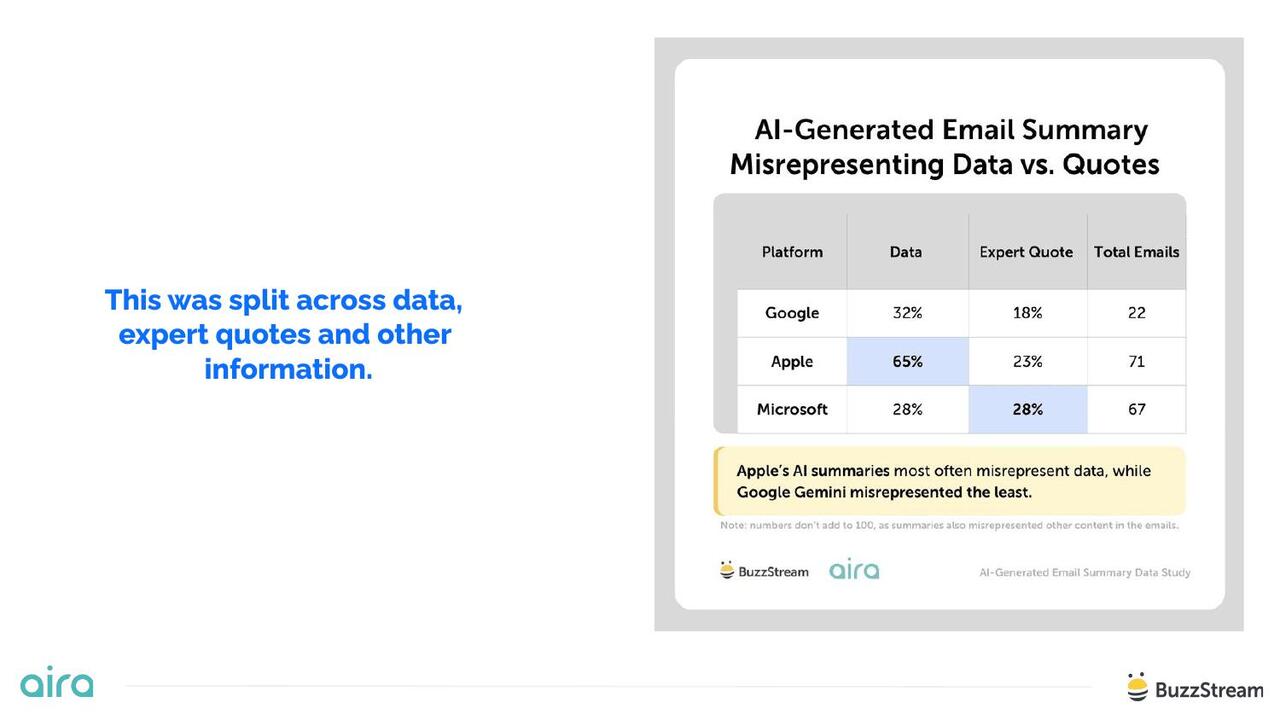
We expected it among a handful, not quite that percentage. It was split across data, experts, and other information within the email.
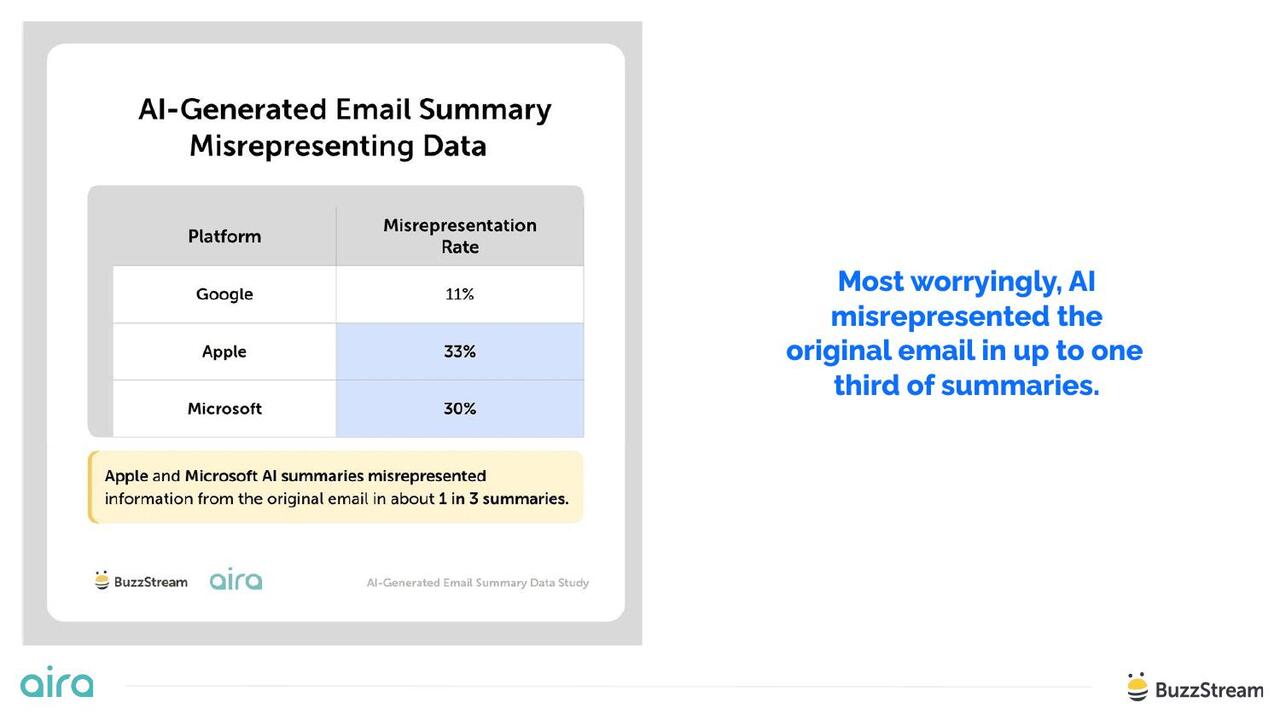
Predominantly across data and experts, it was either confusing data and stats, confusing two different sources, or muddling what an expert quote was saying.
If you think about how short some of these summaries are, and if journalists are relying on these quick summaries, that could put you, your client, or your brand in a negative light.
I’ve read a stat that about 40% of journalists said that if they suspect a PR of misrepresenting data, they’d be likely to block them — so if your email gets read wrong once, and you get blocked, that could impact coverage down the line too.
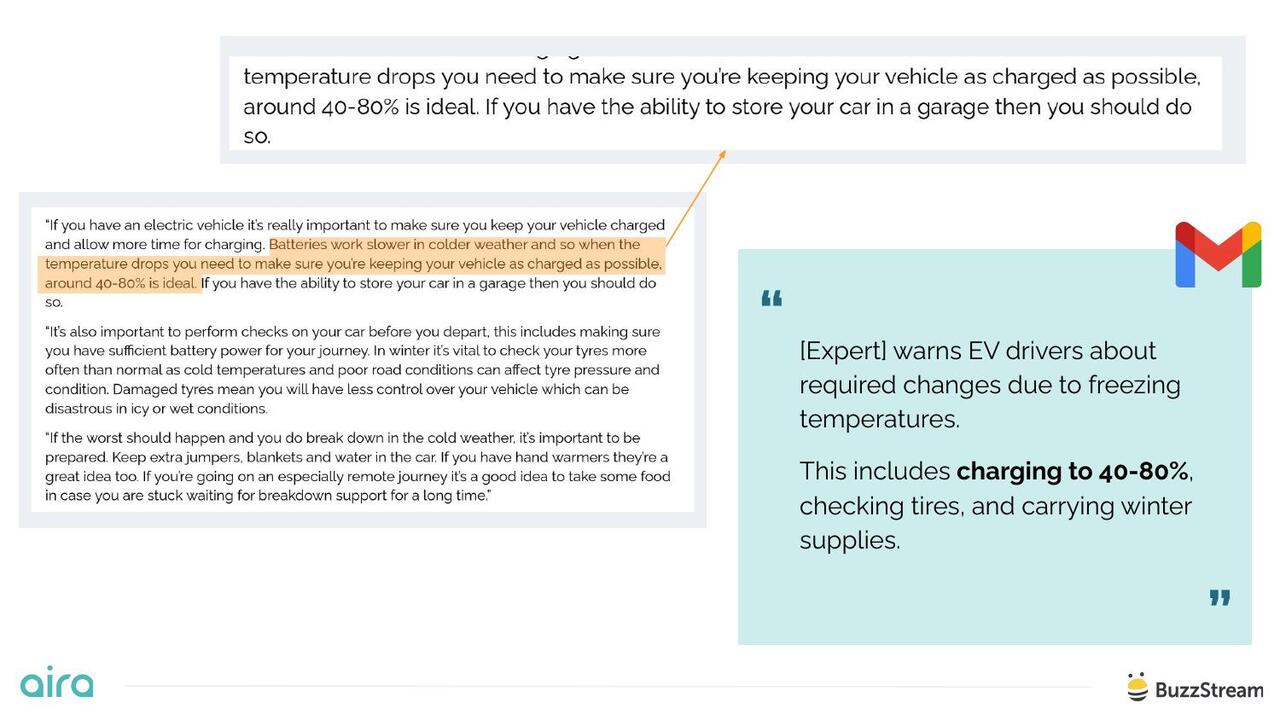
One example: we used a template from a previous campaign about expert advice on what to do with your electric vehicle in winter.
The expert advised keeping your vehicle as charged as possible, around 40 to 80%, essentially saying you shouldn’t let it drop below 40% but should keep it charged above that.
The email summary pulled out that you should charge to “just 40 to 80%.” It sounds minor, but it puts the expert’s information into question, because it doesn’t sound reliable — especially with Google, where the summary is so small, if that’s one of the key points and it gets questioned, you might get ruled out straight away, even though your email doesn’t actually say that.
Vince: This was the part I tried to dig into the most, because I think it’s the most eye-catching piece of this.
Do you think journalists will actually rely on the AI summary for this kind of thing, or read the actual quote if something looks interesting? I want to gauge the concern level here, honestly.
Chloe: I’d think they wouldn’t pull directly from an AI summary — they’re definitely wary of how truthful AI is.
But with the lack of time and resource, I wouldn’t be surprised if they just moved past it because it didn’t sound quite right, without necessarily flagging it as wrong. It depends how bad the misrepresentation is as to whether they’d think, “we don’t want to receive any more emails from that PR.”
I don’t know how many would go that far based on an AI summary alone. Alex, any other thoughts?
Alex: This is always going to be a “how much do journalists rely on AI” kind of question.
I think if it’s specifically a data point, there’s a case for a PR to source where that data is from — put a footnote in, for example — so if a journalist is wondering whether to trust it, they can scroll down and see the reference.
The challenge is expert commentary, because at that point it’s one person saying one thing, and you’re hoping the platform takes it word for word, especially with quotation marks, and treats it as something that shouldn’t be tampered with. I don’t think journalists are going to build a story only from an AI overview, because that’s a bit risky for them right now.
Vince: Do you think there’s a case for writing simpler comments or quotes, or presenting data in a way that can’t be misconstrued — something that, if read back, there’s no way to get it wrong?
Alex: It’s interesting, because it’s almost like you have to prove what you said is real. My first thought was to send the journalist a video of the spokesperson saying it out loud, but even that could be AI at this point — you can’t fully trust that either.
I think it depends on the topic. If it’s genuinely newsworthy and the brand thinks it’s worth putting content on its own site about it, you can put the same quote on your brand’s website as well as in the email, and hopefully a journalist can cross-reference and think, “okay, this is clearly something he wants to speak about.”
If you have something worth it, creating a quick page on-site could help. The other thing is building a brand and building experts for clients — if they’re featured in the news regularly and cited a lot, journalists will tend to trust that at base value, because they’ve seen them cited before, and that helps rule out the AI concern from a journalist’s mind.
Vince: I love that — that makes a lot more sense than trying to tailor emails so AI won’t mess them up.
Safeguarding it more holistically.
I wanted to call out one other thing — there was a case with links where it seemed the AI, I think Copilot, had visited a link and pulled information from it that wasn’t in the email itself. That only happened a couple of times, right?
Chloe: Yeah, it was a very small number, about 5% of occurrences. The information in the summary wasn’t in the initial email, but it was within the campaign content.
Microsoft Copilot has built-in web search capabilities, so as long as it’s not switched off at an organization level, it can do web searches via Bing when it scans your email, or go to the linked article and pull from that to ground its response in additional information. That’s where the wording around links comes in — whether the way we present links makes Copilot think the meaningful content is there, and go find more from it.
That could change over time and happen more often.
Vince: One other level we haven’t talked about is personalization — there’s a piece of this in Google where you can opt in to giving Gemini access to your email history, and when you search, it cross-references that. Right now it’s opt-in, but Garrett Sussman from iPullRank gave a great talk at SEO Week about this, testing personas to see how Gemini answered questions.
I wonder how different AI summaries would be if you’re opted in, based on email history with one specific sender. It’s Chloe emailing you again about the same topic you covered before — I wonder if it becomes a benefit to build relationships, because it reminds the journalist who this person is.
Just theorizing here, but that’s where my head goes trying to connect the dots. A lot of this is “we don’t know what we don’t know yet,” and this study is a point in time — I wonder what it’d look like six months from now as these models progress.
What It Means for Pitch Emails
Alex: What does it mean for pitch emails moving forward?
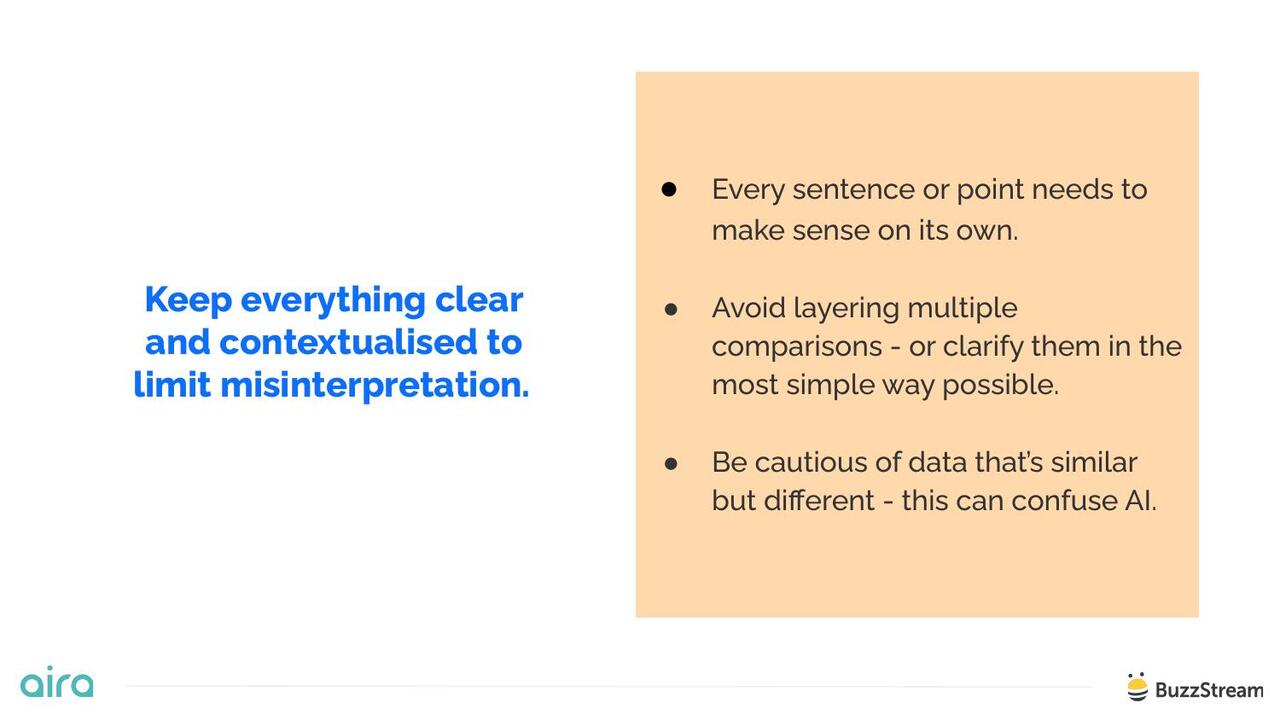
We need to keep everything clear — context is really important here. We want sentences to make sense on their own, and we want things to be digestible, not just for the journalist’s benefit, but also to avoid confusion from AI, since we’ve seen misinterpretation happens a good amount of the time.
We need to think backwards: how do I avoid that from happening?
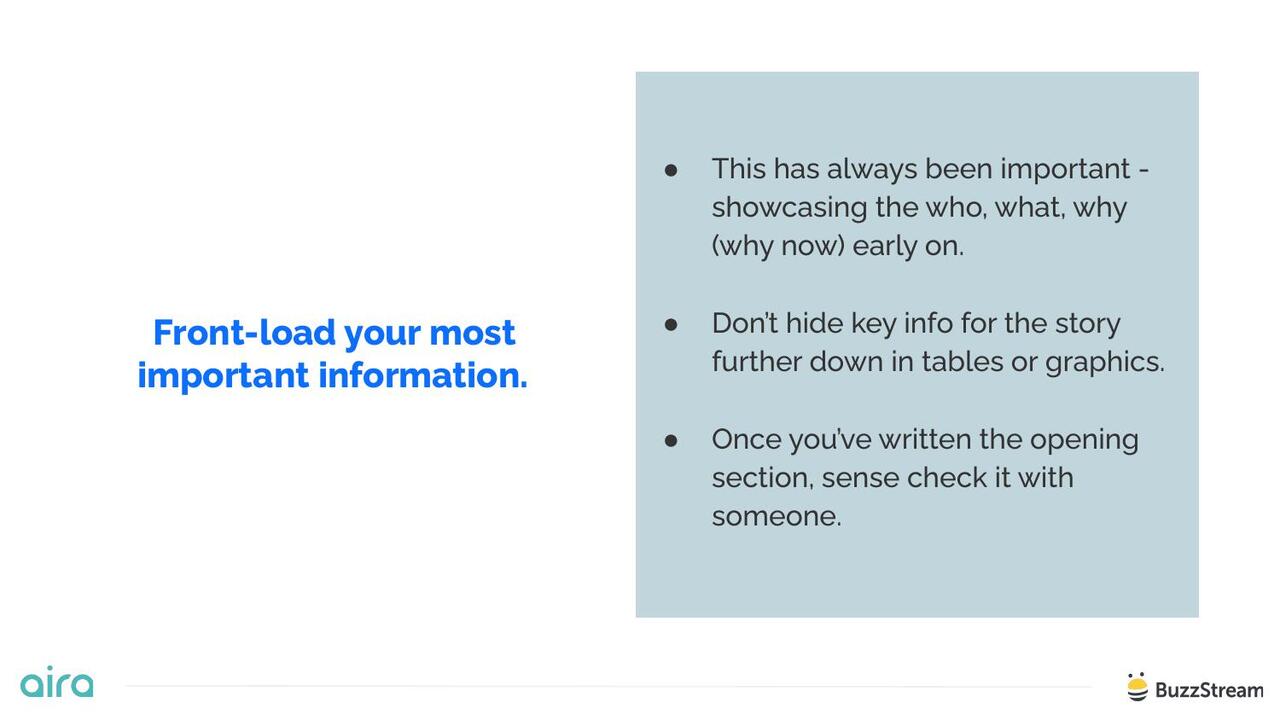
Front-load the most important information — what’s the story about, is it interesting, where’s the data from. It’s about not hiding information.
We’ve seen that tables and graphics don’t necessarily appear in AI summaries, so if you’re trying to tailor for AI, there’s no point including those — go straight for the key points, and craft them carefully.
They’re definitely the thing that gets cited the most.
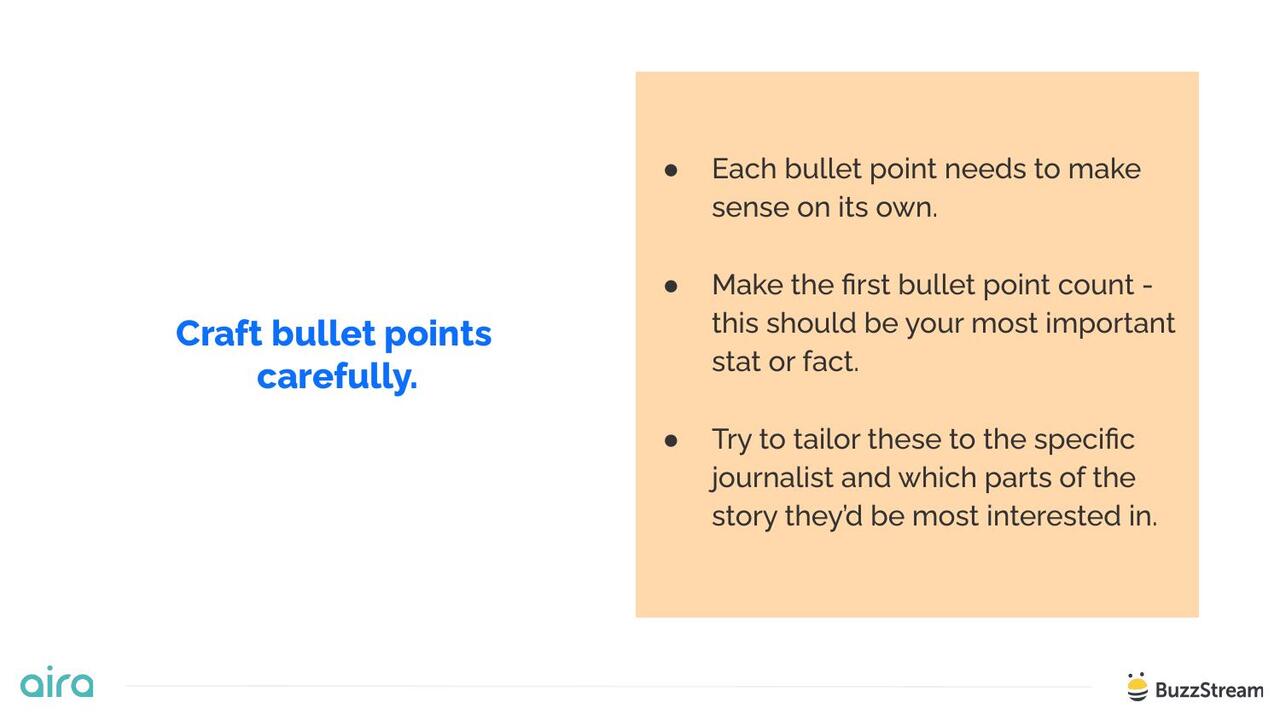
They need to make sense on their own, and the first one seems to be the most important, so either use that as your headline fact, or, for expert commentary, make sure a bullet gets across who the expert is.
Try to tailor these to each journalist too.
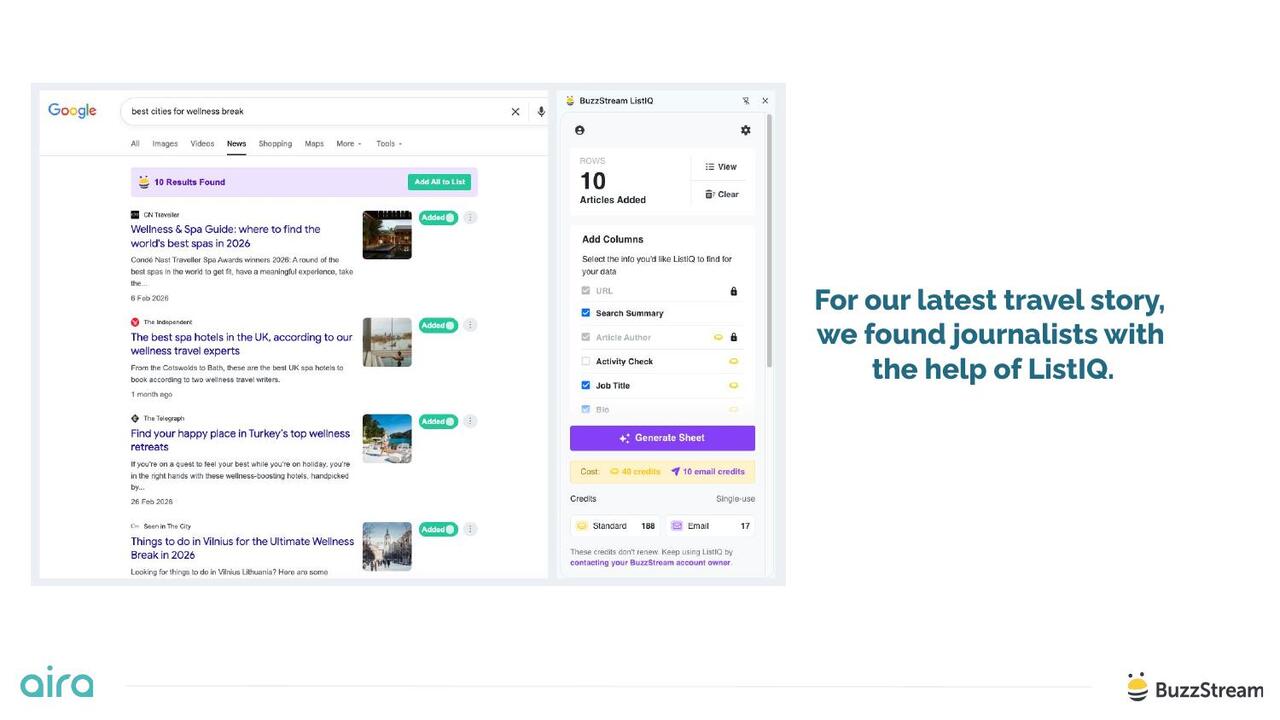
We’ve put together an example from a campaign we did recently around relaxing cities.
We used ListIQ on Google News to find stories similar to the space that had been written by big publications we wanted to get onto — within two buttons, we can generate sheets with the journalist’s email, who they write for, job type, and start building media lists from scratch.
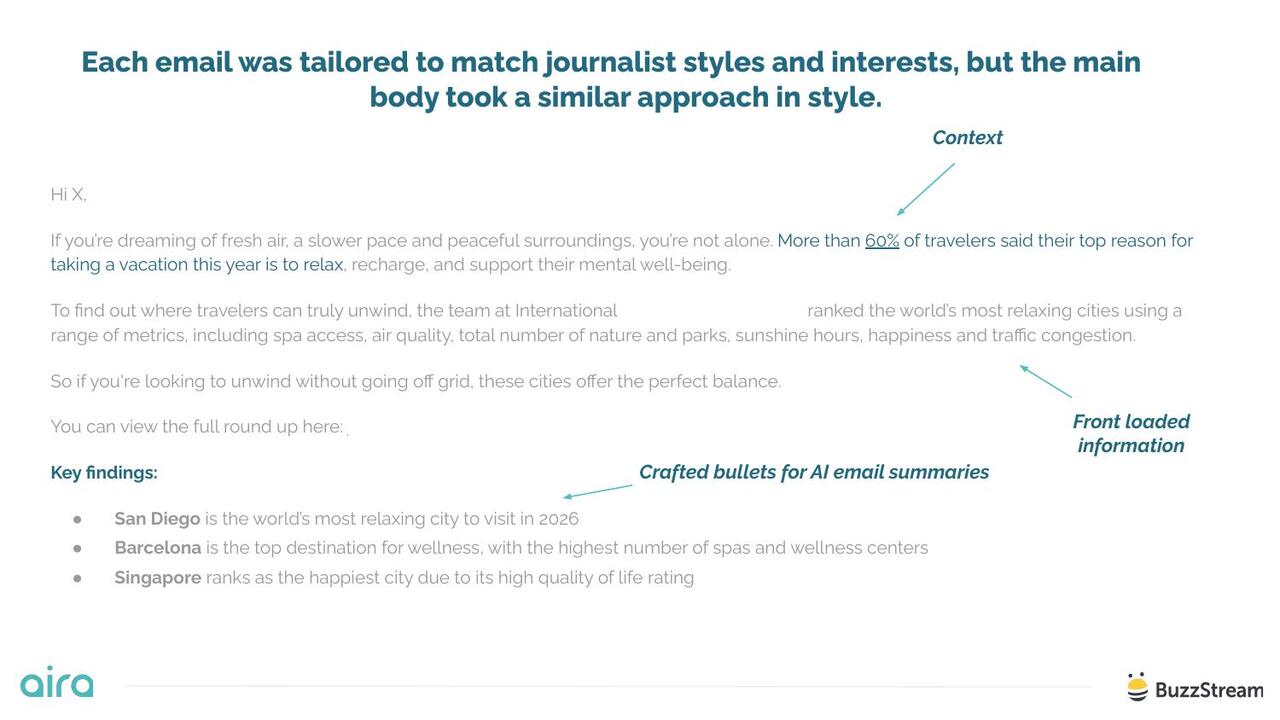
Here’s a snippet of the pitch. Each email is tailored to how a journalist writes, but the three bullet points here are our key takeaways — you need to provide context up front for why this could be interesting to a journalist, and front-load your information.
Already within the second paragraph, three sentences in, we’re telling the journalist what the story is about.
We also crafted the bullet points so they’re high up, and all three could easily be a subject line in themselves, but they’re also very readable for both a journalist and an AI.
Rule number one needs to be that it cites correctly.
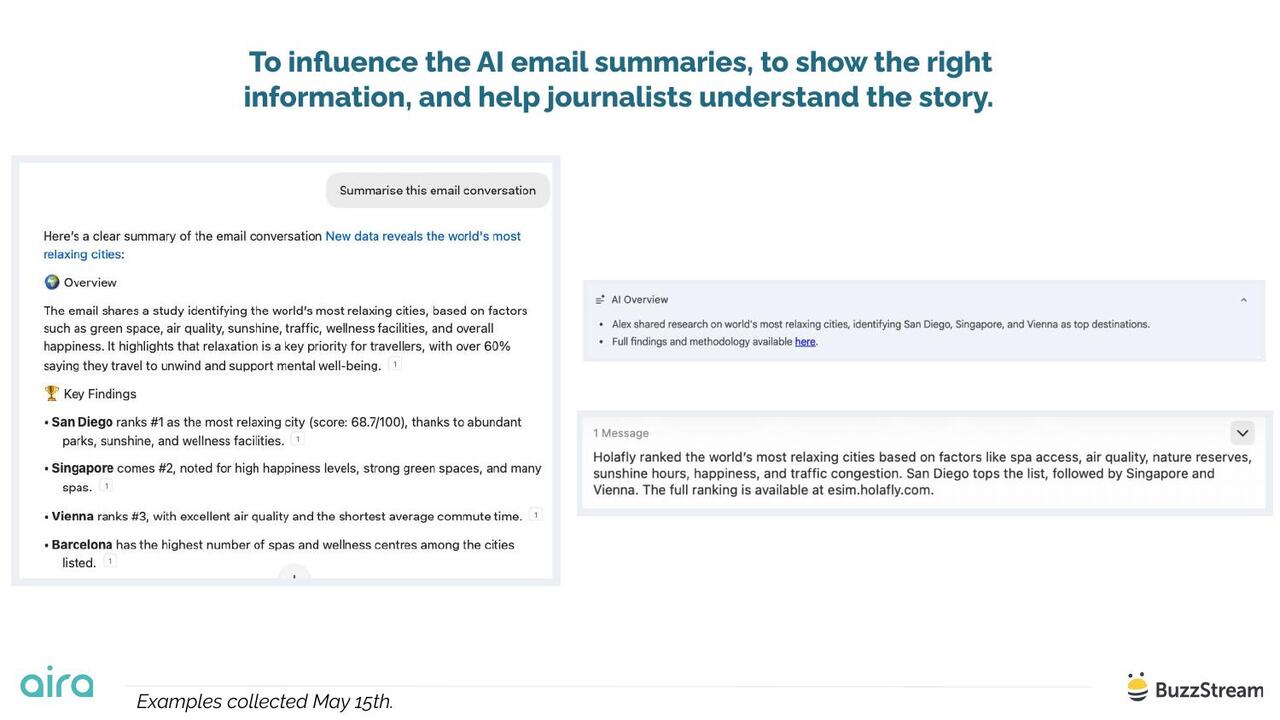
If one AI summary completely changes what your story’s about and a journalist runs with it, there’s a good chance they may never want to cover your content again, so it’s really important to make sure it’s accurate. A handy way to check is to test it on yourself — send it to a couple of colleagues and make sure their summaries are clear, concise, and accurate.
Chloe and I would receive the same email and get completely different AI overviews, which was fun to see, but we needed to make sure they were both factually correct.
You can see the one with two bullet points is Google, Apple is below it, and the size difference from Copilot on the left is almost a full landing page recap for a journalist.
Context is really important across all three of these things.
We need to eliminate the chances of AI getting something wrong. Front-load the most important information — that’s what a journalist wants to read anyway, let alone AI, so it’s a good practice regardless. And craft bullet points carefully — a bullet point can be information, but it can also be a subject line, so have fun playing between the two.
Audience Q&A
Vince: One thing I really wanted to address — you mentioned tailoring bullet points to the journalist, which is easy to say, but in practice, how do you identify what makes a journalist unique, and what angle is going to resonate most with them?
Alex: I’ll use travel as an example — a lot of the time a journalist will use the same format for their headlines. This goes back to old-school PR tactics of creating a subject line a journalist will just copy and paste. If they do that, you know you’ve nailed it.
It’s evolving into the bullet point format in the same way — you’re mixing what an AI can easily take, and also, can this become a mini subject line? If a journalist writes “these are the X best,” playing with that format means your bullet point and your AI summary end up close to each other, written the way that journalist writes.
You’ll notice patterns in how journalists write, and if you do your research when building your media list, that personalization can go a long way.
Chloe: Especially in digital PR, indexes are popular and probably aren’t going anywhere soon.
When you build an index, you usually have multiple angles, because that’s how you increase your outreach remit, broad but relevant, to give yourself enough news stories over several weeks. So make sure that if you have journalists for specific angles, you’re researching exactly what they write about, not just focusing on the topic broadly.
Say you had “foodie capitals” instead of “relaxing cities”, if a regional writer covers specific cuisines, make sure that’s in your bullet point, not just the region. You’re taking into account the writer’s passions and style, not just what region they cover.
Vince: Is that the kind of research you do before starting a campaign too — validating that an angle has enough people writing about it?
Chloe: For the top angles and top publications we want to land in, yes, we’ll do more research to validate what they’re writing about and what they’re interested in.
Knowing we have enough outreach scope — enough places to target to increase coverage opportunities — is really important. It doesn’t always come in before the ideation, because you don’t want to limit creativity too early, but it has to come in as part of the concepting process, making sure the idea is strong enough before you pitch or propose it to stakeholders or a client.
Vince: The other question I had ties into this — giving a journalist the story versus giving them the data to tell their own story.
Especially for something like a survey, is there a case for giving them the overall story versus enough data that they can craft their own?
Alex: I’d say a bit of both, but mainly we focus on the story first. A few years ago we’d always make datasets publicly available so journalists could craft their own story, and if they didn’t like our angle but loved the data, they’d write a completely different story off it.
That doesn’t happen as often now, mostly because of time. PRs have also gotten better at giving all the information in one go, in a weird way, we don’t always want a conversation with a journalist, because it can mean we’ve missed something. Leading with story first is really important, because journalists have quick turnaround times now and can’t always sit down and go through a full spreadsheet, even if it might give them an amazing story we didn’t lead with. There’s definitely been a shift in the importance of nailing your story first time around.
Chloe: I’d agree. Some datasets are huge and complex, and with journalists worried about time, a lot of them take the story directly from us. We try to give different angles so they still get something unique — it might not be that they dislike the initial story, it might be that they need something that feels less repeated.
We try to tailor and twist it so it’s not the same every time, which I think helps them be able to take it.
How to Think About AI Going Forward
Alex: It comes down to credibility again. We hope AI gets better at citing information, but it still comes back to your story needing to be good, with a strong methodology, and your experts needing to be proven. It’s about minimizing the chance of something being cited wrong.
Keep practicing on yourself — send yourself a bunch of emails with different subject lines and bullet points and read through them as if you were the journalist: would that AI summary make you excited about the story? If it did, take that one forward.
It’ll be interesting to come back to this in six to twelve months and see whether the AI reviews are pulling through more, and whether they’re getting longer — Gmail giving you only two bullet points feels tiny, and it didn’t really change based on how long our emails were.
Chloe: For me it’s context — contextualizing everything so every point makes sense on its own. It was always important to have the who, what, why, and why-now right at the top, but if it starts getting confusing in one sentence, people are going to have to break things down into more sentences, while making sure each one still makes sense on its own, so the key points don’t get muddled in how they’re read.
There are instances where you read something twice and realize it could be read a different way, and you don’t want that.
I think context upfront — for bullet points, for how tables are introduced, for everything — is going to be the biggest thing that matters going forward.
Vince: That makes sense, especially given all the research from the SEO world around chunking information and giving enough context.
I think that goes a long way for emails too. I want to thank you both — this was a fascinating study, and you and your team did a ton of the heavy lifting here.
Shout out to Laura Brothers from the Aira team as well, who also helped. We’ll share the study in the show notes, and Aira has their version published on their end too.
If anyone has questions about this stuff, please feel free to reach out.
Big thanks to Chloe Osunsami and Alex Fiske from Aira — and to Laura Brothers from the Aira team — for digging into this data with us.


 Check out the BuzzStream Podcast