 End-to-end outreach workflow



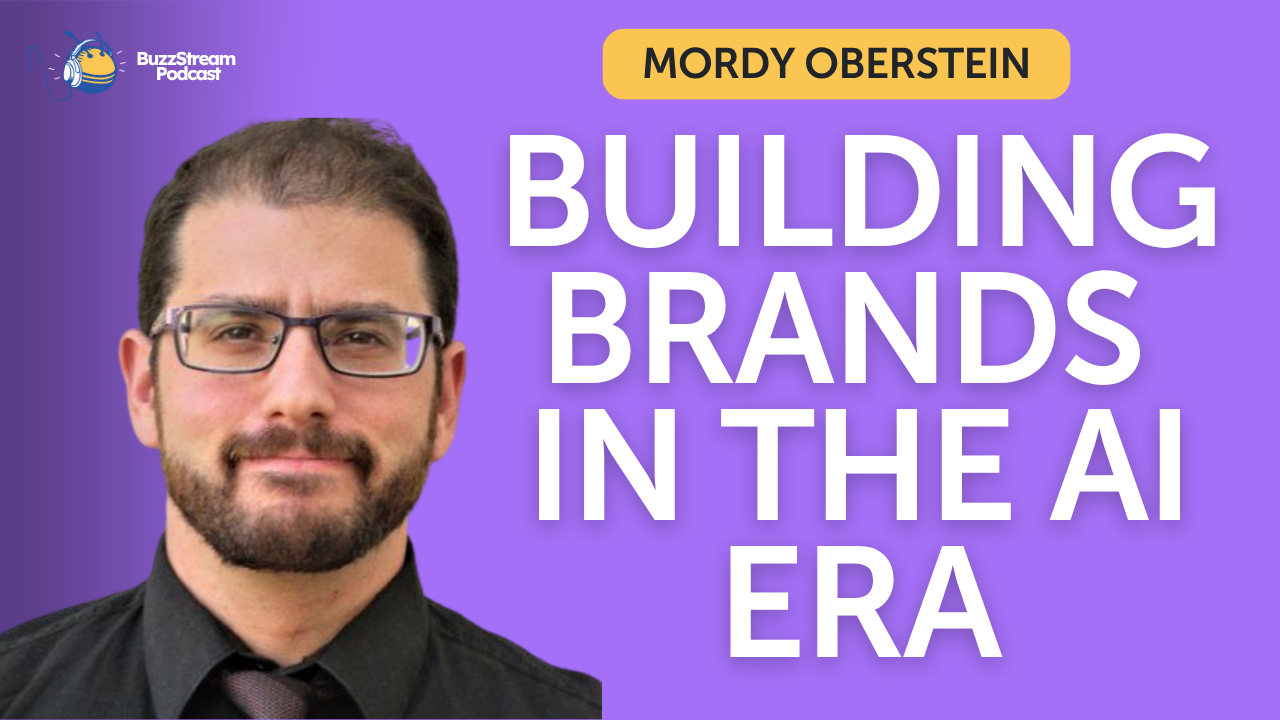
Table of Contents
- Brand is just how people relate to you as an entity. Everyone has one.
- Start with “who are you?” If you struggle to fill out your About page, you need to start earlier.
- Compound association beats the big splash. You don’t need huge budgets, but you do need time.
- Track AI sentiment, not just visibility.
- LLMs are making the internet work more like people actually do, so judge PR by the doors it opens, not just by its own ROI.
“Brand” can be a dirty word to metrics-driven marketers, but now that AI is in the mix, everyone suddenly wants one.
To find out why, I talked with Mordy Oberstein, head of brand at SE Ranking and Planable.
Mordy has worked with some of the biggest brands in the SEO space and has been doing brand work for a long time, including running his own consultancy.
Mordy and I got into why brand has a brand problem, why compounding beats the big splash, how he uses sentiment to spot problems in AI visibility, and where PR fits into all of it. (Plus plenty of baseball analogies and at least one Barry Schwartz troll.)
Let’s get into it.

Below is a slightly edited transcript:
Why does “brand” have such a negative connotation in SEO and marketing?
Mordy Oberstein: Brand’s got a brand problem.
The brand space knows it has that brand problem, but no one knows how to deal with the brand problem for the brand.
I just blew my own mind.
I blame TV, I guess.
You’re thinking of brand as a commercial, and there are no numbers attached to it.
The NFL season is starting in about two days from when we’re recording this, and now I’m going to get inundated with ads from Pepsi or Papa John’s that I don’t like, and most of them aren’t creative anyway. They spend tons of money just to get the name out there.
I think brand has all those weird associations, with the TV ad as the paradigm of it: okay, you’re throwing the name at me, what’s the value on that?
What’s the ROI on that?
In the internet space, we kind of got addicted to that drug of attribution and ROI.
The truth is, marketing has never been that simple.
But brand has a double negative association: one is just in general, and two is particularly on the digital side, where you have all that data and all those numbers, and brand just seems like this fugazi thing.
Like, all right, fine, whatever.
But fundamentally, what brand is — and let’s not call it brand, because everyone working on the brand side has the same problem, that’s always going to be the association — let’s put it into real terms.
Brand is just how I relate to you as an entity.
Let’s pretend for a second that a group can be an actual metaphysical entity.
A sports team is the most natural example. I don’t root for Aaron Judge.
I mean, I do, but I root for the Yankees. The Yankees are an entity in my mind. They’re a real, tangible thing. There’s a place I can go, I can watch them. I group-identify: this group of players is on the Yankees. That group of players?
Who cares, they’re not on the Yankees.
That’s a real thing. How we relate to that group of people — that entity, to use an SEO word — is real.
I have real feelings, real associations, real thoughts, and very much real opinions about that group known as the Yankees. It’s the same thing for a company.
There’s no avoiding it: everyone has a brand.
If you’re saying “I don’t have a brand,” you mean people don’t think about you or associate with you at all? Then I guess you don’t have a brand, because you don’t have a business.
Where do you start when a company needs to build its brand?
Mordy Oberstein: Here are five easy steps to building your brand.
Step one: ignore the five steps.
I say the same thing every time, and I don’t know how to put it any better.
This is all very philosophical. I think marketing in general is very philosophical. You’re asking, “How do you build your brand?” Who’s the “you” you’re talking about?
You’re making an assumption that there’s a “you” there.
It’s a good assumption; there is a you there. But who’s the you?
Everyone skips that.
Everyone goes straight to what other people think about them. Well, who the hell are you?
Is the About page a good starting point?
Mordy Oberstein: Yes. One of the things I ask is: how many people are going to the About page?
I should do a better job tracking this.
If you’re targeting a more sophisticated market — say you went from selling paper clips to selling aircraft carriers — I would imagine that if you’re one of the two or three people on this planet buying aircraft carriers, you’d go to the About page before you buy to see who’s making these aircraft carriers.
If I’m buying a paper clip, I’d probably never visit that page.
I don’t care. I’m just buying a paper clip. So look at who visits the About page.
I once did a webinar with Crystal Carter about About page SEO, and we thought no one was going to find the topic attractive at all.
But it’s super important.
People put things like “here’s the history of our company.”
But from an SEO and LLM point of view, it’s one of the only two pages on your website outside of your homepage where you can explicitly say whatever the heck you want and get away with it.
I can say, “We focus on small to mid-size businesses, in this location, for this number of…”
You can tell the bot explicitly what you do, who you’re relevant for, and what keywords you want to show up for.
So even from an SEO point of view, why wouldn’t you build up the About page?
From a brand point of view, if you can’t fill out your About page — if you’re asking, “What do we put here? Who are we?” — then you need to start earlier.
The advice I give companies all the time is: find your niche audience and talk to them. But you can’t niche down until you figure out what your niche is. What’s your jam?
What different strategies can brands use?
Mordy Oberstein: This is why brand is just hard.
First off, fun fact: the head of brand at Red Bull is now the head of brand at Semrush, or Adobe.
Check that out.
You want to rank? Jump off a cliff.
Without a parachute on. Not recommended, by the way.
Although that does kind of feel like what SEO and GEO are right now, which we were talking about before the show. Jumping off a cliff without a parachute.
You can’t get away from the fact that, at whatever level, it’s a concept.
If you want help thinking about it, think about it at the micro level, like how it would work in a relationship, or use a more concrete example outside of companies, like a sports team.
Or something you already know: Michael Jordan and Nike is a classic example.
You can’t get away from how you think about Michael Jordan and how you think about Nike.
Ask yourself: how many decisions you make throughout the day are conscious decisions, where you consciously decide what you’re going to do or buy right now, versus your brain just working at a preconscious, latent level? That’s where brand exists.
It’s 99.9% at the latent level, because that’s where 99.9% of your mental functioning is actually happening.
Imagine the effort it would take to consciously make decisions all the time.
You’re trying to use whatever lever you can to create a connection between what you are and what you do, and your audience. That connection is your brand.
In brand language, that would be your positioning.
Is the Head of Brand role the same at every company?
Mordy Oberstein: You could do so many different things and go so many different ways with it.
I feel like it’s one of the more interesting areas of marketing because there’s no one-size-fits-all.
It very much depends on where your organization is at, what you’re good at, and how you think and function.
There are things you can change, can’t change, want to change, should change, don’t want to change, and shouldn’t change within that spectrum.
I’ll go with my own experience.
A company like Wix and a company like SE Ranking are just very different, for the mere fact that one is publicly traded and one is not.
So the ways of thinking, the levers that need to be pulled, and how you can pull them are incredibly different.
The nice thing about brand is that, because it’s fundamentally how people relate to you and how you relate to people, there are lots of ways to do it.
There’s visual language, like the owl you mentioned.
There are big splashes where you’re making an impression.
In general, I’m a big fan of the Nike approach back in the day: compound association over time.
Natural, organic, compound association over time.
That’s my version of branding that I like.
I’m not a big fan of the Red Bull thing — big splash, big moment.
That takes a lot of energy, a lot of focus, and pulling a lot of levers at the same time with a lot of money.
But it is certainly a way to go.
My wife always makes fun of me because I always come back to the baseball analogy.
Baseball is life.
Okay. I grew up 15 minutes from Shea Stadium, which doesn’t exist anymore — now it’s Citi Field.
The Mets are a big-market team with tons of money to spend, and they hired a GM from a small market who doesn’t necessarily know what to do with that money.
His way of operating is, “When I didn’t have money, here’s how I built the team.”
That may work out for them in the end. Who knows?
One season is a very small sample size.
But his way of building a team is very different from how Brian Cashman builds the Yankees.
For the last God knows how many years, 20 years, he’s known he’s got 300 million dollars to spend, and he’s used to spending it.
That’s the Red Bull thing.
By the way, the Yankees have changed.
They no longer spend the way they used to.
They try to do things more analytically, like a small-market team would, because that’s how they think you function successfully now.
It’s very much like that on the brand side.
You could do the big-splash Red Bull thing, and it could work. But that’s where I think people get stuck: “I have to do that to make my brand work, but I can’t.
I don’t have money like that, a team like that, or levers like that.”
In reality, you should be more like Nike in the ’80s, not Nike now.
If you’ve ever seen the movie Air, watch it. It’s awesome.
Nike wasn’t known in the niche.
They didn’t have the same kind of money as Adidas and Converse, who were the big players.
The reason Michael Jordan and Nike worked, in my opinion, is because they were in the same place at the same time.
They were both trying to build up their brand, their space, and their persona, and that synergy worked over a very long period of time.
It wasn’t the money or the splash.
The Nike ads back then were simple.
It wasn’t anyone jumping out of an airplane upside down on Jupiter and back into Earth.
It was Michael Jordan dunking a basketball in an artistic way.
All that nostalgia, energy, and association built up over a long period of time, and the brand and the person — Michael Jordan, in that case — grew with you at the same time.
That growing together is super powerful. It wasn’t the big money and the big name.
It was the fact that both were growing together with you, and that story was so powerful in a compounding way over time.
Your brand can do that. Your brand can build something powerful, build a story, and have it compound over time. It doesn’t have to do the Red Bull thing. Sorry, I soapboxed you. I apologize.
What misconceptions do people have about how brand impacts AI visibility?
Mordy Oberstein: It goes back to the misconception people have about brand in general.
It’s compounding identity building over time.
You’re identity building the whole time.
That’s what brand is really about: identity.
I’ve said this for years: I have two things I want to do before I die.
One is go to every baseball stadium in one season.
The other is ask every Fortune 500 CEO what their brand identity is, watch them not be able to answer, and record it.
I’m not sure which one is more fun.
You could do both at the same time.
Take each Fortune 500 CEO to a baseball game, ask them, “Hey, what’s your brand identity?” and watch them have no clue.
That’s kind of what’s happening now.
People have misconceptions about what brand actually means.
I really urge you to strip it down to its core: the connection between how people relate to you and how you relate to them, and that association bridged.
That’s all brand is.
When you strip it down to that, it’s the same thing with an LLM.
Imagine it’s a person.
How does it think of you?
And what do you need to do to get it to think of you a certain way?
There’s probably more than one way to skin that cat — which I think is a horrible phrase.
Every time I say it, I regret it. It’s like “beating a dead horse.”
What kind of sick person would beat a dead horse? It’s already dead, so what are you even doing?
I don’t get it.
What does a day in the life look like for you at SE Ranking and Planable?
Mordy Oberstein: Now you’re getting into the weeds of all the things that have to happen for what I just said to happen.
Being perceived isn’t a simple thing. An identity isn’t a simple thing either.
That’s why people end up in therapy, to figure out their identity.
First off, a lot of it is putting mechanisms in place.
You can’t just say, “Okay, we’re going to do this thing.”
It’s like a muscle. Any muscle needs to be built up and exercised. You can’t start lifting a hundred pounds the next day after starting at zero.
I guess if you were lifting ninety-nine, you can lift a hundred.
That goes back to what you said before.
People generally have two problems with the brand thing.
One, they think it requires lots and lots of money, which it doesn’t necessarily. Two, they think it requires lots and lots of time — and that’s true.
People say, “I can’t do that. I want it tomorrow.”
Well, you can’t have it tomorrow. It’s like that old Willy Wonka thing where she’s singing “I want it now,” and then she gets thrown down the chute because she’s a bad egg.
You can’t have it now. (I know they’re redoing Willy Wonka. I’m just disturbed by that whole thing.)
So you have to build up the muscle and build those mechanisms.
For us, we have three stacks, and I’ll pull the curtain back on this.
We have SE Ranking, and we have SE Visible. SE Visible is the LLM brand visibility platform — or arm, I’ll call it — of SE Ranking.
Those two are joined at the hip. To oversimplify, one is about SEO and one is about GEO.
You kind of need both.
Then there’s Planable, and this is where it gets interesting.
Planable lets you schedule social media posts and collaborate on approving them.
It also lets you track analytics around your social media posts, the engagement on your competitors’ posts, and what your competitors are doing.
We also have social listening, meaning I can see who’s mentioning, say, Gatorade across the web.
We can’t do offline, because then we’d just be omniscient, and that’d be scary.
But online, whether it’s a website or a social media platform: who’s mentioning you, what are they mentioning you about, and what’s the sentiment around that?
Now put all three of those together.
What does that look like?
That’s what I work on.
And if you’re first getting into brand and you’re dealing with a brand architecture of that complexity — stop.
That’s a really complicated problem to solve.
I’m not going to spill the tea on what I’m doing, but you can imagine there’s a lot of overlap between what Planable does on the social listening side and your LLM visibility.
What people say about you on the web impacts how visible you are, and in what way you’re visible, in an LLM.
So in my case, the market — the ecosystem — is sort of solving my problem.
Now it’s about executing on that, and it’ll take a little time for you to see what that looks like.
But that’s a brand architecture problem, and that’s really complicated.
To quote The Big Lebowski, there are a lot of ins and outs and a lot of what-have-yous to solve a conundrum like that.
It’s not really a problem; it’s what’s the opportunity cost, and what does that look like?
Coke acquired BodyArmor and Powerade.
How do they deal with having both, plus Vitaminwater?
They have all three.
What do you do with that?
Most brands will never unify that into one architecture.
They’ll just say, “We acquired it,” and let it go. Sort of like a certain platform I know and a certain media outlet that they bought.
How important is brand for a small business like a plumber?
Mordy Oberstein: Can I get too real with you for a minute?
My stepfather was an electrician. I’d say he probably had a good reputation around the quality of his work and not a good reputation around the timeliness of his work.
And he had a keeping-his-pants-up problem, which is a plumber problem too.
But that’s way too TMI. Now his brand is overlapping with plumbers, and you don’t want to get into that space.
People are going to think you’re a plumber.
Everyone has a reputation, and a reputation just means how people think about you.
Unless you don’t exist, or you just have three big clients.
I used to work in property management a long time ago, 20-plus years ago — I’m old.
We had a plumber, and that plumber also worked for two other property management companies.
That plumber probably needed to do nothing besides maintain those client relationships.
You’re talking about 10,000 apartment units across Manhattan.
You’re good. You should just pray those companies never go out of business.
If you’re not that, which is most plumbers or electricians, you have how people relate to you and how you’re coming across.
Either you let that go into the wind — however people relate to me, okay — or you try to control it.
I don’t mean that in a bad way.
I mean you try to manage it.
It always comes down to a relationship.
The way I am with you right here isn’t the way I am with my wife or my kids, nor should it be.
My guard is much more down with them.
Imagine I’m putting on a cordial persona for you so you can relate to me a certain way, and I can own how I want you to perceive me.
I don’t want you to perceive me the same way my kids perceive me, which is probably as a nag.
I want you to perceive me in a more professional context.
To quote William Blake — the doors of perception are something something.
Now I forgot the quote. But the last part is “infinite.”
The doors of perception are infinite, and you get to control what those doors of perception look like.
Do you want to have control over that?
Yes. Or do you want to be laissez-faire — however people perceive me, they perceive me? Probably not. So control those things. Control yourself.
Outside of social listening, how are you measuring brand?
Mordy Oberstein: One is that the LLMs will sort of tell you.
Dana DiTomaso said this: the LLMs just tell you what they’re thinking.
Let’s take it to local business for a second.
This happens on Amazon, by the way.
I ask Amazon, “I’m looking for a new baseball glove,” and it gives me an aggregate AI summary of all the reviews.
For a local business, say I ask, “Who’s a great plumber near me?”
It’ll look at the reviews and say, “Well, Bob is a big jerk.
Lots of people say he was rude and mean and couldn’t keep his pants up. Don’t hire Bob.”
I’m obviously exaggerating, but those reviews are a perception, and you can influence them. You can say, “Please leave me a review. I’d love to hear what you think about A, B, C, and D.”
I know that’s technically against Google’s guidelines, so I’m not recommending you ever ask for a review — which is ridiculous, but okay.
That’s perception, and it will influence how LLMs perceive you.
One thing I look at is sentiment, which I feel is the most underrated thing.
Does your LLM of choice — or all of them, if that’s your focus — have a negative or outdated view of you?
A good example is Garmin.
When I was a kid, Garmin was the thing you plugged into your car that told you where to go, instead of looking at MapQuest pages while you drive.
Now I can look at my phone and drive instead. I am not advocating you look at your phone while you drive.
I hate when people do that, and it makes me very angry.
From a brand point of view, Garmin has an outdated perception.
Its relevancy around fitness watches isn’t the same as, say — I don’t know who does fitness watches. Apple?
Vince Nero: Like Fitbit or whatever.
Mordy Oberstein: There we go. I only knew that name because I don’t have one.
My wife does — she actually has a Garmin, ironically enough. But you’ll see that spill over.
When you ask AI about Garmin, it’ll say its top features are navigation. My wife never used it for navigation. That’s just legacy spilling in.
That perception — we’ll call it sentiment for argument’s sake — is super important.
I’m looking at a ton of it. If I see sentiment lacking, or negative sentiment, or a sentiment issue for myself or a competitor, that’s a flag.
What’s happening? And my question is: how does that impact visibility?
The answer is, it always will. Either it’s a lack of visibility, which is the obvious point, or — and I think people don’t bring this up enough — it’s whether it’s the right visibility or not.
That’s much more complicated, and that’s where you have to dive in.
If you have lots of visibility but your sentiment score is low, that’s a flag.
You need to look into why they’re not lining up.
What you’ll most likely see is that you either have a perception problem or a legacy problem.
Take Gatorade. Gatorade has a health perception problem.
It gets lots of visibility and outperforms everybody, but it’s not saying the right things, and you can see that in the sentiment.
That was a flag. With Amazon — I just used this example last week — you’ll see a problem in the visibility and in the sentiment, and those will line up.
The sentiment is most likely impacting the visibility.
I haven’t done a deep dive into that, so don’t take my word for it, but that’s a flag.
You have to start looking for flags.
That’s been my view about data for a long time, and feel free to argue with me — it’s a hot take.
Data should be telling you, “Here’s a flag, now let me look into this.” Not, “Here’s the conclusion I should make.”
Data can never tell you a conclusion. It can only tell you a flag. And now, with this whole LLM thing going on, it’s really just lots of flags.
But you need to figure out what the flagging is all about.
How should people use PR to shape how their brand is perceived?
That’s always the conversation right now: which matters more, the things you can control or the things you can’t?
There are things in your control, like your About page.
Please tell the AI. Be explicit.
Tell it what you want it to know about you.
Then there are things less in your control, and that’s where social comes into play — people talking about you.
“Should I use this plumber or not?”
And they’re on Reddit, or on LinkedIn — who goes to LinkedIn for a plumber?
Vince Nero: Facebook.
Mordy Oberstein: Facebook, thank you. I haven’t checked my Facebook in a week.
Thank you for reminding me.
I probably have ten people to wish happy birthday by now.
That’s how I use Facebook.
People are going to have this conversation.
Let’s say it doesn’t impact the LLM directly, and it won’t pull in that Reddit thread.
But say I see it, and then I’m writing a blog post — to oversimplify — about what you should know about plumbers in New York City.
An actual blog post, not one of those crap posts just to get traffic.
And I write, “My experience has been X, Y, and Z, and I saw on Reddit that so-and-so had a horrible time with this plumber.”
That just entered the database.
Even if you say social isn’t part of that — which it is — all of it compounds.
That’s what I was talking about before: everything compounds.
What’s happening in one place isn’t disconnected from what happens in another.
For some reason we’ve siloed all of this, because the way the internet has worked hasn’t been aligned with how people work.
The internet has worked by channels, and that’s not how people actually work. For people, it all compounds together.
And what’s happening now — to get very meta about it, no pun intended — is that because of LLMs, the internet is starting to work closer to how people actually work, and the people on the internet are freaking out.
Vince Nero: I love that.We’ve done a handful of citation analyses on how AI cites things, and you can see the inner workings of exactly what you’re saying.
When you get into query fan-outs and the citations and answers AI presents, it seems to be doing a pretty good job of mirroring how individuals would want to learn about something and which angles they’d want.
It’ll do a site search to look at the entity itself, look at the reviews, look at the social commentary — all the places you’re talking about. It’s getting closer to how people actually do this in real life, and less siloed.
Mordy Oberstein: So PR becomes really important, because you can’t have a conversation with your audience unless you’re out there having conversations, and one conversation builds on the next. What you’re doing on the digital PR side, you have to get out there so you’re opening the doors of opportunity.
Not to use another Doors reference — I do love the Doors.
You can’t just go from zero to a hundred.
You need the things in between.
If you want new doors to open, this is where people get stuck.
I just talked about this with the team the other day.
Don’t just think, “This thing got this ROI and this metric.”
Crystal Carter will know exactly what I’m talking about if she hears me say this: think about what this thing now lets you do that you couldn’t do before, and what the ROI on that is.
The ROI on this thing might be zero, but it lets me do that other thing.
From an SEO point of view, say I’m trying to rank for a super competitive keyword.
I can’t right now.
I have to build up my corpus of content, so I’ll rank for a whole bunch of keywords with zero search volume, but I’m building up my authority on that topic. Then I can rank for that keyword.
How does the thing you’re doing now let you do the thing you want to do tomorrow?

 Check out the BuzzStream Podcast